


French Painted Ottoman
These French painted ottoman examples bring classic seating to a room, offering low profiles and upholstered tops for comfort.
French Painted Ottoman
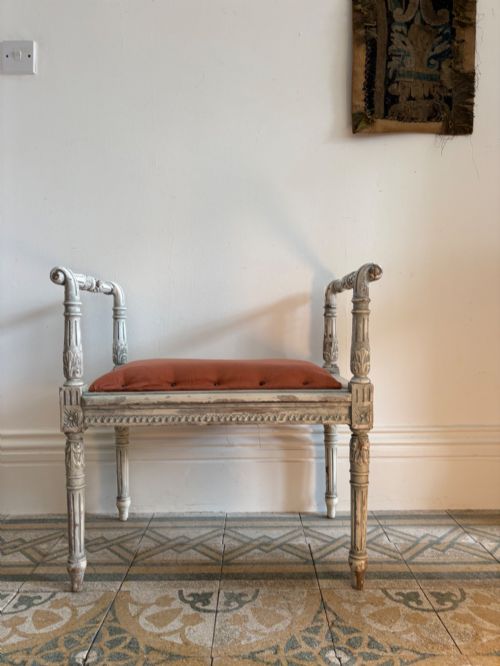
A french painted ottoman search reveals low stools, long benches, and window seats originating from various periods including the Victorian era and the Regency period.
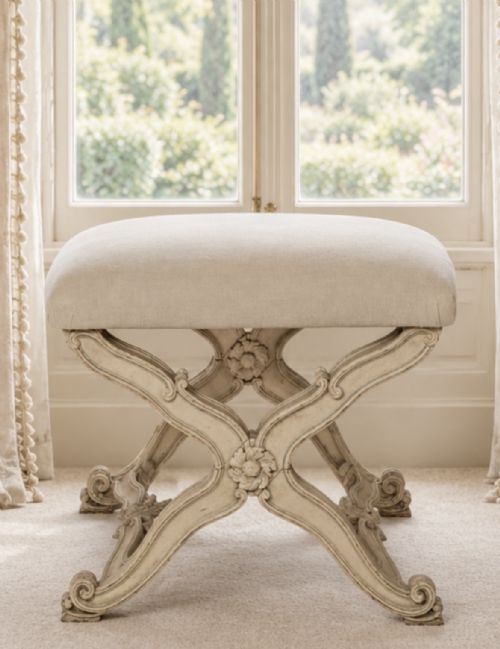
Most items you meet on this page take the form of painted stools or benches, often featuring fabric or silk seats alongside wooden frames.
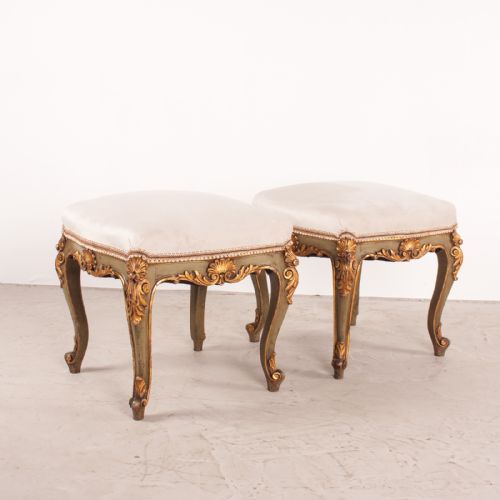
Styles range across Louis XV style, French provincial, and Gustavian neoclassical designs, showing continental rococo and French rococo revival influences.
Materials and Construction
Craftsmen built these frames using wood such as beech, applying paint and occasionally gold leaf or gilded wood for decorative effect.
Upholstery completed the pieces, utilising fabric and linen to create soft seats on stools, benches, and window seats.
Some nineteenth-century makers evidently decided that one coat of paint simply would not do when twenty would make a proper stool.
Assessing Quality and Craftsmanship
The degree of hand carving on the wooden frame separates standard utility pieces from more decorative examples.
The choice of surface finish, from simple painted wood to applied gold leaf, dictates the visual weight of the seating.
The French Painted Ottoman Glossary
- Ottoman
- A low upholstered seat or bench without a back or arms. These pieces serve as footstools or casual seating.
- Gustavian Neoclassical
- A Swedish aesthetic drawing inspiration from French court styles but with simpler lines and lighter painted finishes. It appears frequently in pale tones.
- Louis XV Style
- A design movement characterised by asymmetrical curves, natural motifs, and rococo flourishes. Frames in this style often show elaborate carving.
- Gilded Wood
- Timber treated with a thin layer of gold leaf. This technique adds brightness and highlights decorative carvings on the frame.
French Painted Ottoman: Frequently Asked Questions
What is a French painted ottoman?
A French painted ottoman is a low upholstered seat, stool, or bench featuring a painted wooden frame. These items draw on styles like Louis XV and Gustavian neoclassical.
They provide flexible seating options and function well as footstools or window seats in various rooms.
How were these ottomans used historically?
Historically, low stools and benches served as moveable seating within salons, bedrooms, and dressing rooms. Their compact size allowed easy placement near windows or dressing tables.
The upholstered tops provided comfort for extended sitting or resting feet.
How do I style an ottoman at home?
Place a long stool beneath a window as a window seat, or position a pair of matching stools beside a fireplace. Their neutral painted finishes blend easily with existing furniture.
They also work well at the foot of a bed for placing clothes.
How do I identify the period of a stool?
Dating relies on examining the carving style, the type of wood used, and the characteristics of the paint finish. Pieces span from the Regency era through Victorian times and into the early twentieth century.
Stylistic markers like rococo curves or neoclassical symmetry help narrow down the era of manufacture.