




French Painted Hall Table
A french painted hall table brings useful surface space and continental charm to narrow spaces.
French Painted Hall Table
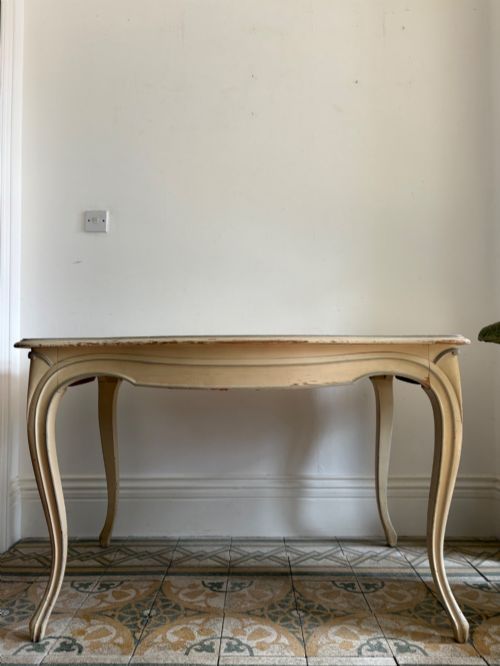
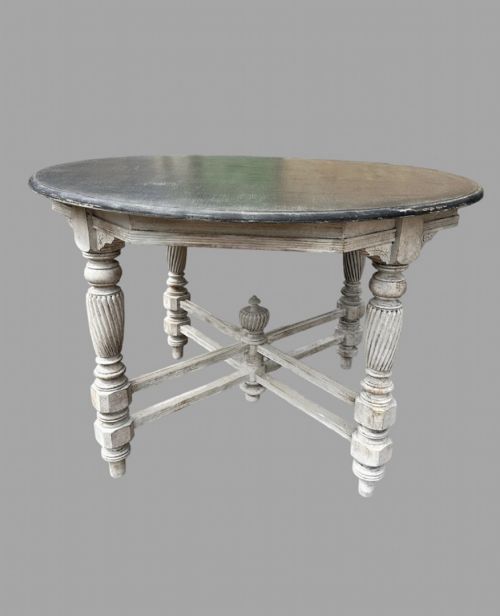
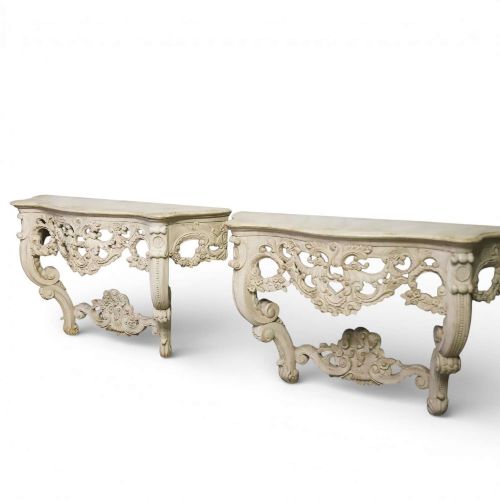
When searching for a french painted hall table, buyers encounter console tables, side tables, and demi lune shapes designed to fit compactly against corridors and entrance walls. These furnishings span the nineteenth century and the early twentieth century, including Edwardian interpretations alongside earlier examples.
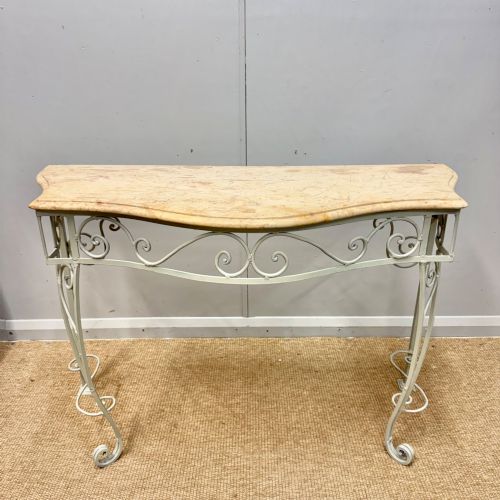
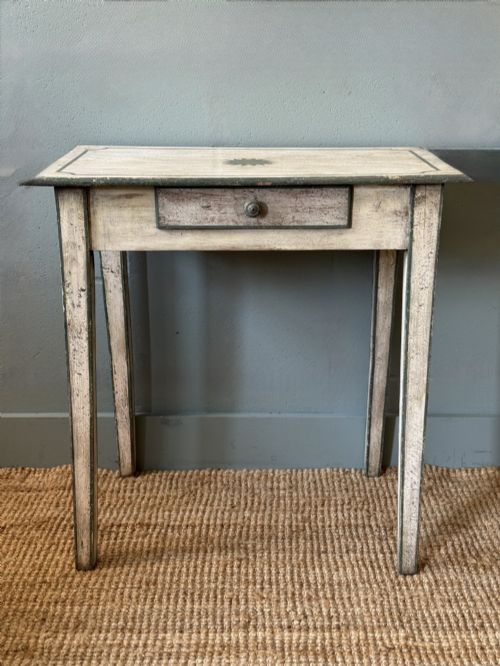
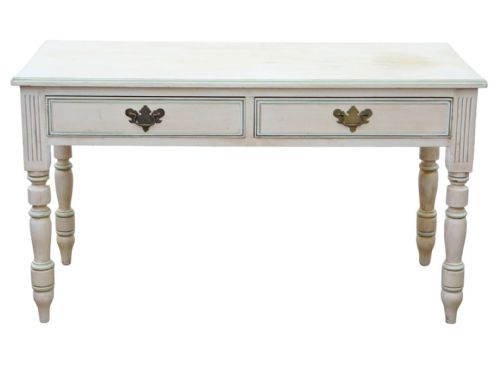
The prevalent forms on this page include marble top consoles, serpentine front designs, and rustic pine tables featuring drawers or pot-shelves. Many adopt styles such as French Provincial, Neoclassical, Louis XVI, and Rococo.
Origins stretch across French country and chateau aesthetics, offering narrow profiles that suit modern entryways while retaining period character through original painted finishes and carved wooden details.
Materials and construction
Construction relies on timber, pine, fruitwood, and satinwood, frequently shaped with hand-carved ornamentation and supported by cabriole legs. Painted wood surfaces often receive layered paint treatments in cream, antique white, or grey, sometimes accented by gold leaf, parcel gilt, or parcel silvering.
Many tables incorporate heavy marble slabs, ranging from white to rouge varieties, fitted directly into the wooden frames. Wrought iron, brass, and inset suede tops appear in specific side and console variations, combining structural metalwork with decorative woodwork.
Some tables double as secret partners for hallway mirrors, pairing up to reflect light down narrow Victorian corridors.
Evaluating craftsmanship
Distinction across the range lies in the depth of hand-carving and the integrity of the original paintwork versus later repainting. Tables featuring genuine period gilding, gesso details, and well-fitted marble slabs demonstrate superior atelier execution.
Structural proportions also set pieces apart, particularly the precision of serpentine fronts, demi lune curves, and the harmonious balance between wooden bases and heavy stone tops.
The French Painted Hall Table Glossary
- Demi lune
- Half moon shape. This configuration allows console tables to sit flush against a wall while projecting minimally into a corridor.
- Cabriole leg
- S-shaped curving furniture leg. It typically terminates in a pad or scroll foot and originates from classical furniture design.
- Gesso
- Plaster-based preparation material. Painters apply it to wood surfaces to create a smooth base for subsequent gilding or paint layers.
- Serpentine
- Wave-like curving front line. This contour alternates convex and concave sweeps across the width of the table.
- Gueridon
- Small round occasional table. These surfaces often feature single central pedestals or tripod legs.
French Painted Hall Table: Frequently Asked Questions
Where do these tables fit best?
These tables suit narrow entrance halls, corridors, and reception spaces where floor area is restricted. Their shallow depth allows placement against walls without obstructing movement.
Console and demi lune variants hug the architecture closely, providing a convenient surface for lamps, correspondence, or decorative objects.
How are marble tops maintained?
Marble tops require gentle cleaning with mild, non-acidic soap and water to preserve the polished surface. Avoid harsh chemical cleaners that can etch the stone.
Using coasters and mats protects the natural material from moisture rings and staining during daily use.
What distinguishes provincial from neoclassical styles?
Provincial pieces display rustic charm with simpler carved motifs, painted pine construction, and relaxed country proportions. They emphasise utility and domestic warmth.
Neoclassical and Louis XVI examples feature formal symmetry, straight tapered or refined cabriole legs, gilt accents, and classical architectural ornamentation.
Can these tables be used for writing?
Certain variations include functional drawers and flat wooden or inset suede surfaces suitable for correspondence. Specific listings directly identify writing and desk configurations alongside standard console forms.
Buyers should check the height and knee clearance of individual pieces to ensure comfortable seating if intended for active desk use.
How do I identify original paint?
Original painted surfaces show natural craquelure, subtle fading, and wear consistent with age rather than uniform modern application. Examining edges and protected undersides reveals layered historical finishes.
Patina builds up over decades, distinguishing genuine period decoration from subsequent decorative updates.