
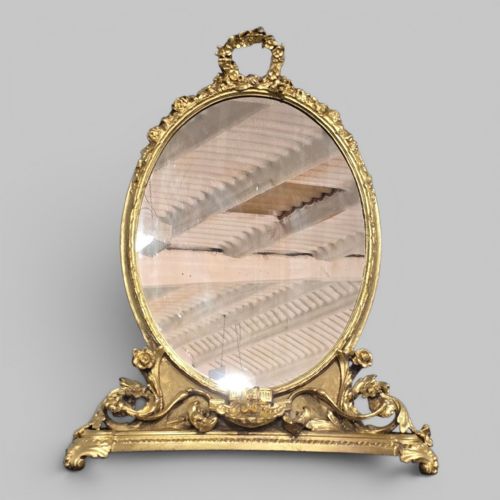
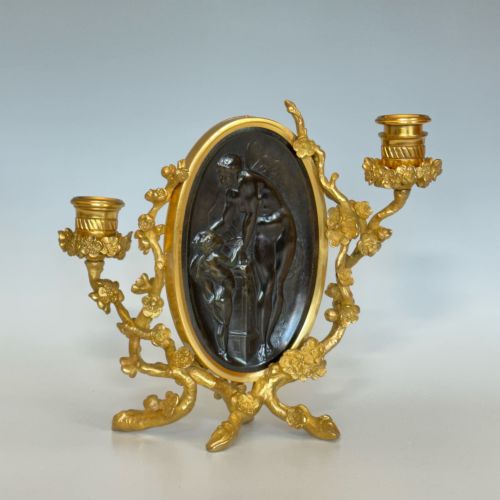


French Ormolu Table Mirror
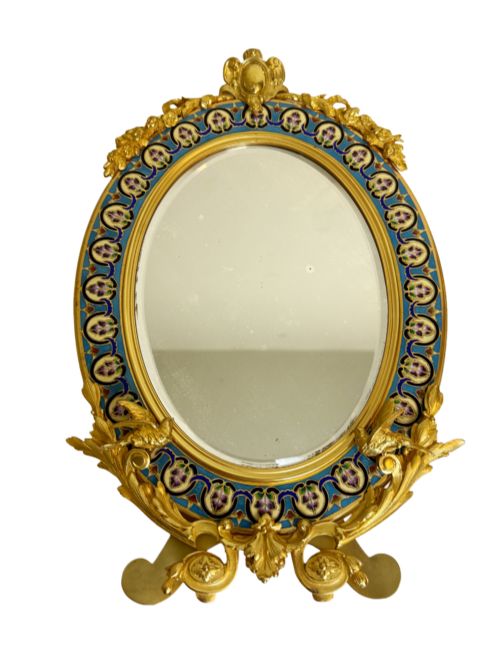
These pieces of French ormolu table mirror combine gilt bronze frames with glass, offering a decorative surface that elevates any dressing space.
French Ormolu Table Mirror
A french ormolu table mirror is a portable looking glass set within a decorative gilt bronze frame, designed to stand on a dressing table or chest. Most examples found here date from the nineteenth century, spanning periods such as the Victorian era and the French Empire style.
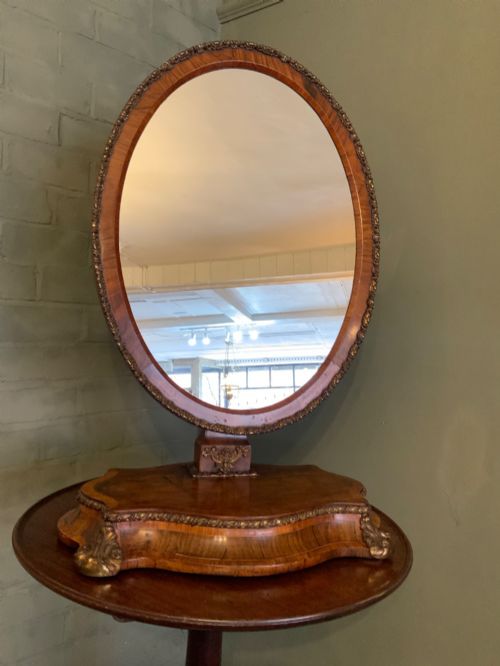
The objects take several forms, including oval toilet mirrors, swivel dressing glasses, and tabletop vanity mirrors. Many incorporate secondary materials like mahogany, walnut, marble, and porcelain panels alongside the metal mountings.
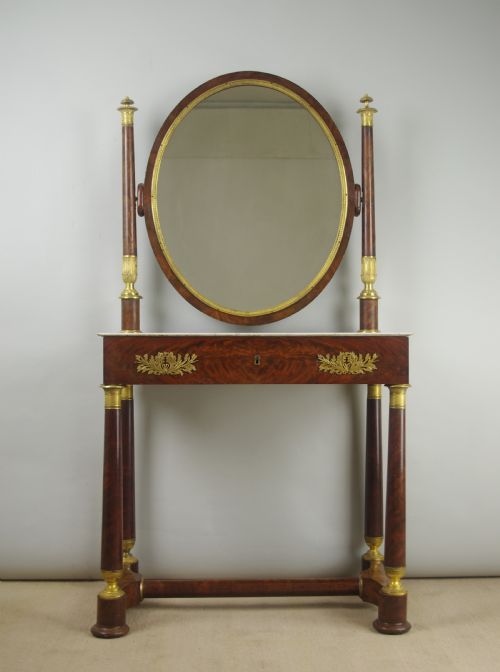
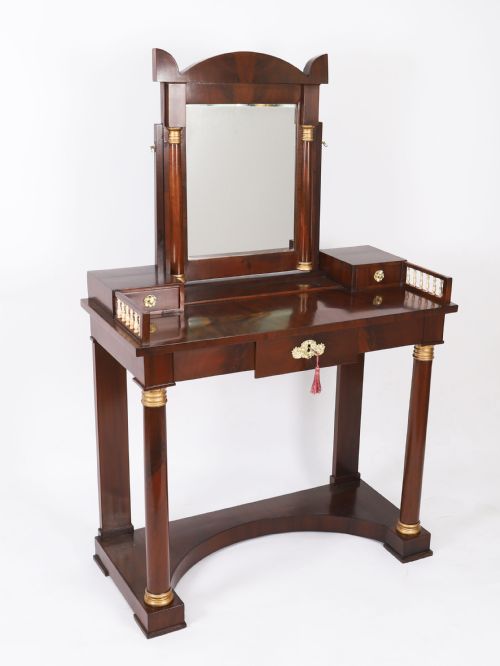
While some pieces are standalone desk mirrors, others form part of larger dressing table sets or console arrangements. They bring reflected light and ornamental metalwork into domestic interiors.
How they were made
The foundation of a french ormolu table mirror relies on cast gilt bronze, often termed ormolu, which provides the intricate scrolls, mounts, and frames. This metalwork is combined with timber structures in mahogany or walnut, sometimes enhanced by marquetry or burr veneers.
Mirrors utilise silvered mirror glass held securely within the metal housings. Enamel, champleve, and porcelain plaques appear as decorative inserts, fixed into the bronze frames alongside marble slabs.
Listings span the nineteenth and early twentieth centuries, recording periods from the French Empire and Victorian eras up to nineteen ten.
What varies in quality
The refinement of the cast bronze work dictates the standard of a french ormolu table mirror, separating sharp, hand-chased ornamentation from softer, secondary castings. The depth of the gilding and the crispness of the floral or architectural motifs show the maker's hand.
The choice of supporting timber also indicates grade, with finely figured mahogany, burr walnut, and inlaid veneers marking out more ambitious pieces. Integral details like original bevelled mirror glass and signed enamel plaques elevate the work further.
Thiebaut Freres·Joseph Meissonnier·F.Bienvue
The French Ormolu Table Mirror Glossary
- Ormolu
- Gilt bronze created by applying a mercury and gold amalgam to a bronze base, then heating it to drive off the mercury. This technique produces a durable golden surface seen on nineteenth-century frames.
- Champleve
- An enamelling technique where troughs or cells are hollowed out of the metal surface and filled with vitreous enamel before firing. It frequently decorates the borders of nineteenth-century mirrors.
- Empire
- A neoclassical design style popular during the early nineteenth century, characterised by military motifs, classical symmetry, and rich mahogany mounted in ormolu. It heavily influences many of these tables and mirrors.
- Bonheur du jour
- A small, light desk with a tiered cabinet superstructure, sometimes paired with dressing elements in Victorian interiors. These pieces occasionally incorporate small mirrors within their upper sections.
- Surtout de table
- A large mirrored plateau placed in the centre of a dining table, sharing similar silvered glass and gilt bronze framing techniques with table mirrors.
French Ormolu Table Mirror: Frequently Asked Questions
What is a french ormolu table mirror?
A french ormolu table mirror is a portable looking glass housed in a decorative gilt bronze frame, designed to sit upon a surface rather than hang on a wall.
These pieces typically date from the nineteenth century and reflect styles such as the French Empire or Rococo revival.
How were these mirrors used originally?
They served as practical grooming aids placed on dressing tables, chiffoniers, or console tables in bedrooms and boudoirs.
Beyond personal use, their reflective glass and polished metal mounts helped bounce natural light around nineteenth-century rooms.
How do I clean an ormolu frame?
Ormolu requires gentle dusting with a soft, dry brush to prevent the accumulation of dirt in the recessed details of the casting.
Avoid chemical polishes or water, as harsh cleaning agents can strip away the historic gilding from the bronze.
How do I date a table mirror?
Dating relies on examining the timber construction, the style of the bronze casting, and the bevelling or flatness of the mirror glass.
Nineteenth-century examples often display specific stylistic markers like Empire mounts or Victorian walnut frames that align with known period manufacturing techniques.