





French Ormolu Sculpture
When you search for french ormolu sculpture, you enter a world of gilt bronze metalwork, marble plinths and neoclassical grace designed to catch the candlelight.
French Ormolu Sculpture
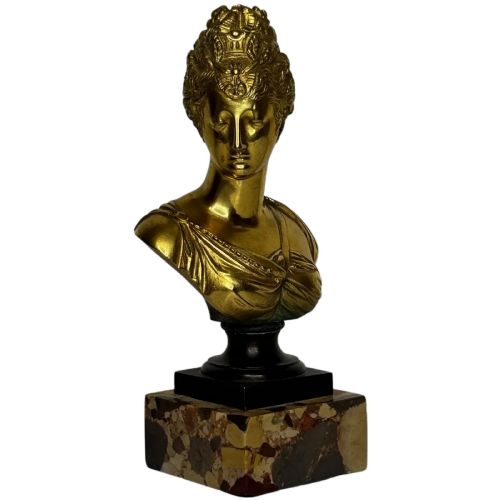
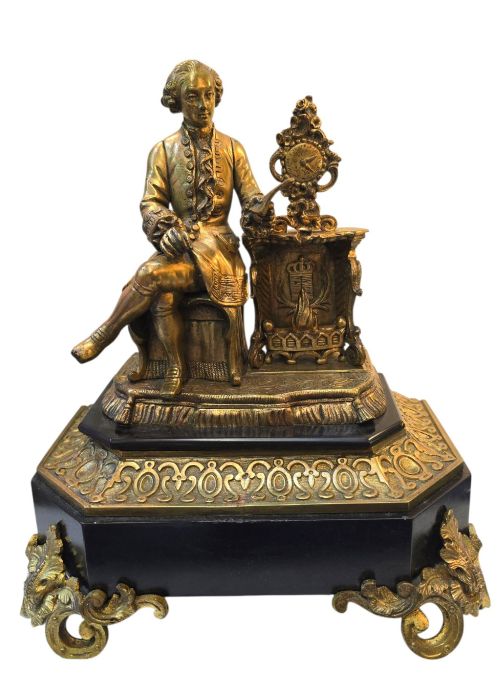
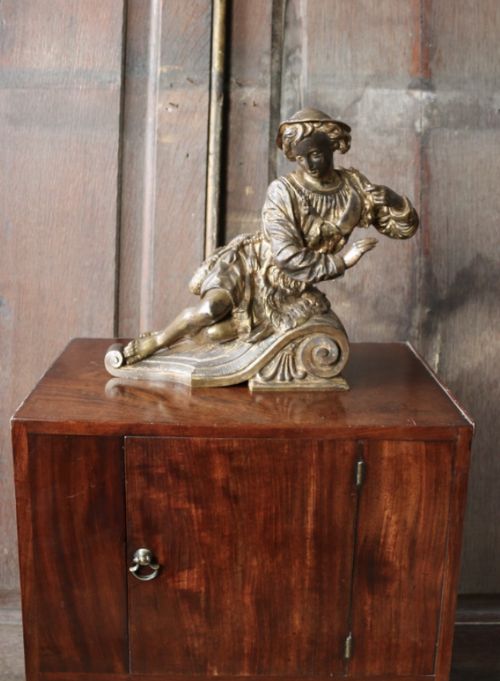
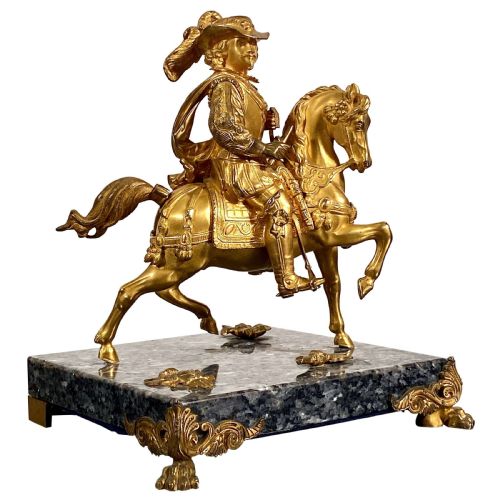
French ormolu sculpture encompasses cast bronze objects finished with mercury gilding, often integrated with marble columns, onyx pedestals and enamel details. These decorative works range from small figural inkstands and furniture mounts to large mantel clocks, candelabra and freestanding statuettes.
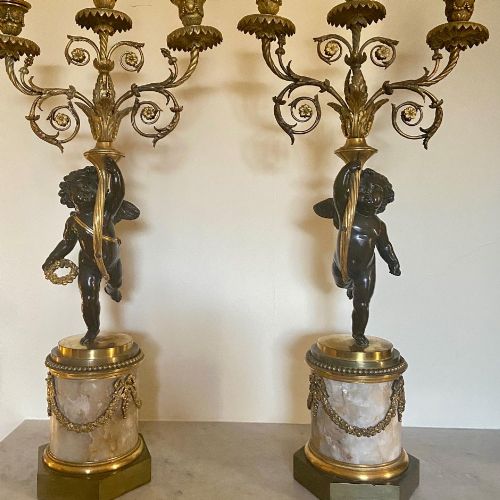
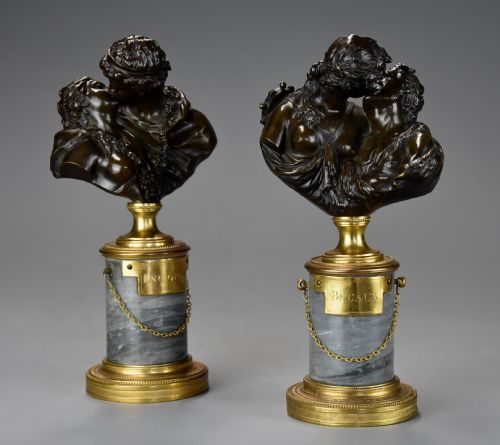
The objects on this page predominantly reflect nineteenth-century production alongside eighteenth-century origins, drawing on Neoclassical, Louis XVI, French Rococo and Art Nouveau styles. Buyers frequently encounter figures of putti, animals, mythological subjects and historical portraits mounted upon stone bases.
Functional items such as inkstands, table lamps and clock cases appear alongside pure sculptures, pedestals and appliques. Many pieces combine patinated bronze with bright gilt bronze elements to create contrast within the composition.
How they were made
Maker workshops cast molten bronze into moulds before chasing the metal surface by hand to sharpen details in hair, drapery and foliage. Artisans then applied an amalgam of mercury and gold, heating the piece to drive off the mercury and leave a durable gilt layer known as ormolu.
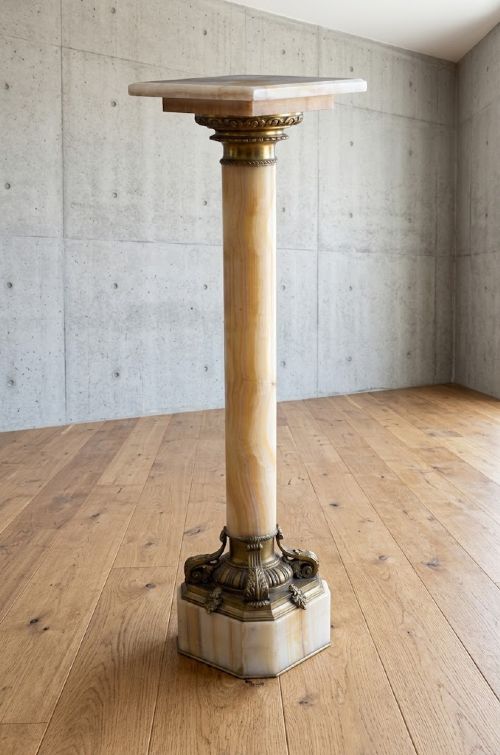
Secondary materials including white or coloured marble, fluorspar, onyx and porcelain frequently serve as structural mounts or plinths for the bronze figures. Enamel dials and patinated bronze treatments add further textural variation to clocks and figural groups.
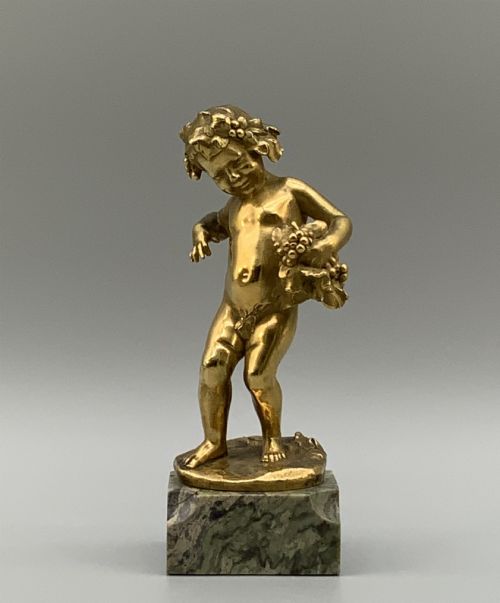
Dentist bears and infant Bacchus figures share the metal foundry floor with classical gods and dancing maidens.
What varies in quality
The refinement of the hand-chasing on the bronze surface distinguishes superior castings from simpler commercial work, as crisp detail requires skilled labour after the initial casting process. Softer contours and blurred foliage indicate rapid production rather than careful finishing.
The integrity of the mercury gilding determines the depth and warmth of the golden surface, whereas thin or worn plating alters the visual balance against the dark patinated bronze or stone. Heavier, more substantial marble bases and precise mechanical movements in clock housings also elevate the standing of a piece.
Poix Blin·Susse Frères·Francois Redmond·Jean Antoine Houdon·Emile-Coriolan Guillemin·Antoine Louis Barye·Leon Message·Jollet et Cie·Eurotrope Bouret·Christophe Fratin·Jean Jacques Pradier·Victor Paillard·Coutan·Charlotte Monginot·Deniere and Cailleaux·Japy Freres
The French Ormolu Sculpture Glossary
- Ormolu
- A gold-coloured alloy or the technique of applying finely ground gold amalgamated with mercury to a bronze object. This historic process creates a durable and luminous finish characteristic of decorative metalwork.
- Patinated bronze
- Bronze that has been chemically treated to produce a dark brown, green or near-black surface colour. This dark tone often contrasts with the bright reflective quality of adjacent ormolu mounts.
- Applique
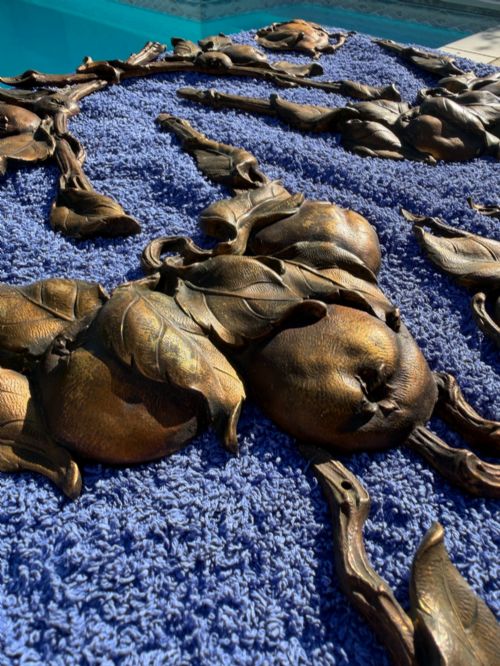
- An ornamental metal mount attached to furniture, panels or walls for decorative effect. These pieces typically feature cast floral, figural or scroll motifs.
- Fluorspar
- A colourful mineral occasionally used for decorative vessels, candelabra bases and inlay work. Its natural banding complements the surrounding gilt bronze elements.
- Putto
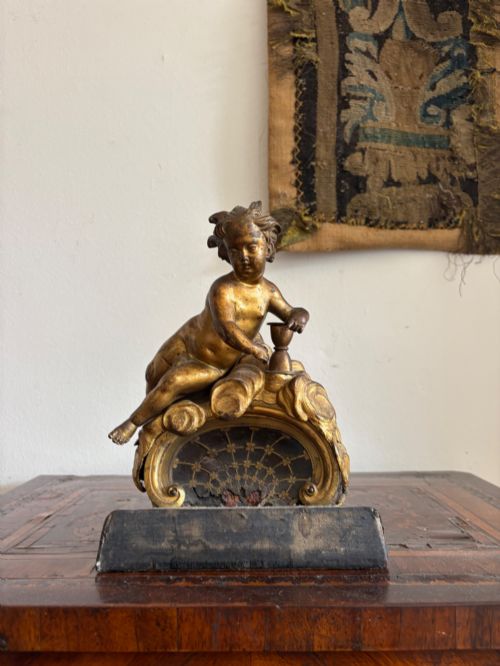
- A chubby male child figure, often winged, depicted in art from the Renaissance onwards. These figures frequently appear as finials, candelabra supporters or attendants in sculptural groups.
French Ormolu Sculpture: Frequently Asked Questions
What is french ormolu sculpture?
French ormolu sculpture refers to cast bronze objects finished with a gold-mercury amalgam, often combined with marble or patinated bronze.
These pieces range from freestanding animal and human figures to decorative clock cases, inkstands and architectural mounts.
How do I clean ormolu and gilt bronze?
Gilt bronze requires gentle dusting with a soft, dry cloth to prevent the accumulation of grit and dust in recessed chased areas.
Water, chemical polishes and abrasive cleaners should be avoided because they strip away the historic mercury gilding.
Are these pieces from the eighteenth or nineteenth century?
The listings span both periods, with original eighteenth-century works appearing alongside nineteenth-century revivals in the Louis XVI and Neoclassical styles.
Stylistic details, casting techniques and material wear help distinguish original period production from later nineteenth-century interpretations.
What is the difference between ormolu and patinated bronze?
Ormolu describes bronze that has been gilded with gold, producing a bright and reflective golden finish.
Patinated bronze retains a dark chemical finish on the metal surface, which French makers frequently paired with ormolu highlights for visual contrast.