


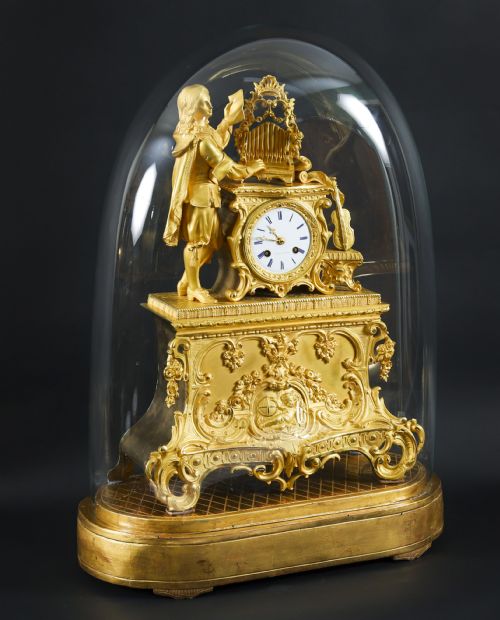

French Ormolu Pendule
A french ormolu pendule brings neoclassical restraint or flamboyant rococo movement to a mantelpiece through rich gilt metal and precise horology.
French Ormolu Pendule
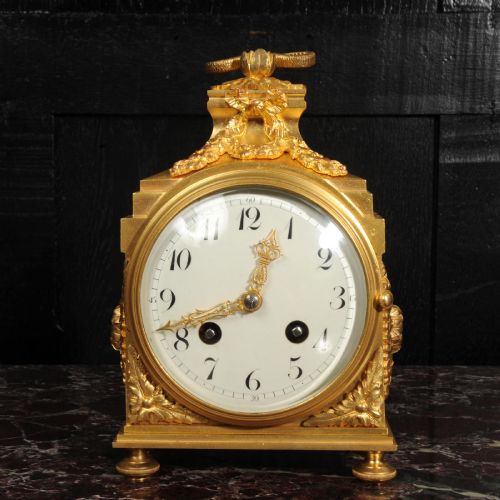
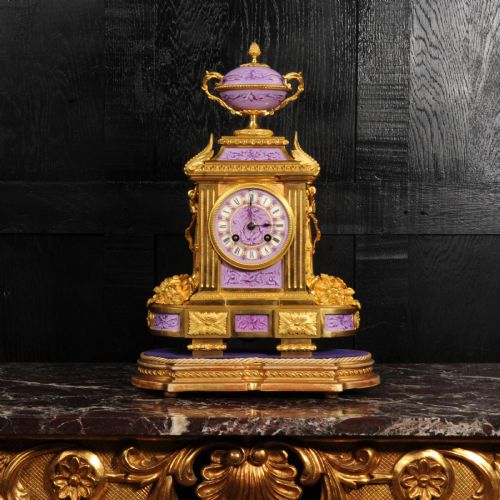
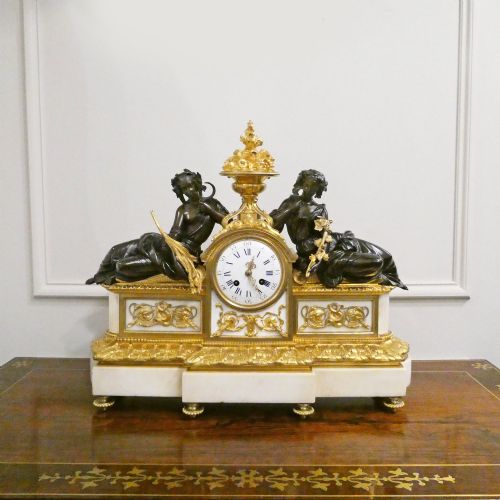
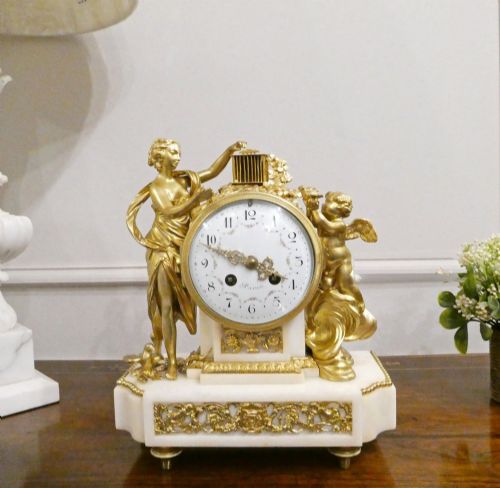
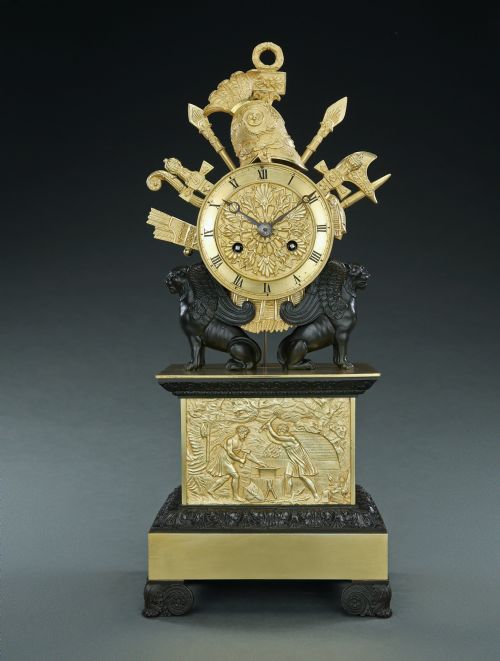
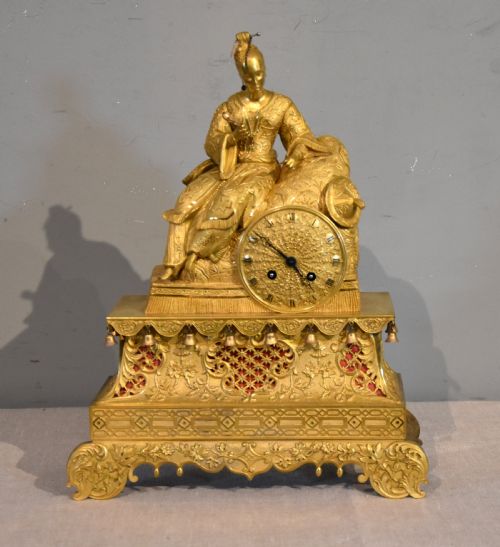
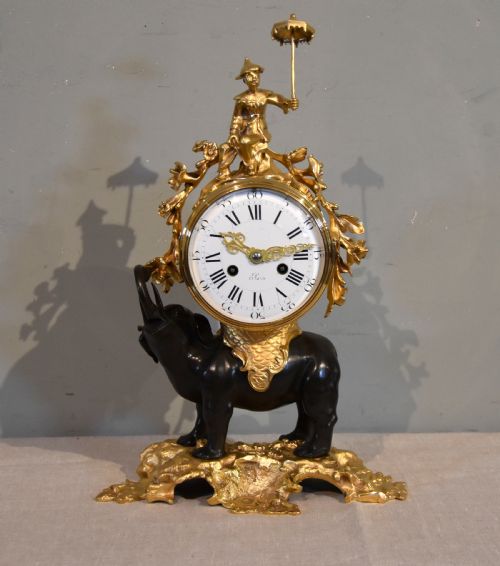
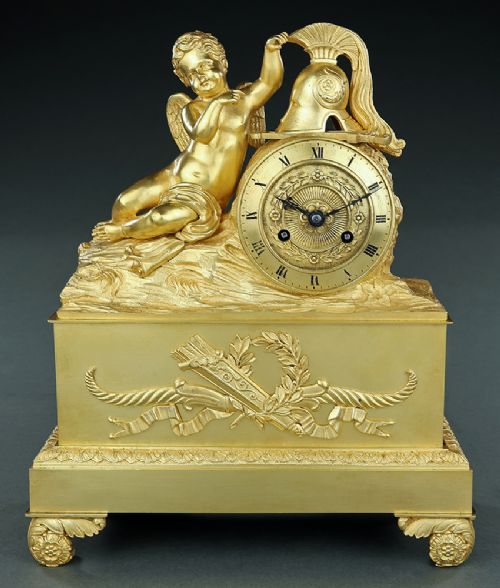
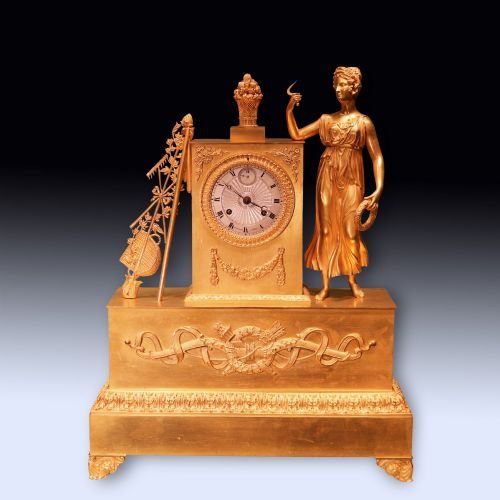
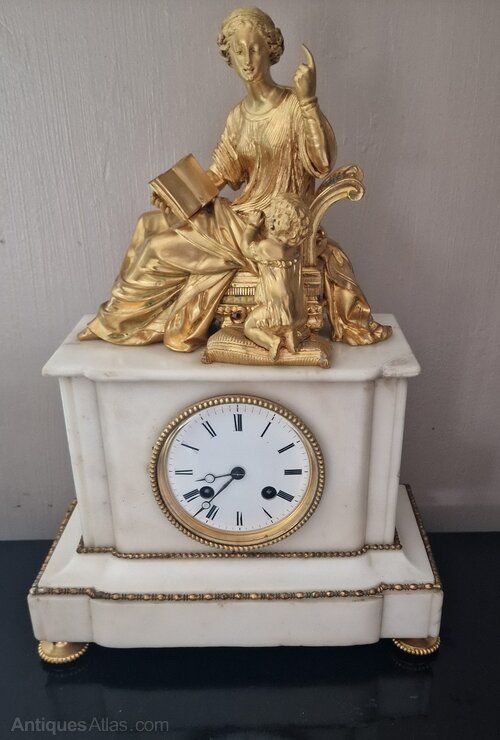
A french ormolu pendule is a freestanding clock housed in a decorative case, most commonly encountered in this collection as nineteenth-century mantel clocks. These pieces range from restrained Louis XVI and Empire designs to ornate Rococo Revival forms, often incorporating figurative elements such as animals or allegorical figures.
The horological forms span standard mantel clocks, wall clocks, and specialised travel pieces like the pendule d'officier. Makers frequently paired the gilded metal cases with contrasting materials, producing substantial table and mantel clocks that served both timekeeping and decorative functions in period interiors.
Materials and construction
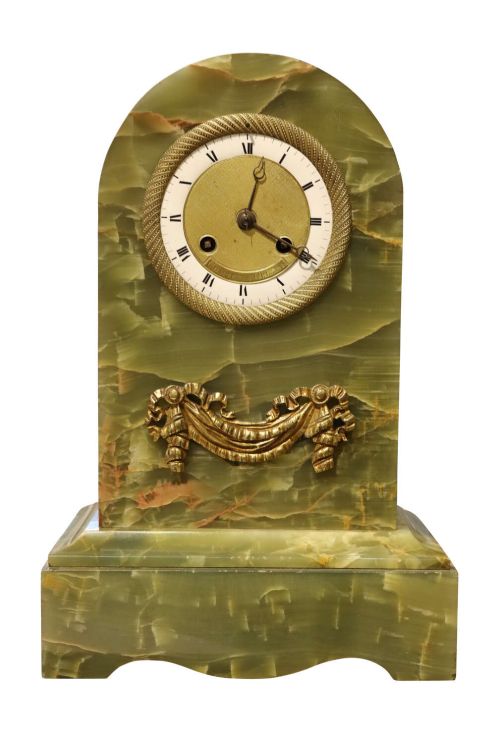
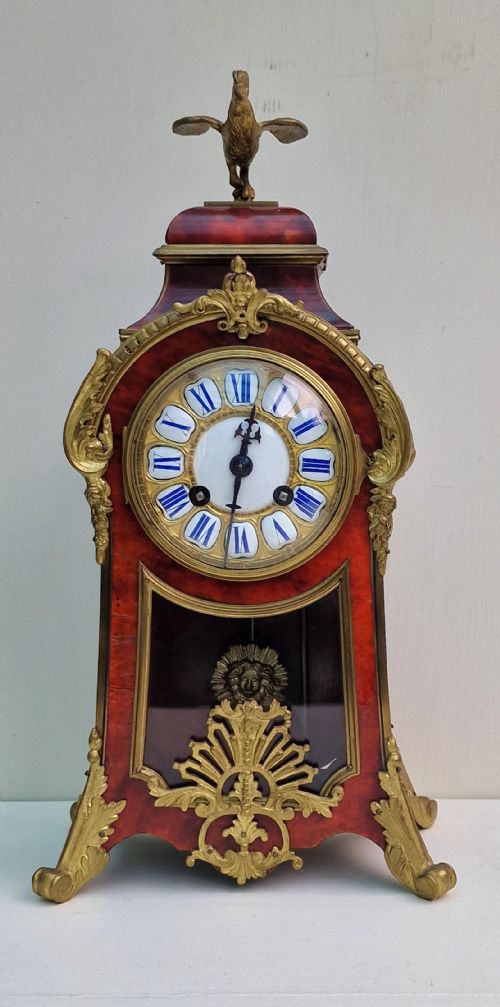
The foundation of these clocks relies on cast metals, specifically ormolu, gilt bronze, and patinated bronze, shaped into elaborate architectural or figural housings. Case makers integrated panels of white marble, green onyx, tortoiseshell, and Sèvres porcelain to provide textural contrast against the bright gilded surfaces.
Dials typically feature painted enamel numerals or individual porcelain plaques, while the internal movements were supplied by prominent horological workshops. These mechanical components were engineered to drive striking trains and eight-day movements housed securely within the heavy metal and stone cases.
Elephants and lions occasionally serve as clock cases, proving that nineteenth-century timekeeping took a decidedly wild turn.
Distinctions in craftsmanship
The distinction between tiers of production lies in the crispness of the bronze chasing and the depth of the mercury gilding on the ormolu surface. Finer examples exhibit meticulous hand-finishing on cast ornament, where floral garlands, figural drapery, and rocaille scrolls retain sharp relief rather than soft, rounded edges.
Quality also depends on the integration of the movement with the case, where notable clockmakers collaborated with skilled bronze-founders. Original matching components, superior enamel dial painting, and robust mechanical engineering separate standard commercial production from exceptional horological art.
Achille Brocot·Charles à Orléans·Vincenti·Canaillor of Paris·Henry Dasson·Berger Paris·Leroy Paris·Henri Marc of Paris·Japy Freres·Samuel Marti·Charpentier Paris·Pons de Paul·Leroy and Fils·Dehné of Paris·PH Mourey
The French Ormolu Pendule Glossary
- Ormolu
- Gilt bronze produced by applying a mercury and gold amalgam to a bronze base and heating it to drive off the mercury. This technique creates a distinctive, deep golden finish characteristic of antique French clock cases.
- Pendule d'officier
- A portable military-style mantel clock featuring a distinctive top-mounted carrying handle and a back door for movement access. These pieces were originally designed for travel during the Napoleonic era.
- Champlevé
- An enamelling technique where troughs or cells are hollowed out of the metal surface and filled with vitreous enamel before firing. It frequently appears on ornate nineteenth-century table clocks.
- Boulle
- A form of marquetry utilising brass and tortoiseshell inlaid in contrasting patterns, named after the cabinetmaker André-Charles Boulle. It appears on select wall and mantel clock housings in this tradition.
- Rococo Revival
- A nineteenth-century design movement drawing on eighteenth-century asymmetrical curves, C-scrolls, and naturalistic plant motifs. It is the dominant decorative style for the more exuberant gilt bronze clock cases.
French Ormolu Pendule: Frequently Asked Questions
How do I wind a french ormolu pendule?
Most eight-day movements require a key inserted into the winding arbors on the dial face to tension the mainsprings.
Care must be taken not to overwind the mechanism, turning the key steadily until resistance is felt.
Are these clocks suitable for daily use?
These antique mechanisms can keep accurate time if they have been professionally restored and serviced.
They function best when placed on a stable, level mantelpiece away from direct sunlight and temperature fluctuations.
How do I identify the period of a clock?
Dating relies on stylistic clues, such as the symmetrical restraint of Louis XVI designs versus the fluid asymmetry of Rococo Revival pieces.
Maker signatures stamped on the backplates of the movements provide more precise chronological markers.
What is the difference between ormolu and gilt brass?
Ormolu consists of cast bronze treated with a genuine mercury gilding process, yielding a rich, warm golden lustre that endures for centuries.
Gilbert brass is typically a cheaper base metal with a brighter, thinner electroplated coating that lacks the depth of traditional fire gilding.