
French Ormolu Mounted Porcelain
French ormolu mounted porcelain unites glazed ceramic bodies with cast gilt metal mounts, bringing together 19th-century decorative forms and Revival aesthetics.
French Ormolu Mounted Porcelain
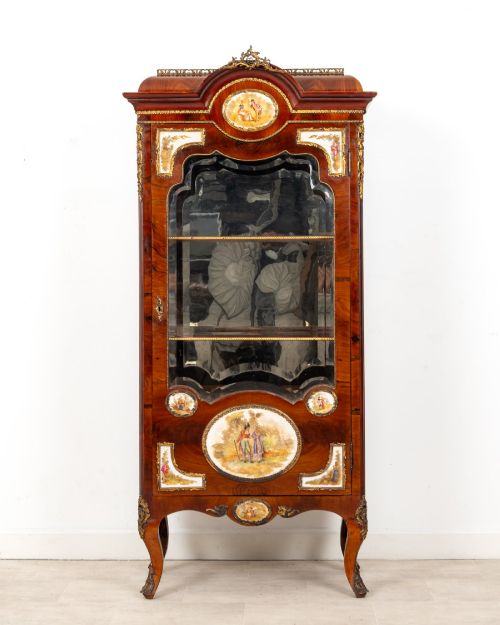
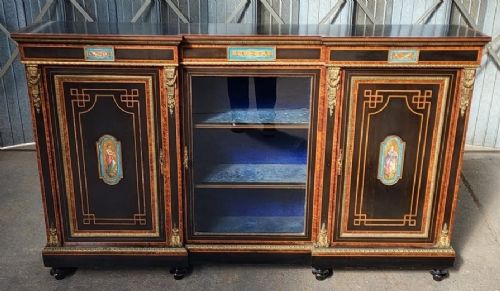
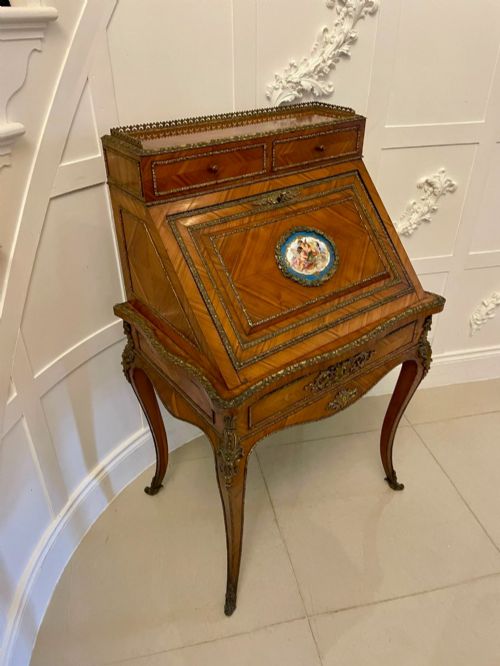
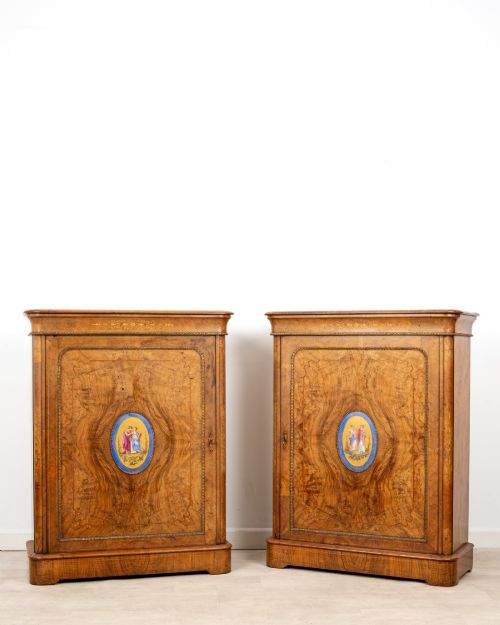
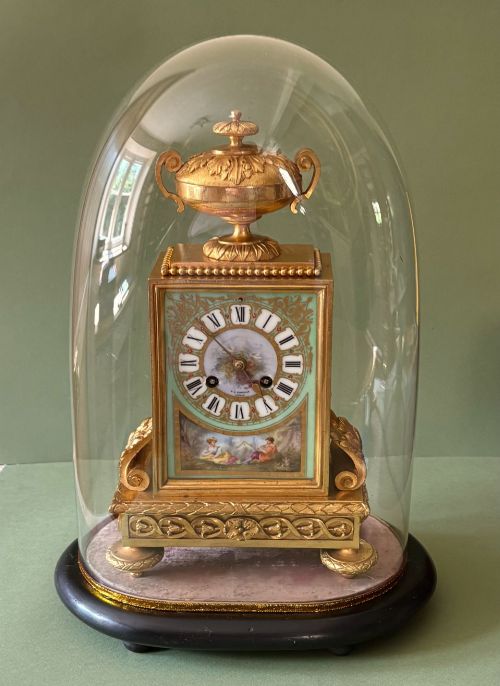
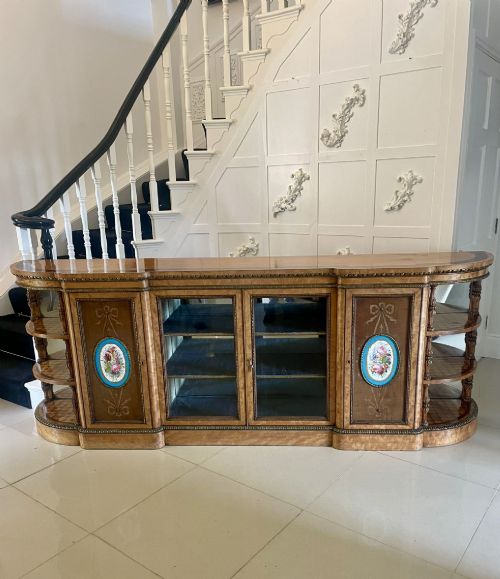
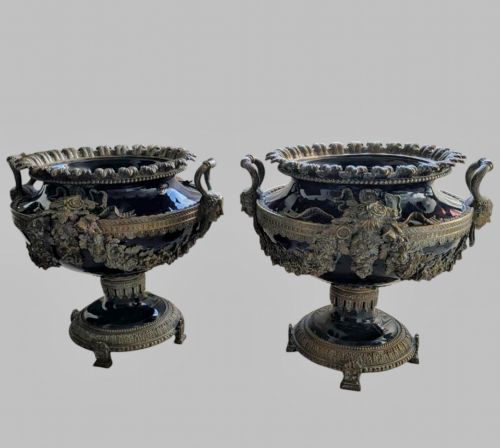
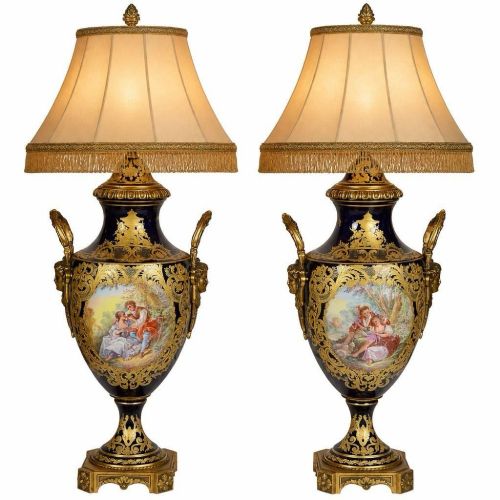
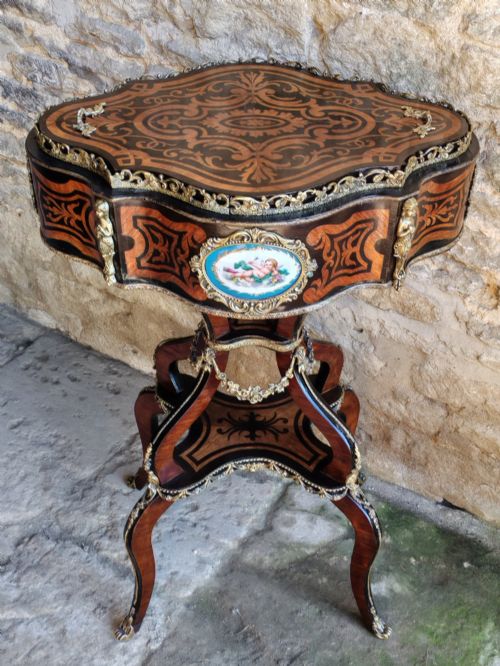
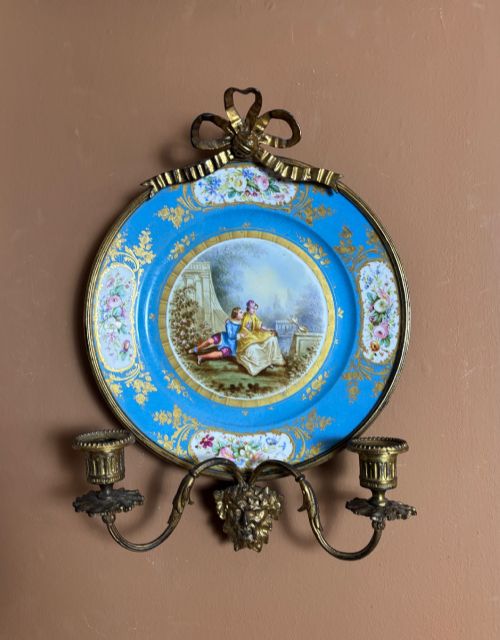
French ormolu mounted porcelain items combine glazed ceramic vessels, plaques, and clock faces with cast and gilt bronze hardware. The objects span practical and decorative forms, including mantel clocks, jardinières, vases, writing desks, and display cabinets.
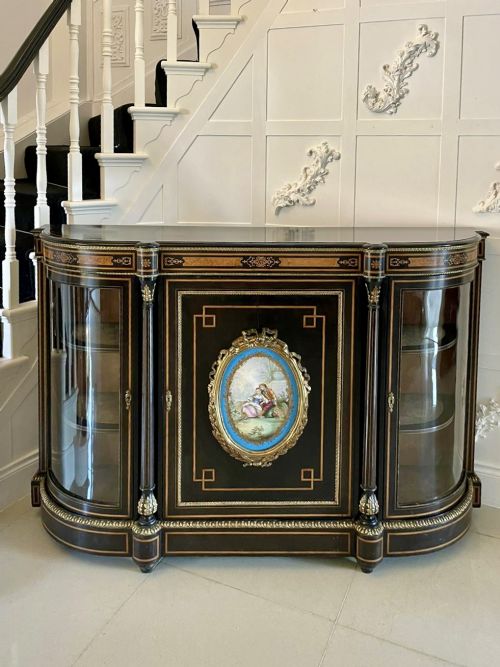
The selection ranges from 18th-century porcelain imports mounted in later periods to 19th-century productions influenced by Louis XV and Victorian French Revival styles. Cabinets and desks incorporate porcelain plaques into kingwood, walnut, and ebonised carcasses, framed by elaborate gilt bronze mounts.
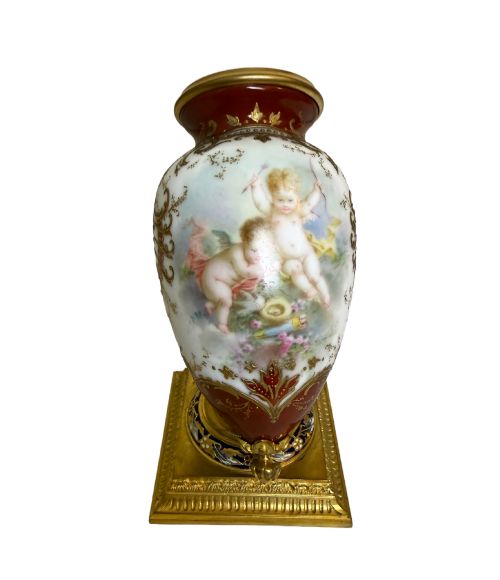
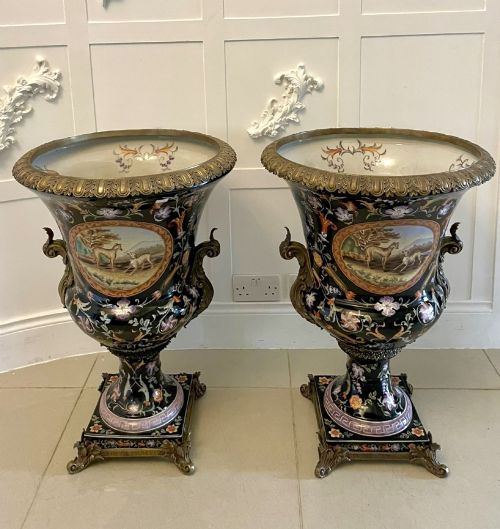
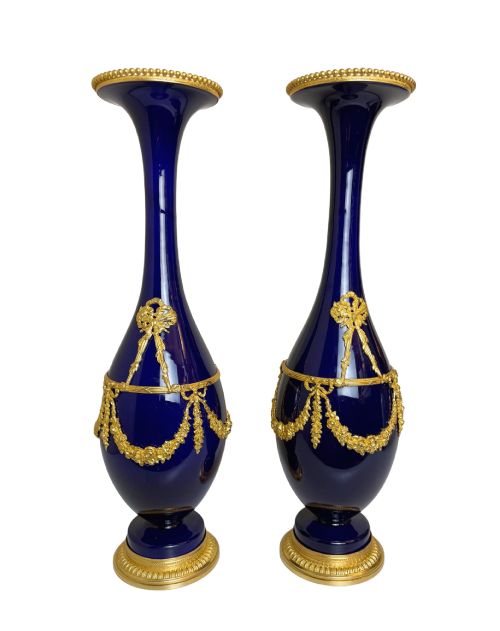
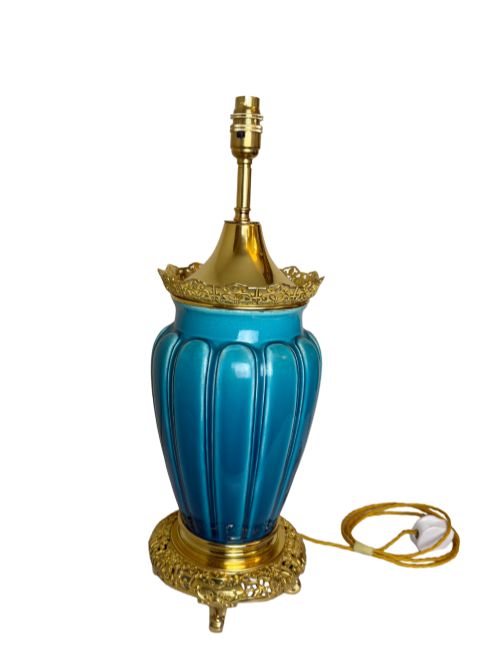
Vessels such as urns, bowls, and ewers frequently feature blue, turquoise, or celadon glazes paired with scrolling ormolu handles and bases. Buyers encounter these pieces as both standalone decorative accents and functional items of antique furniture.
How they were made
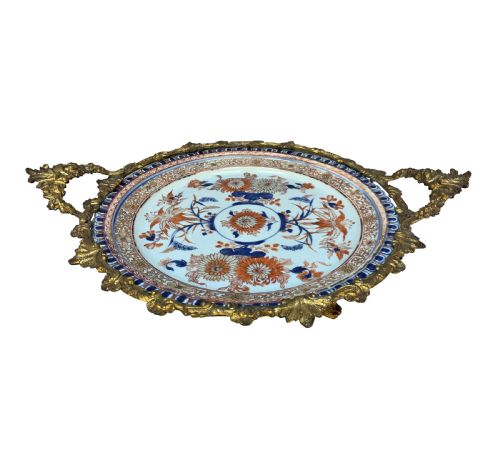
Makers shaped porcelain bodies using traditional firing methods before applying hand-painted designs, often featuring pastoral scenes, putti, or floral motifs against coloured grounds. Chinese and Japanese export porcelains were also adapted with European metalwork.
Foundry workers produced the ormolu mounts by casting bronze, chasing the surface details by hand, and applying a gold amalgam layer through mercury gilding or electrogilding. Craftsmen then secured the metal mounts to the ceramic and wooden frames using screws, pins, and pegs.
Some mantel clocks feature miniature painted ceramic dials where cherubs point lazily toward the passing hours.
What varies in quality
The crispness of the bronze chasing dictates the visual sharpness of the mounts, where deeply chiselled acanthus leaves and scrolls separate superior metalwork from soft, shallow castings. Hand-painted ceramic panels show variation in the precision of enamel work and the richness of the underlying glaze colours.
Integration between the ceramic body and the metal mount reveals the maker's skill, with top-tier pieces utilising custom-cast mounts that follow the exact contours of the porcelain. Secondary timbers in furniture carcasses, such as figured kingwood and amboyna veneers, further indicate the workshop standard.
Etienne Lenoir·J B Delettrez·G T Morant
The French Ormolu Mounted Porcelain Glossary
- Ormolu
- Gilt bronze mounts cast and chased to decorate furniture, clocks, and porcelain. The technique involves applying gold to a bronze base.
- Sevres
- A French porcelain manufactory known for soft-paste and hard-paste ceramic bodies decorated with hand-painted reserves and rich blue grounds. Pieces often bear factory marks.
- Jardiniere
- A decorative container or planter designed for flowers or plants. They appear in porcelain with ormolu feet and rims.
- Bonheur du Jour
- A small ladies writing desk featuring an enclosed superstructure with drawers, shelves, or a cabinet above the writing surface. These desks frequently incorporate porcelain plaques.
- Champleve
- An enamelling technique where troughs or cells are hollowed out of a metal surface and filled with vitreous enamel before firing. It appears alongside bronze mounts on decorative objects.
French Ormolu Mounted Porcelain: Frequently Asked Questions
Are porcelain plaques original to the furniture?
Makers during the 19th-century Revival periods frequently incorporated Sevres-style porcelain plaques into newly built kingwood and walnut cabinets, desks, and tables. These plaques matched contemporary workshop output rather than earlier centuries.
Examine the back of the panels and the surrounding wood housing to check for alterations. Original mountings show consistent wear and undisturbed seating within the timber veneer.
How do I date an ormolu mounted clock?
Clock movements often bear stamped maker marks, serial numbers, or signatures on the backplate that link the mechanism to a specific Parisian or regional workshop. Movement styles changed from pendulum-driven bell strikes to later spring-driven systems.
The design of the ormolu case provides further clues, as Louis XV Revival pieces typically display asymmetrical rocaille scrolls, while Napoleon III examples favour heavier, symmetrical classical proportions.
Can these vases and urns hold water?
Antique porcelain vessels, particularly those with metal mounts and delicate painted reserves, are intended for display rather than utility. Water exposure risks damaging internal adhesives, old repairs, and the unglazed ceramic bases.
Utilise liners if floral displays are necessary, ensuring no moisture reaches the gilt bronze mounts or the porcelain body. Maintaining dry conditions preserves both the ceramic glaze and the metal gilding.