





French Opalescent Glass Plate
A french opalescent glass plate catches the light with milky blue fires, bringing decorative Art Deco form to any table.
French Opalescent Glass Plate
When someone searches for a french opalescent glass plate, they find pressed and frosted glass objects created during the interwar decades. These pieces take the form of decorative plates, shallow bowls, chargers, and salvers designed to display shifting translucent tones.
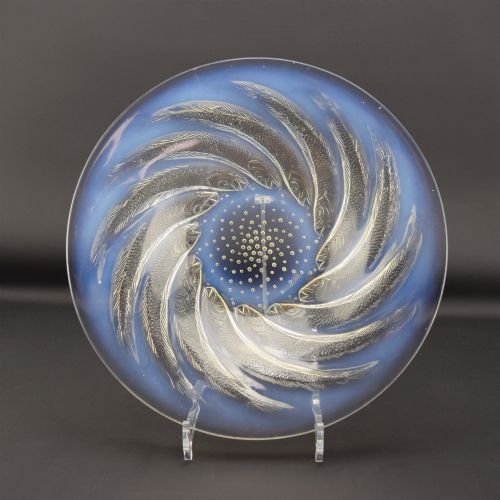
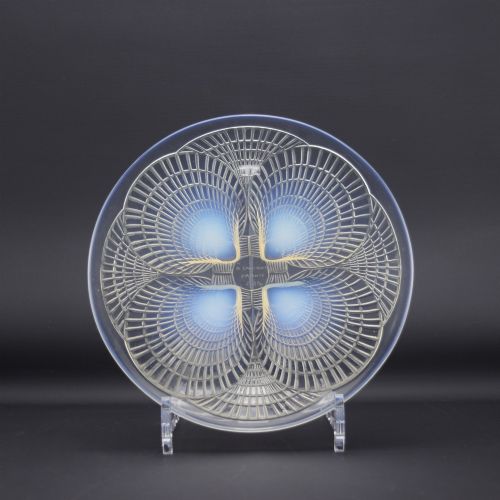
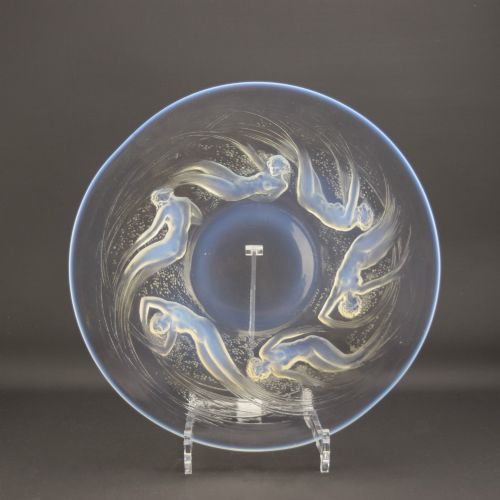
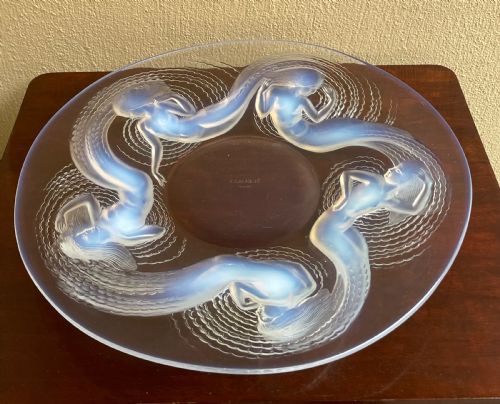
The items seen here date primarily from the nineteen twenties and nineteen thirties. Makers employed moulded techniques to produce both flat plates and deep coupe ouvert designs featuring marine life, flora, and geometric motifs.
Buyers encounter variations such as the Poissons, Ondines, Coquilles, and Actinia patterns. Each french opalescent glass plate serves as both a functional dish and a sculptural centrepiece of the Art Deco period.
What Varies in Quality
The distinction between tiers rests upon the crispness of the moulded relief and the depth of the opalescent effect within the glass. Superior examples exhibit vibrant blue and amber fire when held to the light, whereas lesser pieces appear flat and milky without internal luminosity.
Design complexity also defines the grade of a piece, as intricate figural subjects like mermaids and fish demand precise execution in the mould. The depth of the relief and the smoothness of the finished surface separate standard production items from masterworks.
French Opalescent Glass Plate Retail Price Guide 2026
Typical asking prices for french opalescent glass plate among the pieces listed under this phrase on Sellingantiques today, from the lower quarter to the upper quarter. They describe what is for sale here now, not the wider market.
Fish swim across multiple plate designs, proving that French glassmakers in the thirties possessed an unwavering obsession with the ocean.
Rene Lalique·Sabino·Verlys
The French Opalescent Glass Plate Glossary
- Opalescent glass
- Glass containing agents that create a milky, translucent appearance with characteristic blue or fire-like highlights when lit from certain angles. This optical phenomenon forms the defining visual trait of these plates.
- Coupe ouverte
- An open bowl or deep plate form with sloping sides, frequently utilised in interwar French glass design. These pieces combine the function of a plate with the depth of a shallow vessel.
- Pressed glass
- Glass shaped by mechanical pressure in a metal or wooden mould rather than free-blowing or hand-tooling. This technique enabled the rapid reproduction of complex decorative patterns.
- Charger
- A large decorative plate utilised for display or service rather than daily dining. These substantial objects provide a wider canvas for moulded motifs.
- Salver
- A flat serving tray or footed plate raised slightly from the surface. In French Art Deco glass, these items function primarily as decorative table pieces.
French Opalescent Glass Plate: Frequently Asked Questions
What is a french opalescent glass plate?
A moulded glass decorative dish originating from France during the nineteen twenties and nineteen thirties, characterised by milky translucent glass that glows with blue highlights.
These items range from flat plates to deep chargers and coupe bowls, bearing distinct Art Deco motifs like fish, shells, and flora.
How do I display a glass charger?
Glass chargers sit well on plate stands against a light-colored wall or near a window where natural daylight can pass through the material. Placing them near an independent light source activates the opalescent fire within the glass.
Avoid stacking these plates directly on top of each other in storage or display, as the raised moulded elements can rub and scratch.
How can I tell the period?
Pieces on this page date from the nineteen twenties and nineteen thirties, corresponding to the height of the Art Deco movement in France. The combination of pressed opalescent glass and stylised natural motifs points directly to this interwar era.
Signatures or moulded marks on the glass surface often provide further indication of the specific production decade.
Were these plates used for food?
While originally produced as decorative plates, salvers, and sweetmeat dishes, most owners today choose to exhibit them as visual art objects. The delicate opalescent surface can show wear from cutlery if used for daily dining.
Gentle hand washing in lukewarm water preserves the frosted and polished finish without damaging the glass.