

French Occasional Side Table
When you search for a french occasional side table, you encounter versatile multi-tiered surfaces designed for display and light utility in nineteenth and early twentieth-century interiors.
French Occasional Side Table
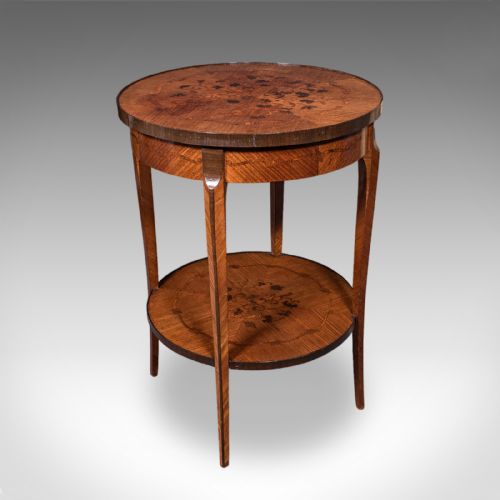
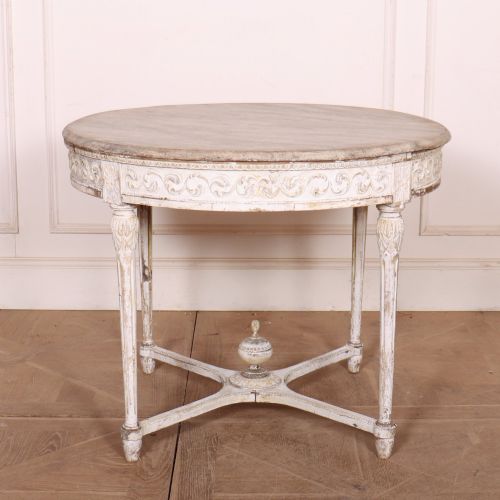
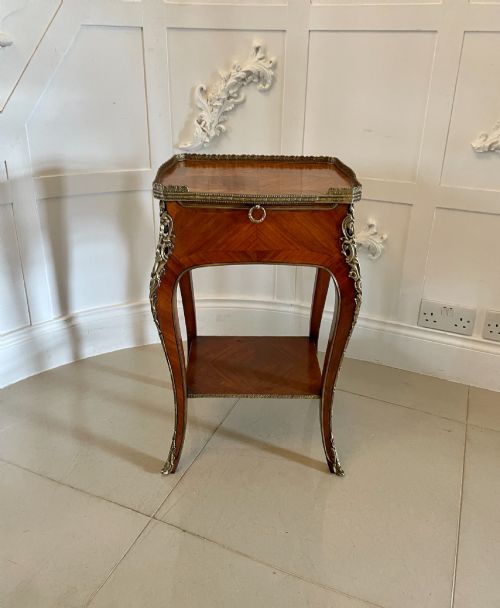
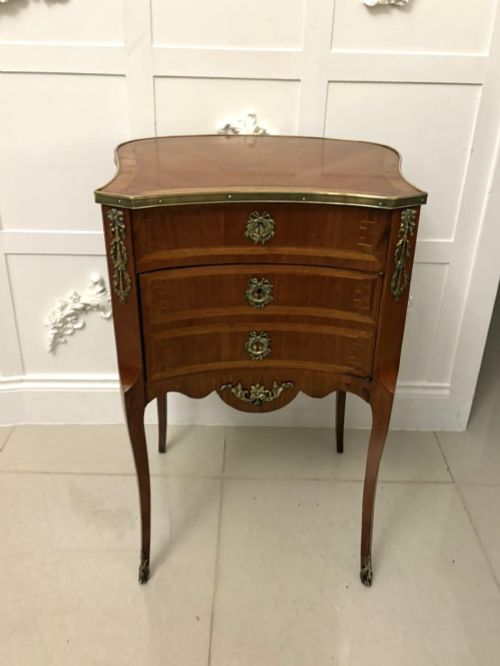
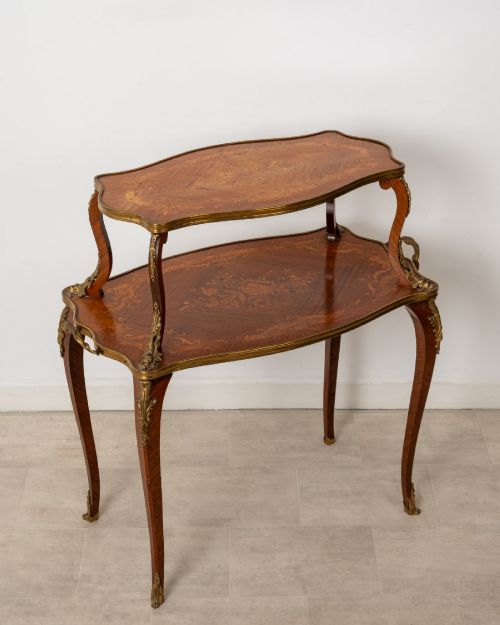
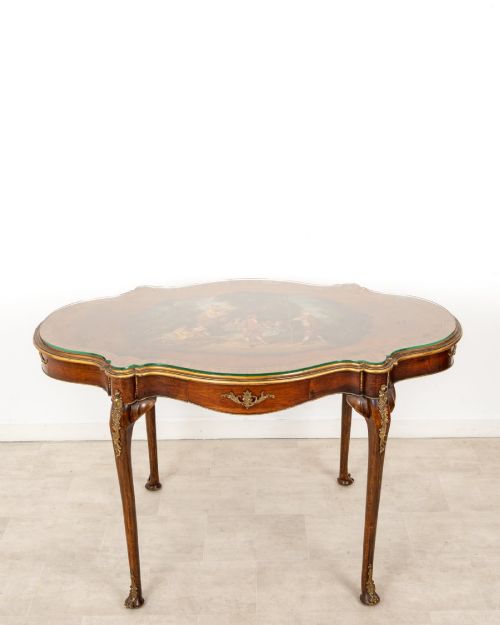
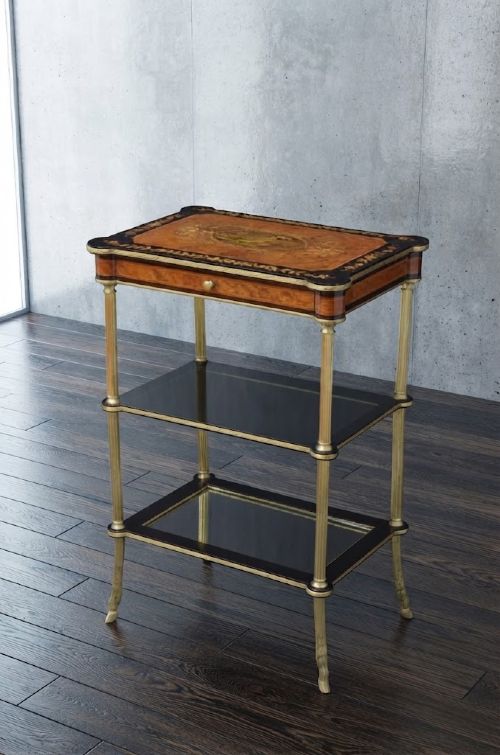
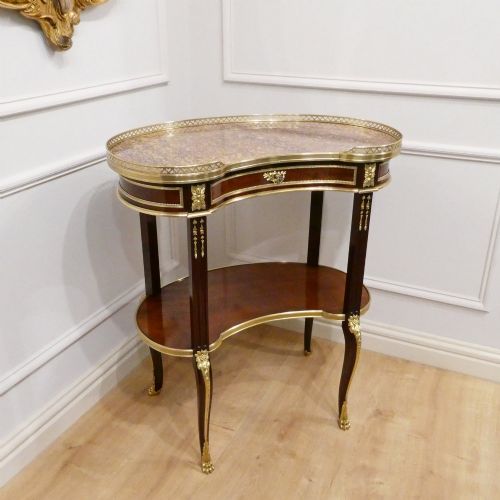
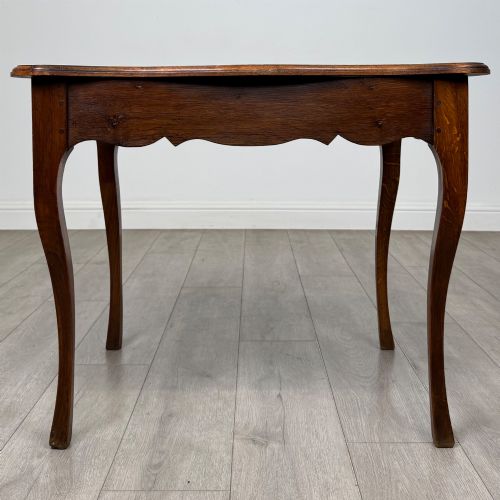
A french occasional side table encompasses a diverse group of compact furniture forms including freestanding centre tables, gueridons, two-tier etageres, and kidney-shaped lamp tables. These pieces served adaptable functions in historic reception rooms, acting as lamp stands, display surfaces, or writing desks.
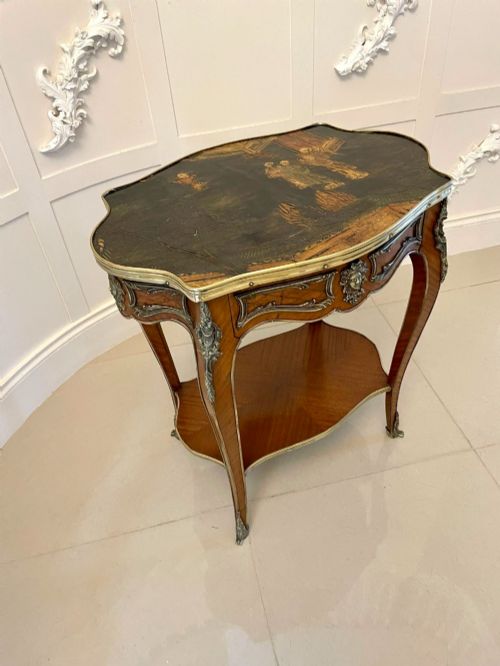
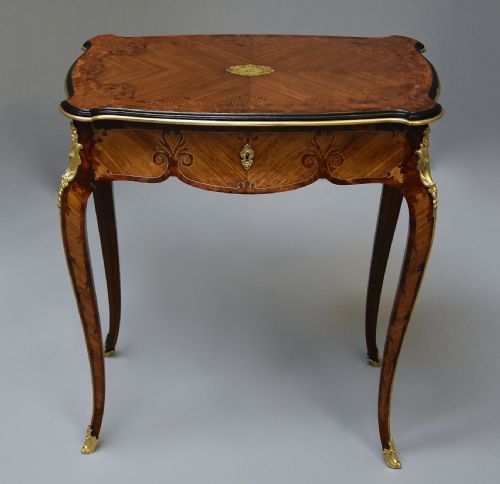
The selection on this page leans heavily toward nineteenth-century nineteenth and twentieth-century examples displaying Louis XV and Louis XVI revival tastes. You will regularly find pieces featuring serpentine contours, cabriole legs, and varied tiers suited to modern placement beside seating.
Origins range across provincial workshops and sophisticated metropolitan cabinet makers working in mahogany, kingwood, and walnut. Their scale remains intimate, designed to fit minor wall spaces and corners while providing decorative presence.
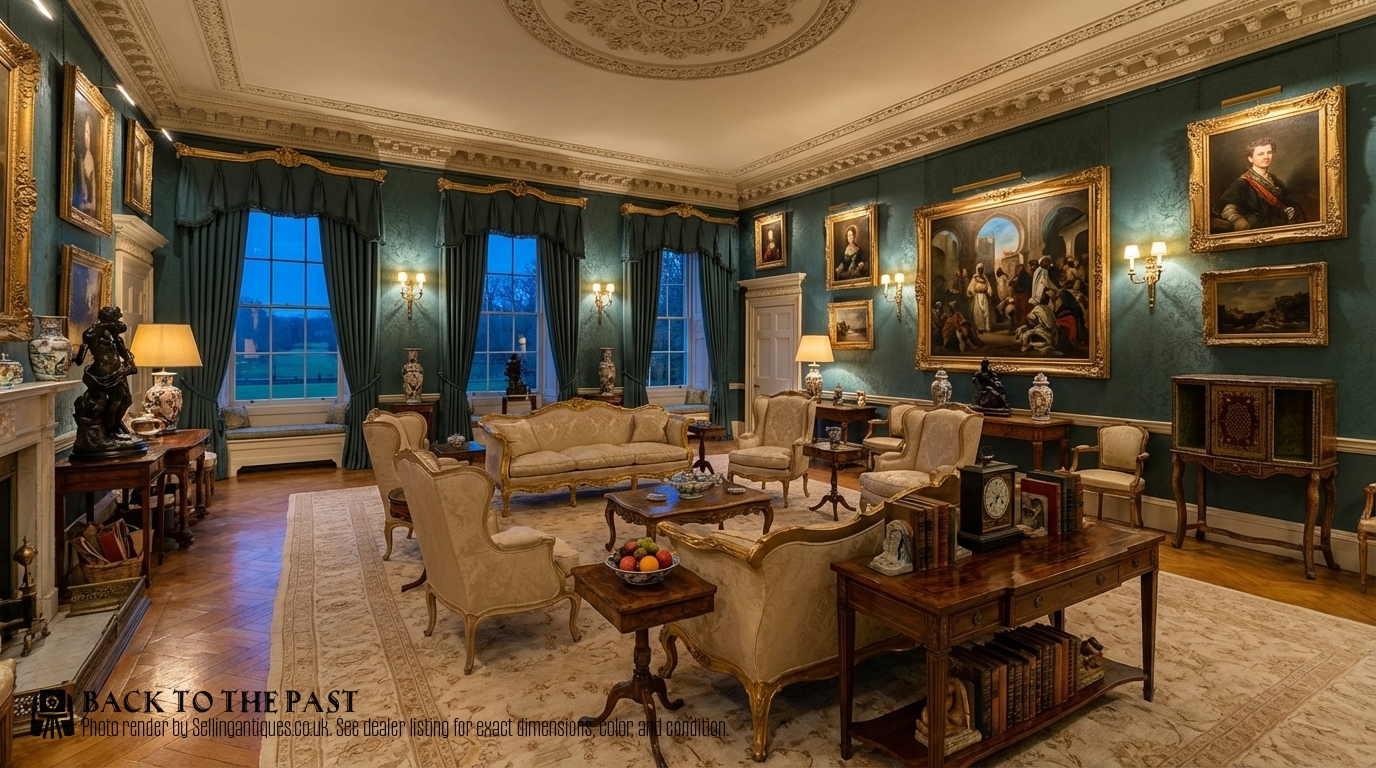
How They Were Made
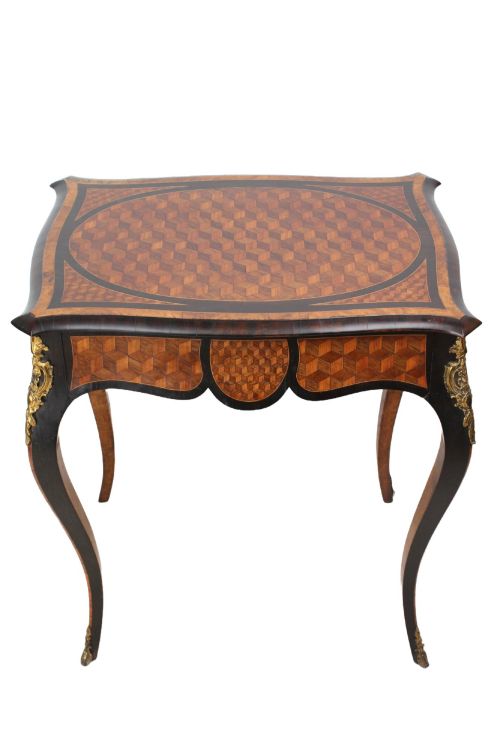
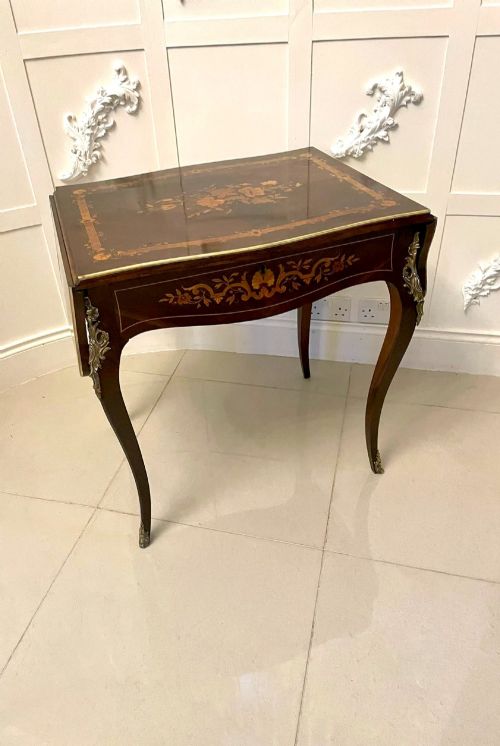
Construction relies on sturdy hardwood carcases of mahogany, walnut, or oak overlaid with decorative veneers such as kingwood, rosewood, and tulipwood. Individual pieces frequently incorporate elaborate marquetry and geometric parquetry patterns arranged across tabletops and shelves.
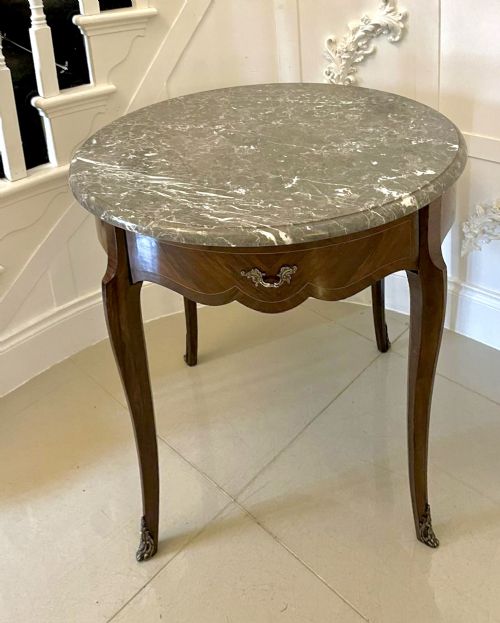
Cast bronze and ormolu mounts, toes, and edgings provide structural protection and ornamental contrast against the polished wood surfaces. Marble tops, inset leather writing panels, and mirrored tiers appear frequently to introduce varied textures and resilient working areas.
Materials span exotic veneers, Ormolu mounts, veined marble tops, and mirrored glass tiers.
What Varies in Quality
Quality rests on the crispness of the bronze or ormolu mounts and the complexity of the wood veneers. Finely cast mounts with sharp chasing separate superior workshop production from routine commercial output.
The precision of the marquetry cutting and the choice of dense, highly figured timbers dictate the tier of craftsmanship. Integrated mechanical actions, such as sophisticated mechanisms or adjustable tiers, indicate ambitious design by notable makers.
JAS Shoolbred·Maison Millet·Joseph-Emmanuel Zwiener
The French Occasional Side Table Glossary
- Ormolu
- Gilded bronze cast and chased to ornament furniture mounts. This material provides metallic highlights against dark cabinet woods.
- Marquetry
- Inlaid wood veneers forming pictorial or floral designs. Artisans assemble contrasting tinted woods within the tabletop surface.
- Parquetry
- Geometric wood inlay forming repeating patterns such as cubes or chequers. This technique emphasises the natural grain variations of kingwood and walnut.
- Etagere
- A set of open display shelves supported by slender columns. These tiered stands allow for the arrangement of decorative objects.
French Occasional Side Table: Frequently Asked Questions
What is a gueridon table?
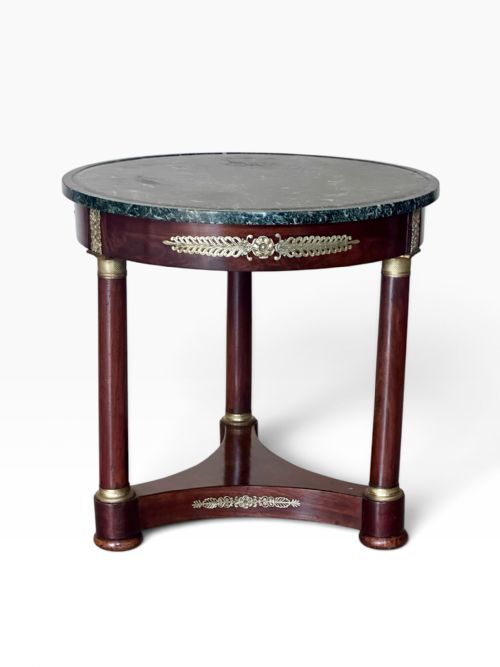
A gueridon is a specific circular form of French table usually supported by a single central column or tripod legs. They originated in the seventeenth century and remained popular throughout the nineteenth century as light serving or lamp surfaces.
These tables frequently incorporate inset marble tops with perforated metal galleries around the perimeter. Their compact footprint makes them particularly adaptable for use beside modern armchairs.
Where should I place an etagere?
An etagere provides multiple open tiers designed for displaying decorative objects, small collections, or books. Their vertical multi-shelf format allows them to occupy minimal floor space while offering significant display area.
These pieces work effectively in corners or against blank walls where a solid cabinet would appear too heavy. The mirrored tiers found on certain examples help to reflect light within smaller rooms.
Are marble tops original?
Many nineteenth-century French tables feature fitted inset marble slabs designed to provide a durable, heat-resistant surface for lamps and drinks. These marble tops are typically heavy and rest directly within a rebated wooden frame.
Veiled variations in the marble colour, such as white, grey, or onyx tones, correspond to the specific period and regional quarry sources utilised by the cabinet maker. The edge profile of the marble should match the contours of the supporting wood frame.