
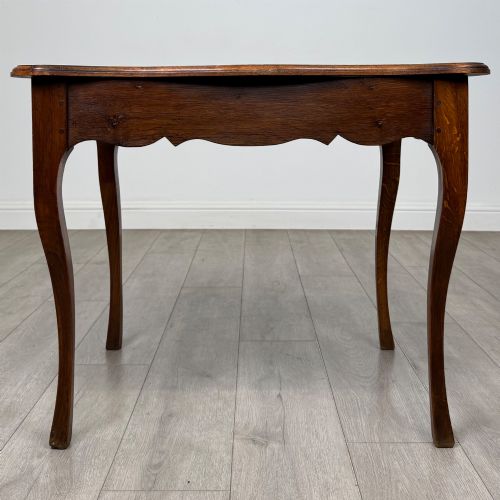
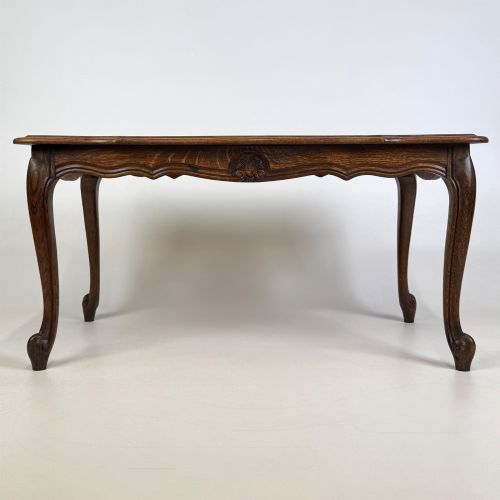
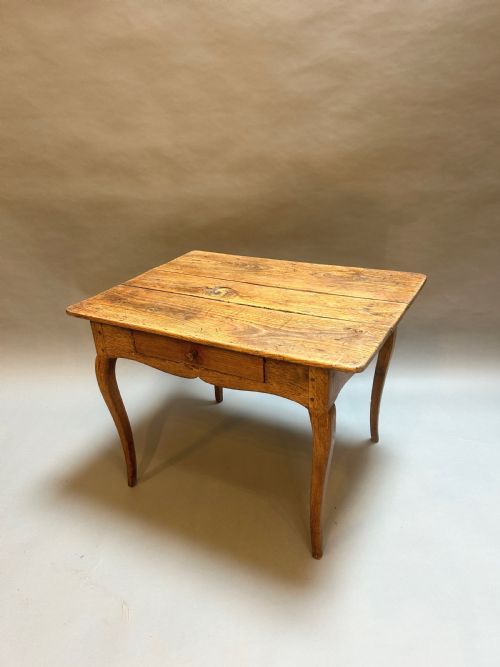


French Oak Occasional Table
These french oak occasional table pieces offer a practical surface with honest grain, drawing collectors who appreciate provincial utility and understated timberwork.
French Oak Occasional Table
A french oak occasional table brings provincial warmth and utility into a modern room, serving multiple daily functions. When searching for this phrase, a buyer meets various forms including side tables, coffee tables, low tables, and centre tables.
The material evidence spans from the 18th century through the 19th century and Edwardian period up to the 1920s. Buyers are most likely to encounter 19th century and provincial examples featuring solid timber construction and simple rectangular or low proportions.
How they were made
Construction relies primarily on solid oak, supported by secondary timbers like pine and beech in concealed areas. Craftspeople shaped these tables using traditional joinery, often incorporating carved details or turned legs depending on the regional style.
Surface treatments vary from early dark finishes to bleached oak effects achieved in later periods. Additional hardware such as brass mounts or iron elements occasionally appears on specific pieces like folding or parquet variants.
Some models fold away neatly, proving that even 19th century French makers understood the eternal struggle of small living spaces.
What varies in quality
Quality separates along the lines of timber selection and the crispness of hand carving. Tables featuring older 18th century provenance or refined French provincial styling demonstrate superior joinery integrity compared to later standardised pieces.
The handling of surface finishes and the balance of proportions distinguish finer workshops from simpler country pieces. The integration of secondary woods and the preservation of original patination dictate the standing of individual tables.
The French Oak Occasional Table Glossary
- French Provincial
- A style originating from the regions outside Paris, reflecting practical local craftsmanship rather than court tastes. These pieces prioritise sturdy utility and modest regional ornamentation.
- Bleached Oak
- Timber treated to lighten its natural tone, a finish seen on specific 20th century pieces. This process highlights the open grain while offering a paler aesthetic.
- Parquet
- Wood flooring technique adapted for table tops, creating geometric patterns using small fitted blocks. It demands precise carpentry to ensure stability across the surface.
- Turned Legs
- Supports shaped on a lathe to create cylindrical, bulbous, or spiral profiles. This decorative technique appears across various 19th century and Edwardian tables.
French Oak Occasional Table: Frequently Asked Questions
How do I date a french oak occasional table?
Dating relies on examining the construction methods, tool marks, and overall proportions of the timber. Earlier pieces often display hand-sawn boards and pegged joinery.
Later Edwardian or 20th century examples show more uniform machining and standardised hardware. Comparing the style to documented regional periods helps narrow down the decade of manufacture.
Where were these tables used originally?
These tables served various practical functions in provincial homes, farmhouses, and chateaux across France. They acted as movable surfaces for dining, writing, or holding lighting.
Their adaptable scale allowed owners to move them between rooms as daily household needs shifted.
How do I care for antique oak?
Maintaining antique oak involves keeping the timber away from direct heat sources and rapid humidity changes. Regular dusting with a dry cloth prevents particle buildup in the grain.
Applying a traditional beeswax occasionally nourishes the wood and preserves the natural surface patination without sealing it.