




French Oak Linen Press
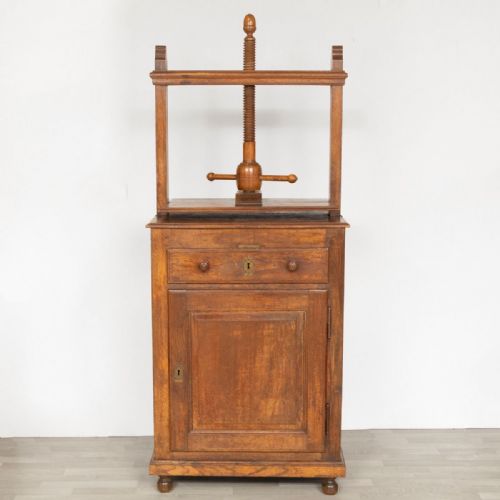
These french oak linen press pieces are robust storage items built to hold textiles, appearing frequently as armoires and cupboards from the eighteenth and nineteenth centuries.
French Oak Linen Press
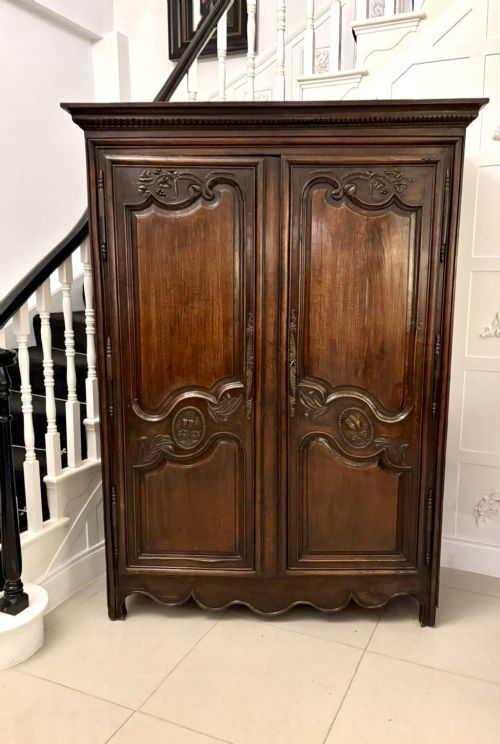
When searching for a french oak linen press, buyers encounter a variety of substantial timber storage forms ranging from seventeenth-century provincial armoires to nineteenth-century Breton cupboards and two-piece cabinets. The most common iteration on this page is the tall oak armoire or wardrobe, often featuring internal hanging rails or shelving adapted for modern linen storage.
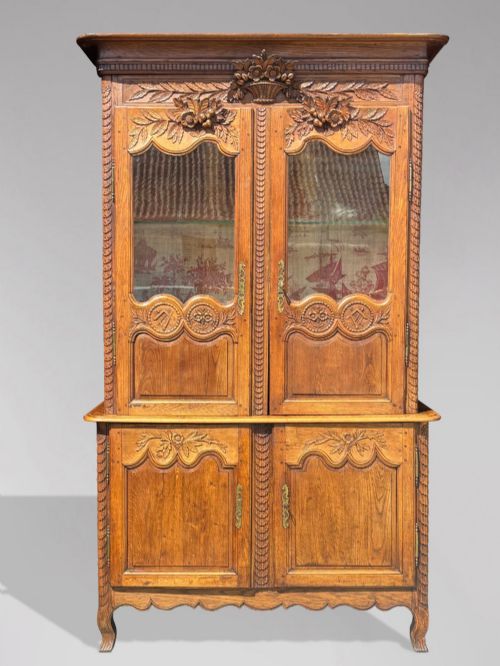
The selection also spans specialised formats such as the buffet deux corps, housekeeper's cupboards, and larder cupboards originating from regional departments in France. These pieces reflect diverse domestic needs of past centuries, combining architectural presence with deep internal capacity for household linens and garments.
Materials and construction
Construction relies predominantly on solid oak, chosen for its durability and dense grain, frequently shaped into panels using traditional joinery methods. Iron and brass hardware, including heavy hinges and key escutcheons, secure the large doors typical of these substantial wardrobe and cabinet forms.
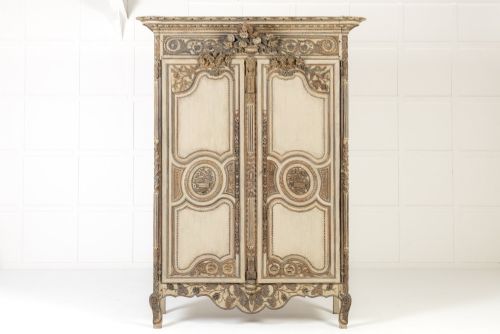
Surface finishes vary across the inventory, with examples showing bleached oak treatments, traditional painted surfaces, or natural waxed patinas built up over centuries. Structural elements like the flat pack armoire demonstrate early ingenuity in transportable furniture design without sacrificing timber integrity.
French Oak Linen Press Retail Price Guide 2026
Typical asking prices for french oak linen press among the pieces listed under this phrase on Sellingantiques today, from the lower quarter to the upper quarter. They describe what is for sale here now, not the wider market.
Distinctions in quality
Quality in these large storage pieces rests primarily on the crispness of hand-carved ornamentation and the architectural proportion of the cornices and panel work. Pieces displaying regional French Provincial or Louis XV styling with deeply moulded panels and well-balanced proportions sit at the higher end of the range.
The integrity of the timber and the retention of original hardware, such as brass hinges and working locks, significantly influence the overall standard. Finer examples maintain smooth door alignment and sound internal framing despite the seasonal movement inherent in heavy antique oak.
The French Oak Linen Press Glossary
- Armoire
- A tall wardrobe or cupboard with doors enclosing shelving or hanging space. They form the majority of large storage furniture in this category.
- Buffet deux corps
- A large two-piece cabinet featuring a smaller upper section set upon a deeper base cupboard. This regional form provides extensive storage for household goods.
- Bleached oak
- Timber treated to lighten the natural dark tones of the wood while retaining the grain texture. This finish appears frequently in later nineteenth and twentieth-century interpretations.
- Breton
- A regional style associated with the northwest of France, often characterised by heavy carved decoration depicting local figures or motifs. Pieces from this tradition display distinct regional identity.
- Vitrine
- A glass-fronted cabinet designed for displaying objects or linen collections. It occasionally appears paired with a commode base in seventeenth and eighteenth-century configurations.
French Oak Linen Press: Frequently Asked Questions
What is the difference between an armoire and a linen press?
An armoire is a tall standing cupboard originally designed for general garment storage, while a linen press typically includes internal sliding trays or shelves specifically intended for flat textiles.
In historical French listings, the terms frequently overlap as pieces were adapted over generations to serve multiple domestic storage functions.
How do I date an antique oak piece?
Dating relies on examining construction techniques, joinery marks, iron or brass hardware styles, and the specific design motifs characteristic of periods like the Louis XV era or the seventeenth century.
Tool marks left by hand-adzes and saws provide clear physical evidence of the manufacturing period before industrial machinery standardisation.
Will these large cupboards fit into modern rooms?
Many French provincial items were built with considerable height and depth to accommodate substantial volume, requiring careful measurement of ceiling clearance and access doorways.
Some historical examples, such as flat pack variants, were intentionally constructed to dismantle for easier transport and assembly within domestic spaces.
How should I care for antique oak timber?
Maintaining oak furniture involves keeping pieces away from direct heat sources and sudden humidity changes to prevent timber splitting or warping over time.
Applying a traditional beeswax polish periodically helps nourish the wood surface and preserves the natural patina developed across centuries.