
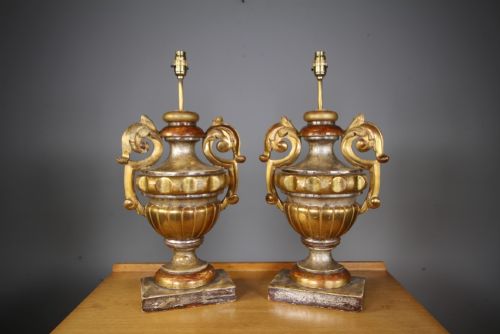

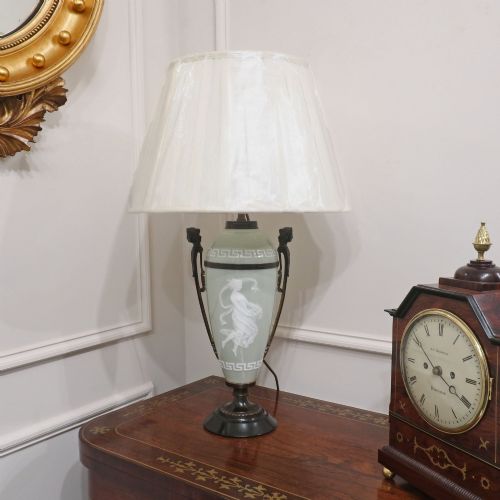
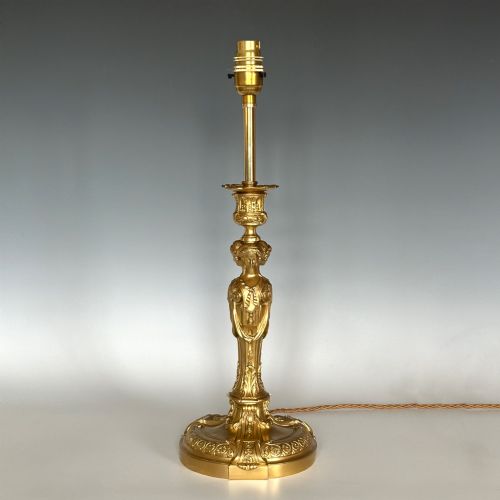
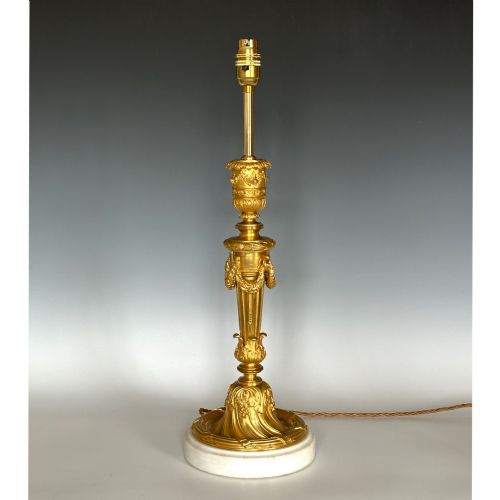
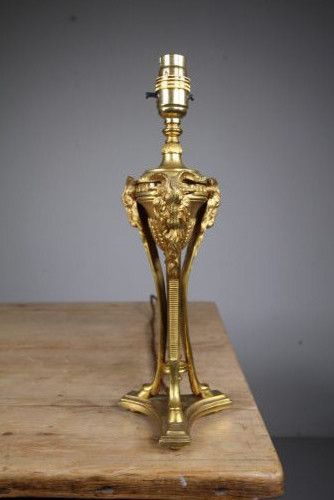
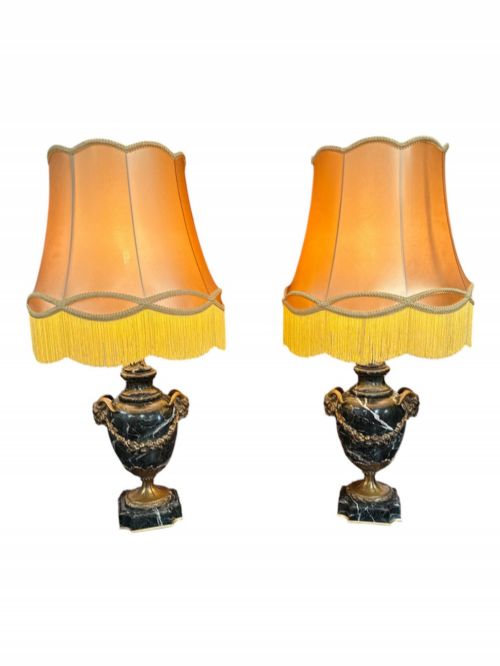
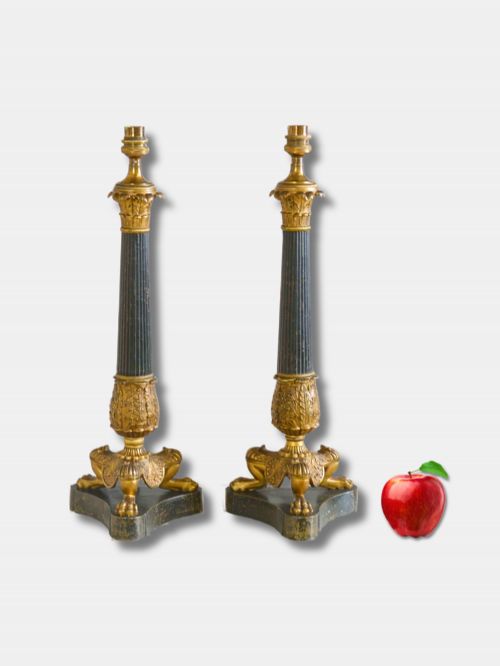
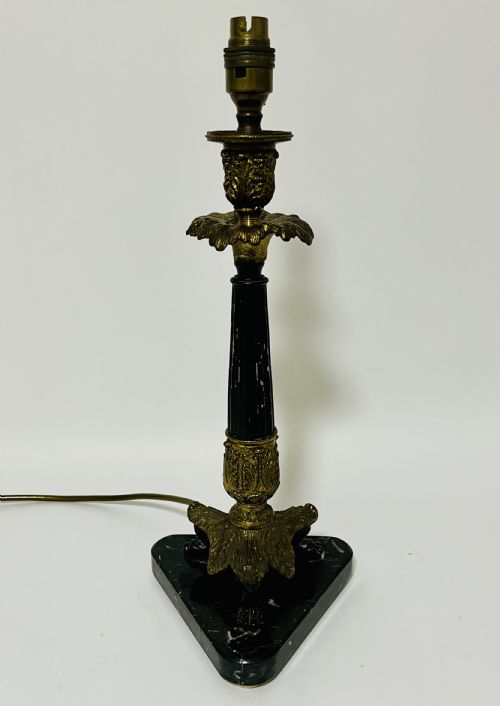
French Neoclassical Table Lamp
A french neoclassical table lamp brings classical architectural proportion and rich metals into a room with understated authority.

Identifying these pieces
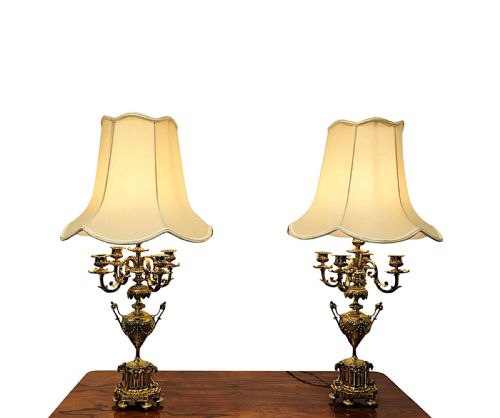
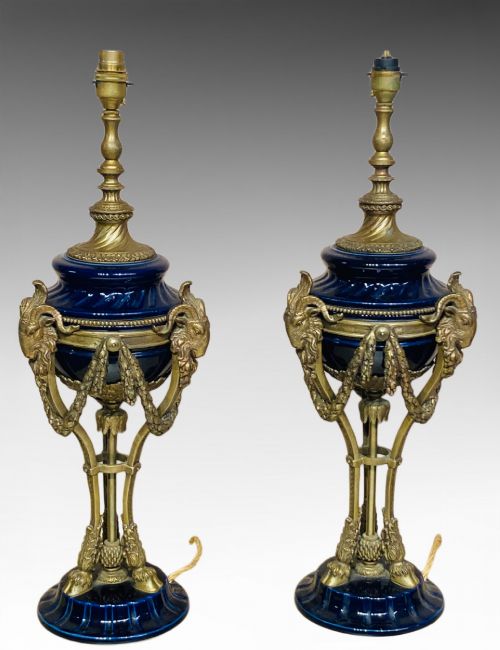
A french neoclassical table lamp draws on classical antiquity, Louis XV style, Louis XVI revival, and Empire design vocabulary. These pieces combine cast metals and stone bases to create formal lighting for sophisticated interiors.
You will most commonly encounter pieces dating from the early decades of the twentieth century, including revival works produced around 1900, 1910, 1920, and 1930. These later interpretations capture the decorative weight of earlier centuries through traditional foundry methods.
The forms range from single standards to twin branch configurations, frequently incorporating decorative mounts and fabric shades. Each object functions primarily as a decorative accent while providing functional illumination.
Materials and construction
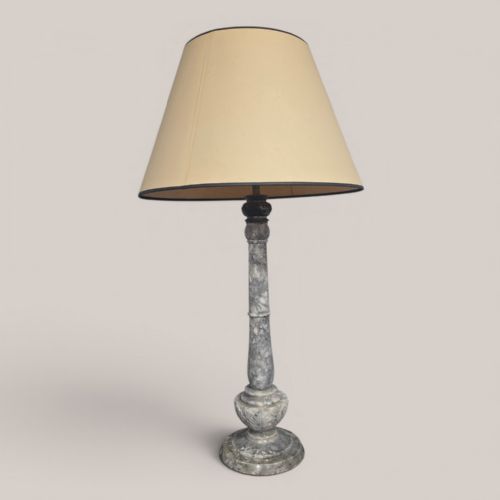
Foundries utilised brass, bronze, gilt bronze, and ormolu to cast the primary metal components. Carved giltwood also appears among the listings, alongside solid carved onyx and marble bases that provide stability and textural contrast.
Surface treatments involve original gilding, bronzed patination, and polished metal finishes applied to cast components. Metal mounts are secured to stone plinths using traditional mechanical fasteners appropriate to each period.
Retail Price Guide 2026
Typical UK retail prices for french neoclassical table lamp, calculated from the Sellingantiques database of over a million retail prices indexed since 2003. This retail price guide relies exclusively on Sellingantiques data; no external sources or auction records are used, so the figures do not describe the wider market.
Current listings demonstrate a concentration of pieces from the 1920s, predominantly utilising brass, bronze, and onyx.
Assessing the craftsmanship
Quality rests in the crispness of the metal casting and the depth of the chased detail across ormolu and bronze surfaces. Superior examples display sharp architectural motifs and refined finishing that require considerable artisan labour.
The selection of materials dictates the overall character, with dense natural onyx and heavy gilt bronze marking the higher tier of production. Integration between the stone elements and metal mounts reveals the maker's structural precision.
The French Neoclassical Table Lamp Glossary
- Ormolu
- Gilded bronze produced by applying a mercury-gilt amalgam to cast bronze. This historic technique creates a warm, enduring golden surface finish.
- Empire style
- A neoclassical design movement inspired by ancient Roman and Greek aesthetics. It favours strong symmetry, military motifs, and rich patinated metals.
- Louis XVI revival
- A nineteenth and early twentieth-century decorative style emulating the restrained classical elegance of the French royal court. It employs straight lines, fluted columns, and classical ornamentation.
- Onyx
- A banded variety of chalcedony used for lamp bases and architectural ornamentation. Its natural translucence adds depth and weight to the composition.
Frequently Asked Questions
How do I date these lamps?
Dating relies on examining the casting techniques, wiring configurations, and stylistic markers such as Empire or Louis XV revival motifs. Twentieth-century interpretations often incorporate construction methods distinct from their nineteenth-century prototypes.
Material choices like onyx and specific patinations also help place a piece within the 1900 to 1930 production window.
Where should I place this lighting?
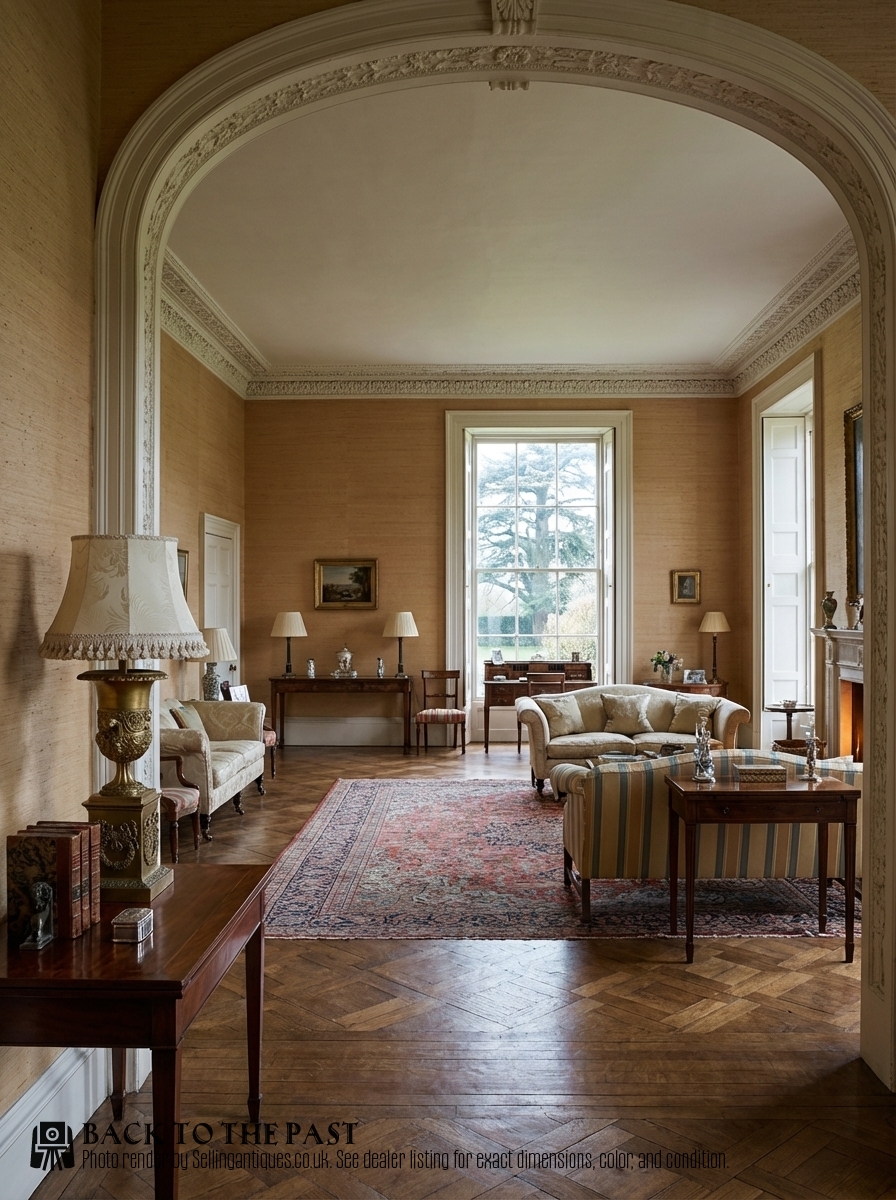
These lamps suit formal reception rooms, studies, or sideboards where their architectural presence can be fully appreciated. Their classical proportions anchor traditional interior schemes effectively.
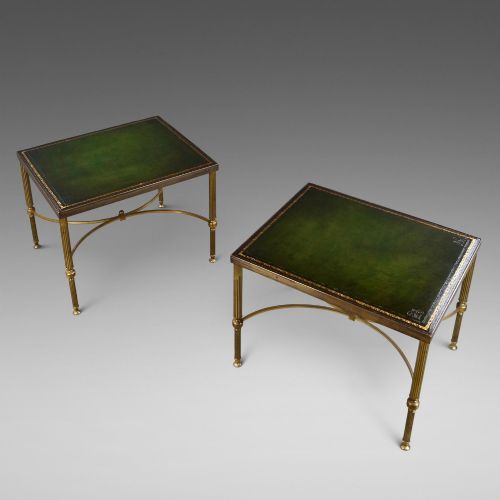
Pair them with complementary side tables to balance their substantial metal and stone construction.
Are these pieces wired for modern use?
Most examples have been adapted for contemporary electrical standards while retaining their historic components and structural integrity. It remains sensible to have any vintage wiring inspected by a qualified professional.
Replacement of flexible cords ensures safe integration into modern domestic electrical circuits.
What defines the Empire influence?
The Empire influence introduces martial motifs, classical urns, and heavy patinated bronze into the decorative repertoire. This aesthetic projects permanence and grand architectural scale.
Such designs contrast sharply with the more fluid and asymmetrical curves associated with earlier Louis XV styles.