



French Neoclassical Storage Cabinet
A french neoclassical storage cabinet brings architectural symmetry and refined proportion to a room, offering practical storage disguised in classical restraint.
French Neoclassical Storage Cabinet
When you search for a french neoclassical storage cabinet, you encounter case furniture rooted in 18th century design principles, drawing heavily on revival periods from the 19th and early 20th centuries. These items serve primarily as commodes, side cabinets, chests of drawers, and escritoires, providing enclosed shelving and drawer space.
The versions most frequently met on this page combine architectural forms with classical ornamentation, spanning the 18th century through to the 1930s. Pieces range from Dutch painted tall boys and country house linen cupboards to sophisticated French commodes and writing cabinets.
Makers and designers of these cabinets looked to antiquity for inspiration, resulting in balanced proportions, fluted pilasters, and restrained carving. They function today as focal points in hallways, dining rooms, and sitting rooms where concealed storage is required.
Materials and construction methods
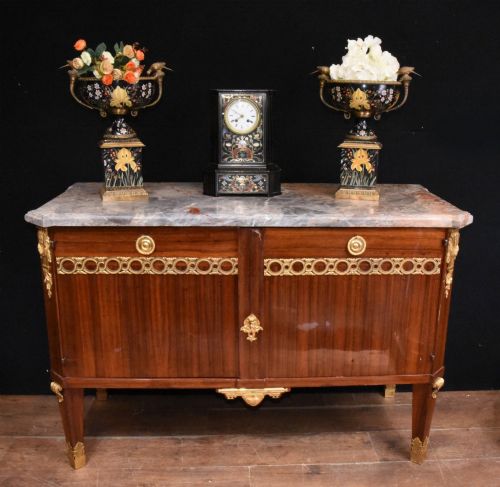
Cabinet makers utilised dense timbers such as mahogany and walnut as the primary structural carcase, often embellished with contrasting tulipwood veneers arranged in geometric parquetry. These woods provide both stability and a rich canvas for surface decoration.
Surfaces frequently feature polished marble tops that offer durability and a cool contrast to the warm wood tones below. Cast ormolu and gilt bronze mounts decorate corners, keyholes, and aprons, anchoring the neoclassical aesthetic.
French Neoclassical Storage Cabinet Retail Price Guide 2026
Typical asking prices for french neoclassical storage cabinet among the pieces listed under this phrase on Sellingantiques today, from the lower quarter to the upper quarter. They describe what is for sale here now, not the wider market.
Listings feature walnut, mahogany, and tulipwood timbers paired with marble and ormolu across the nineteenth and twentieth centuries.
Distinguishing the finer examples
The distinction between standard and superior pieces rests on the precision of the parquetry inlay and the crispness of the cast bronze or ormolu mounts. Finer cabinets display hand-chiselled detailing in the metalwork rather than mass-produced castings, alongside meticulously matched timber veneers.
Internal construction also separates the grades, with better pieces utilising solid secondary timbers for drawer linings and hand-cut dovetail joints. The integration of the marble top, ensuring a precise fit to the wooden profile, signals higher workshop standards.
The French Neoclassical Storage Cabinet Glossary
- Commode
- A low chest of drawers or cabinet designed for domestic storage. These pieces typically feature multiple drawer tiers and often support a stone top.
- Ormolu
- Gilded bronze mounts applied to the corners, feet, and drawer fronts of case furniture. This decorative technique adds metallic contrast to the timber surface.
- Parquetry
- Geometric patterns formed by inlaying small pieces of coloured wood veneer onto a surface. Cabinet makers use this method to create decorative panels on doors and drawers.
- Escritoire
- A writing cabinet featuring a fall-front or sloping lid that conceals small drawers and pigeonholes. It combines desk space with vertical storage.
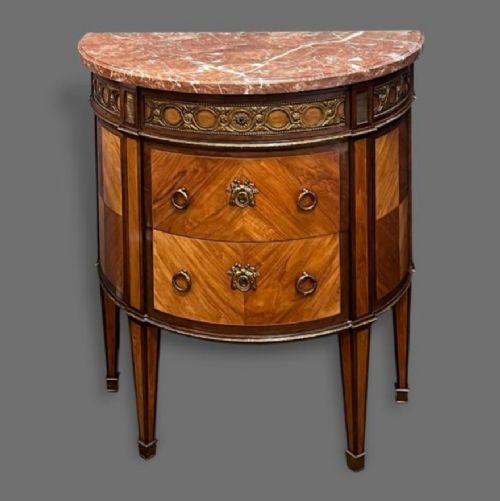
- Demi lune
- A half-moon shape used for the footprint and top of specific chest of drawers. This curved design softens the rigid angles of a room.
French Neoclassical Storage Cabinet: Frequently Asked Questions
Where should I place a side cabinet?
These cabinets suit dining rooms, hallways, and living spaces where surface display and concealed storage are both required. Their shallow depths often allow them to sit comfortably in narrower circulation areas without obstructing movement.
Position them against plain walls to let the timber grain and marble tops stand out as decorative elements within the interior.
How do I care for the marble top?
Wipe marble surfaces regularly with a soft, damp cloth and neutral soap to prevent staining from acidic liquids like wine or citrus. Avoid abrasive cleaners that can dull the polished stone finish over time.
Use coasters and protective mats beneath heavy decorative objects to prevent scratching the polished surface during everyday use.
Can these cabinets hold heavy items?
The sturdy timber carcases and solid internal shelving allow these pieces to hold books, heavy tableware, and household linens securely. The internal timber construction is engineered to support substantial domestic loads.
Distribute weight evenly across shelves and drawers to maintain the balance of the piece and protect older sliding mechanisms.
How do I distinguish revival periods?
Nineteenth-century revival pieces often employ heavier proportions and machine-assisted timber preparation compared to their 18th-century predecessors. Examination of internal drawer construction and fixing methods helps clarify the manufacturing era.
Look closely at the style of the ormolu mounts and the handling of the veneer, as these reflect the manufacturing standards of the specific decade.