




French Neoclassical Bronze Sculptures
These French neoclassical bronze sculptures bring classical antiquity and mythology into domestic interiors through figures, busts, and architectural models.
French Neoclassical Bronze Sculptures
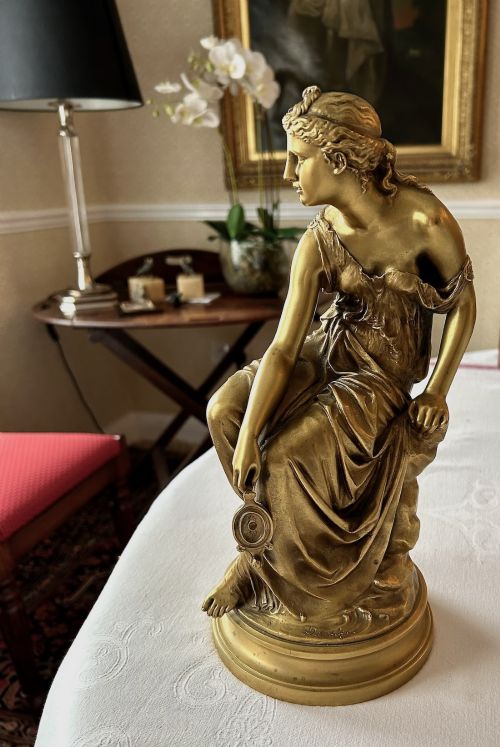
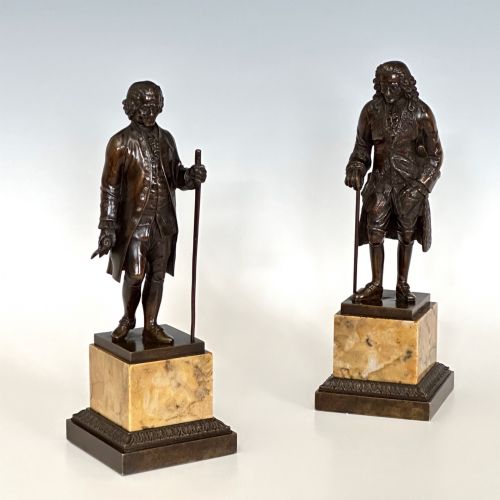
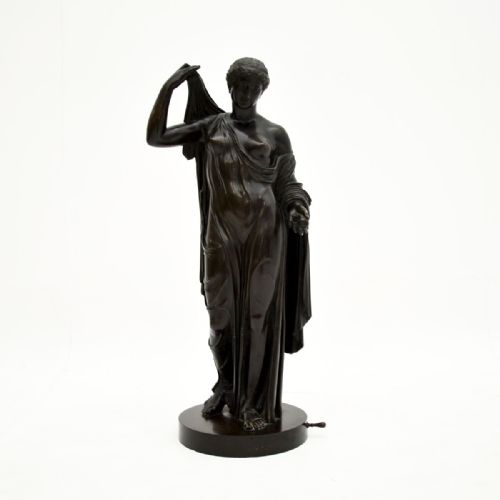
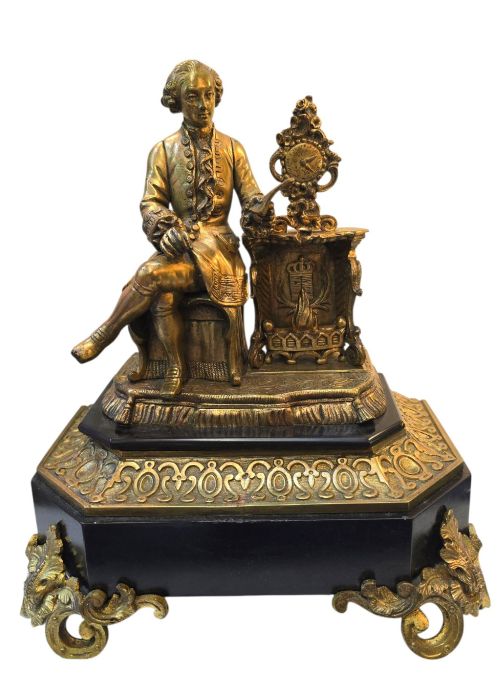
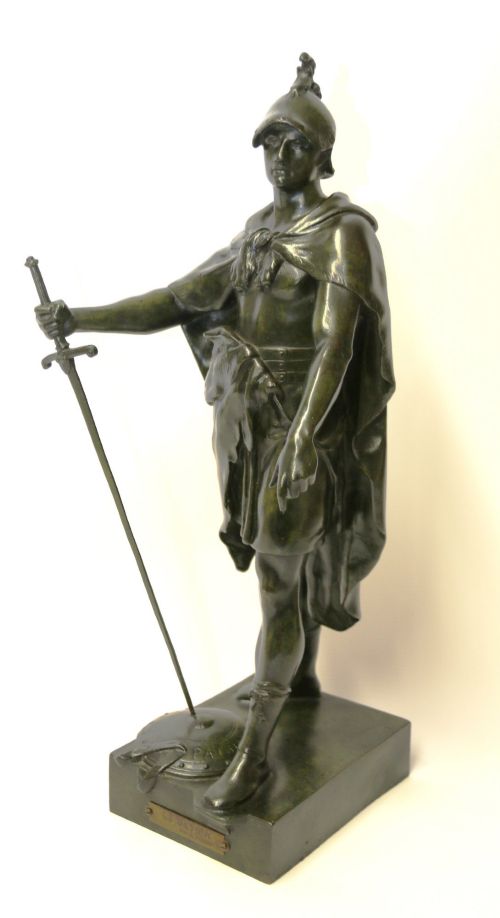
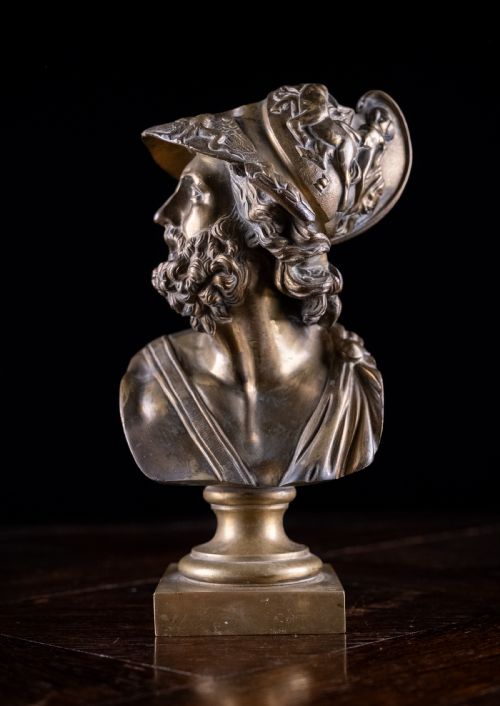
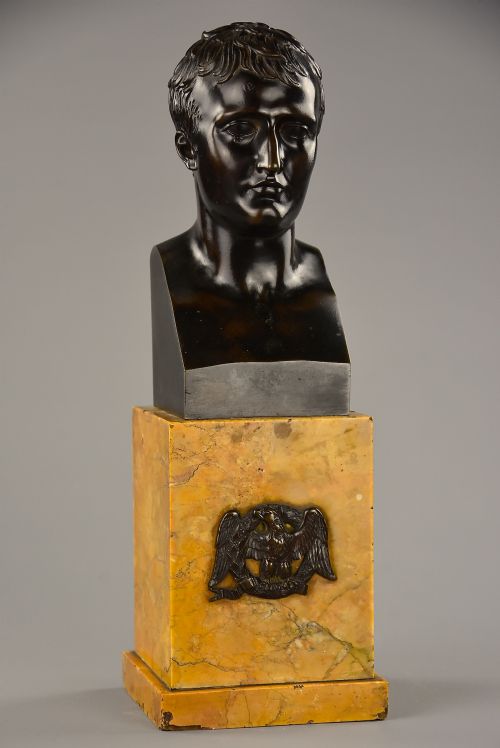
French neoclassical bronze sculptures draw directly on ancient Greek and Roman models, depicting figures from mythology, philosophy, and history such as Venus, Diana, Voltaire, and Napoleon. These works range from grand mantel pieces and cabinet figures to large library bronzes and architectural Grand Tour models.
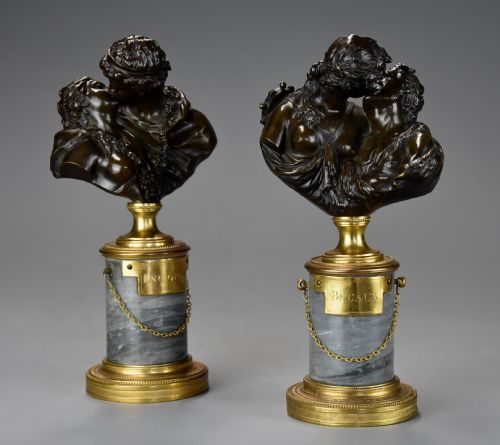
The objects appearing in this selection span the nineteenth century, including the Restauration period, the Louis XVI revival style, and late nineteenth-century foundry productions. Figures frequently stand upon polished marble plinths, granite columns, or ebonised wood bases mounted with cast ormolu collars.
Materials and casting methods
Foundries utilised traditional lost-wax or sand casting methods to produce these bronzes, allowing for intricate detail in drapery, musculature, and facial expressions. The resulting metal was then finished with chemical patination to achieve deep brown or dark green tones, or treated with mercury gilding to create bright ormolu.
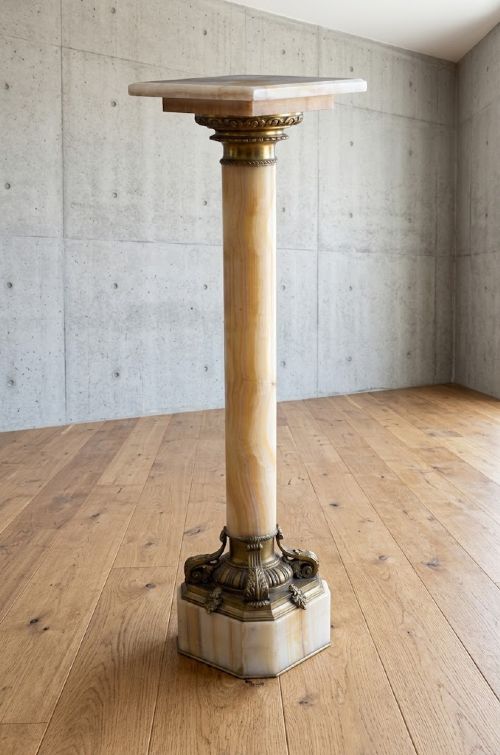
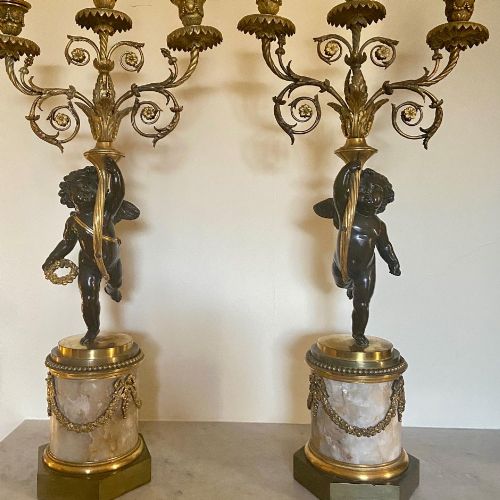
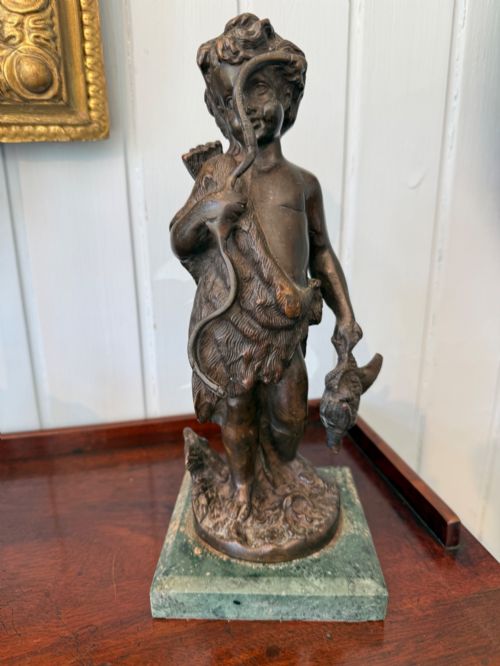
Compositions frequently combine cast bronze with contrasting natural materials such as white marble, fluorspar, and onyx. Bases and pedestals integrate these stone supports alongside wood and patinated metal mounts.
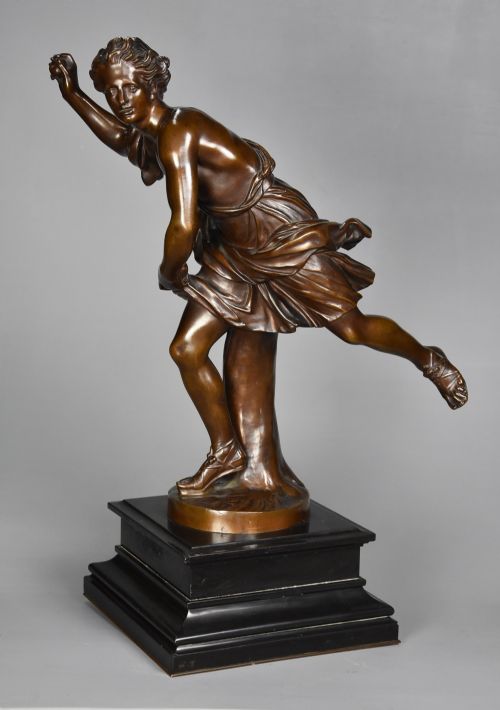
Pradier signed his nude dancer studies with absolute confidence, capturing mid-air motion in heavy metal.
Distinctions in craftsmanship
The sophistication of the patination and the quality of the supporting marble or ormolu mounts indicate the standing of the foundry. Pieces cast by established makers exhibit careful finishing on hidden surfaces and precise fit between the bronze figure and its stone base.
Etienne-Henri Dumaige·Ferdinand Barbedienne·Émile Louis Picault·Mathurin Moreau·James Pradier·Susse Freres
The French Neoclassical Bronze Sculptures Glossary
- Ormolu
- Gilded bronze, where a layer of gold amalgam is applied to a bronze base and heated to drive off the mercury. This technique produces a bright, durable golden finish found on mounts and decorative details.
- Patinated bronze
- Metal treated with chemical solutions to produce a controlled surface colour such as brown, black, or green. This finish protects the metal and defines the sculptural contours.
- Grand Tour
- A nineteenth-century practice where travellers collected small-scale bronze copies of classical antiquities and architecture as souvenirs. These reduction casts captured famous museum sculptures for private display.
- Lost-wax casting
- A metalworking process where a molten bronze is poured into a mould created by surrounding a wax model with refractory material. The wax is melted out to leave a cavity for the metal.
- Directoire
- A transitional French design period preceding the Empire style, characterised by restrained classical geometry and simplified ancient motifs.
French Neoclassical Bronze Sculptures: Frequently Asked Questions
How were these bronzes displayed in nineteenth-century homes?
Owners placed these sculptures on mantelpieces, library tables, and specialised marble pedestals to signal classical erudition and refined taste. They served as focal points in reception rooms alongside clocks, candelabra, and porcelain.
Larger figures stood in entrance halls or libraries, while miniature Grand Tour bronzes occupied cabinets and desks as objects of quiet contemplation.
What is the difference between patinated and gilt bronze?
Patinated bronze uses chemical treatments to achieve dark brown, black, or greenish surface tones that highlight sculptural form through shadow and contour. Gilt bronze, or ormolu, involves applying gold to the metal surface to create a brilliant golden lustre.
Many nineteenth-century pieces combine both finishes, using gilt highlights on drapery or ornaments against a dark patinated body.
How do I identify a Grand Tour bronze?
Grand Tour sculptures are typically reduced-scale models of famous ancient statues, temples, or triumphal arches encountered by travellers in Italy. They are characterised by accurate proportions and a portable size suited for nineteenth-century luggage.
These souvenir pieces frequently rest on simple marble plinths and date from the mid to late nineteenth century.
How should I care for a antique bronze sculpture?
Maintain the surface by gently dusting with a soft, dry brush to prevent particulate accumulation. Avoid using liquid cleaners, polishes, or abrasive cloths that can strip the original chemical patina or damage the underlying metal.
Keep the sculpture away from direct sunlight and excessive moisture to preserve the stability of both the bronze and any associated marble or wood bases.