


French Natural History Art
French natural history art brings the scientific observation of flora and fauna straight to your walls through detailed watercolours, engravings, and oils.
French Natural History Art
French natural history art encompasses botanical studies, animal portraits, and ornithological engravings created across multiple centuries. Buyers searching this phrase encounter framed prints, watercolours, and oil paintings that record the natural world with scientific precision.
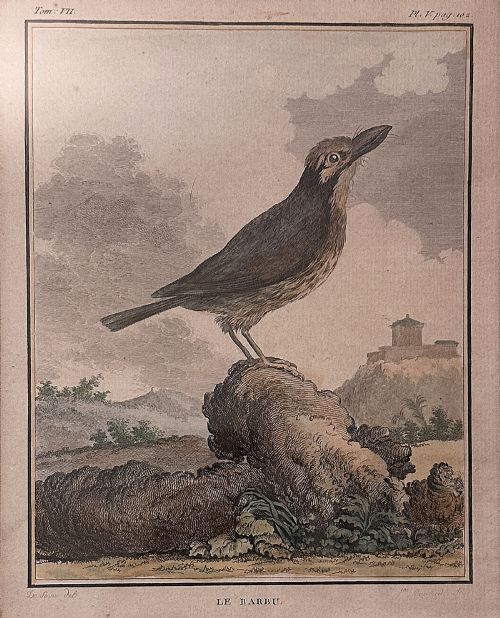
The selections available range from eighteenth-century Georgian engravings by notable illustrators to mid-twentieth-century watercolours on paper. Pieces frequently depict birds, mammals, and botanical subjects mounted in framed presentations ready for display.
Materials and methods
Works in this field rely on paper and canvas as the primary surfaces for watercolour, oil paint, gouache, and ink. Hand colouring adds vibrant pigment to engraved lines and lithographs produced during the eighteenth and nineteenth centuries.
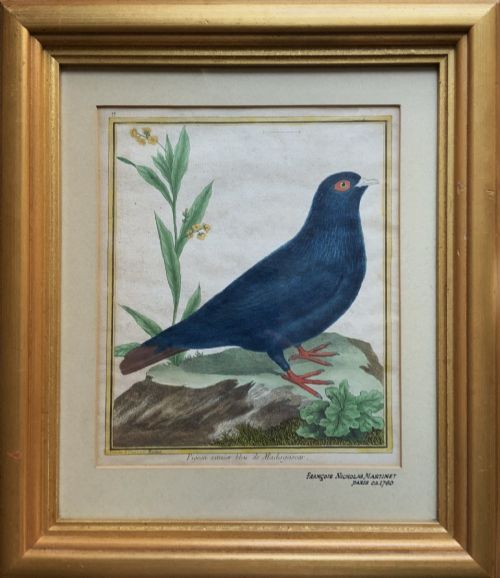
Framing often employs wood, gilt wood, and gold leaf to house and protect these delicate works on paper and canvas. The physical construction combines traditional printmaking techniques with hand-applied pigments.
Even a blue-faced parakeet requires proper framing.
Assessing quality
Quality rests in the precision of the draughtsmanship and the vibrancy of the surviving hand-coloured pigments on paper or canvas. Works attributed to established illustrators or their circles demonstrate superior anatomical and botanical accuracy.
The condition of the paper surface and the preservation of the original framing materials contribute significantly to the standing of each piece. Finer examples maintain their initial colour saturation without excessive fading or paper degradation.
François-Nicolas Martinet·Buffon·Paul-Louis Barruel·Pierre-Joseph Redouté·Audebert
The French Natural History Art Glossary
- Lithograph
- A print made from a design drawn on a flat stone or metal plate. This technique allows for detailed tonal gradations and colour printing.
- Engraving
- An image produced by cutting lines into a metal plate which holds the ink for printing. It provides sharp, enduring botanical and zoological outlines.
- Gouache
- An opaque water-based paint that gives a heavier, more solid colour coverage than transparent watercolour. It appears frequently in floral and botanical studies.
- Botanical study
- A rigorous visual documentation of plant species focusing on scientific accuracy. These works record structural details of leaves, stems, and blossoms.
French Natural History Art: Frequently Asked Questions
How do I date these artworks?
Dating relies on the printing technique, paper characteristics, and stylistic conventions associated with periods like the eighteenth century or mid-century modernism. Inscriptions and attribution notes also assist in placing the work within a specific era.
Examining the framing style provides additional context, though many pieces have been reframed over time to suit modern interiors.
Are these pieces hand-painted?
Many examples combine printed base lines from engravings or lithographs with meticulous hand-applied watercolour or gouache. Other pieces, such as oil paintings and certain botanical studies, are entirely hand-painted on paper or canvas.
Close inspection under magnification reveals the brushwork or hand-colouring layered over the printed matrix.
How should I hang these?
Protect these works from direct sunlight to prevent the fading of watercolours, coloured inks, and paper supports. Display them in rooms with stable humidity levels to preserve both the art and the wooden or gilt frames.
Pairing complementary animal or botanical studies creates a balanced gallery wall arrangement.
What subjects are most common?
Avian subjects, including parrots, pigeons, and songbirds, feature prominently alongside botanical studies of flowers like amaranth and lilies. Mammals and primates also appear in historical plates and animal portraits.
These subjects reflect the scientific curiosity and natural philosophy of French collectors and naturalists.