





French Modernist Landscape
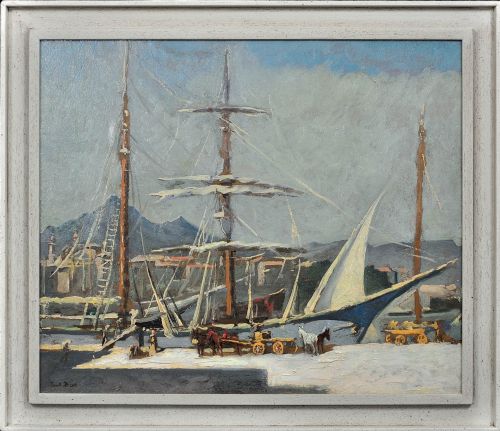
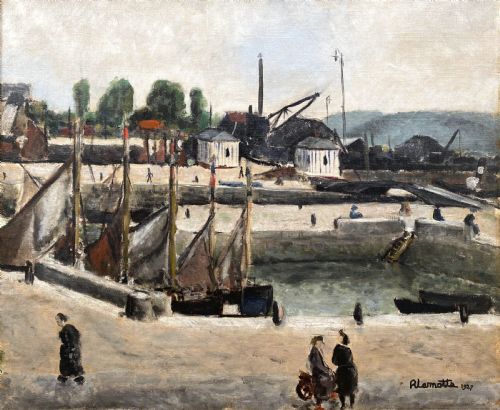
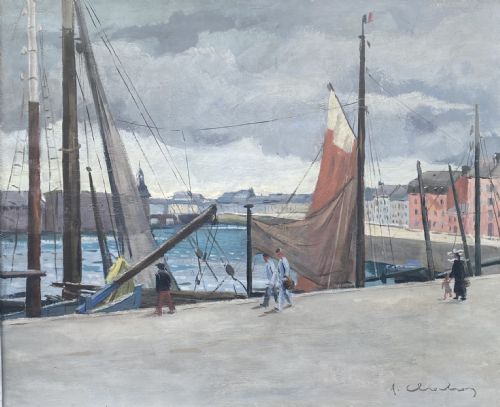
When you want a french modernist landscape, you are looking at oil and gouache works capturing mid-century vision across canvas, paper and wood.
French Modernist Landscape
A french modernist landscape brings together twentieth-century painting traditions with subjects ranging from Mediterranean ports and Parisian cityscapes to rugged rural scenes. You will frequently encounter works originating from the 1920s, 1930s, 1940s, 1950s, and 1960s, reflecting shifts through Art Deco, Mid-Century Modernism, and 20th Century Realism.
The compositions on this page lean heavily toward oil paint on canvas and board, alongside gouache on paper and mixed media representations. Painters capture scenes such as the Alpilles in Provence, the cliffs of Normandy, and the quays of Paris with abstracted forms and dynamic brushwork.
Most pieces date from the interwar period through to the post-war decades, showing how artists balanced figurative elements with modernist abstraction. These artworks preserve the light and atmosphere of southern France, Brittany, and Mediterranean harbours through distinct regional colour palettes.
Materials and Techniques
Artists painted primarily with oil paint on stretched canvas, wooden boards, and paper mounted on canvas, building pigment layers that preserve texture and brush marks. Gouache on paper also appears frequently, offering matte surfaces and sharp graphic qualities suited to rapid gestural work.
Support materials range from traditional wooden frames and glass to heavy cotton canvas and paper, often housing the artist's original framing or mounting. Painters utilised these supports to experiment with form, applying heavy impasto or thin washes to define structural elements in landscapes and cityscapes.
French Modernist Landscape Retail Price Guide 2026
Typical asking prices for french modernist landscape among the pieces listed under this phrase on Sellingantiques today, from the lower quarter to the upper quarter. They describe what is for sale here now, not the wider market.
Some paintings arrive with historic gallery stamps on the reverse, proving they survived decades of artistic moving around.
Evaluating Quality and Execution
Quality rests in the handling of light, colour harmony, and the confidence of the brushwork within the modernist idiom. Stronger examples display a clear command of space and abstraction, where every stroke contributes to the dynamic tension of the composition.
The integration of the support material also dictates the success of a piece, whether through the preservation of original canvas texture or the crisp application of gouache on paper. Provenance and documented exhibition history further elevate certain works, linking them directly to known European artistic circles.
Paul Bret·Lilian Colbourn·Raymond Moritz·Gabriel Dauchot·Yves Brayer·André Raffin
The French Modernist Landscape Glossary
- Gouache
- An opaque water-based paint that dries to a matte finish. It allows artists to build vibrant, solid fields of colour on paper.
- Impasto
- Paint applied thickly to a canvas or board, leaving visible brush or palette knife marks. This technique adds physical texture and depth to the surface.
- Provenance
- The documented history of ownership of a work of art. It provides a reliable paper trail verifying authenticity and past exhibitions.
- Art Deco
- A design style of the 1920s and 1930s characterised by streamlined forms and geometric simplification. It heavily influenced modernist painters of the interwar period.
French Modernist Landscape: Frequently Asked Questions
What defines a french modernist landscape?
These paintings combine twentieth-century avant-garde techniques with traditional regional subjects like harbours, rolling hills, and city streets. They break away from strict academic realism to focus on colour, form, and personal expression.
You will see works spanning several decades, each capturing the distinct light and topography of locations from Provence to Paris through varied modernist lenses.
Are these paintings supplied framed?
Many pieces retain their period frames, ranging from simple wooden mouldings to styles contemporary with the date of creation. Framing helps protect the edges of canvas and paper works.
Check individual descriptions to see whether a specific painting includes its original frame or glass protection.
How do I care for oil on canvas?
Keep paintings away from direct sunlight and fluctuating humidity to prevent the canvas from warping and the paint from cracking. Dust the surface gently with a soft, dry brush.
Avoid using water or cleaning solutions on the paint surface, and consult a professional conservator for deeper cleaning needs.
What is the difference between oil and gouache?
Oil paint uses drying oils to bind pigments, offering a rich, workable surface that takes time to cure and holds heavy texture. Gouache is water-soluble and dries quickly to a flat, opaque finish on paper.
Both mediums allowed mid-century artists to experiment with abstraction while achieving entirely different visual textures.