

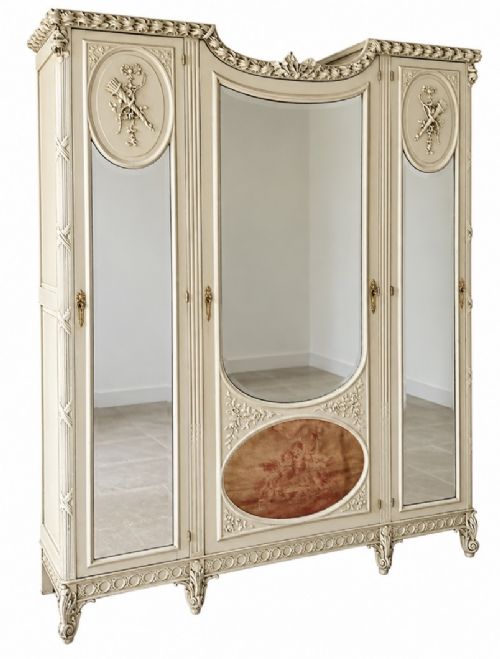
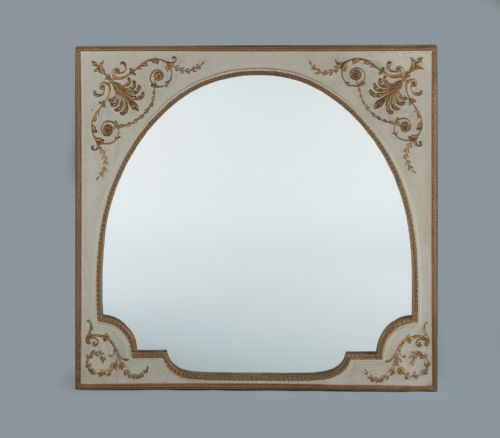
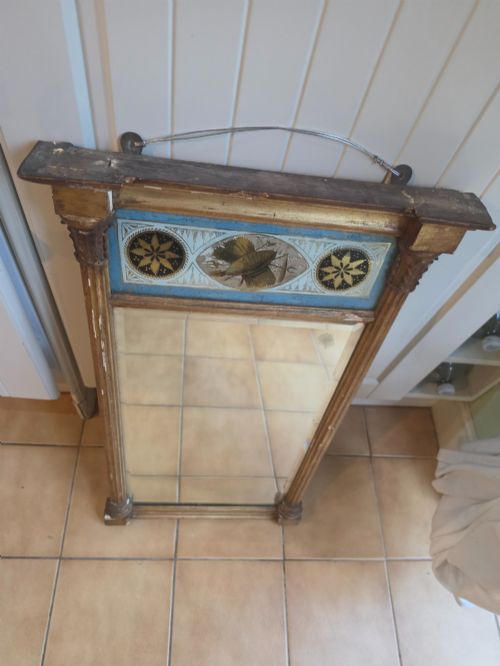
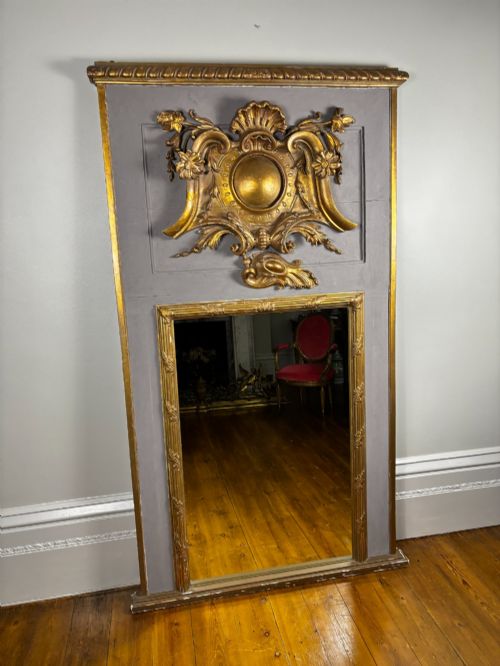
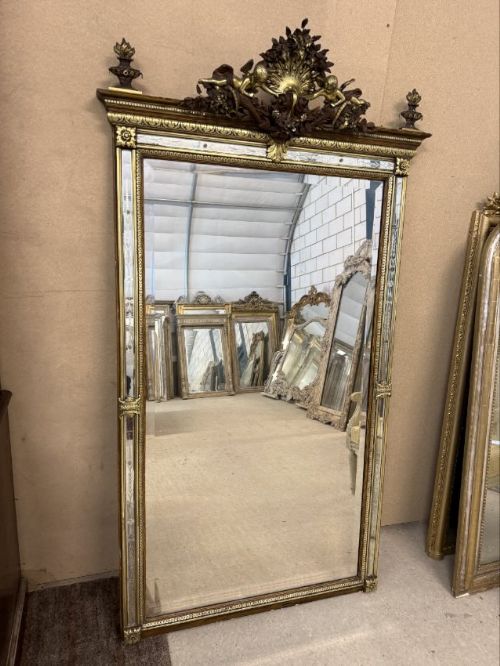
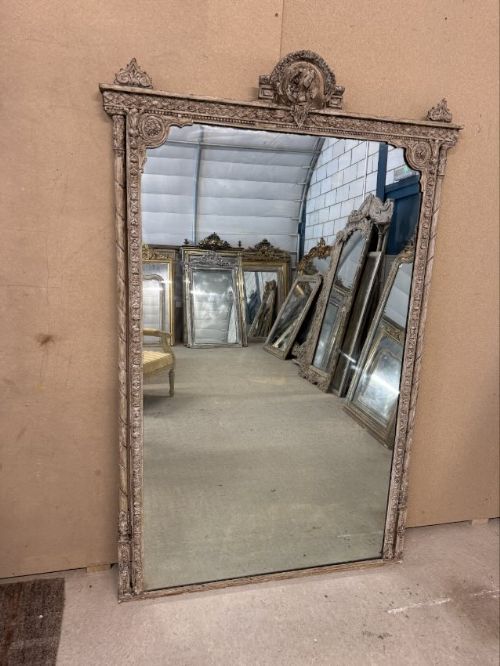
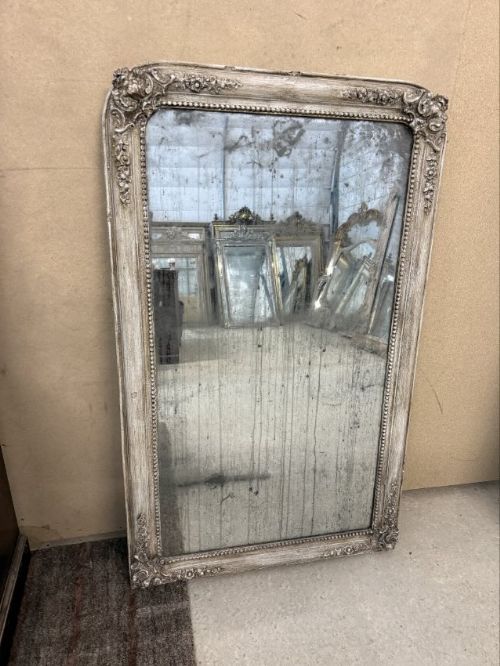
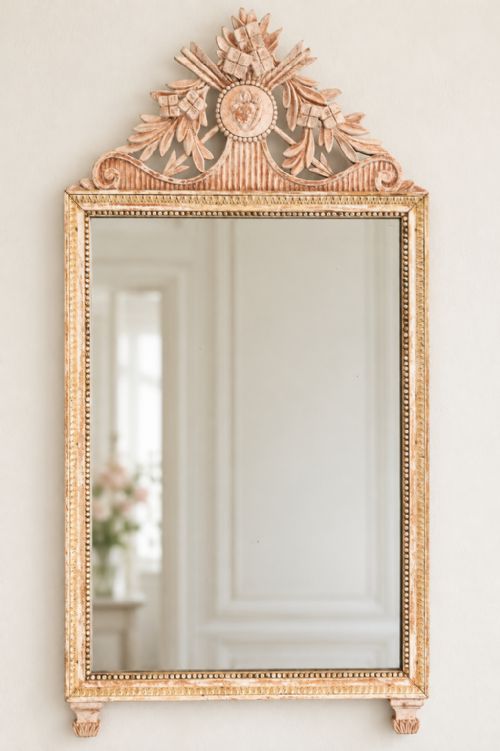
French Mirror with Painting
These French mirror with painting pieces combine reflective glass with oil on canvas panels, offering a decorative focal point for any interior.
French Mirror with Painting
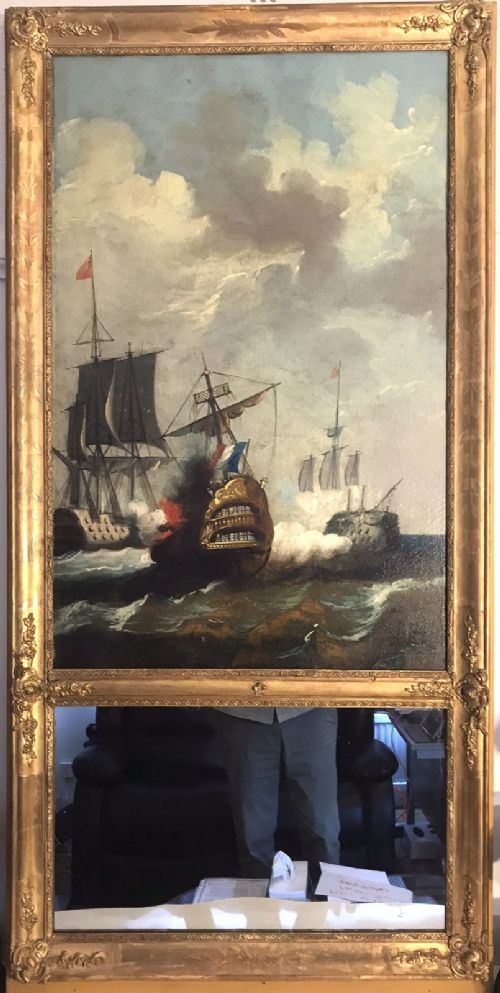
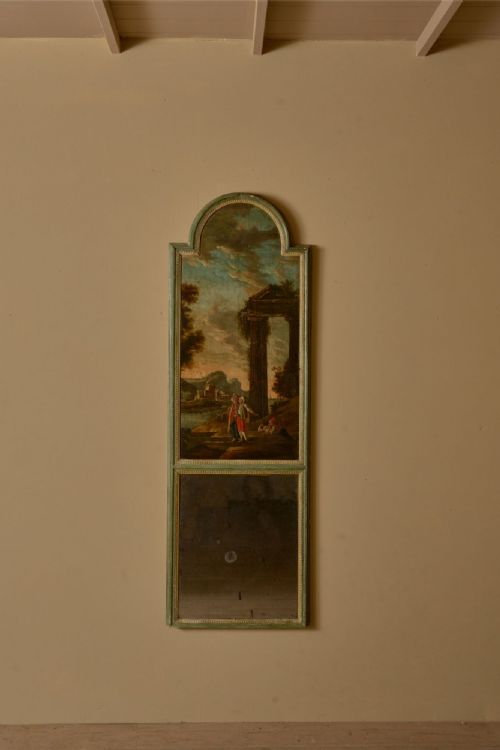
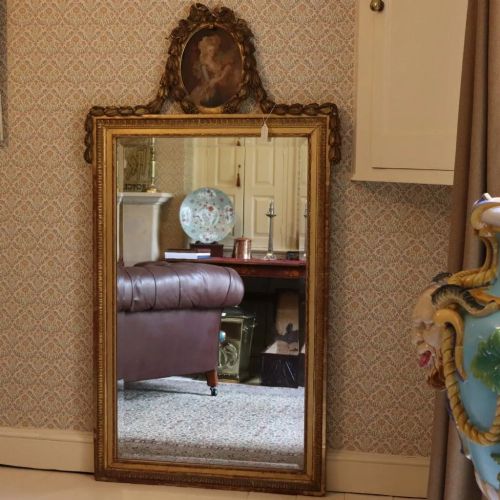
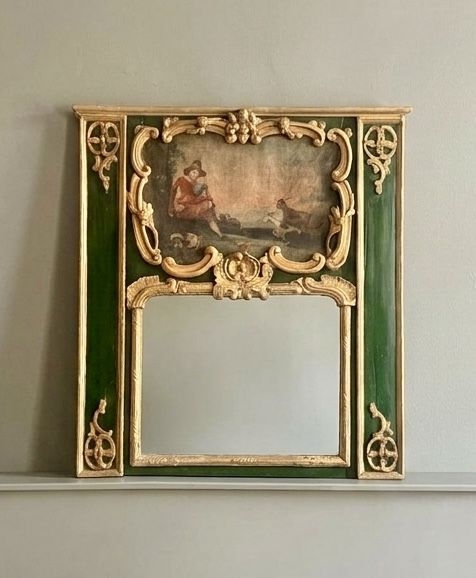
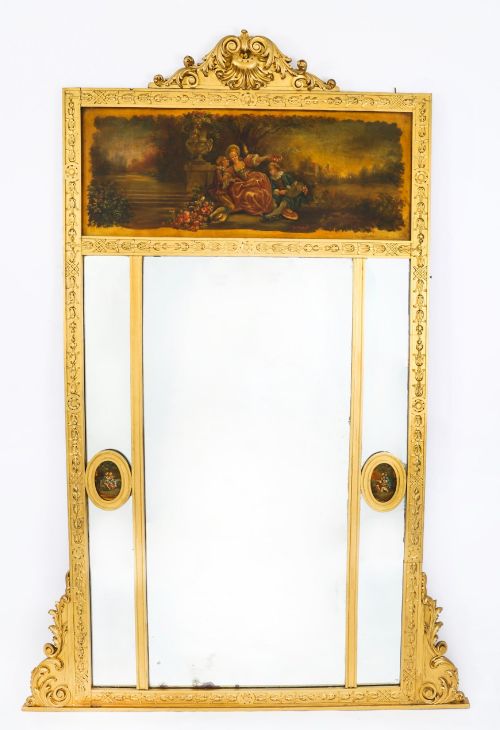
A French mirror with painting brings together decorative framing and fine art panels within a single wall-mounted or console-mounted fixture. These items frequently manifest as trumeau mirrors or pier mirrors, incorporating pastoral scenes, seascapes, or religious subjects directly above or beside the glass plate.
The pieces appearing on this page span the nineteenth century and early twentieth century, showing influences from French Empire, Belle Époque, and Rococo Revival styles. Buyers encounter both grand country house overmantels and more restrained provincial examples finished in giltwood or painted wood.
Beyond the standard wall-hanging formats, the selection includes integrated console tables and girandoles designed to function as complete architectural units. Each object reflects the aesthetic priorities of its period, balancing utility with decorative painting.
Materials and construction
Makers constructed the primary frames using timber such as walnut and oak, applying gesso to build up decorative relief mouldings before finishing the surfaces with gold leaf, paint, or bronze highlights. Glass plates were set within these rebates, often accompanied by separate stretched canvases or wooden panels prepared for oil paint.
Decorative panels utilised oil paint to render detailed subjects ranging from galleons at sea to classical figures like Bacchus. Brass detailing and applied ornaments frequently complemented the carved wood and painted elements.
French Mirror with Painting Retail Price Guide 2026
Typical asking prices for french mirror with painting among the pieces listed under this phrase on Sellingantiques today, from the lower quarter to the upper quarter. They describe what is for sale here now, not the wider market.
The listings show painted wooden frames finished in giltwood, gesso, and oil paint across the nineteenth century.
Assessing quality and execution
The standard of a French mirror with painting depends heavily on the artistic execution of the oil painted panel and the crispness of the carved gesso or wood relief. Finer examples display nuanced brushwork and well-proportioned compositions that harmonise with the surrounding frame rather than appearing secondary to the glass.
Original integration matters significantly, distinguishing pieces where the mirror plate and painted panel were conceived as a single ensemble from later assemblages. The depth of the gilding and the integrity of the underlying timber structure further separate standard production from superior craftsmanship.
The French Mirror with Painting Glossary
- Trumeau mirror
- A decorative wall mirror featuring an integral painted or carved panel set above the glass plate. These architectural elements originated in eighteenth-century French interior design.
- Giltwood
- Timber carved and coated with a thin layer of gold leaf over a prepared gesso ground. This finish provides a luminous surface that catches candlelight and natural illumination.
- Girandole
- A wall-mounted mirror featuring attached candle sconces that project forward from the frame. The reflective glass multiplies the light cast by the candles.
- Pier mirror
- A tall, narrow mirror specifically designed to hang on the wall space between two windows. They often coordinate with a matching console table placed directly beneath.
- Gesso
- A plaster-like mixture applied to wooden frames and moulded into relief decoration before gilding or painting. It allows for sharp, intricate architectural ornamentation.
French Mirror with Painting: Frequently Asked Questions
Where should I hang a trumeau mirror?
These pieces traditionally occupy the wall space above a mantelpiece, sideboard, or console table where their vertical proportions can anchor the room. Positioning them opposite a window helps maximise reflected light and showcases the integrated painting.
Ensure the wall structure can support the weight of the timber frame and glass plate. Fixing the piece securely to wall studs guarantees stability.
How do I clean the painted panel?
Dust the oil-painted canvas gently with a soft, dry artist's brush or microfiber cloth to remove surface particles. Avoid using water, chemical sprays, or household cleaning products on the paint layer.
Professional conservators should handle any deeper cleaning or consolidation of the paint surface. Regular gentle dusting prevents accumulation without risking the historic medium.
Are the paintings on canvas or wood?
Makers applied oil paint to both stretched canvas inserts and prepared wooden panels depending on the workshop and the period. These panels were then fitted securely into the upper section of the carved frame.
Examining the edges under magnification reveals whether the pigment rests on a woven textile or a solid wooden substrate. Both methods were standard practice across nineteenth-century workshops.
How can I date these mirrors?
Stylistic indicators such as Empire relief motifs, Belle Époque ribbon crests, or Rococo Revival curves provide the primary clues for determining age. The construction of the timber backing and the characteristics of the glass plate offer additional confirmation.
Comparing the decorative vocabulary with known period styles helps narrow down the decade of manufacture. Minor inconsistencies in hand-carved elements often point to authentic period production.