



French Military Figurine
A french military figurine brings nineteenth-century history into your study with character and presence.
French Military Figurine
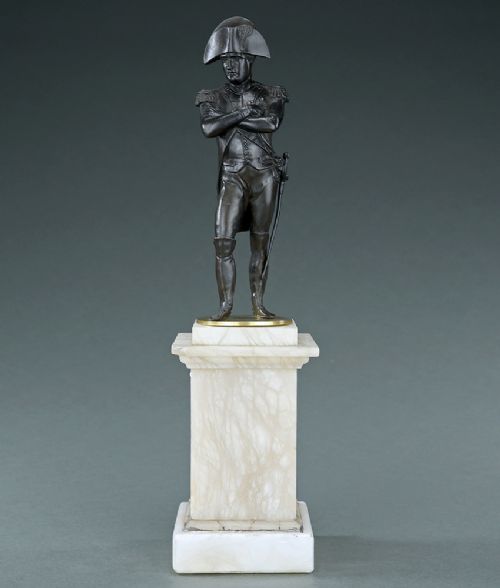
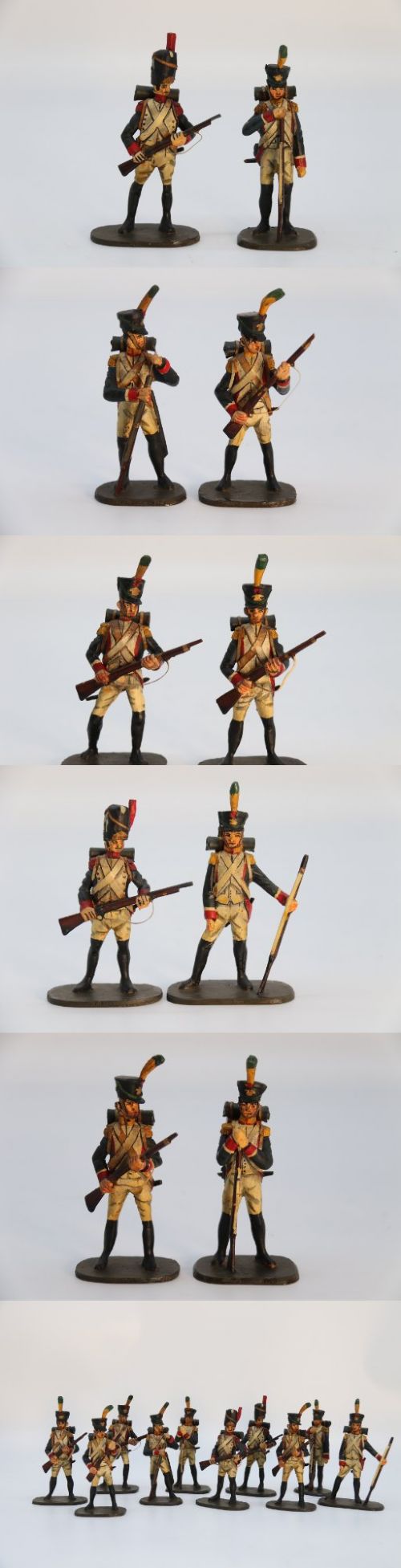
When you search for a french military figurine, you encounter nineteenth-century works depicting historical commanders and soldiers in bronze, spelter, and wood. These pieces range from cabinet-sized figures to larger statues mounted on marble bases.
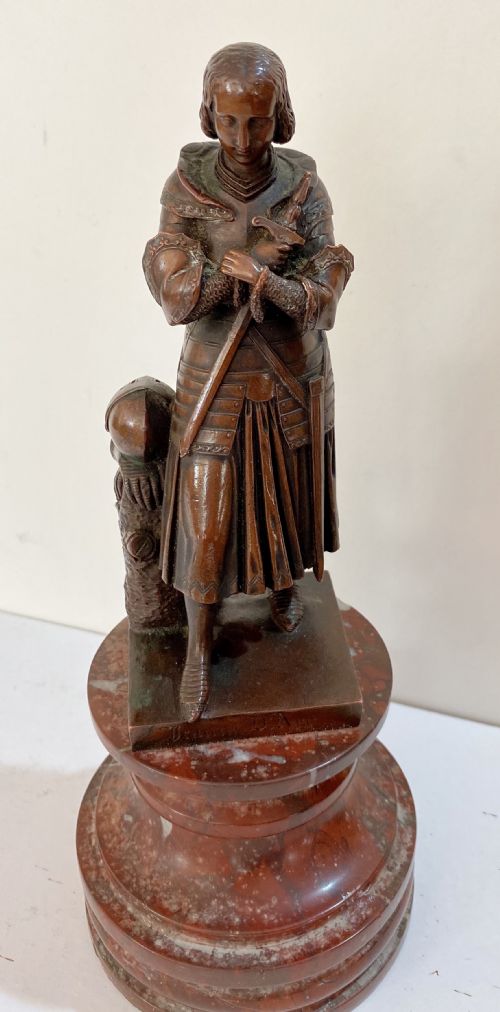
The selections on this page lean heavily towards Napoleon Bonaparte and Napoleonic era soldiers, alongside notable historical figures like Jeanne d'Arc and Saladin. French Empire styles and nineteenth-century Orientalist designs dominate the aesthetic across these objects.
Materials and construction
Foundry cast bronze forms the core of many works here, often finished with a dark patina or paired with green marble bases. Spelter appears as an alternative metal medium for larger soldier figures.
Wooden examples rely on hand carving and applied paint to render uniforms and details. Metal figures utilise casting techniques typical of nineteenth-century French foundries.
Saladin stands shoulder-to-shoulder with Napoleon on this page, proving that medieval commanders love a good nineteenth-century bronze revival as much as anyone.
Judging quality
Quality rests upon the crispness of the casting and the finesse of the finishing work on the metal or wood. Finer examples display sharp facial expressions and clear uniform details rather than soft edges.
The integration of materials matters greatly, particularly how well a bronze figure sits upon its marble plinth or how neatly hand-painted wooden elements retain their pigment over time.
Emile Guillemin·E.H. Dumaige·C.Anfrie
The French Military Figurine Glossary
- Spelter
- A zinc alloy frequently used as a less costly alternative to bronze for nineteenth-century figures. It often carries a painted or patinated finish to mimic heavier metals.
- Patina
- The surface sheen or coloration developed naturally over time or applied chemically by the foundry. It protects the metal and defines the contours of the uniform.
- French Empire
- A neoclassical design style spanning the early nineteenth century. It influences the formal military bearing and classical bases seen on these sculptures.
- Orientalist
- An artistic style from the nineteenth century focusing on Middle Eastern or North African subjects. It accounts for military figures depicting leaders from outside European campaigns.
French Military Figurine: Frequently Asked Questions
Which historical figures appear in this category?
Napoleon Bonaparte dominates the selection, appearing both on foot and on horseback across various nineteenth-century dates. Other notable subjects include Jeanne d'Arc and Saladin.
These subjects reflect nineteenth-century French interests in military history and notable historical commanders.
How do I date a french military figurine?
Dating relies on the stylistic markers of the nineteenth century, including Victorian influences and French Empire Revival aesthetics. Inscribed dates or foundry marks on the bronze offer the most precise references.
Materials such as spelter and specific patination styles also point toward late nineteenth-century production periods.
Where should I display a heavy bronze sculpture?
A substantial bronze or marble-based statue requires a sturdy surface capable of supporting considerable weight safely. Placing the piece away from direct foot traffic protects both the sculpture and its surroundings.
Ensure the display area provides stable humidity to preserve the metal patina and any attached marble components.