



French Military Figure
A French military figure brings the presence of nineteenth-century campaigns directly into a room through cast bronze and carved wood.
French Military Figure
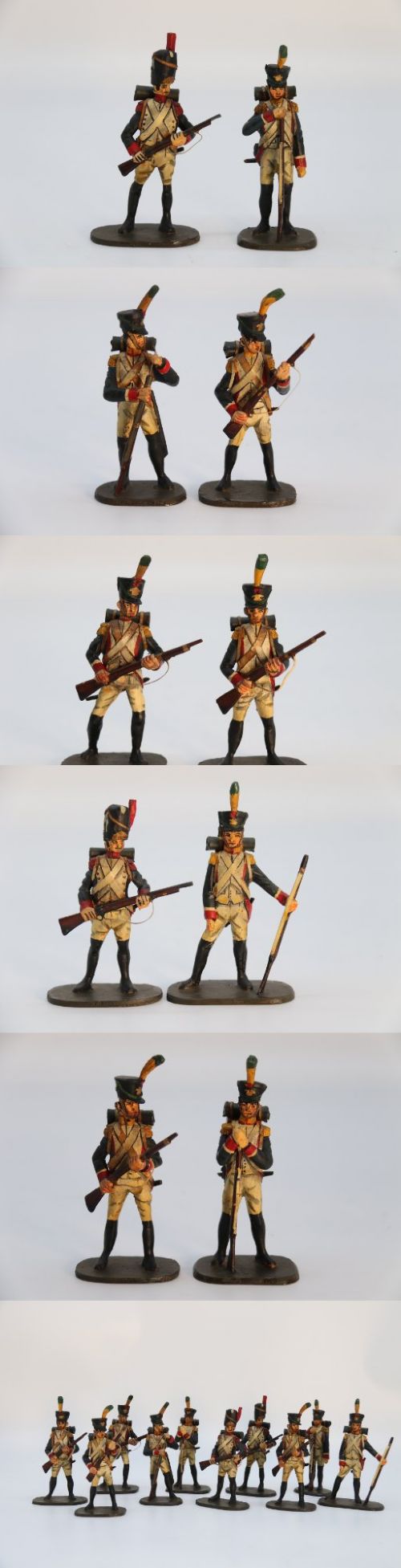
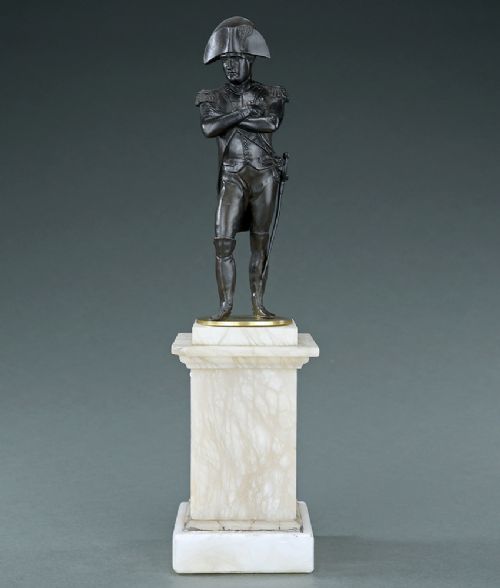
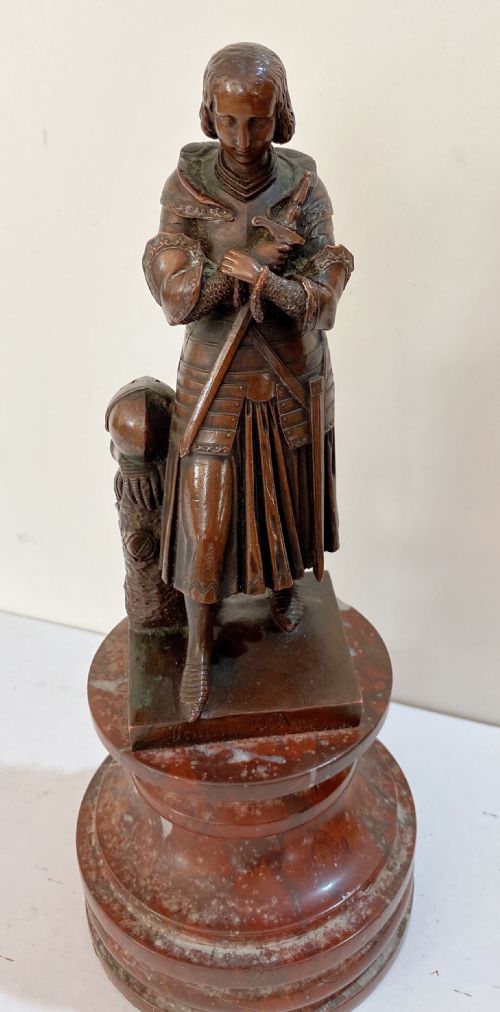
A french military figure represents historical commanders, soldiers, and notable historical personalities from the nineteenth century. These works appear primarily as standalone bronze sculptures, mounted statues on marble bases, decorative mantel clocks, and groups of hand-carved wooden soldiers.
The selections span distinct periods including the Regency and Victorian eras, with several pieces specifically referencing the Napoleonic Era and the French Empire style. Buyers encounter individual portrait bronzes of figures like Napoleon, Louis Philippe, and Saladin, alongside paired spelter soldiers.
Origins remain anchored in nineteenth-century French artistic production, though English Staffordshire pottery also contributes regional portrait figures to the selection. Formats range from intimate library bronzes to larger equestrian monuments set on marble plinths.
Materials and construction
Alternative items employ organic materials, featuring hand-carved wooden construction enhanced with paint to define military uniforms. Clockwork mechanisms integrate directly into sculptural cases, combining horology with cast bronze and enamel details.
French Military Figure Retail Price Guide 2026
Typical asking prices for french military figure among the pieces listed under this phrase on Sellingantiques today, from the lower quarter to the upper quarter. They describe what is for sale here now, not the wider market.
Listings feature bronze and wood as primary materials across nineteenth-century periods including the Regency and Victorian eras.
Factors of distinction
The fidelity of the casting and the crispness of the chasing separate standard works from superior examples. Master founders achieved sharp definition in uniform buttons, facial expressions, and equestrian harness details that lesser casts tend to soften.
Material integration also dictates the standard of the piece, particularly where cast bronze meets tailored marble or green marble bases. Signature attribution by documented nineteenth-century sculptors elevates the historical standing of individual works.
Emile Guillemin·E.H. Dumaige·James Pradier·C.Anfrie
The French Military Figure Glossary
- Spelter
- A zinc alloy commonly utilised as a less costly alternative to bronze for nineteenth-century decorative figures. It often receives a bronze-coloured surface finish to mimic heavier metal.
- Ormolu
- Gilded bronze produced by applying a mercury and gold amalgam to the base metal before heat treatment. This technique creates a rich, durable golden surface.
- Patina
- The surface coloration and texture developed through age or chemical treatment on bronze. It protects the underlying metal while defining the contours of the sculpture.
- Enamel
- A glassy substance fused to metal surfaces through firing to add colour and decoration. It frequently appears on clock dials and decorative details associated with these pieces.
- Regency
- An English historical period spanning the early nineteenth century noted for classical revival styles. Pieces from this era often incorporate military themes commemorating contemporary conflicts.
French Military Figure: Frequently Asked Questions
What subjects do these figures represent?
The sculptures portray prominent historical military commanders and leaders, most notably Napoleon Bonaparte, alongside equestrian subjects and anonymous soldiers.
Additional figures include historical figures such as Jeanne d'Arc, Louis Philippe, and Saladin, reflecting nineteenth-century interest in military history.
Where were these sculptures displayed originally?
Nineteenth-century owners placed these bronze and wooden figures upon library desks, mantelpieces, and dedicated display tables within domestic interiors.
Larger equestrian bronzes and clock garnitures served as formal focal points for studies, drawing rooms, and entrance halls.
How should I clean bronze figures?
Dusting with a soft, dry brush removes surface particles without disturbing the underlying metallic patina. Moisture and chemical cleaning agents should be avoided to preserve the historic finish.
How do I identify nineteenth-century pieces?
Examination of the casting quality, the composition of the metal, and the style of the base provides primary indicators of nineteenth-century manufacture. Many examples also bear cast signatures of the period sculptors or foundry marks.