
French Marquetry Commode Chest
A french marquetry commode chest brings patterned wood and curved lines into a room, offering decorative storage rooted in eighteenth and nineteenth-century cabinet-making.
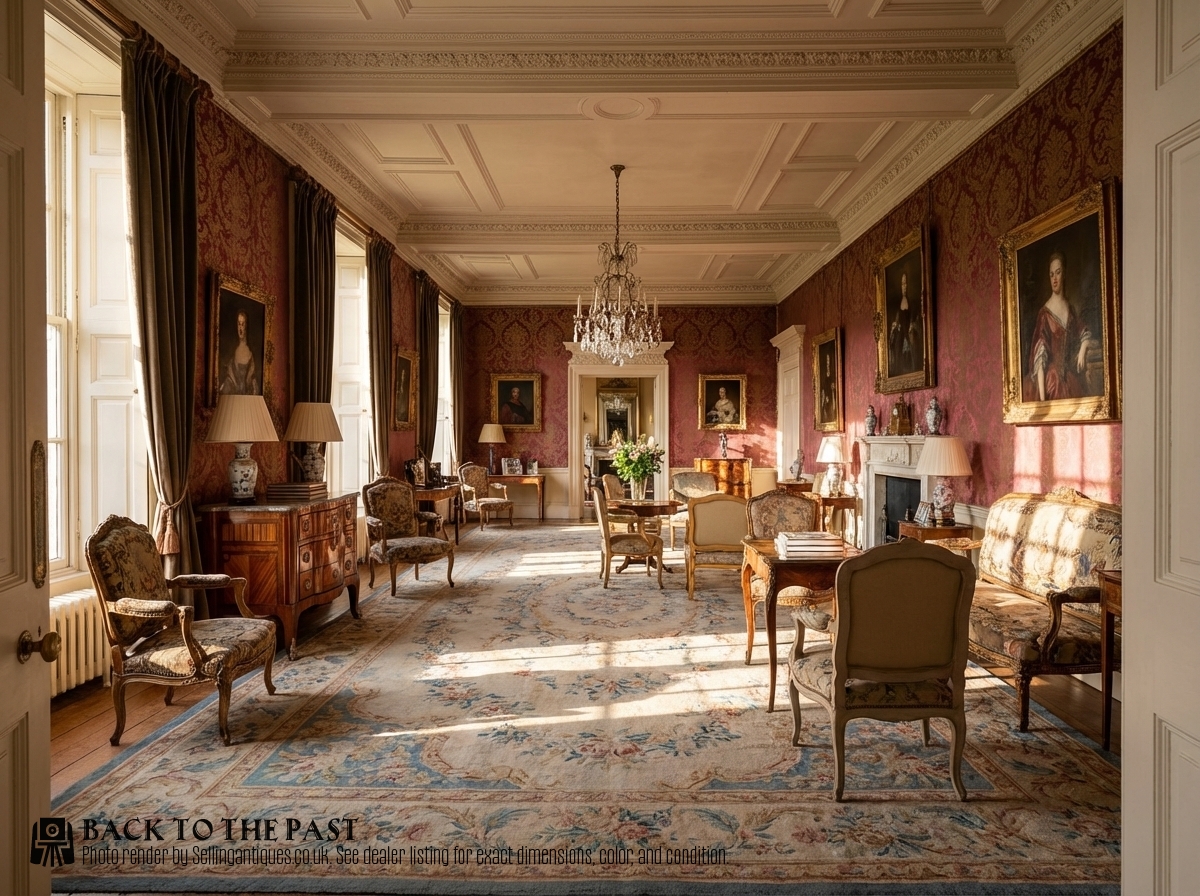
French Marquetry Commode Chest
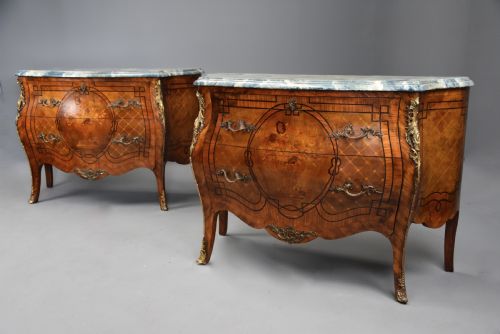
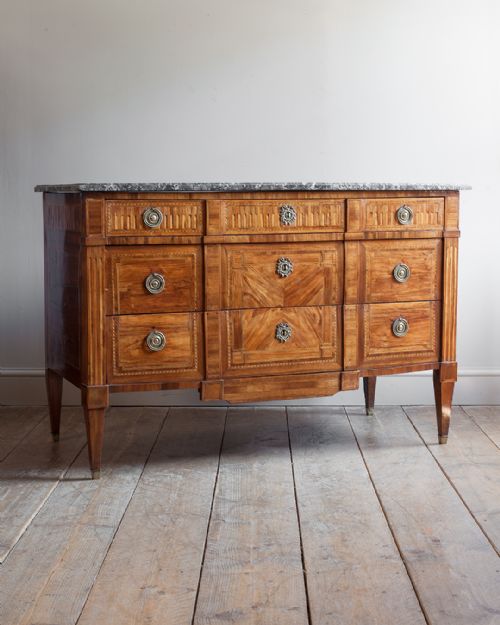
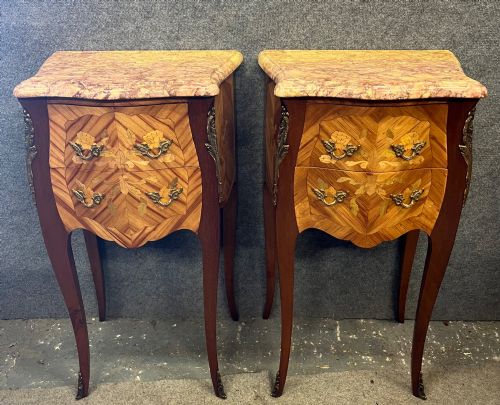
A french marquetry commode chest functions as a low drawer unit or cabinet, typically featuring patterned wood veneers arranged in floral or geometric designs. Buyers searching this phrase encounter examples ranging from eighteenth-century originals to nineteenth-century revival pieces influenced by court styles.
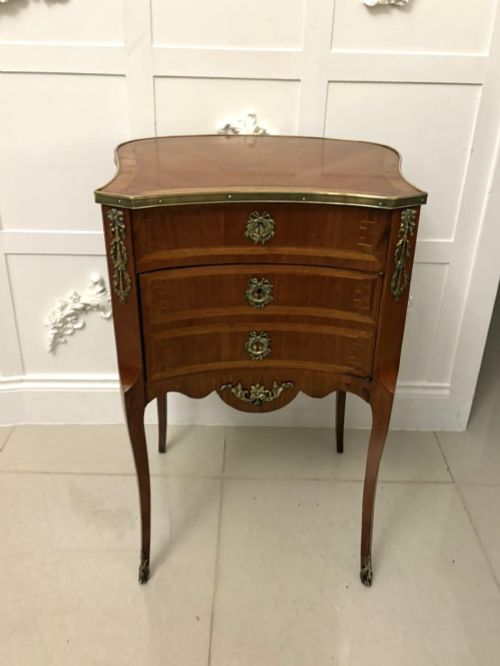
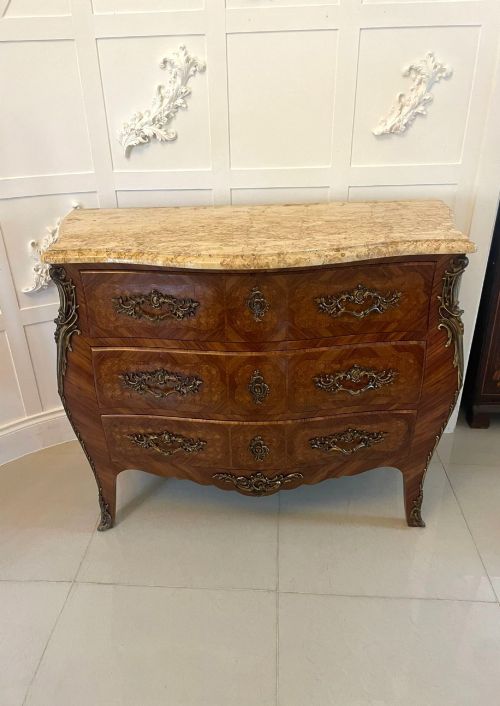
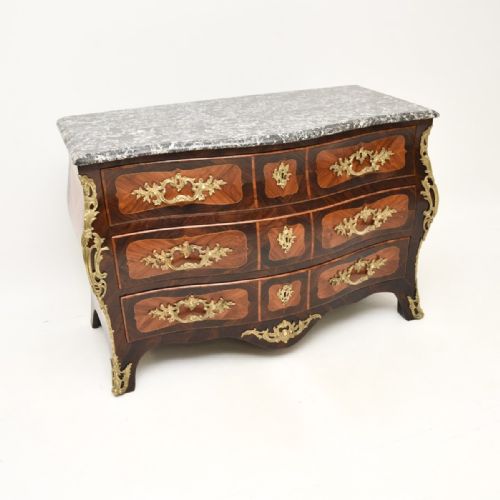
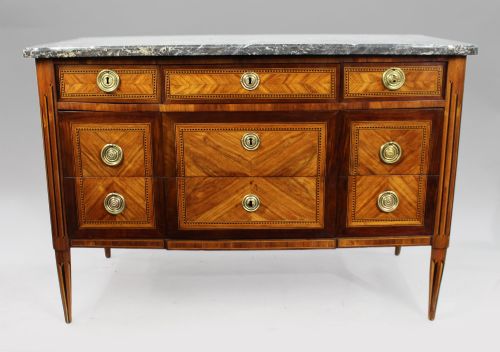
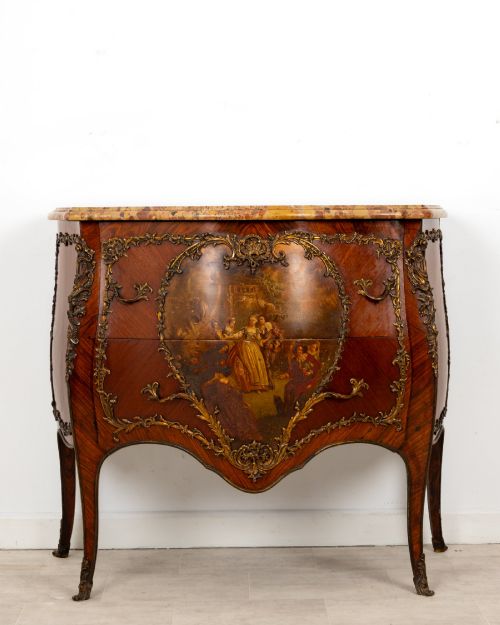
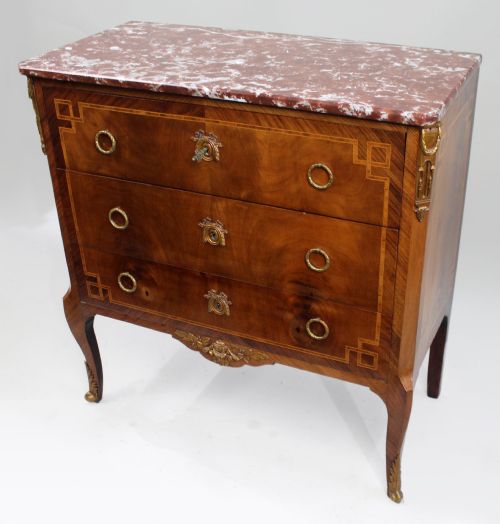
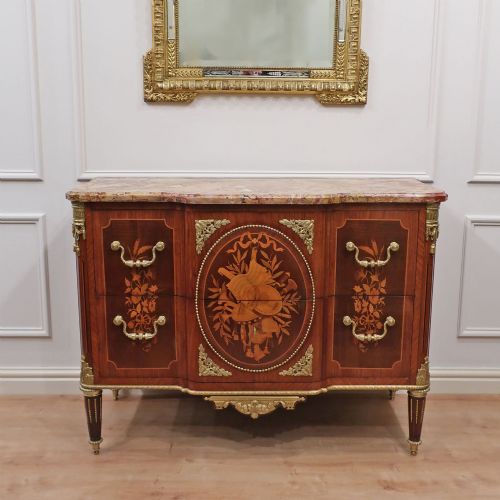
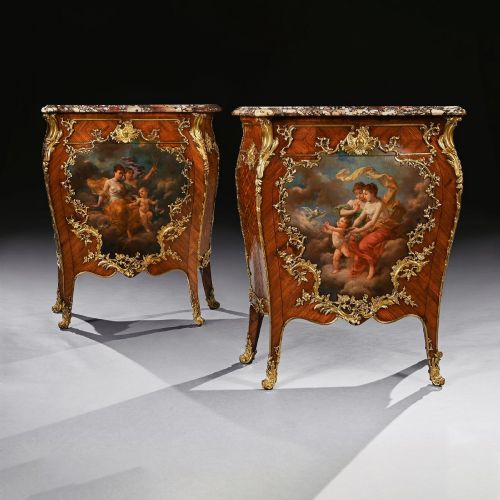
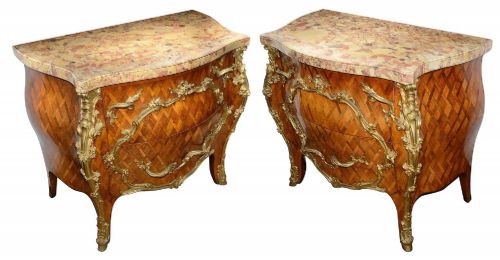
The most common form on this page is the nineteenth-century revival commode, often built in the Louis XV or Louis XVI style with serpentine or bombe fronts. These pieces combine decorative timber surfaces with heavy stone tops and cast mounts.
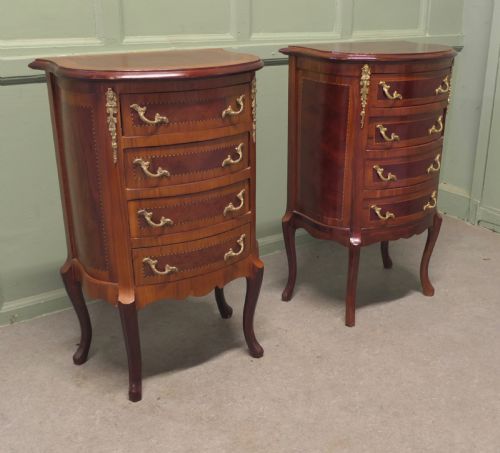
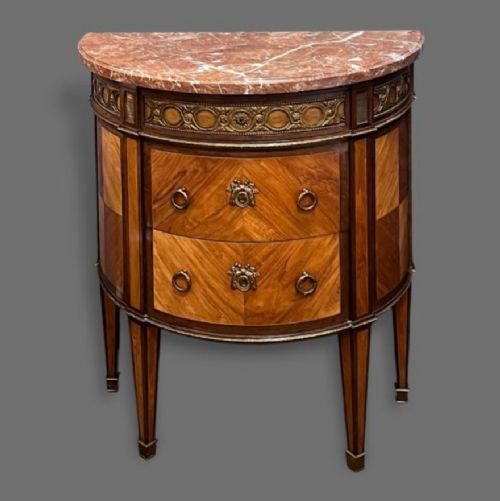
Origins span Parisian workshops and provincial centres, with designs varying from monumental salon chests to neat bedside cabinets and small side tables. The overarching form remains low and wide, designed to anchor a wall while providing surface display space.
Quality and Execution
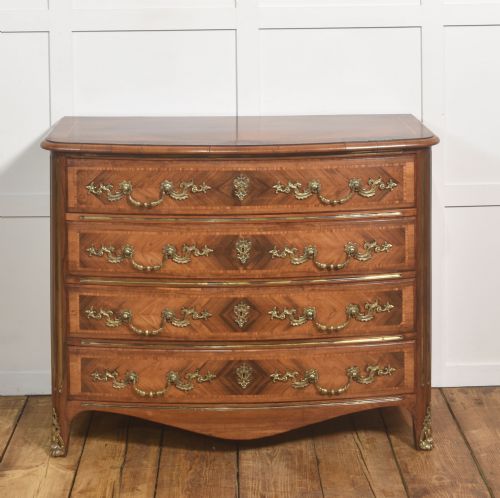
The distinction between tiers rests upon the precision of the veneer work and the crispness of the bronze mounts. Finer pieces display seamless grain matching across complex curves, whereas simpler items rely on repetitive geometric parquetry.
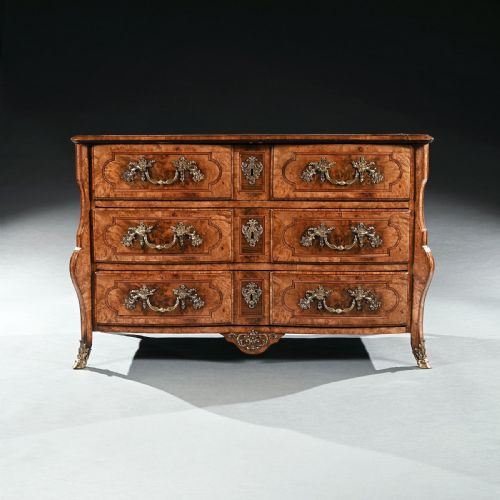
The handling of the carcase shape dictates upper levels of manufacture, particularly where bombe or serpentine contours require individually shaped drawer fronts and dovetailed frames. Secondary woods inside the drawers and the weight of the marble slab further distinguish standard production from master workshop output.
Listings feature eighteenth and nineteenth-century pieces alongside revival works from 1880 to 1930, utilising kingwood, rosewood, walnut, and marble.
Jacques Bircklé·Thomas Hache of Grenoble·Sormani
The French Marquetry Commode Chest Glossary
- Marquetry
- The art of applying small pieces of veneer to a structure to form decorative patterns or pictures. Craftsmen cut contrasting woods together so the pieces fit flush into the design.
- Parquetry
- Geometric wood inlay forming repeating patterns such as cubes, diamonds, or chequers. This technique uses straight lines rather than the pictorial motifs found in marquetry.
- Bombe
- A swollen, convex shape curving outward on the front and sides of a cabinet. This curved profile demands skilled woodworking to fit drawers accurately.
- Ormolu
- Gilt bronze ornamentation applied to the angles, feet, and aprons of furniture. The technique involves gilding a bronze mount with powdered gold amalgam.
- Serpentine
- A furniture front or side curving inward in the centre and outward at the ends. The undulating line mimics organic movement and requires precise joinery.
French Marquetry Commode Chest: Frequently Asked Questions
What is a French marquetry commode chest?
A French marquetry commode chest is a low drawer cabinet adorned with patterned wood veneers. They originated as functional storage furniture for elite domestic interiors.
Over subsequent centuries, cabinet-makers reproduced these forms using historical revival styles. Today they function as decorative accent furniture in living rooms and bedrooms.
How do I tell Louis XV from Louis XVI style?
Louis XV pieces feature asymmetrical curves, serpentine contours, and flowing organic motifs. The lines are rounded and organic throughout the structure.
Louis XVI furniture introduces neoclassical straight lines, symmetrical parquetry, and fluted columns. The overall silhouette becomes more rectangular and restrained.
Are marble tops original to these commodes?
Marble tops appear frequently on eighteenth and nineteenth-century commodes to provide a durable and luxurious surface. Many are original to the piece, cut specifically to match the serpentine or bombe contours of the wooden carcase.
Replacement marble slabs do occur due to damage over time. Examining the fit against the wood moulding helps determine originality.
How do I care for antique marquetry?
Antique marquetry requires stable indoor humidity away from direct sunlight and heat sources. Extreme temperature shifts cause the delicate wood veneers to lift or split.
Dust the surface gently with a dry, soft cloth and avoid chemical polishes. Occasional application of specialist wax maintains the moisture in the aged timbers.