






French Marble Vases
French marble vases combine solid stone vessels with gilt bronze or ormolu mounts, bringing classical presence and rich texture to a room.
French Marble Vases
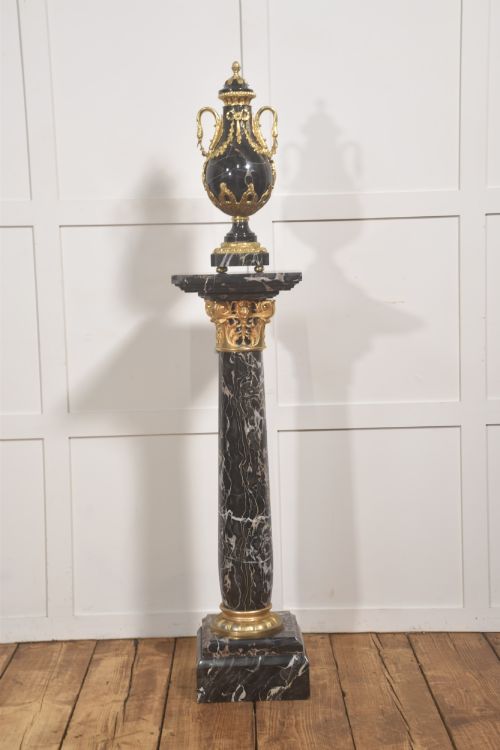
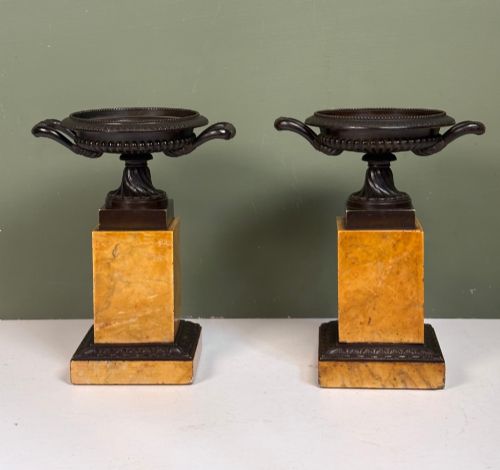
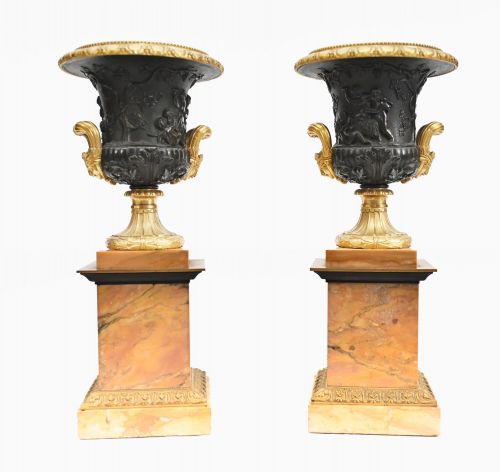
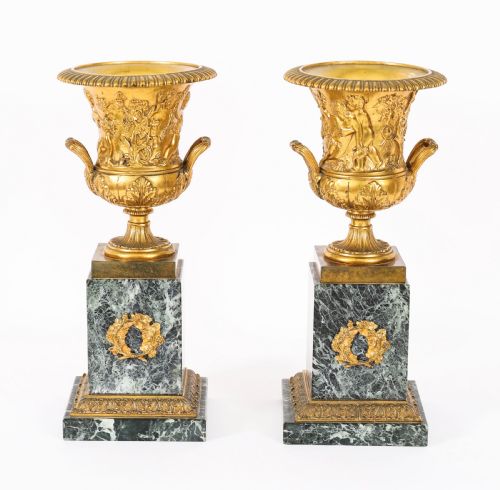
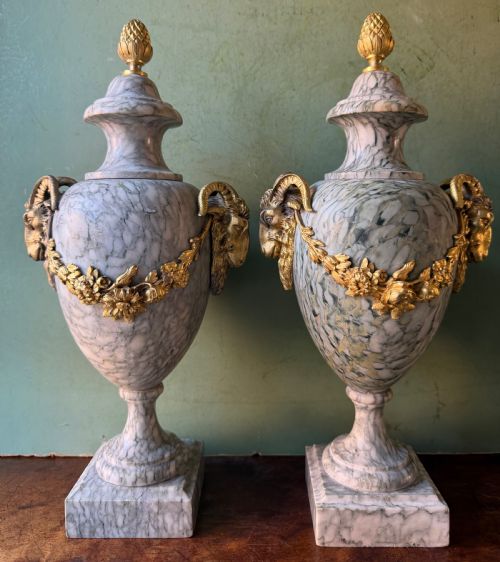
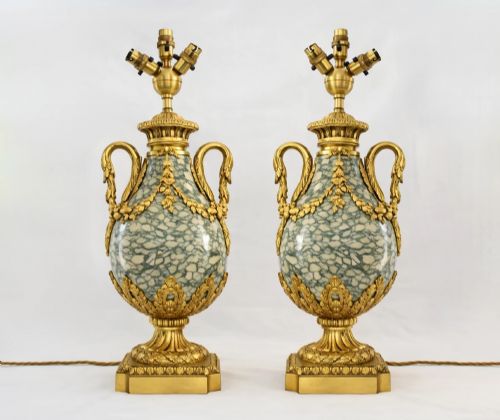
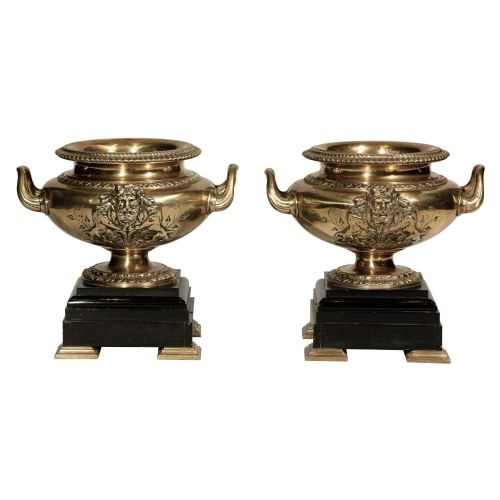
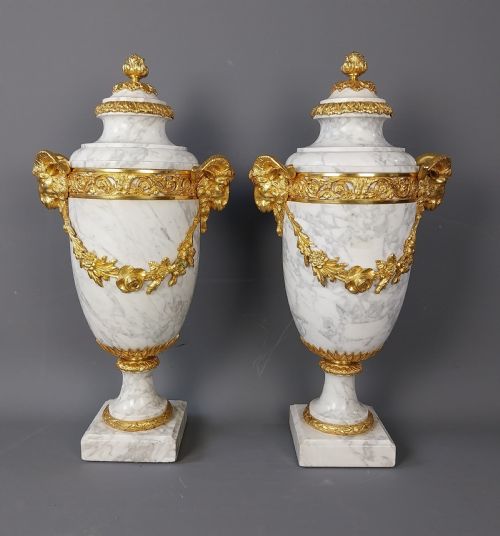
These decorative objects unite stone bodies with metal mountings, taking forms such as campana urns, tazza vessels, and lidded cassolettes. They appear frequently in pairs intended for mantelpieces, tables, or garniture sets alongside clocks.
Most examples originate from the nineteenth century, spanning periods from early decades through the Victorian era and the close of the eighteen-nineties. Grand Tour influences and classical revival styles dominate the designs, reflecting sustained interest in antiquity.
Makers utilised various stone bodies including green marble, white onyx, rouge marble, and siena marble. These are paired with bronze, gilt bronze, spelter, and silvered metal components to create formal decorative statements.
Materials and construction
Turned stone forms provide the heavy, solid bodies of these vessels, often drilled or hollowed to serve as lamps or cassolettes. Masons selected stones like white marble, alabaster, and dark green varieties for their distinct veining and colour.
Metal mounts, handles, and plinths were produced through casting in bronze, ormolu, or spelter, then chased and gilded. These metal elements were subsequently fitted to the stone bodies using threaded rods or adhesives.
French Marble Vases Retail Price Guide 2026
Typical asking prices for french marble vases among the pieces listed under this phrase on Sellingantiques today, from the lower quarter to the upper quarter. They describe what is for sale here now, not the wider market.
Evaluating the pieces
The refinement of the metal casting and the crispness of the chasing separate standard decorative items from superior examples. Finely cast mounts display sharp details in foliage, figures, and classical ornament without blurring.
The quality of the stone body itself, including the regularity of the turning and the richness of natural mineral patterns, influences the overall presence of the piece. Heavier mounts and well-integrated bases indicate careful workshop assembly.
The French Marble Vases Glossary
- Cassolette
- A reversible vessel that functions as a vase or urn on one side and a burner or lidded container when flipped. These pieces often feature pierced ormolu covers.
- Ormolu
- Finely ground high-carat gold applied to a bronze base using mercury amalgamation. The technique produces a durable, rich metallic lustre.
- Campana
- A bell-shaped vessel profile derived from ancient Roman pottery. This classic form appears frequently in classical revival metal and stone designs.
- Garniture
- A coordinated set of three or more ornamental objects, typically comprising a central clock flanked by matching vases or urns. They were designed for display on mantelpieces.
- Grand Tour
- A period of European travel undertaken by wealthy young men to study classical art and antiquities. Souvenirs brought back included miniature bronzes and marble architectural models.
French Marble Vases: Frequently Asked Questions
What is a cassolette?
A cassolette is a lidded decorative vessel designed with a removable or reversible top. Many examples allow the lid to turn over, transforming an urn into a burner.
These pieces served primarily as decorative garniture elements in nineteenth-century interiors. Their dual-purpose form reflects classical revival tastes popular during the period.
How do I style these vases?
Pairs of urns work well on mantelpieces, console tables, or pedestals where symmetry enhances their classical proportions. Some wired examples function as table lamps while retaining their historic stone and bronze bodies.
Placing them away from direct heat sources protects the stone and metal surfaces. Their substantial weight requires stable, level display furniture.
How can I tell the period?
Nineteenth-century pieces display specific casting techniques and material combinations characteristic of workshops from the era. Bronze and ormolu mounts show hand-chasing marks typical of pre-industrial metalworking.
Stylistic cues such as Louis XVI revival details or Grand Tour motifs help narrow down the decade of production. Examining the construction of the interior fixings reveals period assembly methods.