



French Marble Top Chevets
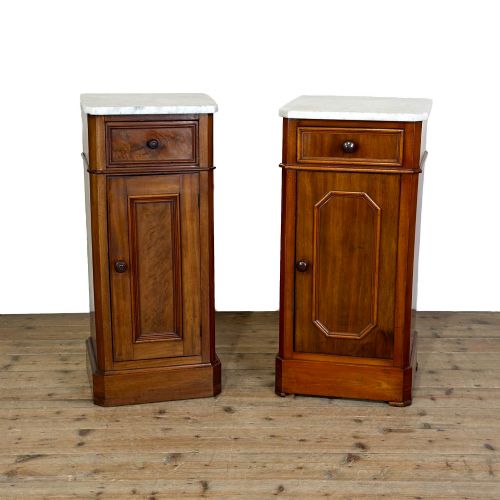
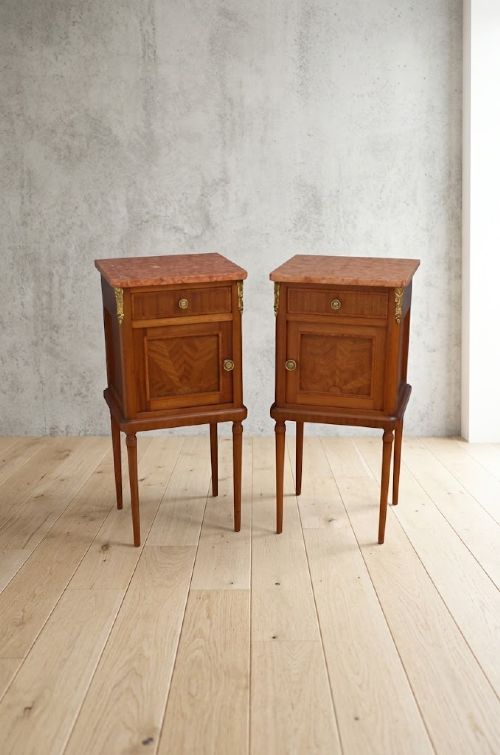
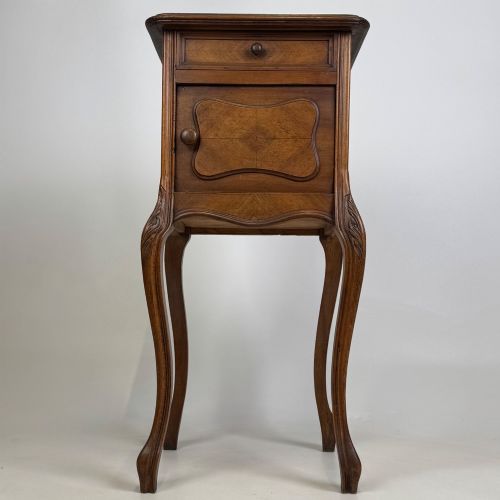
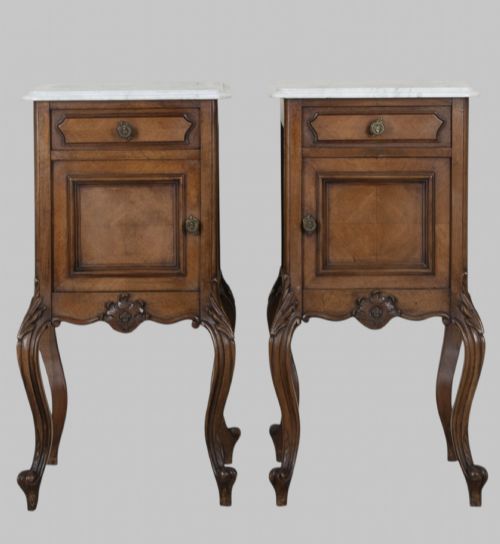
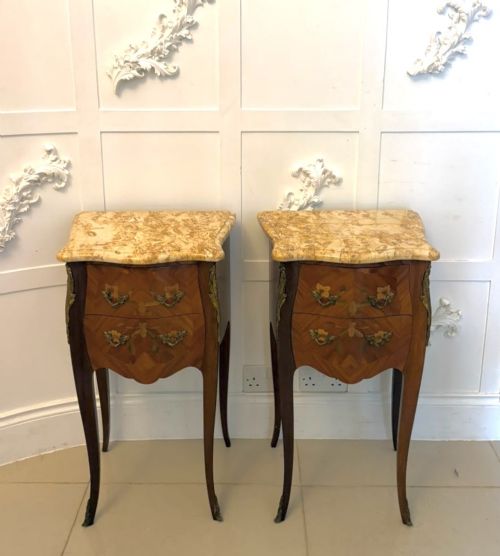
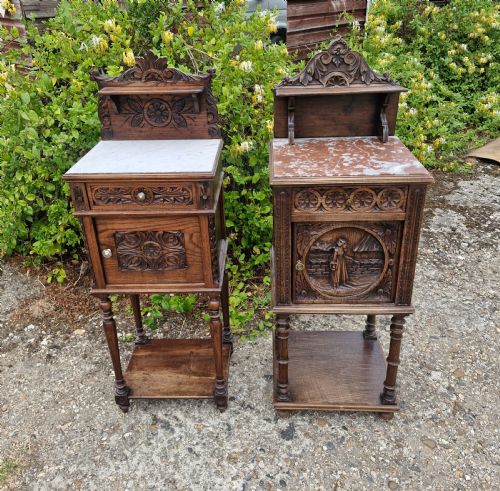
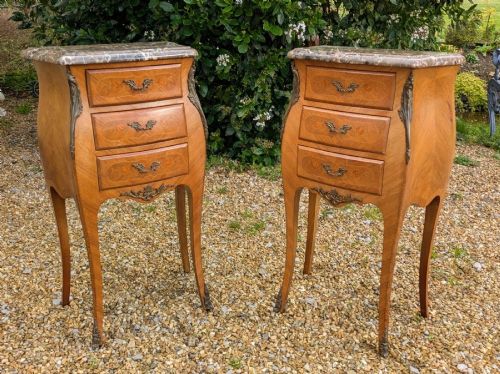
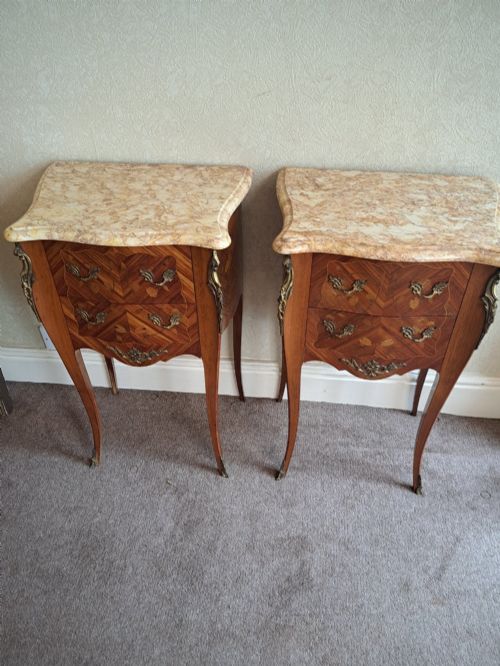
French marble top chevets are bedside cabinets offering stone surfaces and wooden frames designed to sit beside a bed.
French Marble Top Chevets
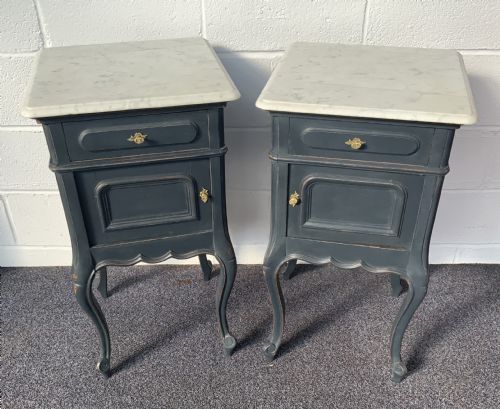
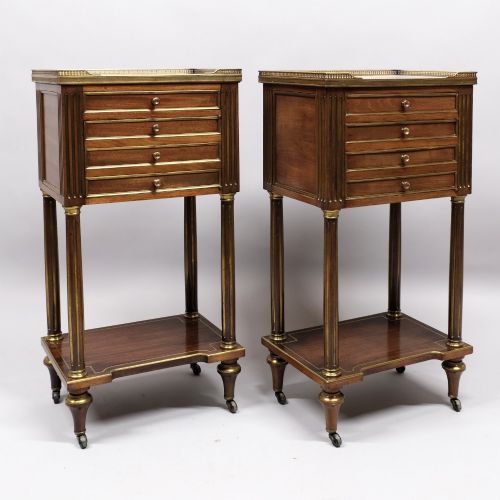
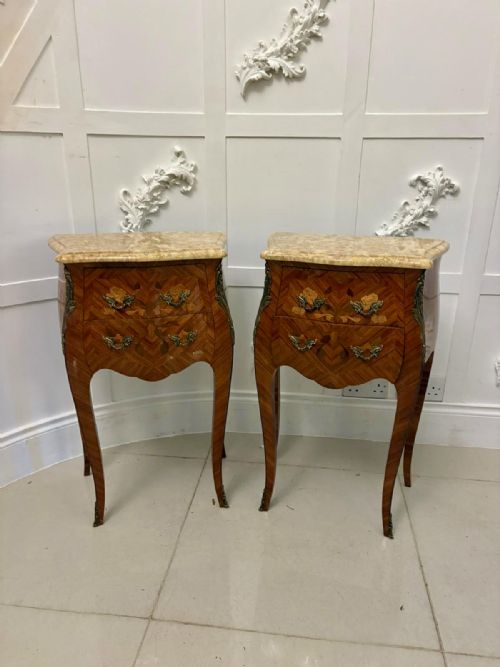
French marble top chevets appear in various forms on this page, including bedside cabinets, bedside tables, side cabinets, and side tables. These small tables and cupboards serve primarily as functional bedroom storage beside a bed.
The selection includes pieces spanning the nineteenth and twentieth centuries, referencing periods such as Victorian, Edwardian, and the 1880s through the 1930s. Styles range from French Provincial and French Chateau to Louis XV, Louis XVI, Louis XIV, First Empire, and Rococo.
Buyers encounter single pieces alongside matched pairs, constructed from woods like walnut, mahogany, oak, kingwood, satinwood, and painted wood. Each piece integrates a stone top designed to resist moisture and wear.
Materials and construction
Makers built the foundational frames of French marble top chevets using hardwoods such as walnut, mahogany, and oak, frequently applying veneers of kingwood or satinwood alongside marquetry and parquetry inlay. Painted wood surfaces also appear across the selection.
Each cabinet incorporates a fitted marble top, including specific varieties like Belgian Sainte-Anne marble, which sits unattached or secured onto the wooden carcase. Metal mounts in brass and ormolu decorate handles, corners, and feet on selected models.
Assessing quality and craftsmanship
Quality in French marble top chevets rests upon the crispness of wood carving, the precision of marquetry and parquetry patterns, and the selection of timber figure. Cabinets featuring dense grain and balanced timber selection demonstrate superior cabinetmaking.
The thickness, polish, and natural figuring of the marble top distinguish different tiers of production. Finely chosen stone, neat edge profiling, and substantial cast brass or ormolu mounts elevate the status of a bedside cabinet.
The French Marble Top Chevets Glossary
- Chevet
- A French bedside table or small cabinet. This term describes the form commonly utilised for night storage.
- Marquetry
- Decorative patterns formed by inserting pieces of wood veneer into a master background. This technique creates pictorial or geometric designs on drawer fronts and top surfaces.
- Parquetry
- Geometric wood mosaic work used for cabinet surfaces. Artisans arrange small blocks or strips of timber to form repeating patterns.
- Ormolu
- Gilt bronze mounts applied to furniture edges and feet. This decorative metalwork provides metallic contrast against the polished wood.
- Sainte-Anne marble
- A dark grey or black Belgian limestone featuring characteristic white calcite veins. It provides a durable and decorative surface for furniture tops.
French Marble Top Chevets: Frequently Asked Questions
What is a chevet?
A chevet is the French term for a bedside cabinet or small night table. These pieces provide enclosed storage and a surface beside a bed.
They traditionally housed chamber pots or night necessities, evolving into decorative bedside stands holding lamps and personal items.
Are these cabinets sold as pairs?
Many French marble top chevets are listed as matched pairs, though single examples also appear. Pairs suit placement on both sides of a double bed.
Matching pairs share identical wood types, marble selections, and decorative carving details.
What woods were used?
Cabinetmakers utilised walnut, mahogany, oak, kingwood, and satinwood to construct the frames. Painted wood finishes also feature in the selection.
Veneers and contrasting inlays decorated the exterior surfaces of finer examples.
How do I identify the style?
Styles follow historic French design periods, including Louis XV, Louis XVI, Empire, and Rococo revivals. Curved lines and cabriole legs typically indicate Louis XV influence.
Straight tapered legs and neoclassical symmetry point toward Louis XVI or Empire designs.