




French Marble Mantel
A french marble mantel piece brings together polished stone and cast metal in heavy, decorative objects designed for period interiors.
French Marble Mantel
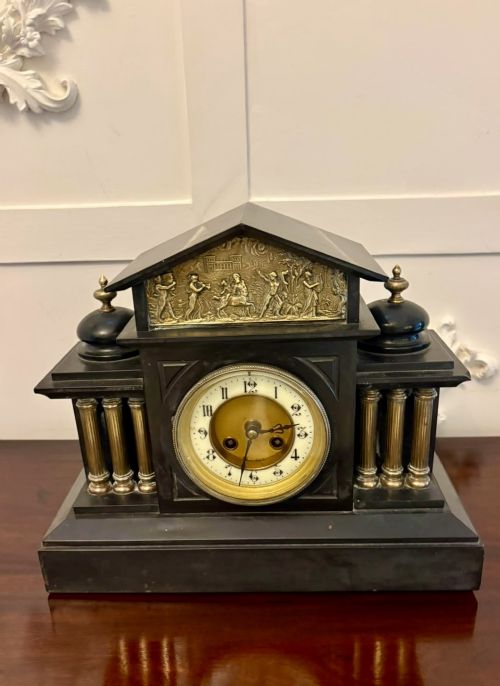
A french marble mantel selection encompasses heavy stone clock cases, matching garniture sets, architectural portico models, and sculptural ornaments resting on polished bases.
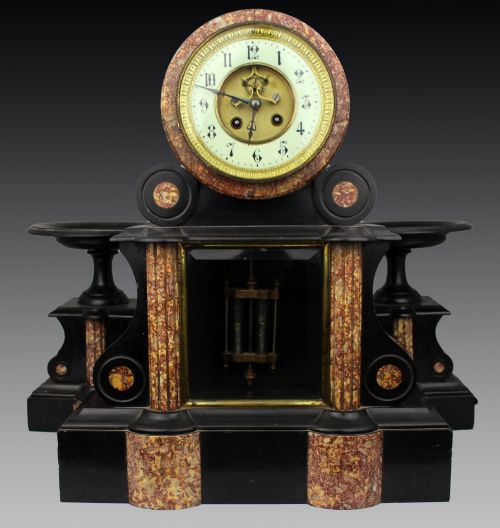
The most common examples encountered here date from the nineteenth century, ranging from severe architectural black marble boxes to ornate neoclassical white and ormolu designs.
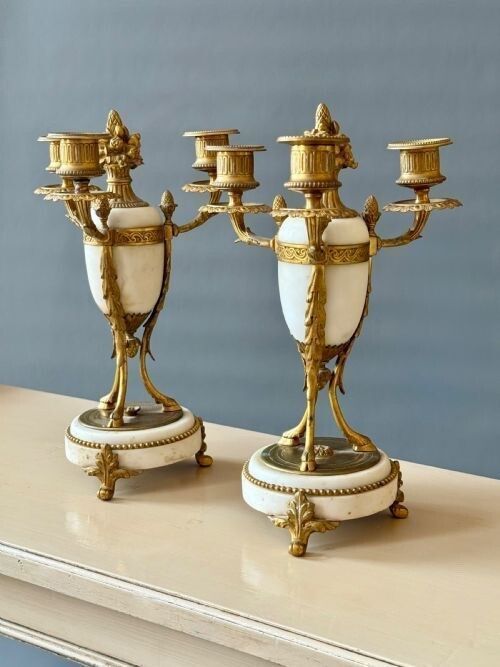
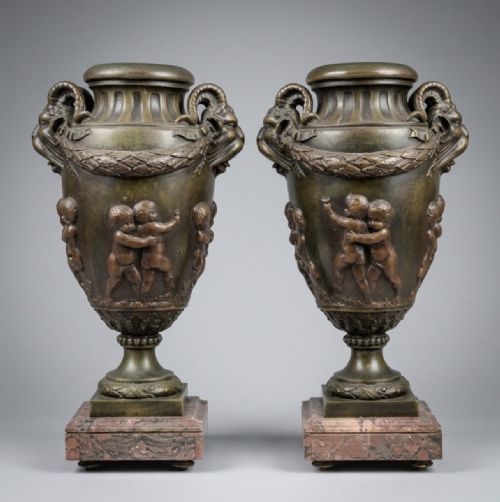
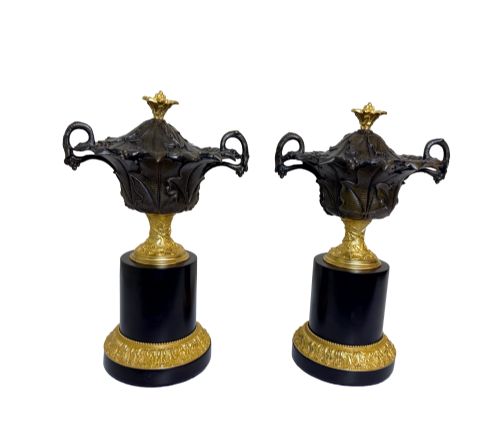
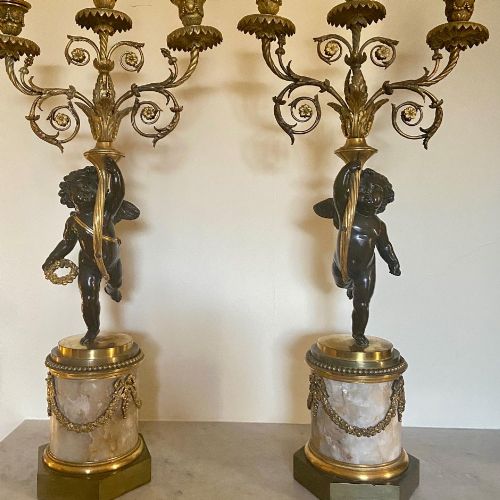
Pieces frequently incorporate side garnitures such as urns or candelabra, creating a balanced decorative scheme intended to anchor a fireplace surround.
Materials and construction methods
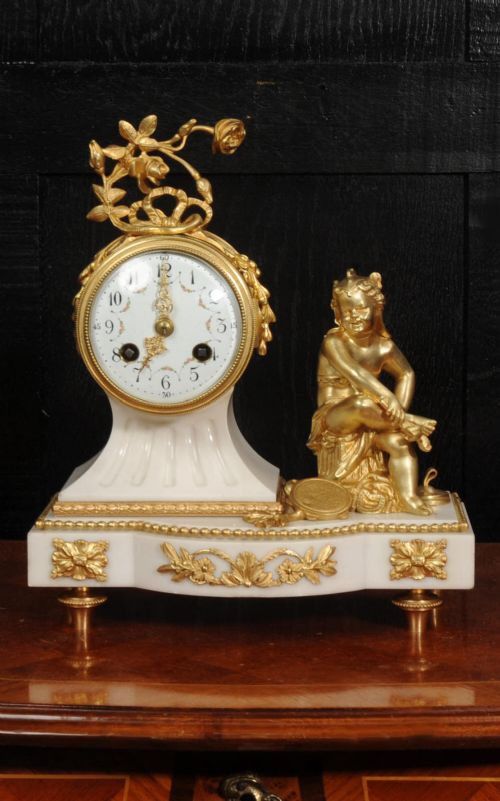
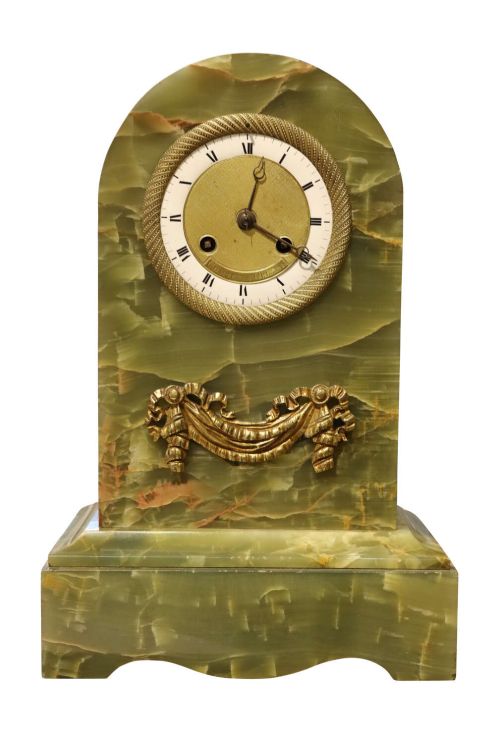
Foundries combined natural quarried stones like black marble, white carrara, green onyx, and sienna with cast bronze, gilt brass, and ormolu mounts.
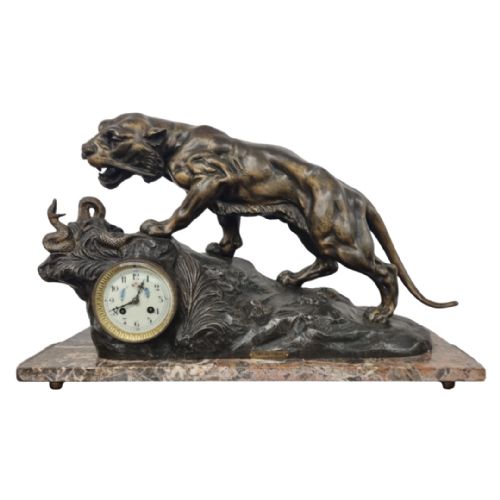
Clock movements were fitted behind hand-painted enamel dials, while decorative figures utilised patinated bronze, spelter, or cast brass secured directly to the stone chassis.
Listings feature black marble, white marble, green onyx, and sienna stone paired with ormolu, gilt bronze, and patinated bronze figures.
Distinguishing quality across examples
Superior execution shows in the precision of the stone cutting, the crispness of the bronze chasing, and the integration of the movement maker's signature on the dial or backplate.
Lower tiers rely on simpler cast metal mounts, heavier and less nuanced spelter figures in place of true bronze, and plain stone surfaces lacking detailed architectural mouldings or garniture companions.
Japy Freres·Samuel Marti·Vincenti·Henri Picard
The French Marble Mantel Glossary
- Garniture
- A set of matching decorative objects, typically comprising a central clock flanked by two urns or candelabra. These sets were designed to sit harmoniously together on a fireplace shelf.
- Ormolu
- Gilt bronze produced by applying a mercury and gold amalgam to cast bronze and heating it to drive off the mercury. This technique creates a durable, rich golden surface finish.
- Portico clock
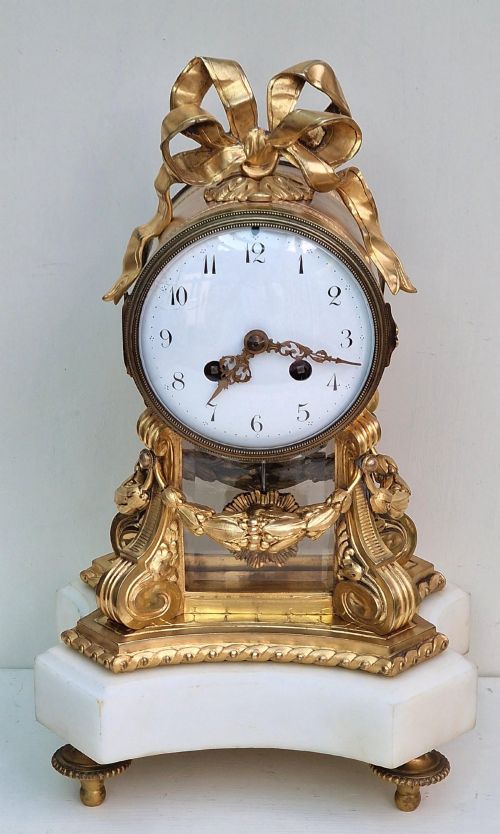
- A distinct architectural clock style supported by four columns resembling a classical temple facade. They often house a swinging pendulum visible within the central open space.
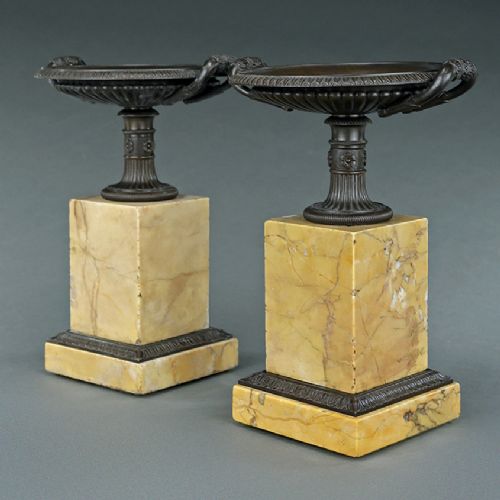
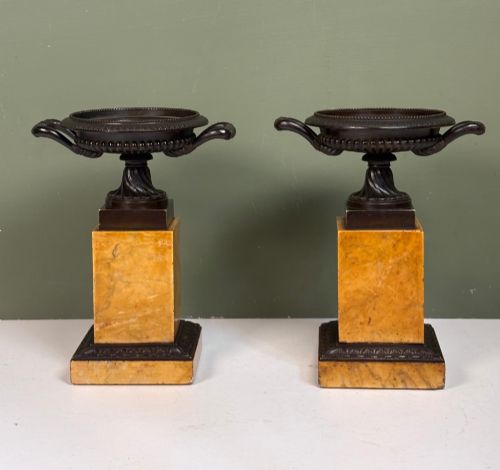
- Tazza
- A shallow ornamental cup or vase raised on a high foot and pedestal base. Found frequently executed in marble paired with bronze mounts.
- Spelter
- A zinc alloy cast to imitate bronze, commonly utilised for figures and ornaments on nineteenth-century pieces. It offers a lighter, less expensive alternative to traditional bronze casting.
French Marble Mantel: Frequently Asked Questions
How do I identify a portico style?
Portico models feature distinct architectural column supports framing a central suspended pendulum movement.
They stand apart from standard block or architectural clock cases through their open, temple-like proportions.
What is a garniture set?
A garniture set includes a central clock accompanied by matching side pieces such as urns or candelabra.
These complementary items were manufactured together to provide a symmetrical display across a mantelpiece.
How do I tell marble from slate?
Black marble displays natural crystalline veining and mineral variations within the stone matrix.
In contrast, slate variants present a uniform, dark matte appearance without natural stone patterning.
Are these clocks eight day movements?
Many surviving examples house mechanical movements requiring winding approximately once a week.
Such mechanisms typically strike on bells or gongs to mark the hours and half hours.