





French Marble Cassolettes
French marble cassolettes are reversible decorative vessels that shift from a lidded urn to a candle holder, combining stone and cast metal in classical forms.
French Marble Cassolettes
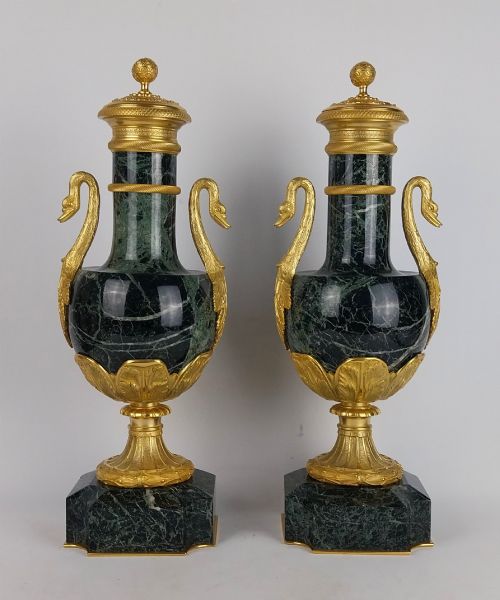
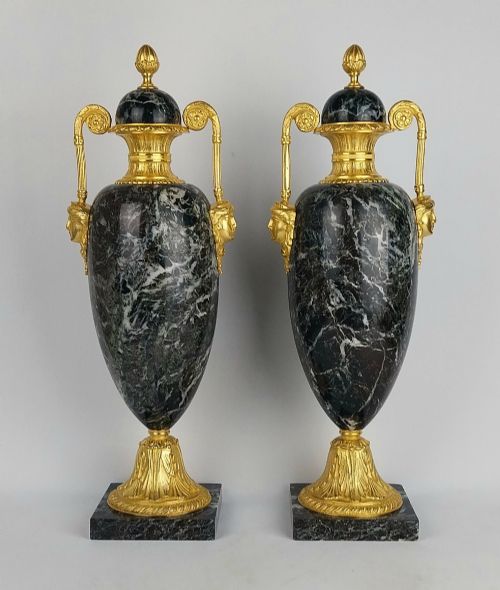
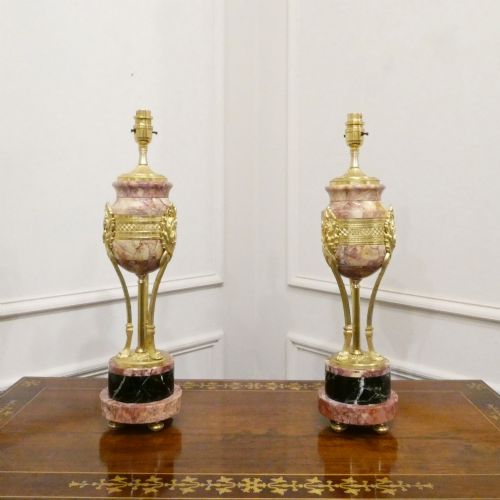
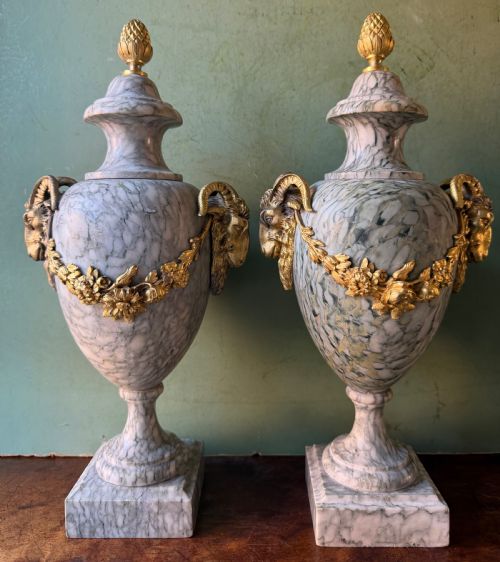
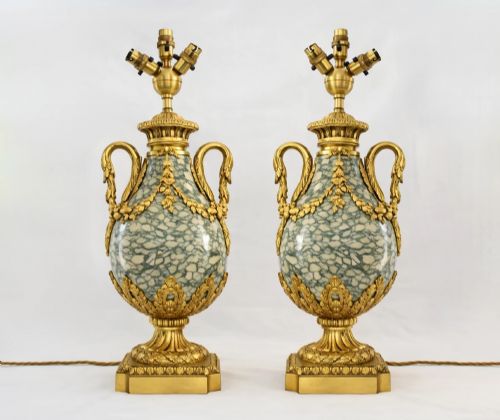
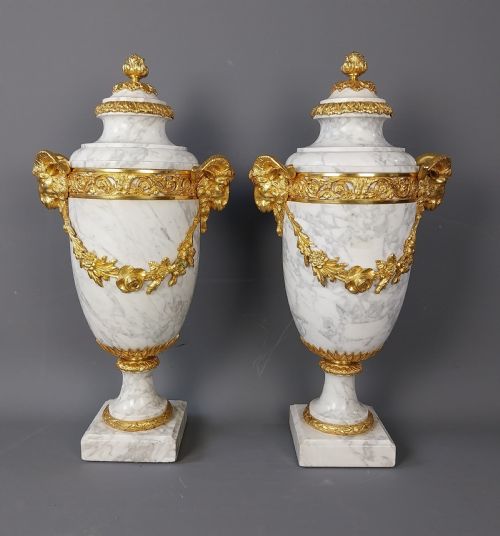
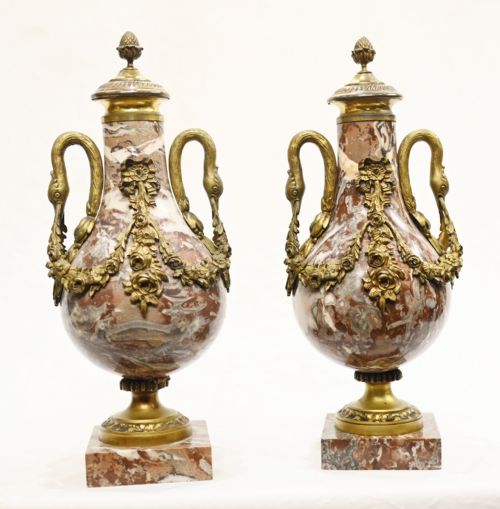
French marble cassolettes take the form of lidded ornamental vases designed with a removable or reversible top that reveals a socket for a taper or candle. Most examples seen here date from the nineteenth century, aligning with the Victorian period and drawing heavily upon Louis XVI and French Empire taste.
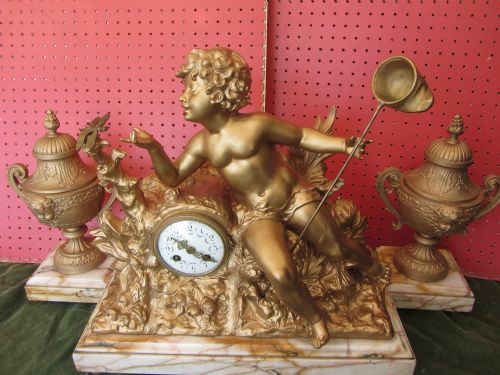
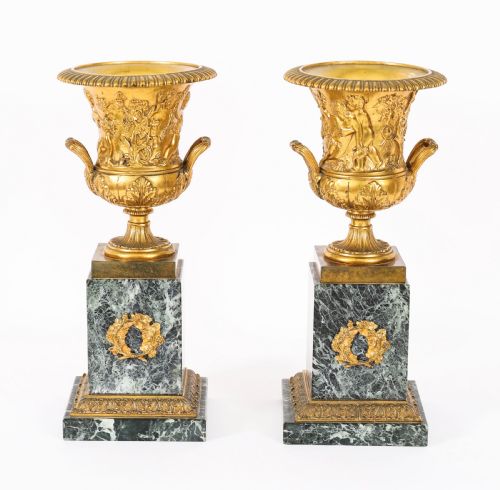
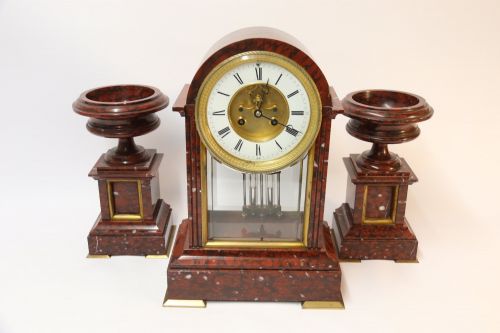
The inventory encompasses pairs of decorative urns, amphora vases, and clock garniture sets that incorporate these dual-purpose vessels. Makers and workshops of the era produced them to serve as mantelpiece ornaments or table centrepieces in neoclassical interiors.
How they were made
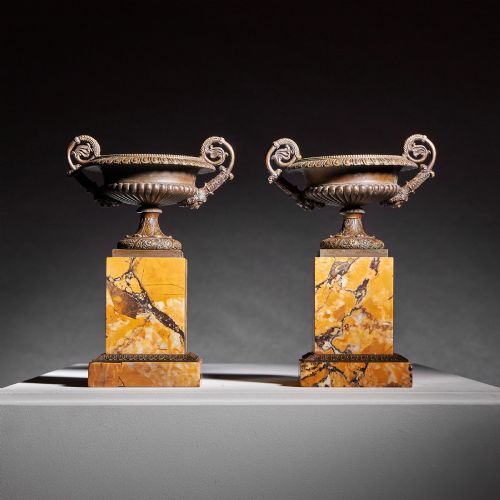
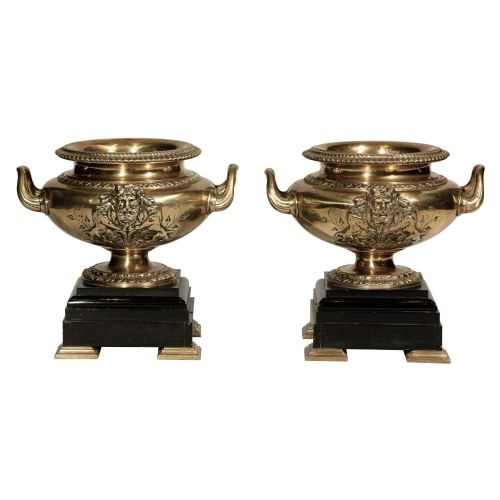
Makers turned and polished various marbles, including white, green, rouge, quartz, and yellow varieties, to form the body and pedestal base of each piece. This stone work was combined with cast bronze, gilt bronze, and ormolu mounts that decorated the shoulders, handles, and plinths.
Foundries utilised lost-wax or sand-casting techniques for the metal elements, finishing the surface with fire-gilding or patination. Artisans then fitted the stone and metal components together with threaded rods and pins to create the reversible lid mechanism.
French Marble Cassolettes Retail Price Guide 2026
Typical asking prices for french marble cassolettes among the pieces listed under this phrase on Sellingantiques today, from the lower quarter to the upper quarter. They describe what is for sale here now, not the wider market.
Listings feature green marble, rouge marble, white marble, and white onyx paired with gilt bronze, ormolu, and silvered bronze.
What varies in quality
Quality depends on the precision of the bronze chasing and the crispness of the cast mounts, where sharper details separate finer work from softer production. The selection of the marble itself, from plain black or white to richly figured breccia, giallo di siena, or deep green, dictates the visual impact.
Proportion and weight also divide standard items from superior examples, with heavier metal mounts and tightly fitted, precisely turned stone bodies indicating higher workshop standards.
Samuel Marti
The French Marble Cassolettes Glossary
- Cassolette
- A reversible decorative vase with a dual-purpose lid that flips to function as either an urn or a candlestick. This form was popular in eighteenth-century France and revived during the nineteenth century.
- Ormolu
- Finely ground high-carat gold mercury-gilt onto a bronze base. It provides a bright, durable golden surface on the decorative mounts of nineteenth-century pieces.
- Garniture
- A set of matching ornamental objects for a mantelpiece, typically comprising a clock flanked by a pair of vases, cassolettes, or candelabra.
- Grand Tour
- Nineteenth-century travel practice where affluent individuals collected classical antiquities and revival pieces such as bronze and marble urns across Europe.
- Amphora
- A two-handled ancient vase shape adopted by nineteenth-century designers for decorative marble and bronze urns.
French Marble Cassolettes: Frequently Asked Questions
What is a french marble cassolette?
A french marble cassolette is a decorative nineteenth-century vessel featuring a reversible lid that transforms a classical urn into a candlestick.
Craftsmen built these pieces using turned marble bodies mounted with gilt bronze or ormolu in the Louis XVI and Empire styles.
How were cassolettes used?
These objects served primarily as decorative ornaments on mantelpieces, tables, and clock garniture sets within formal nineteenth-century interiors.
When needed for illumination, the lid was simply inverted to hold a taper candle.
How do you date these pieces?
Dating relies on the style of the bronze mounts, the turning of the marble, and historical manufacturing periods such as the nineteenth century or the reign of Napoleon III.
Revival movements frequently copied eighteenth-century Louis XVI designs during the 1870s to 1900 period.
What marbles appear on these pieces?
Surviving examples utilise white, green, rouge, black, and yellow varieties of marble, alongside white onyx and quartz.
Foundries often paired these natural stones with fire-gilded bronze or patinated bronze handles and plinths.