





French Mantel Clock Candelabra
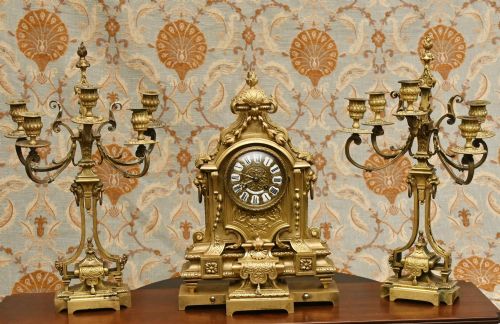
When you search for french mantel clock candelabra, you uncover matched sets of timepieces and matching lights designed to dominate a nineteenth-century room.
French Mantel Clock Candelabra
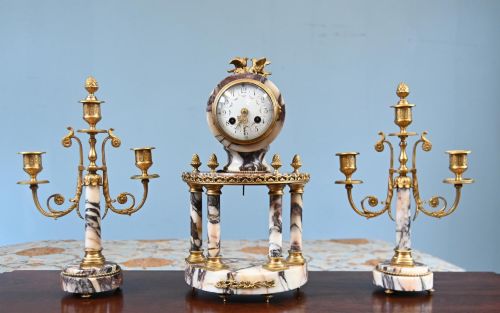
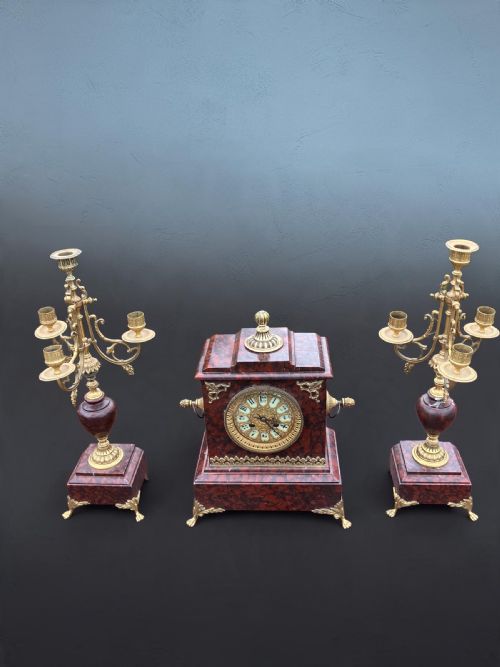
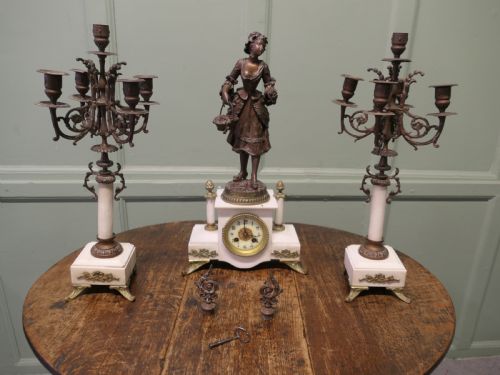
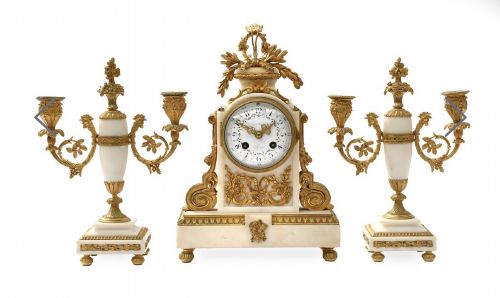
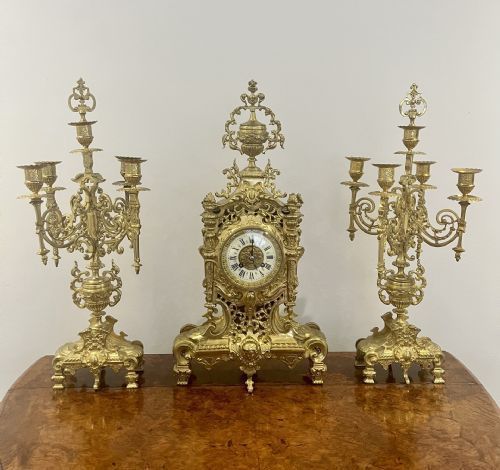
A french mantel clock candelabra search brings up coordinated garniture sets, uniting a central timepiece with matching side pieces such as candelabras or urns. The version you meet most often on this page is a nineteenth-century arrangement featuring a clock flanked by matching light fittings or decorative pillars.
These compositions originate from periods spanning the Victorian era through to the late nineteenth century, predominantly styled in Louis XVI Revival, French Rococo, and Empire aesthetics. They serve as centrepieces designed for the mantelpiece, combining functional timekeeping with symmetrical ornamentation.
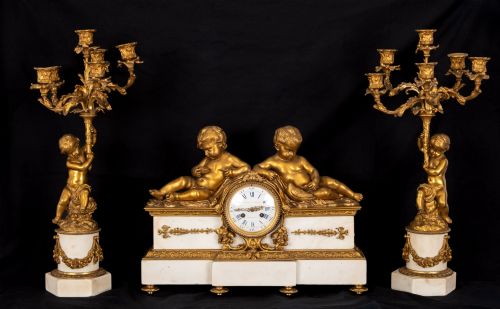
The objects appear in various forms, including three-piece and larger multi-light sets incorporating cherubs, porcelain panels, and classical motifs. Buyers encounter materials ranging from white and black marble to gilt bronze and ormolu, forming complete decorative schemes.
Quality differences
The standard of a french mantel clock candelabra depends heavily on the crispness of the bronze chasing and the weight of the cast metal. Superior examples exhibit deep, clean relief work where fur, feathers, and acanthus leaves retain sharp edges rather than soft, rounded profiles.
The selection of materials dictates the upper tier of the range, separating solid marble and heavy gilt bronze from lighter gilded metal and plated substitutes. The integration of hand-painted porcelain panels and signed movements by known Paris workshops elevates the ambition and execution of the set.
French Mantel Clock Candelabra Retail Price Guide 2026
Typical asking prices for french mantel clock candelabra among the pieces listed under this phrase on Sellingantiques today, from the lower quarter to the upper quarter. They describe what is for sale here now, not the wider market.
Listings feature 19th-century pieces spanning the Victorian era, incorporating materials like gilt bronze, white marble, brass, and porcelain.
Henry Dasson·H Luppens Paris·Raingo Fres Paris
The French Mantel Clock Candelabra Glossary
- Garniture
- A set of matching decorative objects designed to be displayed together on a mantelpiece, typically consisting of a central clock and two side pieces such as candelabras or urns.
- Ormolu
- A technique of applying finely ground high-karat gold to a bronze object, creating a bright metallic finish that resists tarnishing. It defines the golden surface of many nineteenth-century French pieces.
- Candelabra
- A branched candlestick holder designed to hold multiple taper candles, frequently produced as the matching side pieces in a clock garniture set.
- Bleu de Roi
- A rich, deep cobalt blue ceramic glaze developed at the Sevres porcelain factory, often used as a contrasting background colour on clock cases and garniture urns.
- Chasing
- The manual process of refining a cast metal surface using small punches and hammers to sharpen details and remove casting flaws before gilding.
French Mantel Clock Candelabra: Frequently Asked Questions
What is a french mantel clock candelabra?
A french mantel clock candelabra is a matched decorative set comprising a mechanical timepiece and matching side light fittings designed for display.
These ensembles coordinate in material, style, and period to create a balanced presentation across a fireplace mantel.
How do I wind the clock?
Most pieces utilise an eight-day mechanical movement wound via a dedicated key inserted into winding holes on the enamel dial.
Care must be taken not to over-wind the internal springs to preserve the historical mechanism.
Are the candelabras wired for electricity?
The pieces recorded here retain their original configuration intended for holding taper candles rather than electrical wiring.
Converting them requires careful evaluation to avoid altering the historic metalwork of the side pieces.
How do I identify Louis XVI style?
Louis XVI style is marked by classical restraint, symmetrical proportions, straight architectural lines, and motifs like urns and ribbons.
This aesthetic contrasts with the more asymmetrical and exuberant curves found in Rococo revival pieces.
What maintenance do marble bases need?
Marble bases require gentle dusting with a dry microfibre cloth to prevent the accumulation of grit in crevices.
Liquid cleaners and polishes should be avoided to protect the aged stone surface and exposed metal mounts.