




French Mantel Clock 1875
A french mantel clock 1875 brings ornate Victorian craftsmanship and striking mechanics directly to the domestic hearth.
French Mantel Clock 1875
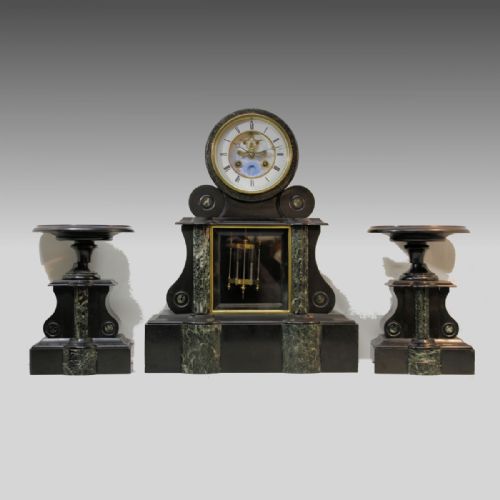
A french mantel clock 1875 represents the height of nineteenth-century horological decoration, appearing predominantly in Victorian settings across this collection. These items typically arrive as standalone mantel clocks or as larger garniture sets complete with matching side ornaments.
Buyers encounter diverse revivalist aesthetics within this group, ranging from exuberant Rococo and Louis XV styles to severe Victorian Gothic Revival and classical Louis XVI forms. Architectural portico clocks and delicate four-glass designs also feature regularly among the recorded inventory.
Originating firmly in the nineteenth century, these objects combine timekeeping utility with ambitious sculptural presence. The selection showcases both standard mantel pieces and grander decorative variations designed to dominate a room.
How they were made
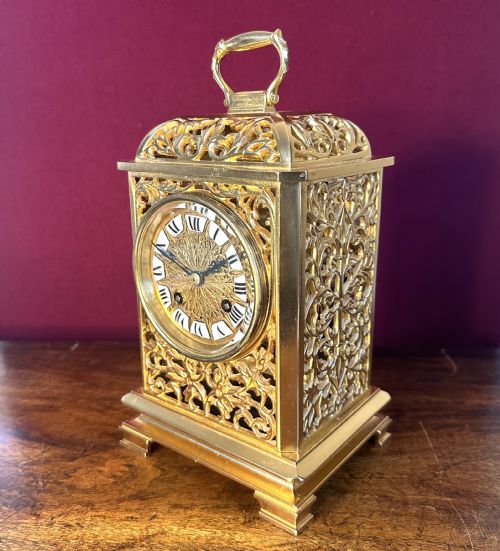
Maker workshops constructed these movements and cases using heavy cast metals, frequently finishing the brass and bronze bases with rich ormolu and gilding. Enamel dials provide the crisp white background for delicate numerals, often protected beneath curved glass bezels.
Stone elements feature prominently, with white marble and decorative pink marble providing weighty, solid foundations for portico and architectural designs. Artisans employed champleve enamel techniques to add vibrant coloured patterns directly into the metallic surfaces.
What varies in quality
The refinement of the cast bronze and ormolu mounts dictates the visual success of the piece, separating standard production from exceptional examples. Crisp chasing on metalwork and the presence of specialised complications, such as a penny moon dial showing phases of the moon, elevate certain models.
Material selection and decorative ambition create clear distinctions across the range, moving from simple brass cases to elaborate pink marble portico structures or intricate Boulle marquetry. The harmony between the clock housing and any matching garniture pieces further defines the overall stature of the set.
The French Mantel Clock 1875 Glossary
- Ormolu
- A gilded bronze finish applied to decorative metal mounts. This technique gives brass components the rich appearance of solid gold.
- Garniture
- A set consisting of a central clock flanked by matching ornamental pieces. These decorative objects are designed to sit symmetrically on a mantelpiece.
- Champleve
- An enamelling technique where troughs are dug into metal and filled with coloured glass paste before firing. This creates intricate patterns across the clock case.
- Portico clock
- A mantel clock built in an architectural frame resembling a classical porch. These structures typically rely on marble columns for support.
- Boulle
- A style of ornate marquetry using tortoiseshell and brass inlay. It takes inspiration from the famous French cabinet maker Andre-Charles Boulle.
French Mantel Clock 1875: Frequently Asked Questions
What is a french mantel clock 1875?
A french mantel clock 1875 is a nineteenth-century timekeeper produced in France during the Victorian period, known for decorative revivalist styles. These clocks combine mechanical clockwork movements with elaborate artistic cases.
They serve as both functional timepieces and sculptural centrepieces for domestic interiors. The category includes diverse forms from simple brass designs to grand marble garnitures.
How do garniture clock sets work?
Garniture sets pair a central mantel clock with two matching decorative objects, such as urns or candelabra. They were designed to create a balanced display across a fireplace mantel.
The side pieces echo the materials and decorative motifs of the main clock. Together, they form a cohesive ornamental arrangement.
Where were these clocks displayed?
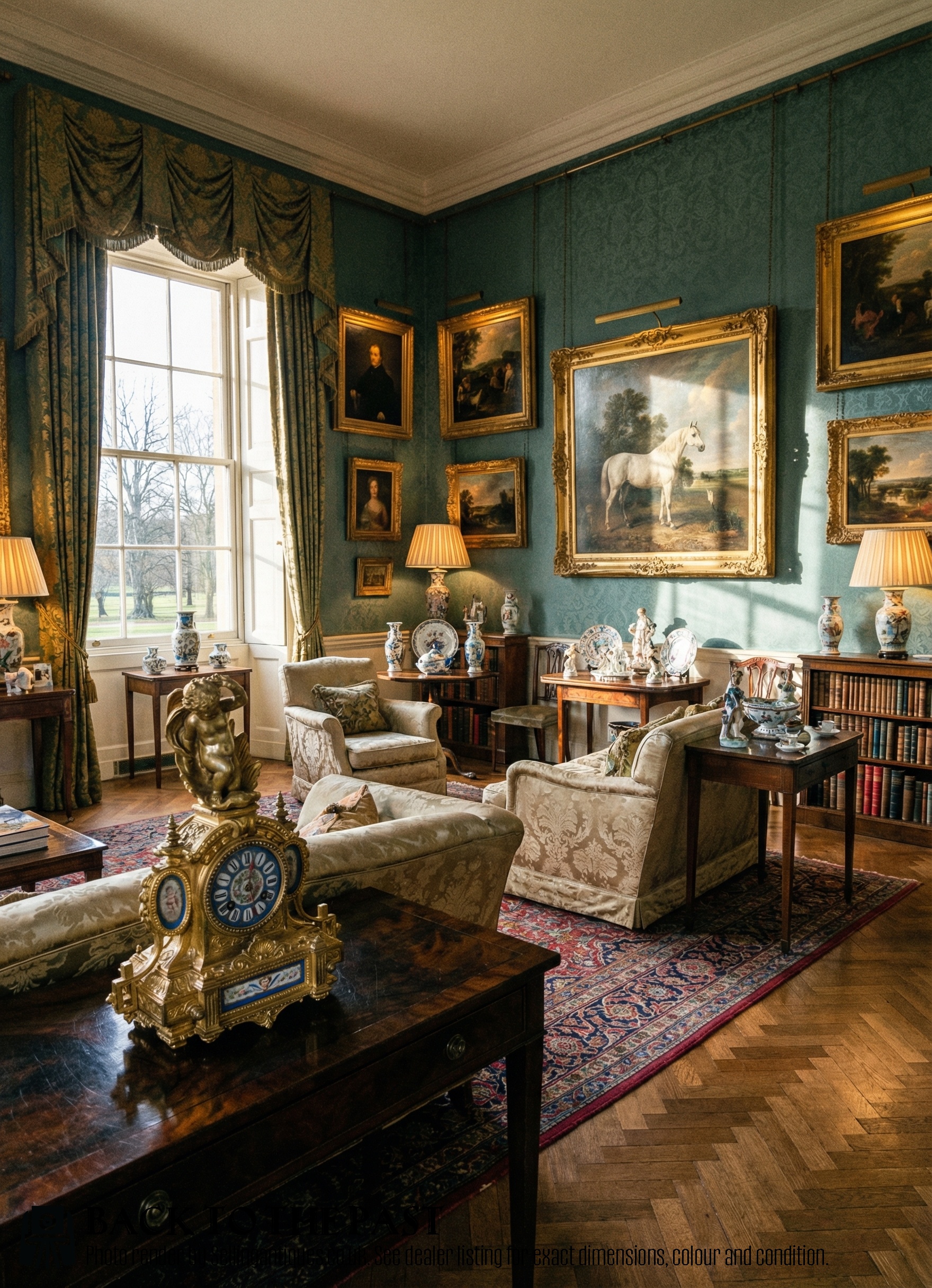
These clocks traditionally occupied prominent positions in nineteenth-century reception rooms and parlours. They sat upon mantelpieces above fireplaces to command attention in the room.
Their decorative weight made them central visual anchors for interior decor. Today they function similarly on sideboards or mantel shelves.
What styles influence these clock designs?
The designs draw heavily on historical French aesthetics, particularly Rococo Revival, Louis XV, and Louis XVI styles. Victorian Gothic Revival also appears among the architectural variants.
These revivalist movements celebrated historical craftsmanship with ornate scrolls, classical columns, and elaborate gilding. Makers reinterpreted past royal courts for nineteenth-century domestic tastes.