

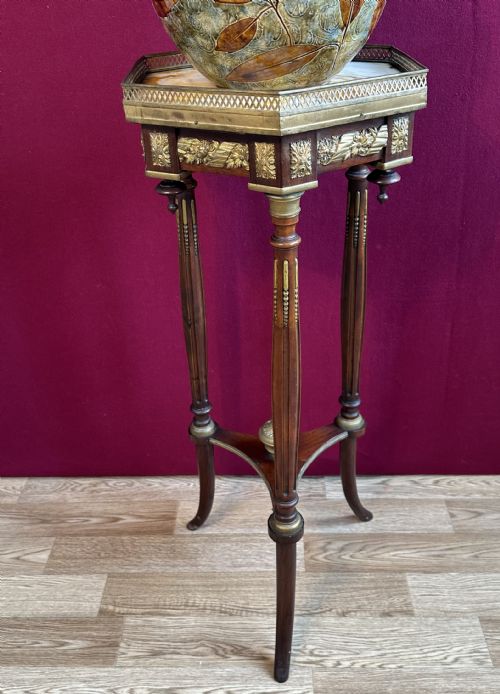


French Mahogany Plant Stands
French mahogany plant stands bring sculptural continental elegance to a room, serving as refined stages for greenery or decorative objects.
French Mahogany Plant Stands
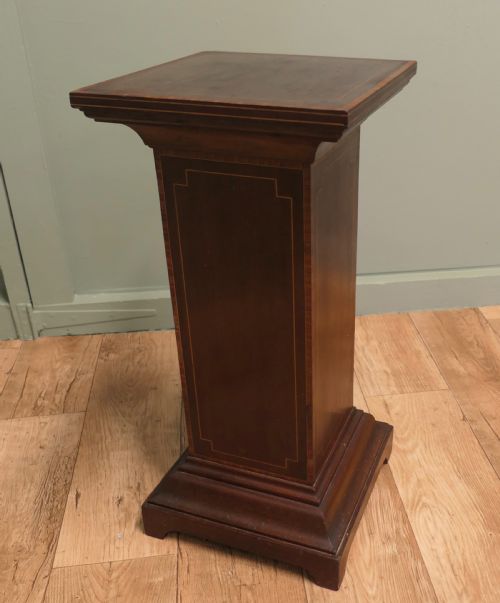
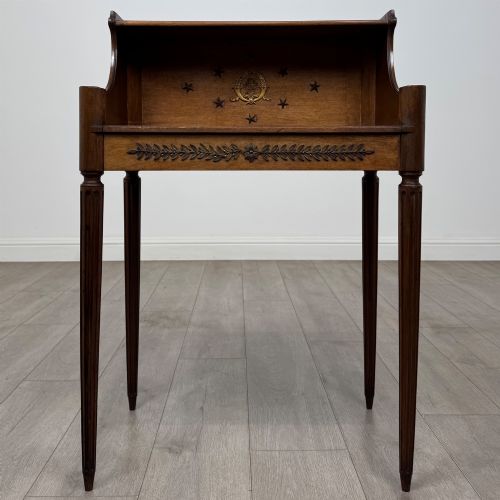
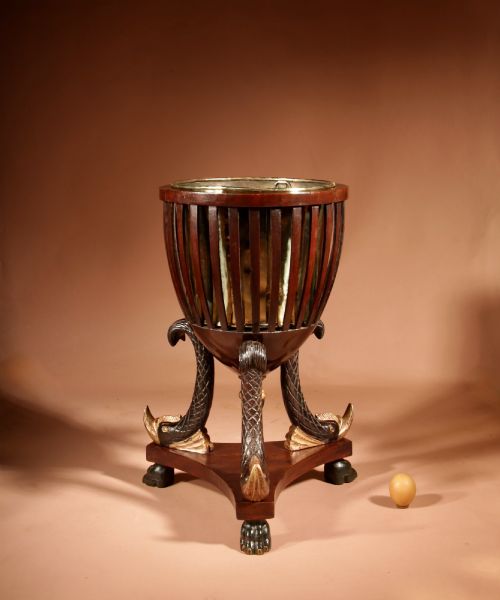
French mahogany plant stands encompass a variety of elevated display surfaces, jardinières, pedestals and torchères designed to hold foliage or ornamental items. These pieces frequently manifest as tall pedestals, round gueridons or small occasional tables dating from the nineteenth and early twentieth centuries. You will encounter styles reflecting French Empire, Louis XVI Revival and neoclassical tastes among the selections on this page.
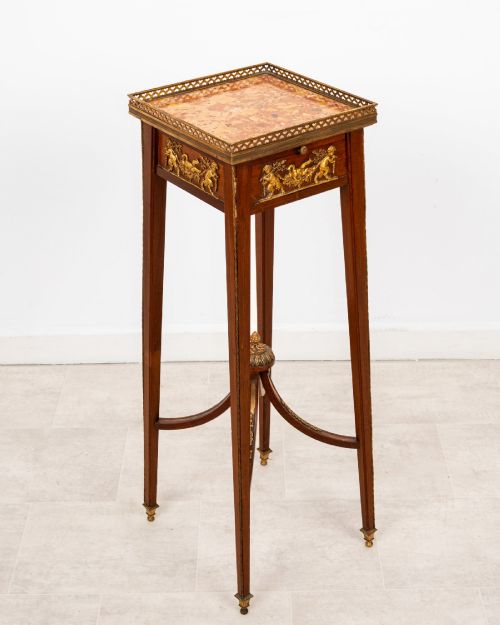
The primary forms found here range from slender column pedestals to dedicated planters lined for botanical use. Many incorporate inset marble tops and lower tiers, known as étagères, providing stable surfaces that resist water from pots. These stands bridge the gap between functional garden furniture and sophisticated interior decor.
Materials and construction
Cabinetmakers utilised rich mahogany as the primary timber backbone, sometimes pairing it with ebonised wood or other hardwoods for contrast. The wood was selected for its grain and warmth, providing a dark, steady foundation for decorative embellishments.
Metalwork played a defining structural and aesthetic role, with makers applying cast brass, ormolu and gilt bronze mounts to corners, feet and friezes. Insets of white, rouge or alabaster marble provided durable, cool surfaces resistant to moisture, while glass elements occasionally appeared in related tables.
The listings here combine nineteenth-century periods with early twentieth-century revivals, utilising mahogany, marble, brass, and ormolu across various pedestal and table forms.
Judging the work
Quality rests in the crispness of the cast metal mounts and the depth of the mahogany grain. Pieces bearing attribution to notable makers or workshops exhibit superior hand-chased ormolu and precise joinery that marks them out from mass-produced commercial furniture.
The integration of materials dictates distinction, particularly the quality of the marble slab and the tightness of its fit into the wooden frame. Heavy, well-figured timber combined with substantial gilt bronze rather than light plated brass separates utilitarian items from elite salon pieces.
François Linke
The French Mahogany Plant Stands Glossary
- Ormolu
- Gilt bronze applied to furniture mounts and decorative hardware. This technique involves coating bronze with a finely ground mercury and gold amalgam before heating.
- Jardinière
- A decorative planter or flower stand, often lined with metal. These vessels were designed specifically to hold indoor plants within formal rooms.
- Gueridon
- A small round table supported by one or more columns or figures. Originating in the seventeenth century, these stands frequently display marble tops and brass mounts.
- Étagère
- A piece of furniture consisting of open shelves for displaying small objects. They provide multiple tiers for arrangement.
- Torchère
- A tall ornamental stand designed to hold a light or a display piece. These slender columns elevate plants or sculptures to eye level.
French Mahogany Plant Stands: Frequently Asked Questions
How do I identify the period?
Dating relies on stylistic clues such as the presence of heavy neoclassical columns, Empire ormolu mounts, or lighter Edwardian inlay work. Nineteenth-century examples often display denser mahogany and hand-cast bronze details.
Examining the construction methods underneath and inside the frame offers further confirmation of age. Machine-sawn timber points toward the later nineteenth or early twentieth century.
Are these stands waterproof?
Most pieces featuring marble or stone tops handle potted plants well without risking the underlying wood. However, older timber tiers lack modern waterproof sealants and require protective saucers beneath pots.
Careful watering habits prevent moisture rings and preserve the polish of the mahogany. Using discreet liners protects vintage surfaces from accidental spills.
Where should I place a pedestal?
These stands suit corners, empty wall spaces, or flanking doorways where a vertical accent draws the eye upward. Placing them near light sources helps support the plants they carry.
Their compact footprints allow them to fit into tight spaces where standard tables fail. They work well paired with urns, bronzes, or trailing foliage.