



French Mahogany Gueridon Table
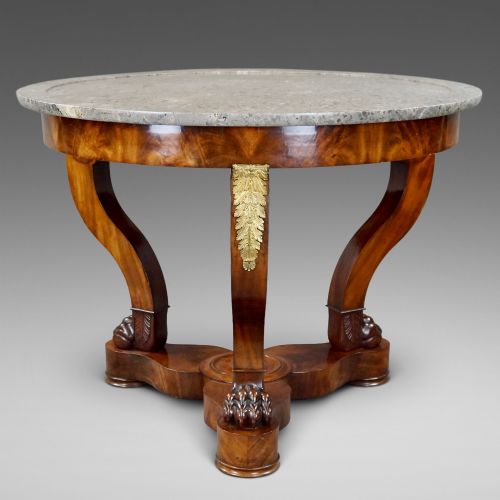
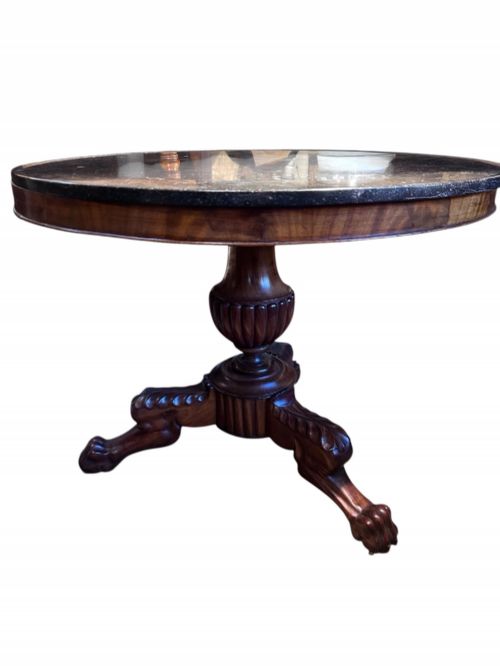
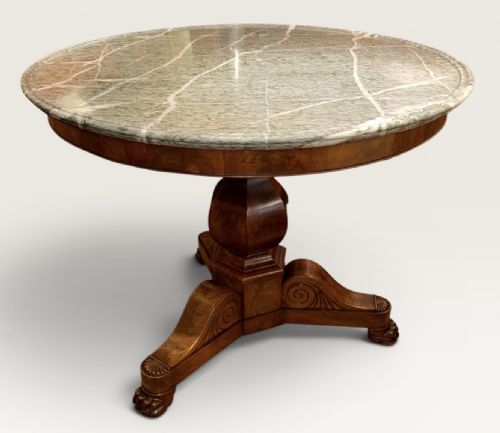
When you search for a french mahogany gueridon table, you seek a round freestanding pedestal piece designed to anchor a room.
French Mahogany Gueridon Table
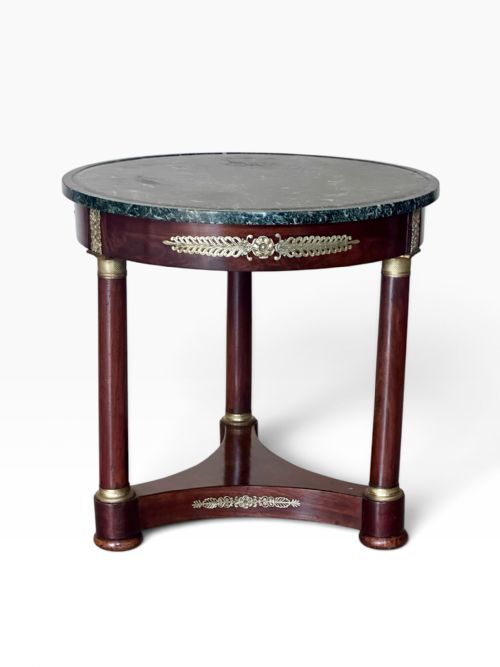
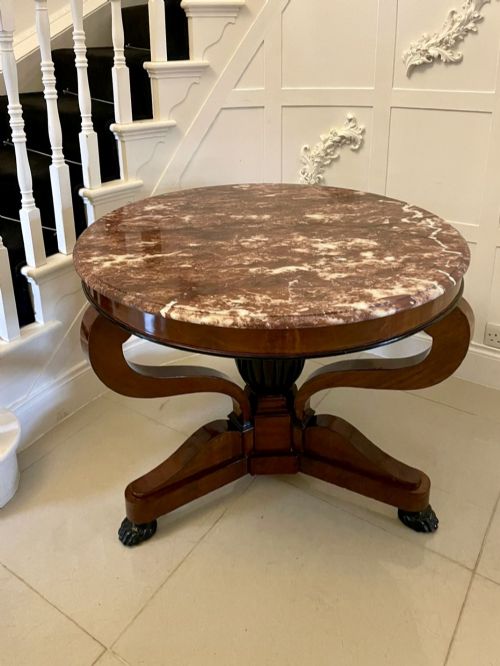
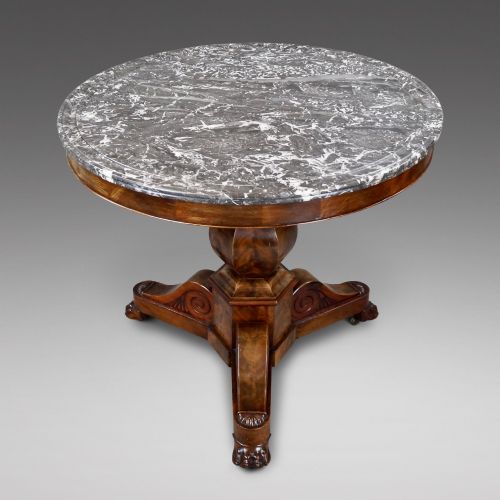
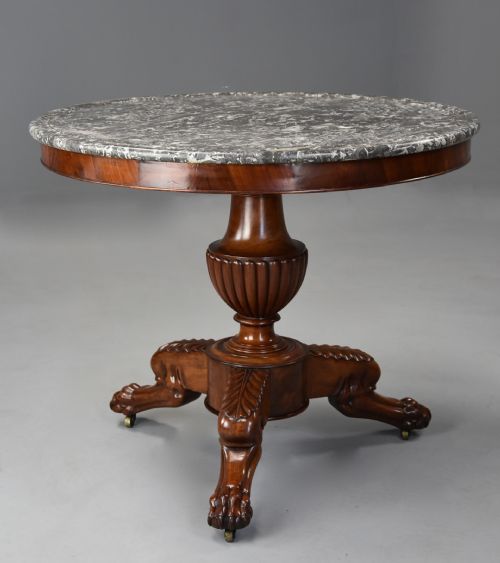
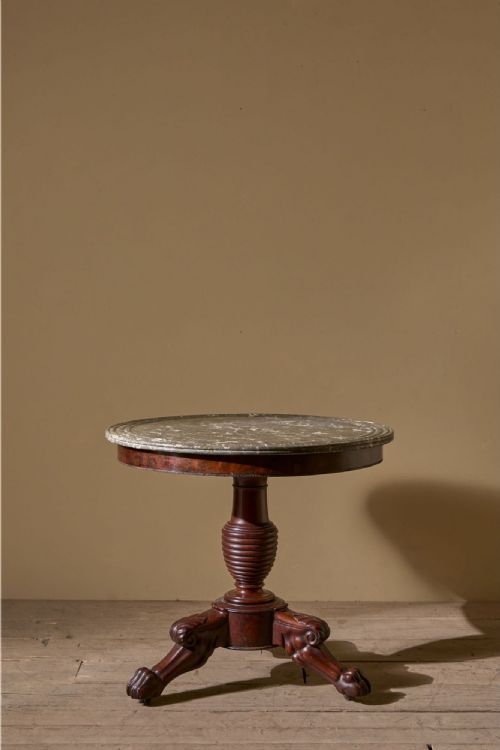
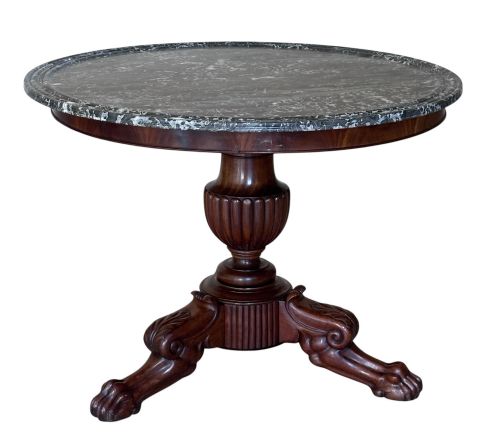
A french mahogany gueridon table typically stands on a single central pedestal with a circular top, functioning historically as a centre table, lamp table, or occasional surface. These pieces emerge predominantly from the nineteenth century, spanning periods from the Empire and Charles X eras through to later revival styles.
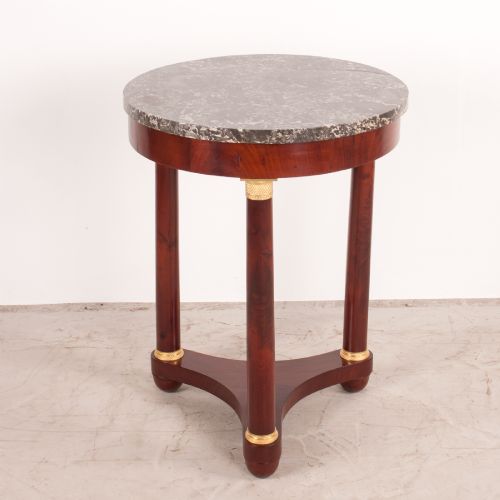
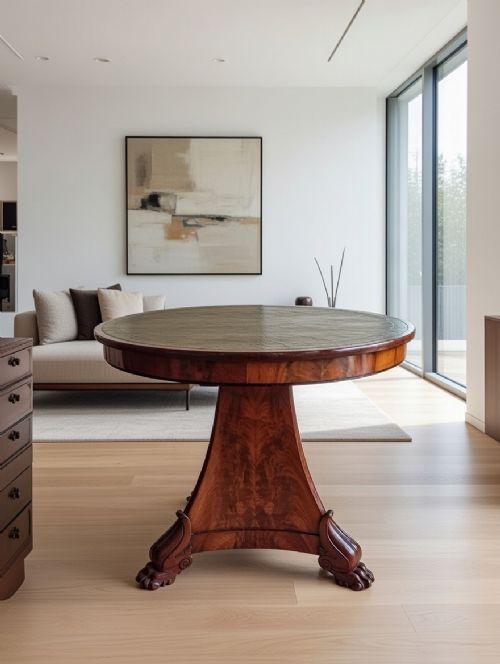
The most common formats you encounter combine dense mahogany timber with inset marble tops in white, grey, red, or black. Makers also produced variations featuring leather tops or flame mahogany veneers, adapting the classic round pedestal silhouette for domestic sitting rooms and salons.
Distinctions in quality
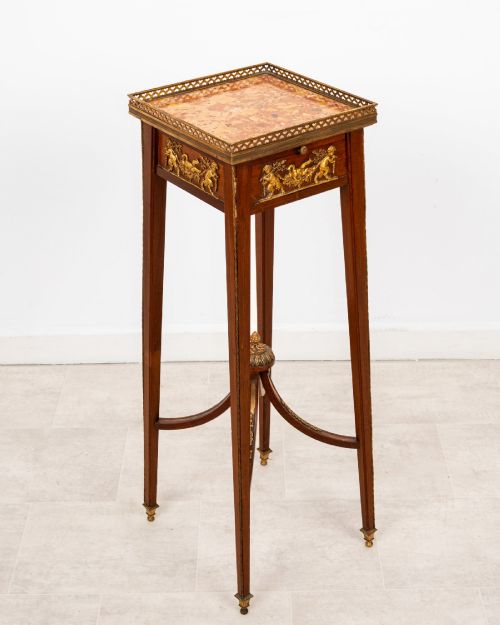
The sophistication of the carved wooden details and the crispness of the cast brass or ormolu mounts separate standard production from superior examples. Master workshops invested heavily in sculptural mounts and refined timber selection, whereas lesser pieces rely on simpler turned columns without cast metal embellishments.
Originality of components dictates value, particularly the presence of matching veined marble slabs and undisturbed veneer work. Tables retaining their initial patination and integrated structural hardware demonstrate superior longevity compared to heavily restored or altered equivalents.
Listings demonstrate that nineteenth-century examples frequently pair mahogany bases with contrasting marble slabs and cast brass mounts.
A Hugnet Paris·François Linke
The French Mahogany Gueridon Table Glossary
- Gueridon
- A small round table supported by a central pedestal pillar, originating in seventeenth-century France as a stand for a torch or candle before evolving into a general table form.
- Ormolu
- Gilded bronze mounts cast and chased by metalworkers to adorn furniture legs, aprons, and pedestals with decorative metallic highlights.
- Flame mahogany
- A highly figured timber veneer sliced from mahogany logs where the grain creates a distinctive undulating, flame-like pattern across the tabletop.
- Centre table
- A freestanding piece finished on all sides, intended to occupy the middle of a room rather than sit flush against a wall.
- Marble top
- A polished stone slab fitted into a recessed wooden frame on the table surface, offering durability and a cool decorative contrast to the timber base.
French Mahogany Gueridon Table: Frequently Asked Questions
What is a french mahogany gueridon table used for?
These tables function primarily as freestanding centre pieces in drawing rooms or reception spaces, providing a stable surface for lamps, decorative objects, or books. Their round proportions allow movement around them easily within an interior layout.
Historically, homeowners utilised them as occasional tables for holding drinks or display items. Today, they serve a similar decorative purpose while adding distinct nineteenth-century character to a room.
How do I identify an Empire period gueridon?
Empire period examples often feature architectural pedestal columns, dark mahogany timbers, and classical cast bronze or ormolu mounts. Look for distinct figural carvings such as swans or ram heads integrated into the base.
These pieces typically date from the early nineteenth century and reflect the grand symmetrical aesthetic favoured during the Napoleonic era. Charles X and later revival pieces adopted slightly softer proportions.
Are the marble tops original to these tables?
Many tables retain their original inset marble slabs, which can be verified by checking the fit within the wooden gallery and the natural ageing of the stone edges. White, grey, red, and black marble variants all appear across the period inventory.
Replacement marble is common due to the fragility of stone over long periods of domestic use. Inspect the underside of the top to see how the slab secures to the wooden carcase.
How do I care for a mahogany and marble table?
Clean the mahogany surfaces using a soft dry cloth and avoid modern silicone polishes that can degrade the traditional polish over time. Feed the timber periodically with appropriate wax to maintain the grain depth.
Protect the marble top from acidic spills such as wine or citrus juice, which can etch polished stone surfaces. Use coasters and wipe the stone gently with a damp cloth.