
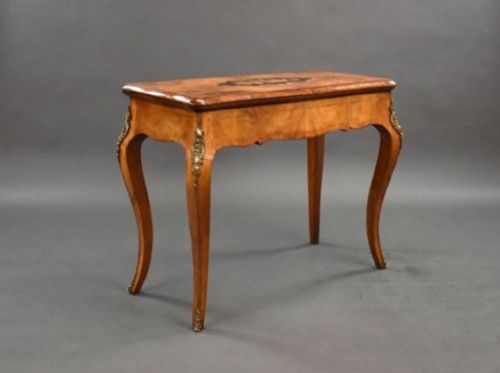


French Mahogany Console
When you search for a french mahogany console, you are tracking down a statement piece of continental joinery that brings architectural dignity to a hallway or drawing room.
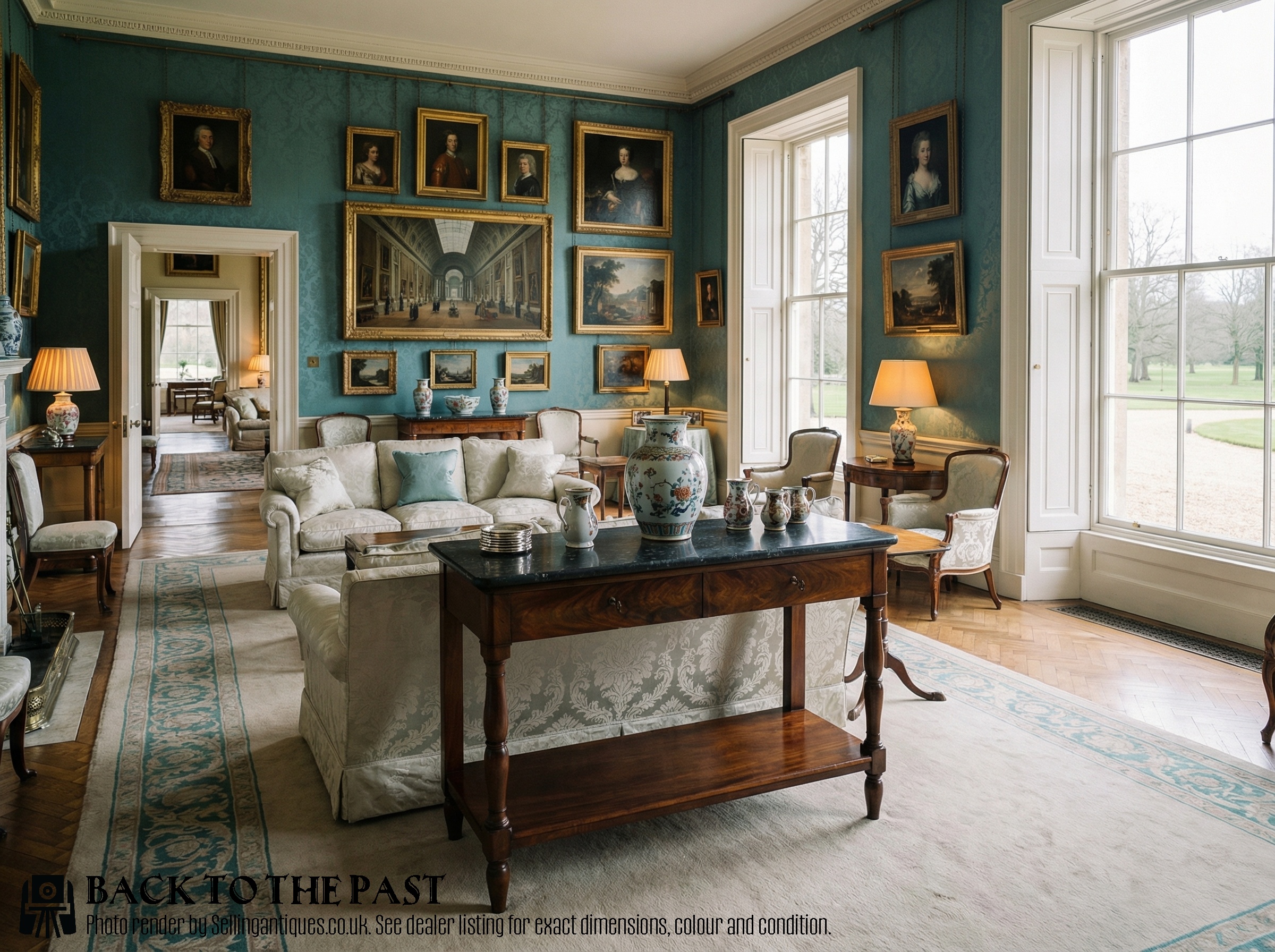
French Mahogany Console
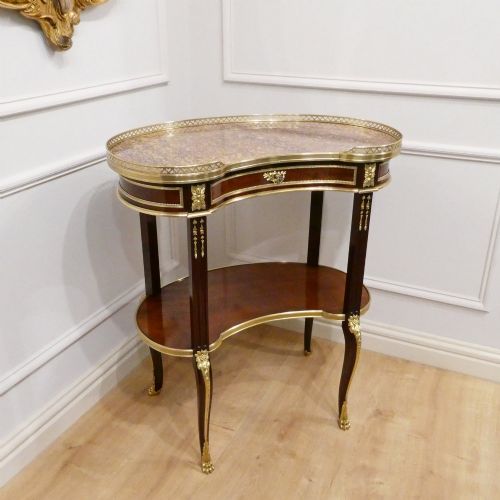
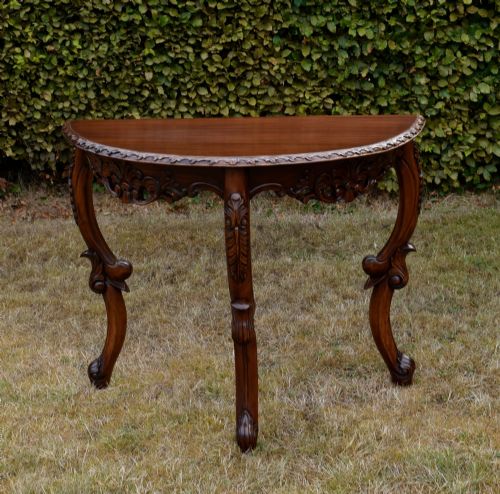
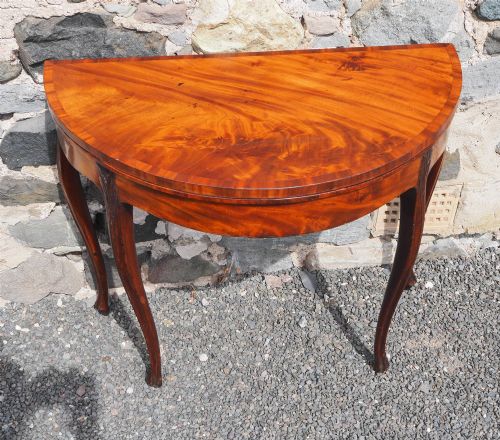
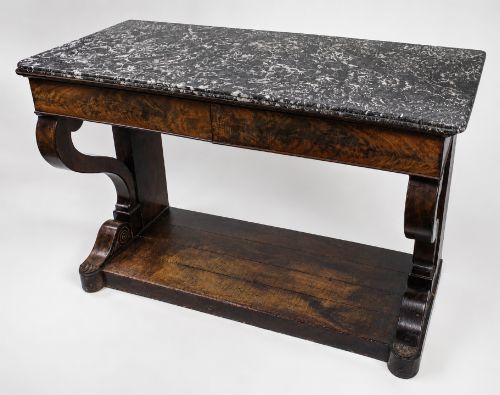
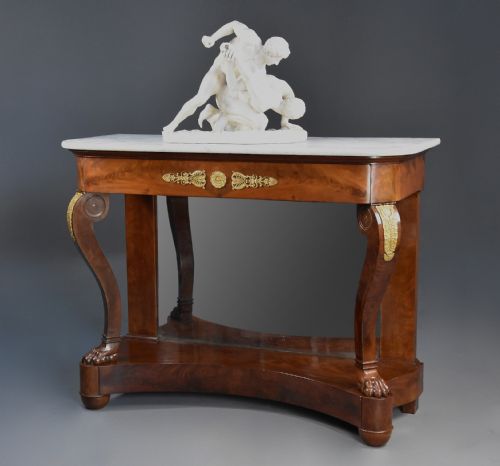
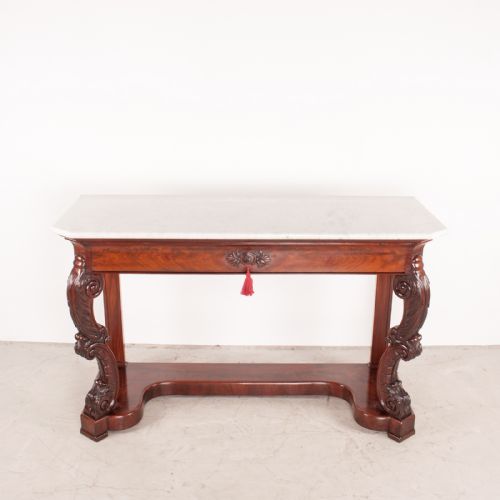
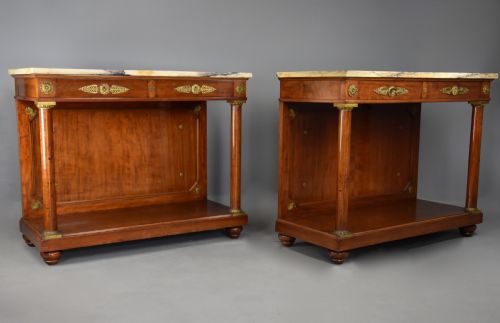
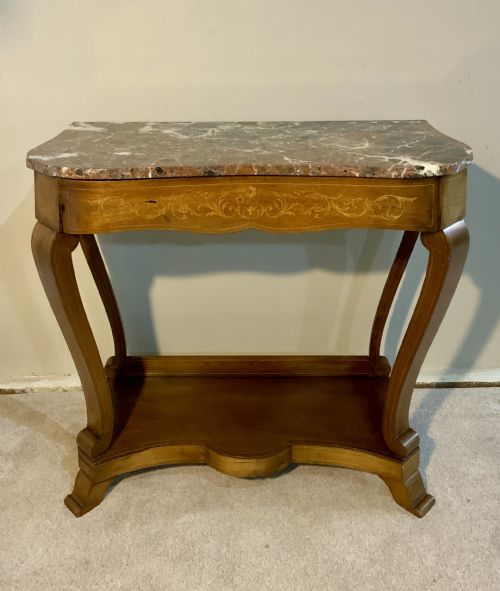
A french mahogany console table typically presents a sturdy timber carcass paired with a contrasting stone top, frequently designed to sit flush against a wall in a reception room or salon. The pieces found here span the nineteenth century and the early twentieth century, taking forms such as the semicircular demi-lune, the upright pier table, and the larger architectural console often accompanied by a fitted mirror.
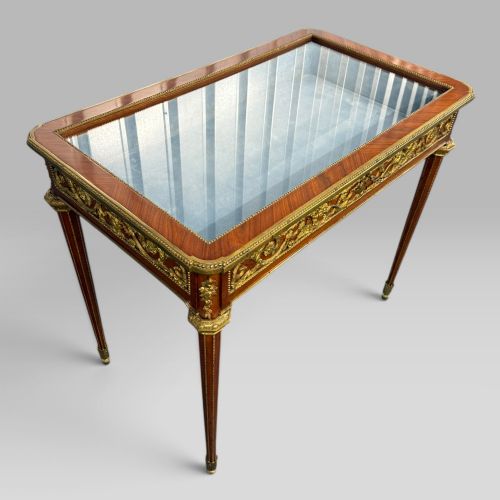
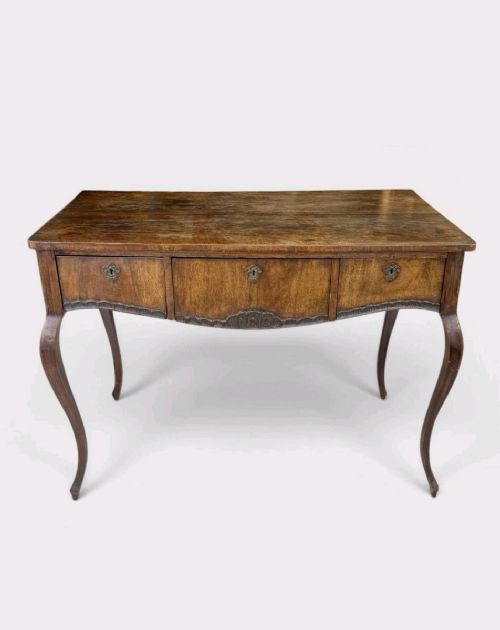
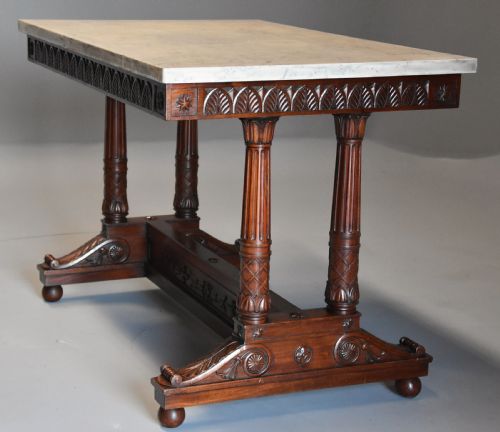
Makers working in the French Empire, Louis XVI Revival, and Charles X styles dominated production, creating substantial side furniture that balances utilitarian surface space with classical decorative motifs. Alongside traditional console tables, the selection includes related formats such as card tables, writing desks, and centre tables sharing the same timber vocabulary.
Materials and Construction
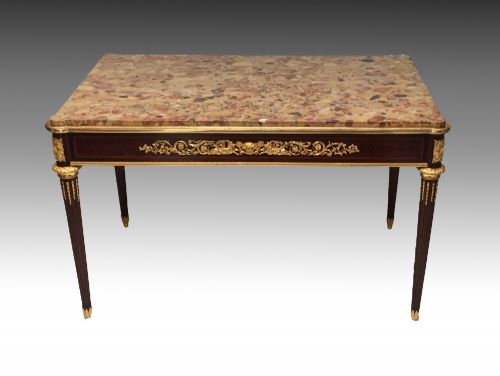
Cabinet makers utilised rich dense timbers, employing flame mahogany and plum pudding veneers over sturdy pine or oak carcases to achieve deep figured grain patterns across the front frieze and legs. These polished wood surfaces are regularly contrasted with smooth marble tops in white or fossil varieties, secured neatly within the upper framing.
Metal ornamentation played a central role in the assembly, with gilt bronze and ormolu mounts applied to corners, feet, and aprons to highlight the structural lines of the design. Brass details and intricate marquetry or parquetry inlay further decorated the timber surfaces on specific revival and neoclassical examples.
Listings feature mahogany, marble, ormolu, brass, and marquetry inlay across periods spanning the nineteenth century and the early twentieth century.
Judging Quality
The distinction between ordinary production and superior craftsmanship rests in the selection of the mahogany veneers and the precision of the cabinet work. Master workshops balanced rich figure against clean architectural proportions, ensuring the timber grain flowed naturally across the drawers and panels without awkward interruption.
Execution of the metalwork separates workshop tiers, as finely chased ormolu and gilt bronze mounts display crisp relief and secure integration into the wood. The weight and finish of the marble top, along with the subtlety of any marquetry inlay, complete the measure of the piece.
Maison Millet·François Linke·Krieger Paris·JACOB·Jean Joseph Chapuis·Maison Mottheau
The French Mahogany Console Glossary
- Console
- A side table designed to stand against a wall, frequently secured to it or balanced on scroll front legs. These tables often feature prominent marble tops and decorative friezes.
- Ormolu
- Gilded bronze ornamentation applied to furniture mounts and decorative details. The technique involves treating brass or bronze with a gold amalgam to achieve a rich metallic finish.
- Marquetry
- Decorative patterns formed by inserting thin pieces of wood, shell, or ivory into a veneered surface. This technique creates complex pictorial or geometric designs across the tabletop.
- Demi-lune
- A half-moon or semicircular shape common in table design. This format allows the furniture to fit tightly against a wall while offering a useful curved surface.
French Mahogany Console: Frequently Asked Questions
Where should I place a console table?
These tables find a natural home in entrance hallways, drawing rooms, or dining spaces where floor space is limited. Their shallow depth allows them to sit comfortably against a wall without obstructing walkways while providing a surface for lamps or decorative objects.
Historically, they were often paired with matching wall mirrors to reflect light and complete the architectural scheme of a grand interior.
How do I care for marble and mahogany?
Mahogany responds best to a gentle wax polish applied sparingly to maintain the natural lustre of the timber. Avoid placing the wood in direct sunlight or near heat sources to prevent the veneer from drying out.
Marble tops require simple cleaning with a damp cloth and mild soap. Acidic liquids should be wiped away promptly to protect the polished stone surface from etching.
Are these tables designed to be freestanding?
Most traditional console tables are designed to stand flat against a wall and may rely on structural brackets or wall fixings for total stability. The rear legs and back edges on these models were often left unfinished.
Centre tables and certain larger console variants feature finished backs and four fully detailed sides, allowing them to sit out in the middle of a room.