


French Louis XV Style Vanity
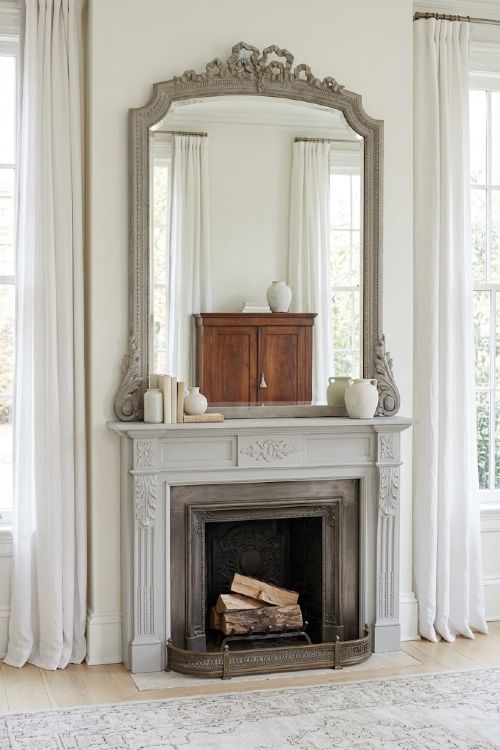
These french louis xv style vanity items bring curvaceous rococo elegance and intricate carving to your dressing room.
French Louis XV Style Vanity
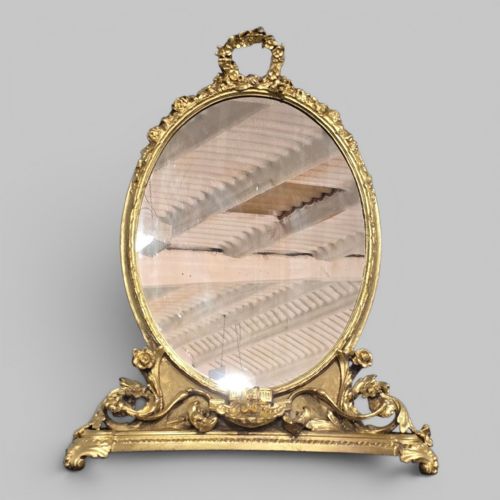
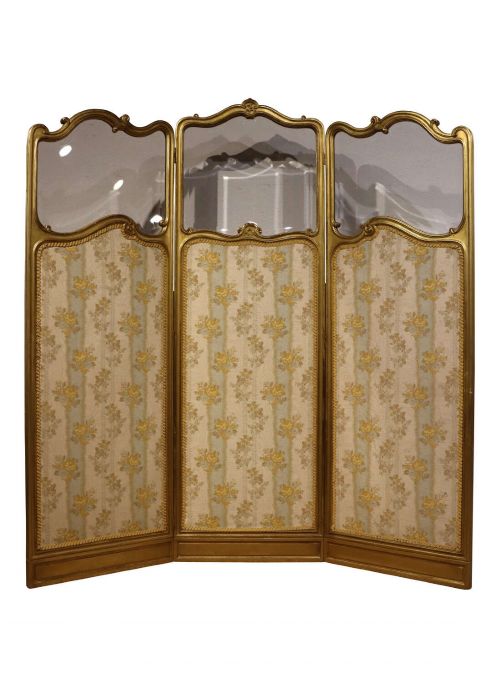
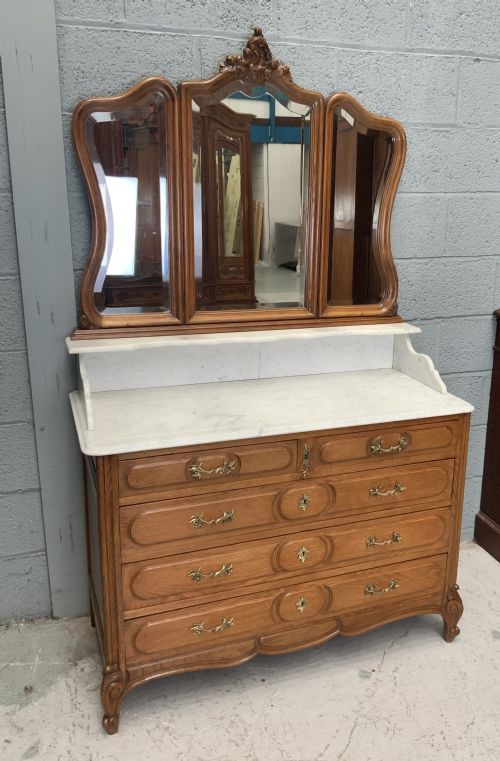
A french louis xv style vanity encompasses dressing tables, poudreuses, and dressing mirrors created across the nineteenth and early twentieth centuries. These pieces reflect the exuberant curves and organic ornamentation of eighteenth-century French design, revived through periods such as the Victorian era and the late nineteenth century. You will encounter dressing tables fitted with work compartments alongside pivoting or threefold mirrors designed for the boudoir.
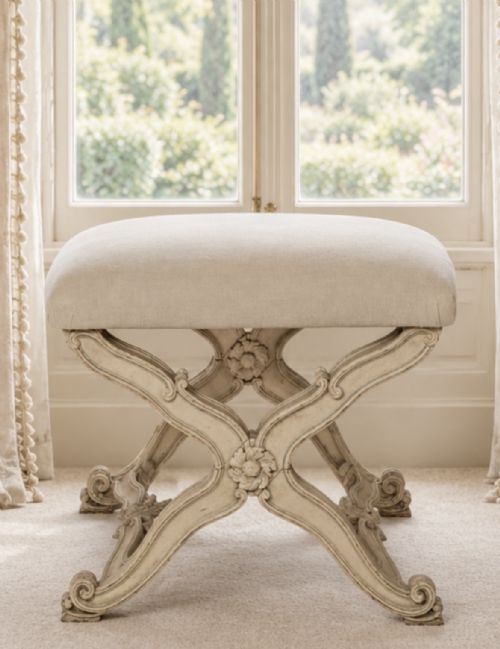
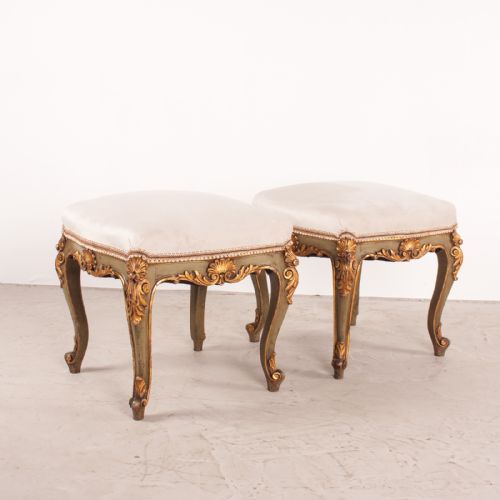
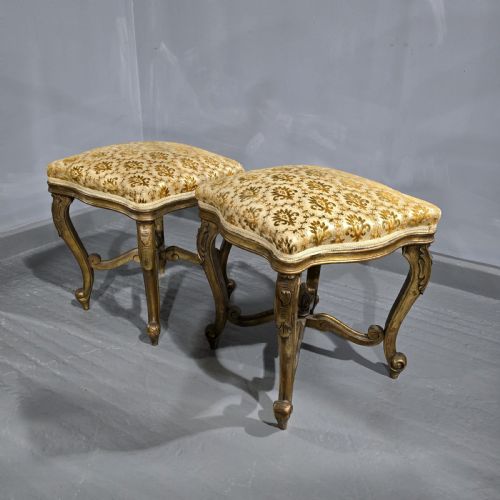
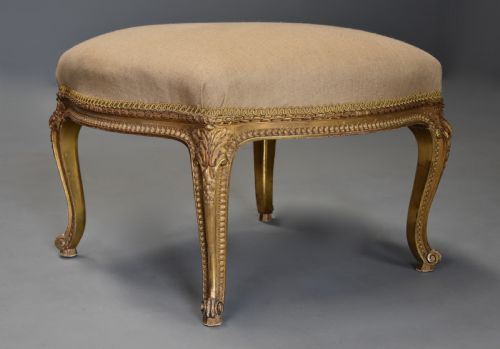
The selection on this page leans heavily toward companion pieces like footstools, side tables, and vanity screens rather than single-purpose dressing furniture alone. Dressing tables appear in forms ranging from walnut and tulipwood to painted finishes, often accompanied by matching or period-appropriate seating. Each object demonstrates the enduring appeal of rococo revival aesthetics in private chambers.
Materials and construction
Cabinet makers utilised a rich palette of timbers, including walnut, rosewood, tulipwood, and kingwood, frequently applying crossbanding to enhance surface movement. Carved gesso and giltwood provided the opulent frames for mirrors and the structural flourishes on stools and desks. Silk panels and decorative fabric inserts were integrated into screens and seating to soften the hard edges of the woodwork.
Construction relied upon traditional joinery combined with hand-carved decorative motifs characteristic of French provincial and chateau workshops. Gilding was applied over gesso to create reflective, luminous surfaces on frames, while bevelled glass was set into folding and table-top mirrors. These labour-intensive techniques ensured that every curve and scroll of the rococo style was executed with precision.
Some dressing tables hide compartments so secret even your morning coffee might feel watched.
Distinguishing quality
The hierarchy of quality rests primarily in the crispness of the hand-carving and the choice of primary timbers and veneers. Pieces featuring finely figured kingwood or tulipwood crossbanding demand closer inspection than plain painted alternatives, as do those with deep, undercut gesso ornamentation. Maker stamps, particularly those originating from Parisian workshops, elevate a piece by confirming documented provenance.
Hardware and auxiliary materials also dictate the upper tiers of craftsmanship. High-grade bevelled mirror glass, intact original silk panel inserts, and substantial giltwood frames separate standard commercial output from exceptional cabinet work. The fluidity of the scrollwork and the balance of the proportions reveal the maker's adherence to classical rococo principles.
LOIDRAULT FRERES PARIS
The French Louis XV Style Vanity Glossary
- Poudreuse
- A traditional French dressing table fitted with a mirror and compartments for cosmetics. These multifunctional pieces often double as work tables.
- Giltwood
- Timber coated with gold leaf or a gold-coloured metallic preparation over a gesso base. This treatment creates the bright, reflective finish seen on rococo revival frames.
- Crossbanding
- A decorative border of veneer laid perpendicular to the grain of the main surface. It frames the central timber panel on tabletops and desk lids.
- Gesso
- A plaster-like mixture applied to wood surfaces to provide a smooth base for gilding and deep relief carving. It allows for sharp, intricate ornamental details.
- Rococo Revival
- A nineteenth-century artistic movement that imitated the asymmetrical scrolls, shell motifs, and curving lines of the original French eighteenth-century style.
French Louis XV Style Vanity: Frequently Asked Questions
What is a poudreuse?
A poudreuse is a specialised French dressing table featuring a hinged top that opens to reveal a mirror and storage compartments. These versatile items served for grooming and letter writing in nineteenth-century boudoirs.
They combine utility with delicate cabinetry, often showcasing fine veneers like tulipwood or kingwood. Their compact design made them essential furniture for private dressing rooms.
How do I date these items?
Dating relies on identifying the revival period, timber usage, and mirror glass construction. Pieces span from the mid-nineteenth century through the early twentieth century, reflecting shifting revival tastes.
Examine the backboards, screw types, and veneer application for clues to the exact manufacturing era. Stylistic shifts between Victorian interpretations and later French provincial pieces help narrow the age.
Where were these pieces used?
These dressing tables, mirrors, and stools were designed for private bedchambers and boudoirs. They provided a dedicated space for personal grooming and morning preparation.
Today, they adapt easily into modern bedrooms as functional dressing stations or hallway consoles. Their decorative forms also allow them to function as statement accent pieces in living spaces.
Are mirrors original?
Many surviving dressing and threefold mirrors retain their original bevelled glass plates. Old glass often exhibits subtle foxing or imperfections that confirm its period authenticity.
When inspecting a vanity mirror, check the silvering behind the glass and the retention clips. Original frames and mirrors maintain the historical integrity of the piece.