

French Louis XV Display Cabinet
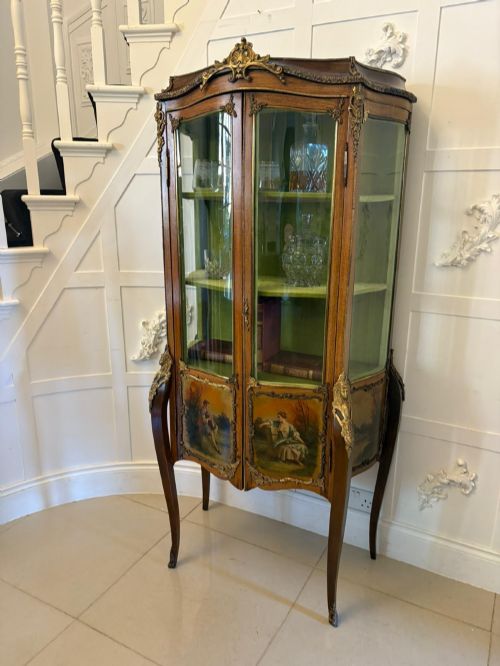
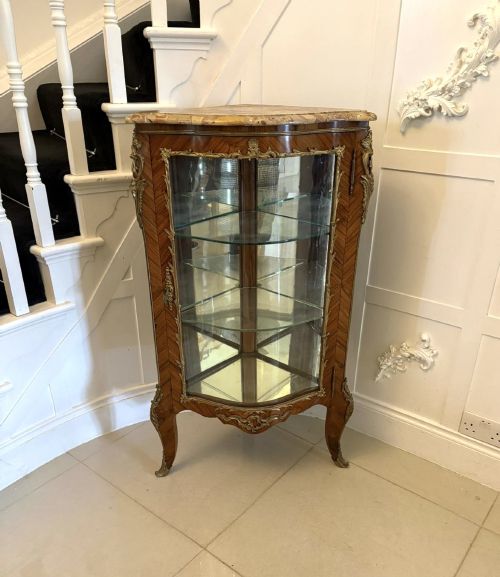
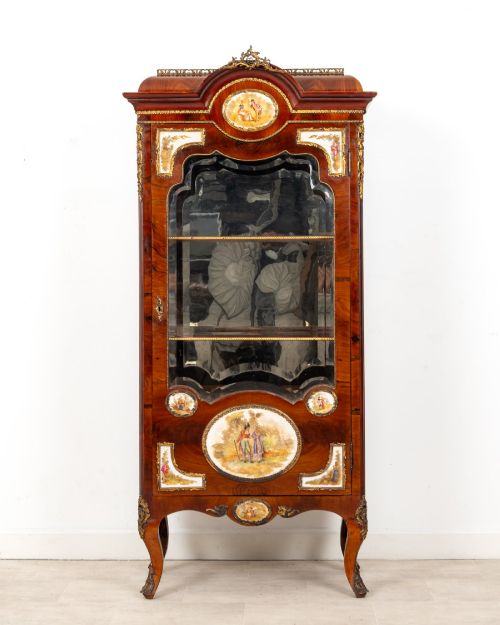
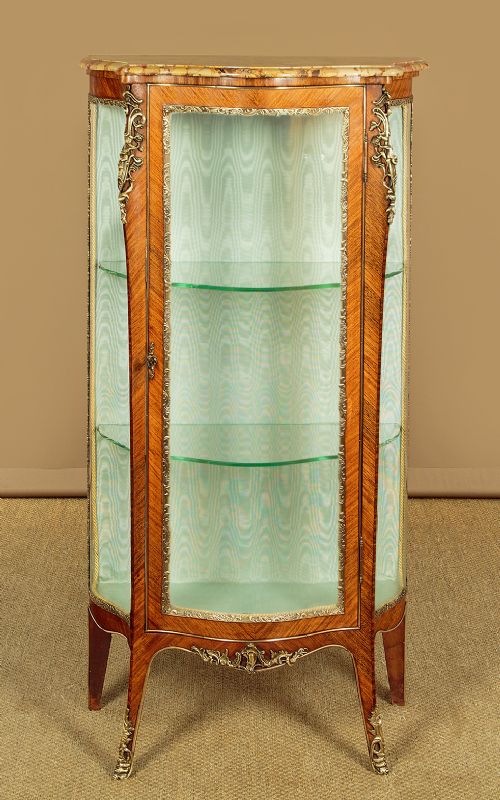
A french louis xv display cabinet brings flowing Rococo lines and glazed panels together to exhibit porcelain and small treasures.
French Louis XV Display Cabinet
A french louis xv display cabinet combines curvilinear woodwork with glass panels designed to exhibit porcelain, glassware and decorative objects. Buyers searching this phrase meet pieces ranging from grand nineteenth century revival vitrines to smaller twentieth century wall hanging or floor standing cabinets.
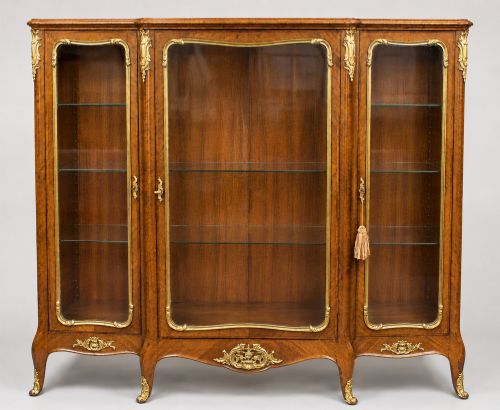
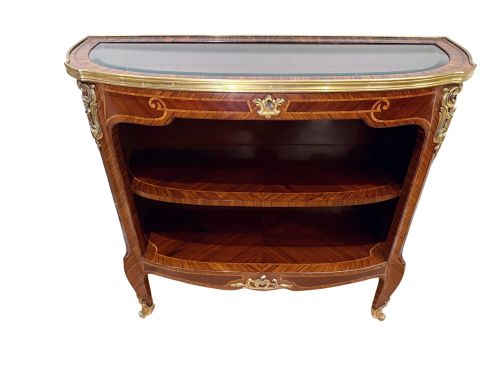
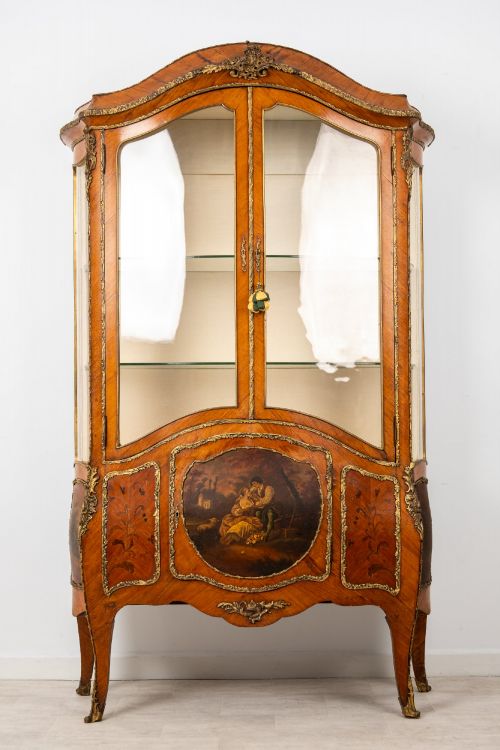
The dominant forms include single and double door vitrines, serpentine side cabinets and credenzas shaped with sweeping contours. Walnut, kingwood and mahogany form the primary carcases, often paired with painted lower panels or glazed doors.
Origins stretch from eighteenth century provincial workshops to nineteenth century Parisian ateliers working in the Rococo revival taste. These pieces serve primarily to display collections while introducing fluid decorative movement into an interior.
Materials and construction
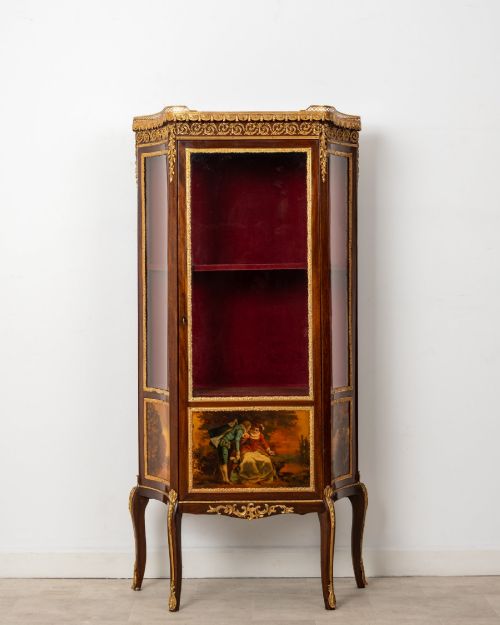
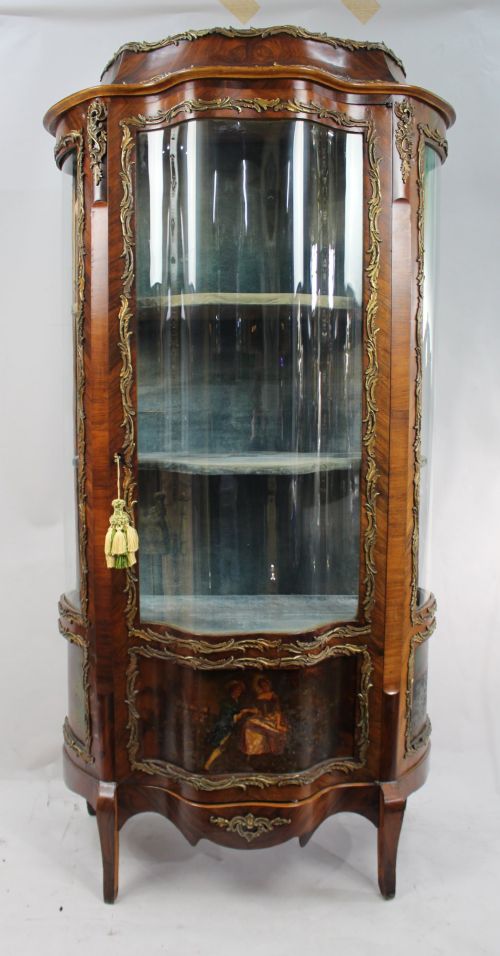
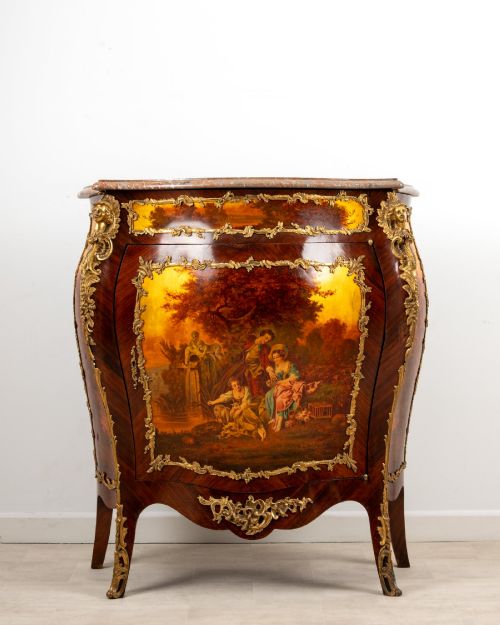
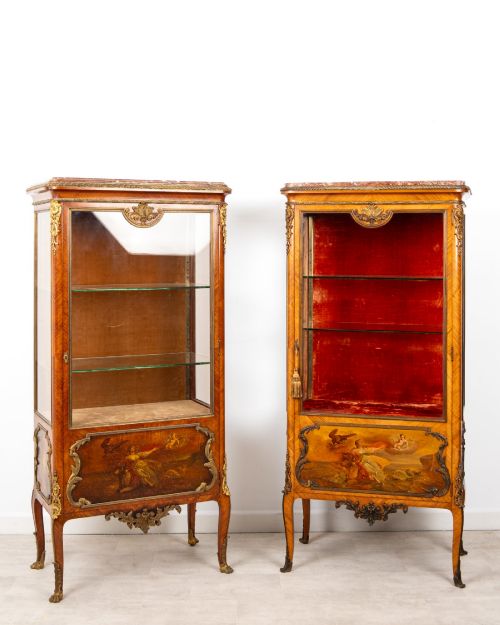
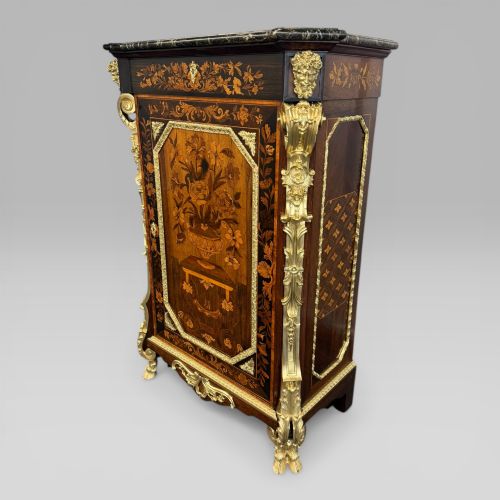
Cabinet makers constructed carcases using native and exotic timbers such as walnut, oak and mahogany, frequently veneered with quarter cut kingwood in geometric or floral parquet arrangements. Marquetry detailing and painted Vernis Martin panels decorate the lower sections of finer examples.
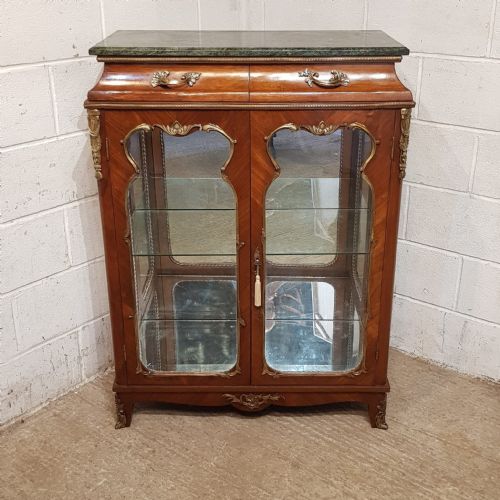
Gilt bronze and ormolu mounts frame the glass doors, corners and feet, casting scrolling acanthus leaves and asymmetrical cartouches. Marble tops in white or coloured varieties cap many of the nineteenth century floor standing cabinets.
Glass panes, often curved for serpentine models, sit within rebated wooden frames secured by internal glazing bars. Velvet linings frequently cover the interior display shelves and backing boards.
Recorded object types include freestanding vitrines, wall hanging cabinets, credenzas and pier cabinets mounted with Sevres or porcelain plaques.
Standards of craftsmanship
The precision of the ormolu mounts dictates the upper tier of quality, separating crisp, hand chased gilt bronze from softer, later brass castings. Maker attribution, such as work associated with François Linke or Edward Holmes Baldock, elevates the standing of a piece through superior carving and heavier gauge mounts.
Timber selection and veneer matching reveal the skill of the original workshop, particularly where grain patterns flow symmetrically across serpentine drawer fronts and curved door panels. The weight and thickness of the marble top and the integration of hand painted Vernis Martin scenes further distinguish standard production from exhibition grade items.
François Linke·Edward Holmes Baldock
The French Louis XV Display Cabinet Glossary
- Ormolu
- Gilt bronze mounts applied to furniture for decoration and edge protection. This technique involves coating cast bronze in a layer of gold amalgam.
- Vernis Martin
- A decorative lacquer technique developed in France imitating Japanese finishes. Artists applied multiple translucent varnish layers over painted scenes.
- Vitrine
- A glass fronted display cabinet designed specifically for showing porcelain and small collectibles. The term derives from the French word for glass.
- Serpentine
- A furniture shape featuring a double curved front line that convexly swells at the centre and concavely curves at the edges.
- Marquetry
- The art of applying small pieces of veneer to a structural structure to form decorative patterns and pictures.
French Louis XV Display Cabinet: Frequently Asked Questions
How do I style a vitrine cabinet?
Arrange collectibles inside by grouping objects according to height, material and colour to avoid visual clutter against the glass panels.
Keep surrounding furniture simple to let the curved woodwork and ormolu mounts of the cabinet remain the focal point of the room.
Were these cabinets used for books?
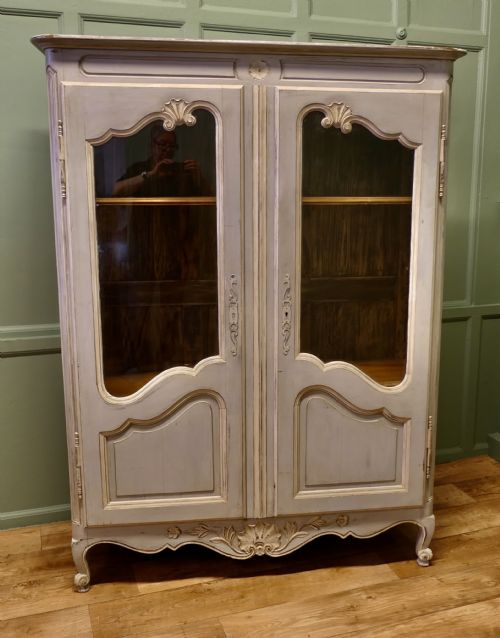
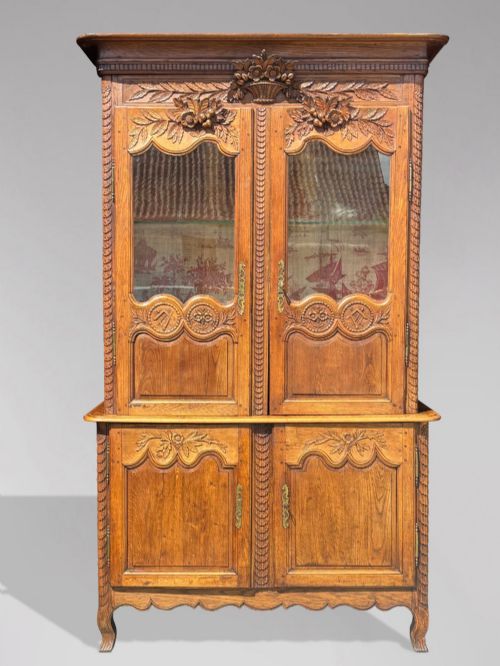
Some taller versions function as bookcases with glazed upper doors, but most vitrines serve strictly to display decorative objects and ceramics.
Heavier shelving in bookcases contrasts with the lighter, velvet lined tiers built into cabinets meant for delicate porcelain.
How do I identify a revival piece?
Nineteenth century revival pieces exhibit heavier timbers, machine sawn secondary woods and crisper cast ormolu mounts than eighteenth century originals.
Examine the construction joints and interior carcase timber to confirm the production period against stylistic markers.
What is a Vernis Martin panel?
Vernis Martin refers to simulated Japanese lacquerwork featuring painted pastoral or Asian inspired scenes under a clear varnish.
Cabinet makers placed these decorative panels on the lower sections of vitrines beneath the main glass display area.