


French Library Armchair
A french library armchair brings heavy timber frames and deep upholstery together for long hours of reading in the study.
French Library Armchair
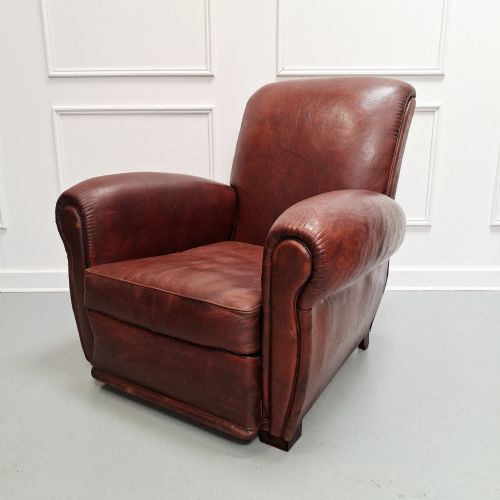
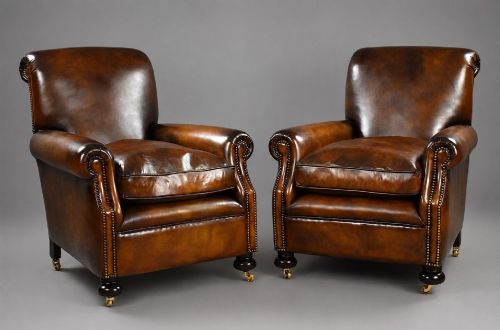
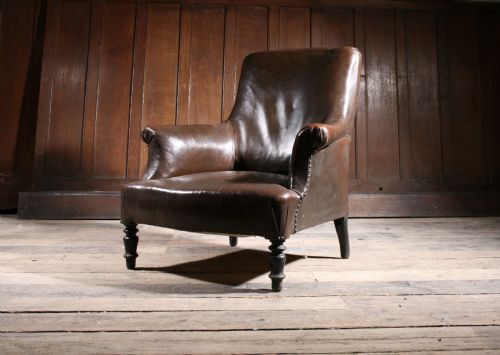
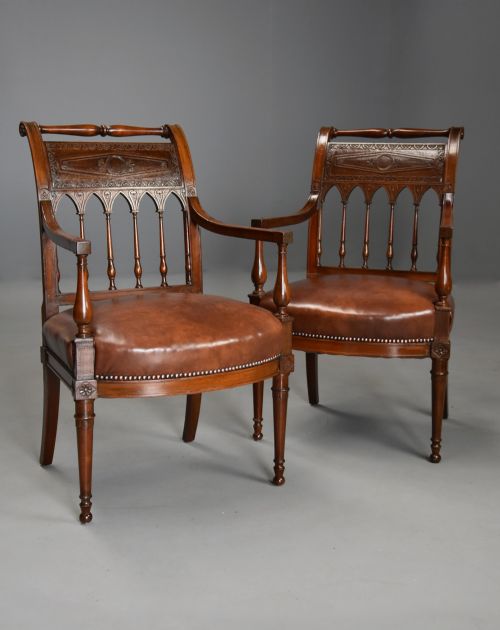
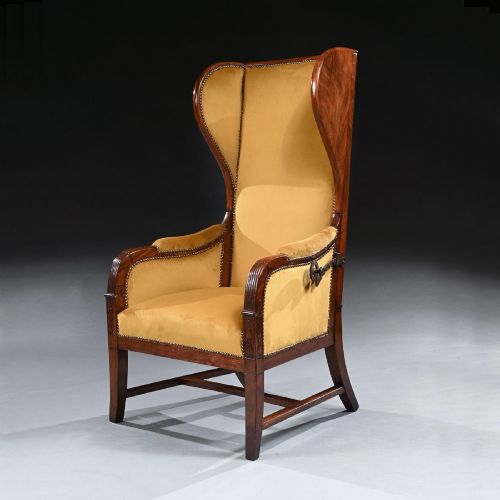
A french library armchair is a seat designed for the study, library or reading room, combining supportive armrests with upholstered comfort. The search phrase covers forms such as open armchairs, closed bergères, reclining wingbacks and low desk chairs.
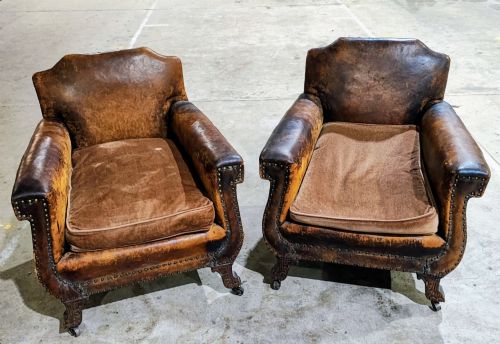
Most pieces met here belong to the nineteenth century, running from the Empire period down through Victorian and Edwardian revivals, alongside pieces from the 1920s and 1930s. Walnut and mahogany frame designs appear frequently, often accompanied by leather upholstery or tapestry covers.
How They Were Made
Frames are constructed from hardwoods like walnut, mahogany and rosewood, carved with the decorative vocabulary of Louis styles, Empire, or Art Deco. Timber components are jointed to support deep seating and upholstered sprung interiors.
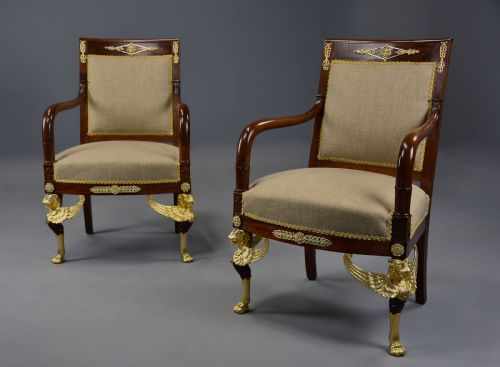
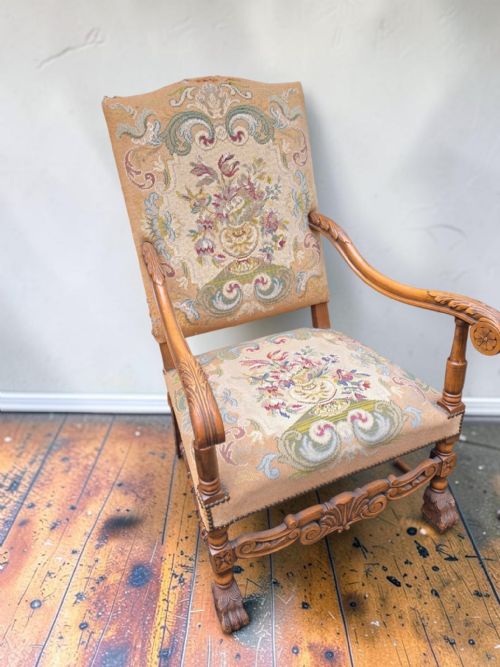
Surface finish relies on traditional polishing of timber and hand-stitching of leather, velvet, fabric, or needlepoint tapestry covers. Metal elements such as brass or ormolu mounts appear on specific Empire and revival pieces.
The listings on this page span the 18th, 19th, and 20th centuries, featuring walnut, mahogany, and leather.
What Varies in Quality
The degree of hand-carving on walnut and mahogany frames distinguishes standard production from finer cabinetwork. Crisp details in scrollwork, fluting, and ormolu mounts indicate skilled workshop output.
Original upholstery materials and the integrity of the internal webbed or sprung structure dictate the durability and historical consistency of the seat. Full restoration using period-appropriate leather or tapestry preserves the character of older examples.
The French Library Armchair Glossary
- Fauteuil
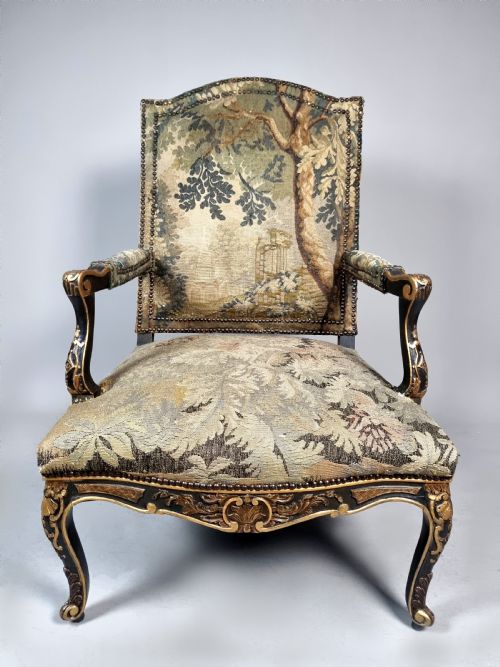
- An open-armed upholstered armchair with exposed wooden framing, typical of French seating design.
- Bergère
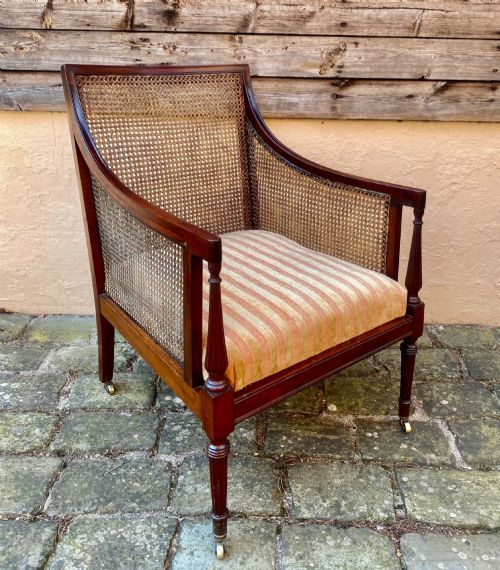
- An enclosed upholstered armchair with solid upholstered sides, often featuring cane work or fitted seat cushions.
- Gainsborough chair
- A wide, upholstered armchair with open padded elbows, short cabriole or square legs, designed for writing desks and libraries.
- Ormolu
- Gilt bronze mounted ornamentation applied to furniture frames during the eighteenth and nineteenth centuries.
- Tapestry
- Hand-stitched needlepoint fabric used for heavy upholstery on period armchairs.
French Library Armchair: Frequently Asked Questions
What is a french library armchair?
A french library armchair is a heavily upholstered seating piece designed for reading, working at a desk, or relaxing in a study. These chairs combine timber frames with supportive armrests and deep padding.
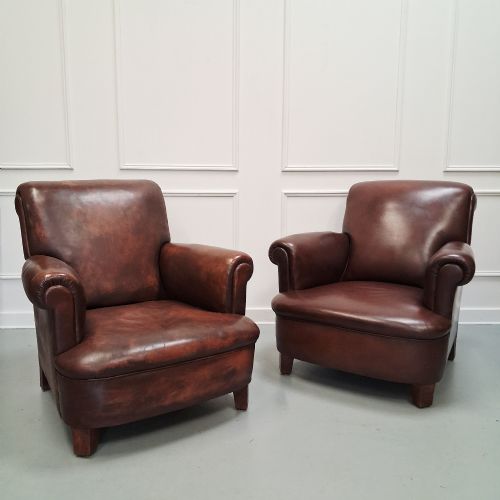
They appear in various forms, including open fauteuils, enclosed bergères, and heavy leather club chairs. Their design reflects periods from the eighteenth century through to the Art Deco era.
How do I date a library armchair?
Dating relies on identifying the prevailing stylistic influence, such as Louis XVI, French Empire, or Art Deco, combined with the construction timber. Mahogany and walnut were used across different decades with distinct carving styles.
Secondary indicators include the method of upholstery, hardware mounts like ormolu, and general framing proportions. Comparing timber patination helps confirm the age of the woodwork.
Where were these armchairs used?
These armchairs were placed in private libraries, studies, reading rooms, and formal drawing rooms of large townhouses and country residences. Desk variants sat alongside writing tables for correspondence.
Their robust construction was intended for daily reading and quiet study. The enclosed bergère styles provided shelter from drafts in large rooms.
How do I care for leather library chairs?
Leather upholstery requires regular dusting and occasional conditioning to maintain suppleness and prevent cracking. Keeping the leather away from direct sunlight and heat sources preserves the natural finish.
Wooden frames benefit from gentle cleaning and wax polishing appropriate for antique timber. Checking structural joints periodically ensures stability during daily use.