


French Kingwood Vitrine
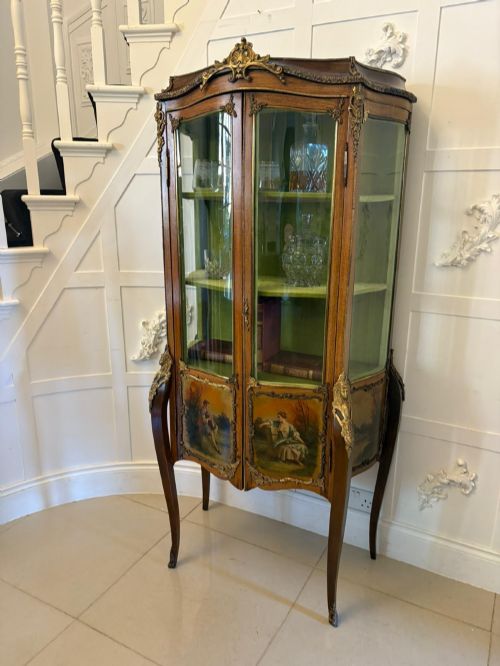
When choosing a french kingwood vitrine, collectors encounter ornate nineteenth-century display furniture designed to showcase porcelain and curiosities.
French Kingwood Vitrine
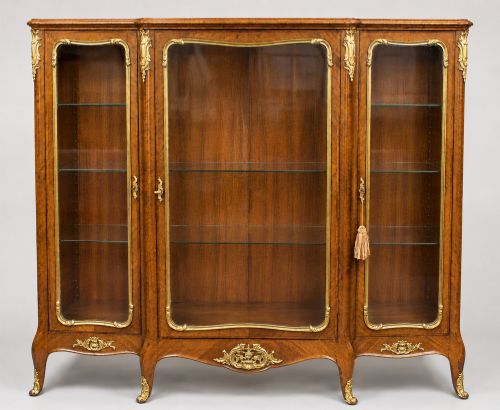
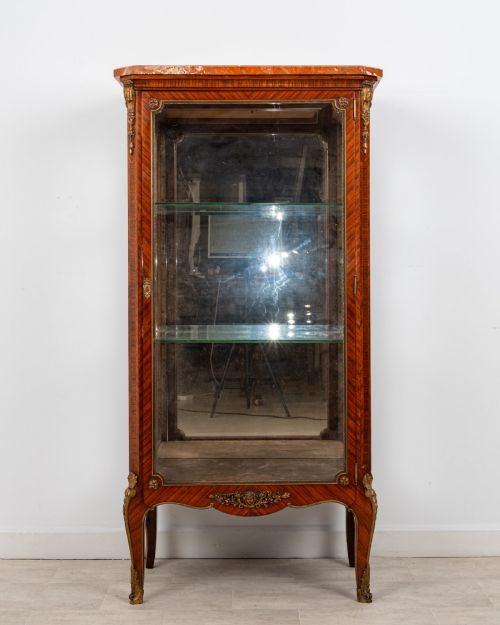
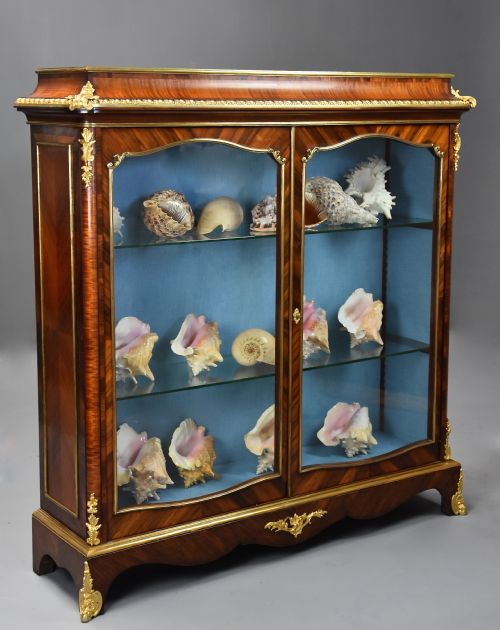
A french kingwood vitrine is an enclosed display cabinet constructed primarily during the nineteenth century, often reflecting Louis XV and Louis XVI revival aesthetics. These pieces typically feature glazed doors and sides designed for the exhibition of valuable objects and ceramics within a domestic interior.
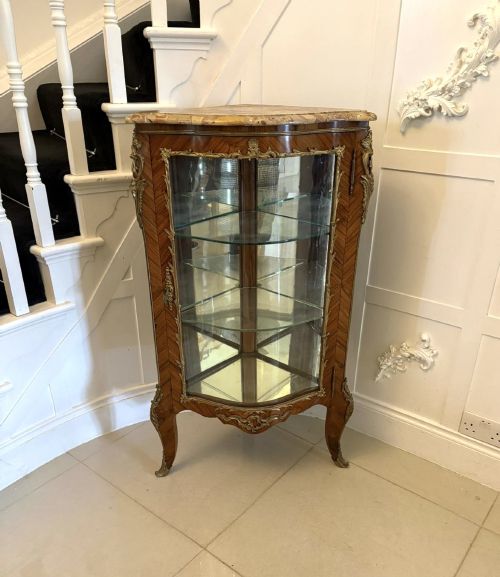
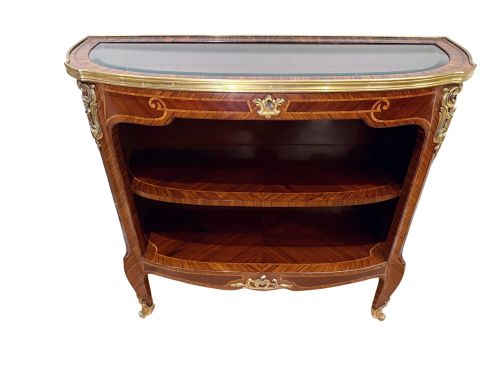
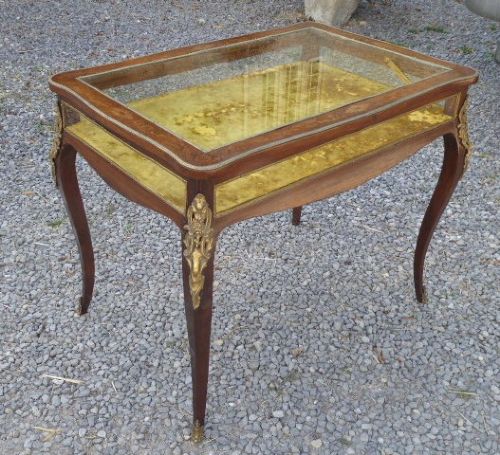
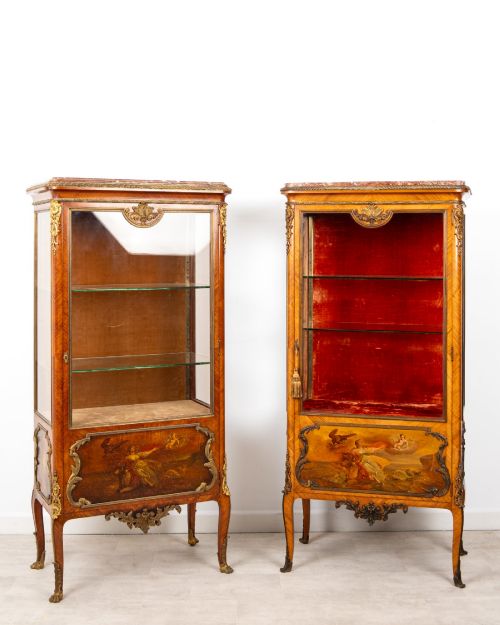
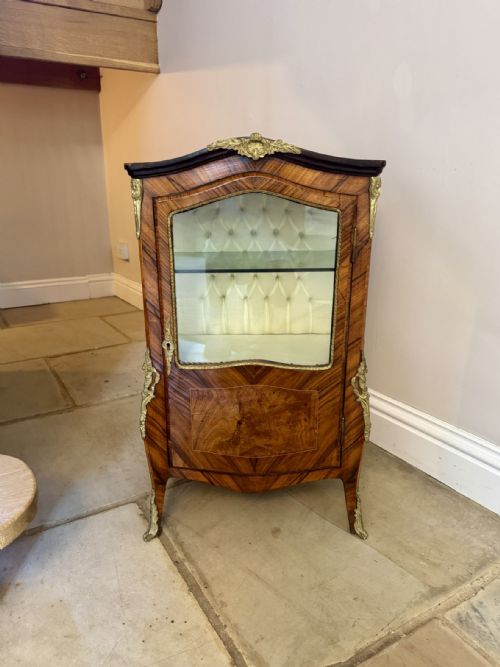
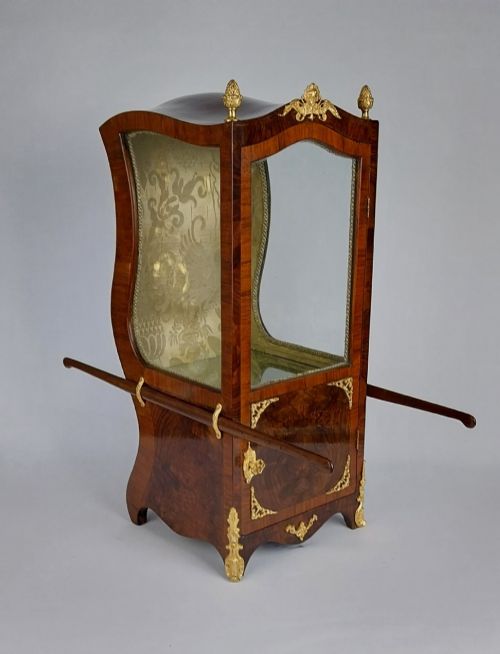
The versions most commonly met on this page span the Victorian era and the late nineteenth century, taking forms such as serpentine corner cabinets, tall standing vitrines, and low bijouterie tables. Workshops frequently combined rich timber veneers with decorative metal mounts to achieve a formal appearance.
How they were made
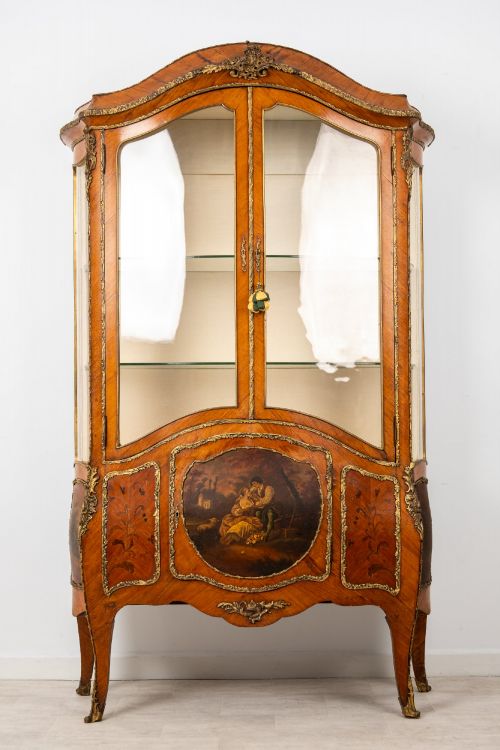
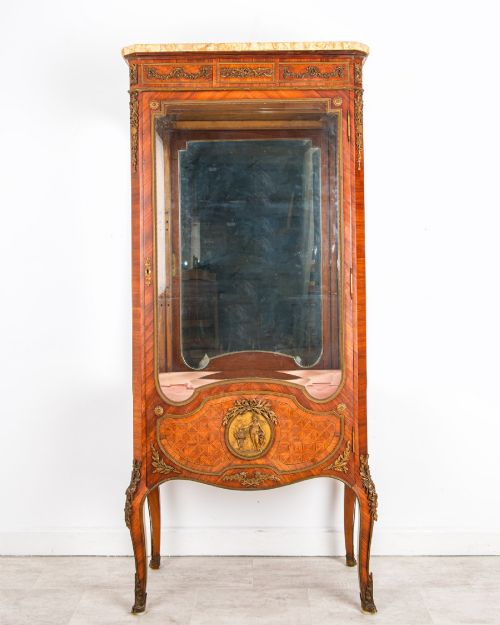
Cabinet makers utilised kingwood veneers laid in geometric parquetry or floral marquetry patterns over supportive carcases of oak or pine. Ormolu and gilt-bronze mounts were cast, chased, and fixed to the corners, feet, and cornices to accentuate the contours of the cabinet.
Many examples incorporate shaped glass panes, marble tops, and painted Vernis Martin panels depicting pastoral scenes along the lower sections. Interior shelves were lined with fabric or velvet to complement the displayed items.
The listings demonstrate a strong preference for nineteenth-century manufacturing dates, with Louis XV and XVI revival styles dominating the decorative vocabulary.
What varies in quality
The calibre of a french kingwood vitrine depends largely on the crispness of the gilt-bronze mounts and the complexity of the underlying veneer work. Master workshops employed heavy, finely chased ormolu rather than lightweight stamped brass, and their marquetry showed precise botanical or geometric alignment.
Structural harmony also dictates value, where pieces with perfectly fitted curved glass, intact hand-painted Vernis Martin panels, and original marble tops represent the pinnacle of nineteenth-century cabinet making.
François Linke·G. Durand·Maison Mottheau·Victor Raulin·Gouffel
The French Kingwood Vitrine Glossary
- Kingwood
- A dense, heavily figured Brazilian timber displaying rich brown and violet tones. It was widely used by nineteenth-century cabinet makers for decorative veneer work.
- Ormolu
- Gilt bronze applied to furniture as decorative mounts and feet. The process involves coating bronze with a mixture of gold and mercury before firing.
- Marquetry
- The art of applying small pieces of veneer to a structure to form decorative patterns. Craftsmen utilised various exotic woods to create floral or geometric designs.
- Bijouterie table
- A glass-topped display table designed for holding small valuables and jewels. These pieces often share the timber and mount characteristics of larger vitrines.
French Kingwood Vitrine: Frequently Asked Questions
What is a french kingwood vitrine used for?
These cabinets were originally manufactured to display precious porcelain, miniatures, and collection items safely behind glass panels.
Today, they serve the same function in domestic settings, offering dust-free visibility for curated objects.
How do I identify Louis XV revival style?
Louis XV revival pieces are characterised by asymmetrical flowing lines, serpentine fronts, and extensive use of floral marquetry.
Ormolu mounts on these cabinets typically feature C-scrolls and naturalistic acanthus leaf motifs.
Are marble tops original to these cabinets?
Many nineteenth-century vitrines and pier cabinets were fitted with shaped marble tops to add weight and a formal surface.
White and variegated marble slabs are frequently integrated directly into the upper wooden framework of the cabinet.
How should I clean vernis martin panels?
Painted lacquer panels require gentle dusting with a dry, soft microfibre cloth to protect the historic varnish layer.
Moisture and modern chemical polishes can damage the delicate paintwork underneath the clear finish.