
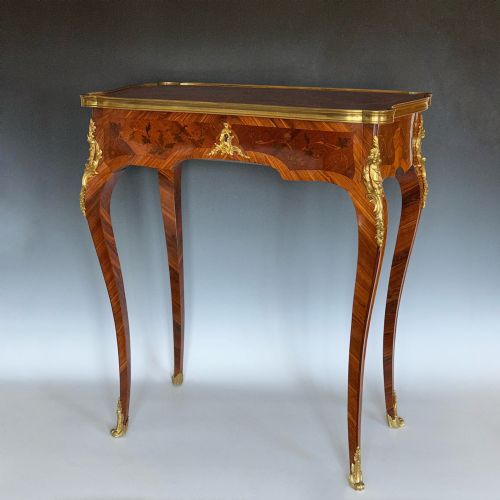
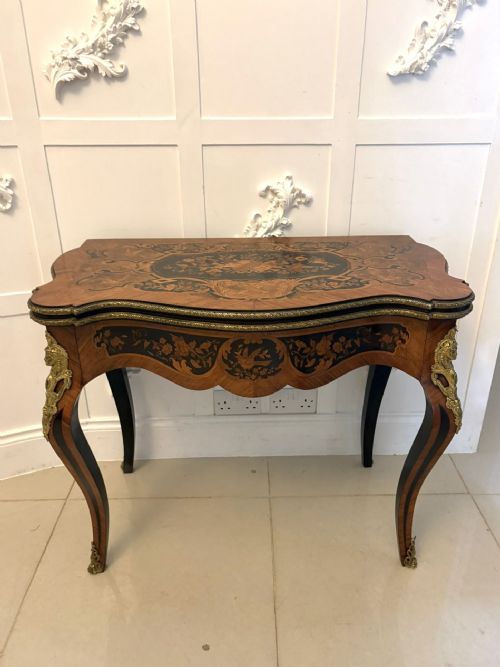


French Kingwood Console Table
A french kingwood console table brings together rich veneers, gilt mounts, and revival styling from the nineteenth century.
French Kingwood Console Table
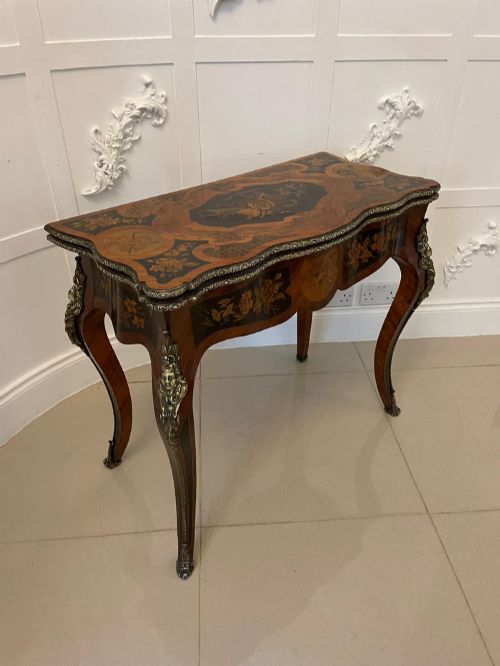
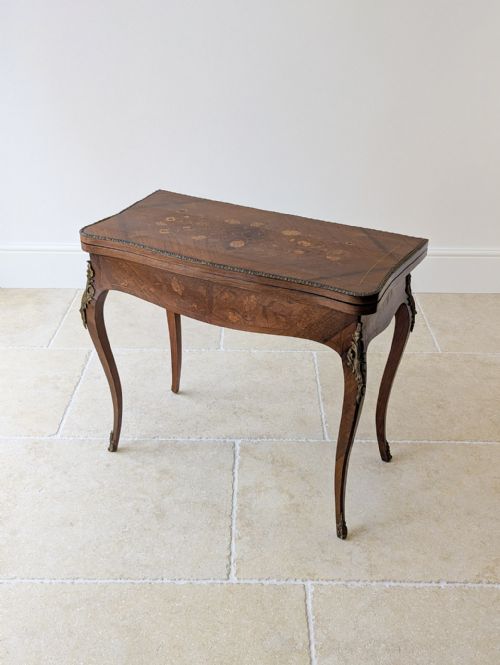
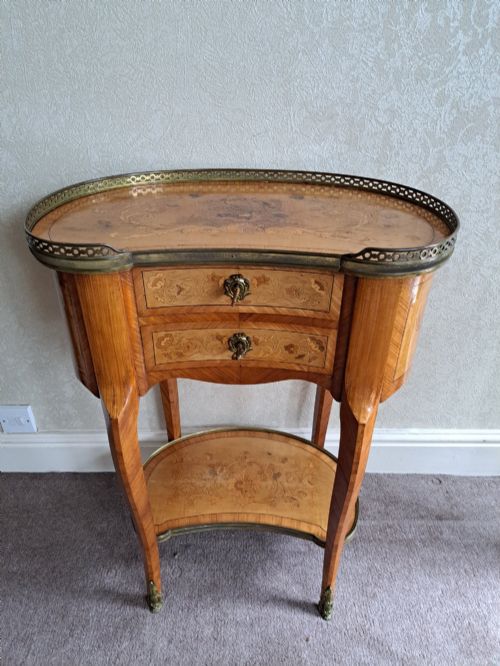
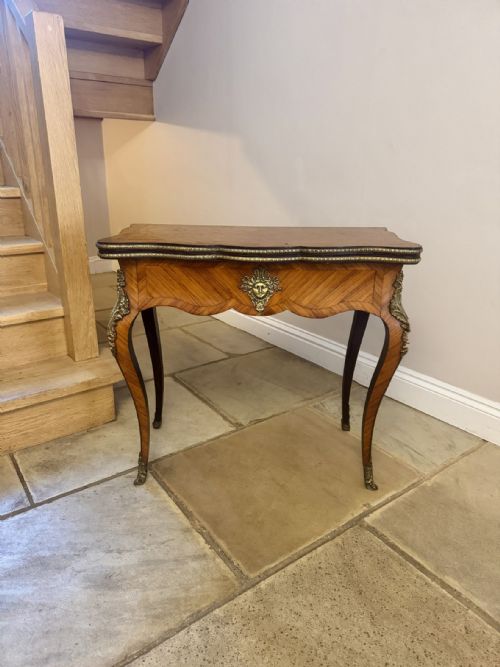
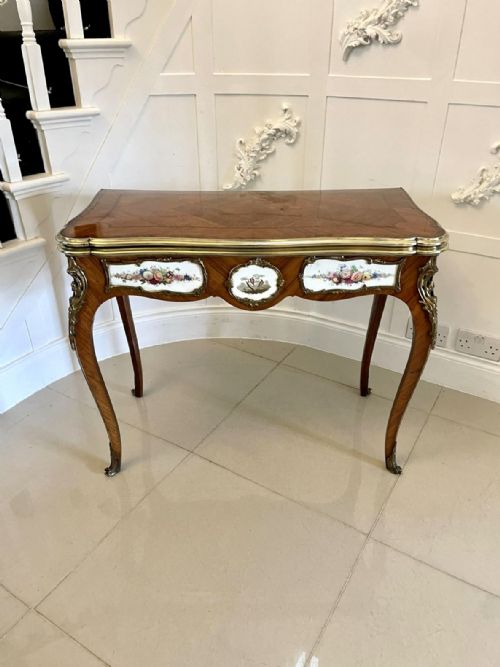
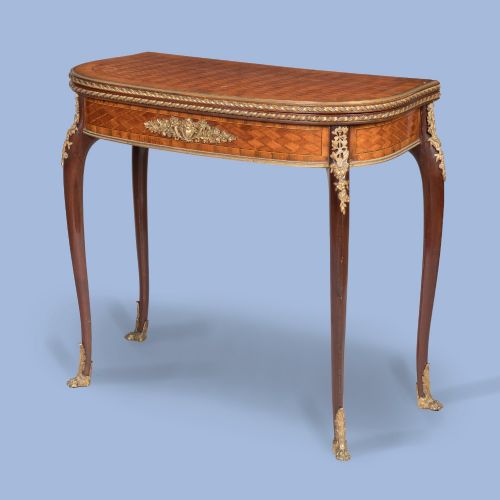
A french kingwood console table sits against a wall or functions as a versatile card, side, and games table within a room. The pieces seen here span the Victorian era and the nineteenth century, covering decades from eighteen-fifty to nineteen-twenty.
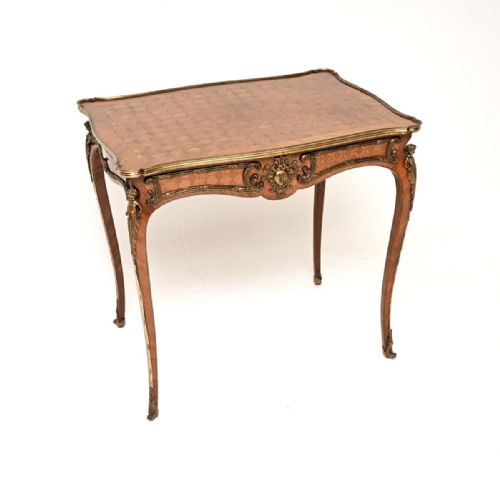
Most examples adopt Louis XV or Louis XVI revival styles, showing the enduring appeal of eighteenth-century French design during later periods. Makers combined console forms with card and demi-lune tables, creating surfaces inlaid with intricate patterns.
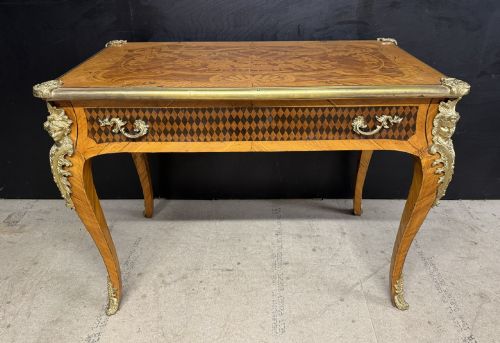
Makers such as Henry Dasson, G T Morant, Millet, and François Linke produced works that survive as highlights of this tradition. Alongside console tables, the selection includes bureau plat desks, cabinets, and occasional tables utilising the same vocabulary of materials.
Quality and Craftsmanship
The fineness of the marquetry and parquetry work dictates the visual success of the surface, distinguishing simple veneering from meticulous pictorial inlay. Crispness in the casting and chiselling of the ormolu mounts separates standard production from exhibition pieces.
Attribution to documented makers like Henry Dasson or François Linke elevates a piece through superior structural joinery and heavier, more deeply chased bronze mounts. The selection of timber grain and the precision of the cross-banding also signal higher workshops.
Listings feature 19th-century cabinetwork utilising kingwood, tulipwood, and ormolu mounts in Louis XV and Louis XVI revival styles.
G T Morant·François Linke·Millet·Joseph-Emmanuel Zwiener·Henry Dasson
The French Kingwood Console Table Glossary
- Kingwood
- A dense Brazilian timber used for fine veneer work, prized for its dark purple-brown grain and rich figuring. It appears extensively in nineteenth-century French cabinetmaking.
- Ormolu
- Gilt bronze mounts applied to furniture edges, feet, and aprons for decorative effect. The process involves coating bronze in gold amalgam.
- Marquetry
- The art of creating decorative patterns and pictures by fitting together small pieces of coloured wood veneer. Makers arranged floral and geometric motifs across tabletops.
- Parquetry
- A geometric mosaic of wood pieces used for floorings and tabletops. Squares, triangles, and lozenges create repeating patterns.
- Demi-lune
- Half-moon shape used for console and games tables designed to stand flat against a wall. These tables often feature folding tops.
French Kingwood Console Table: Frequently Asked Questions
What is a french kingwood console table?
A french kingwood console table is a decorative surface made from dense exotic timber, often decorated with ormolu mounts and marquetry. These pieces date primarily from the nineteenth century and reflect historical French royal styles.
Such tables served practical purposes as writing desks, card tables, or decorative side tables in formal reception rooms. Their distinctive veneers and gilt hardware made them focal points in Victorian and Edwardian interiors.
How do I identify Louis XV and Louis XVI styles?
Louis XV style pieces, often called rococo, show flowing asymmetrical curves, cabriole legs, and elaborate floral marquetry. The mounts follow organic, scrolling contours.
Louis XVI style furniture moves toward strict symmetry, straight tapered legs, and neoclassical geometric parquetry patterns. Ormolu mounts on these pieces incorporate urns, ribbons, and classical foliage.
Where should I place a console table?
A console table works best against an empty wall in a hallway, drawing room, or dining room. Placing a mirror or artwork above it completes the traditional arrangement.
Many examples feature folding tops that convert a slim wall console into a larger card or games table. This dual function allows the furniture to adapt during social gatherings.
How do I care for kingwood and ormolu?
Keep kingwood furniture away from direct sunlight and heat sources to prevent the delicate veneer from drying and cracking. Dust regularly with a soft, dry cloth without applying modern silicone polishes.
Clean ormolu mounts gently with a dry microfiber cloth, avoiding abrasive cleaners that strip the original gilt finish. Maintaining stable room humidity protects both the timber substrate and the bronze mounts.