

French Jardiniere Planter
A French jardiniere planter brings living greenery indoors within ornate vessels of ormolu, porcelain, and exotic woods.
French Jardiniere Planter
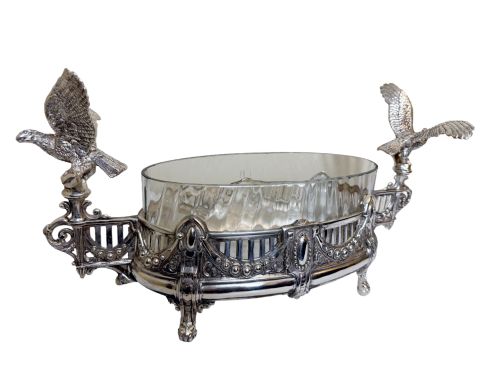
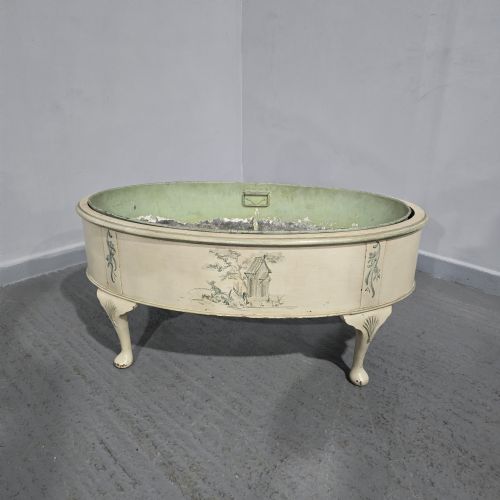
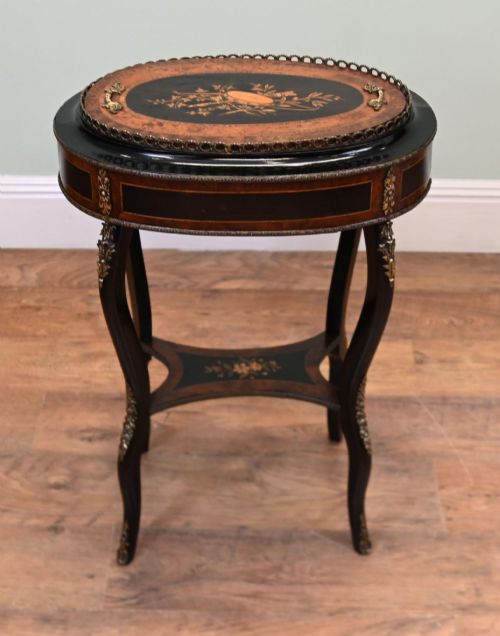
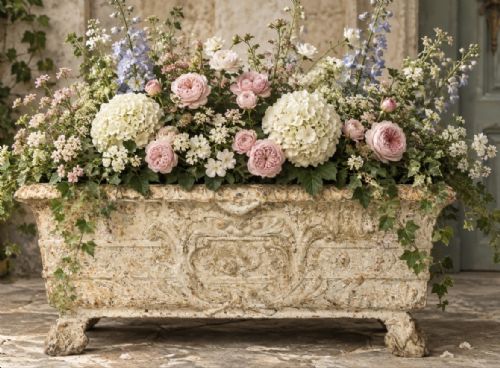
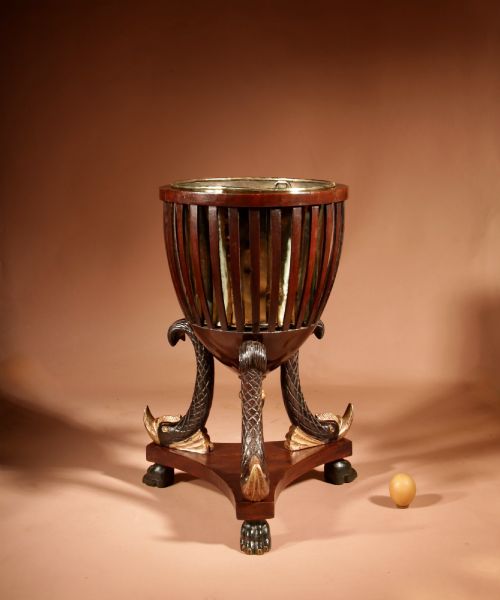
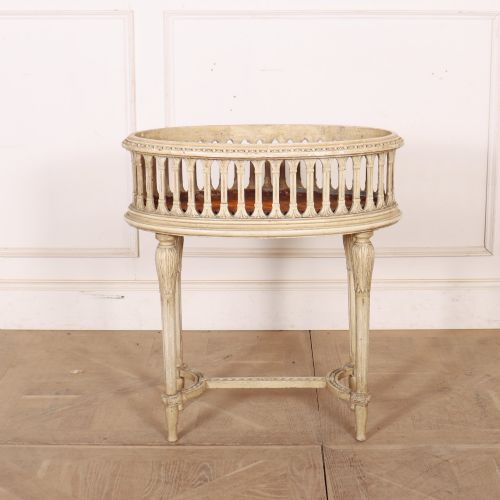
A french jardiniere planter takes the form of a decorative stand, table, or vessel designed specifically to display indoor plants and floral arrangements. Pieces belonging to this search phrase originate primarily across the nineteenth century, encompassing periods from Regency through to the late Victorian and Belle Epoque eras.
Makers drew upon diverse regional aesthetics, yielding Louis XV revival curves alongside neoclassical symmetry and robust wrought iron garden constructions. Buyers select these items to integrate botanical display directly into period interior schemes.
Materials and Technique
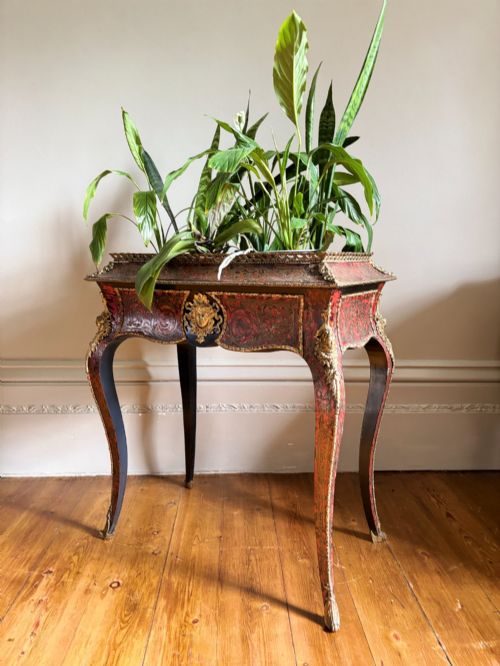
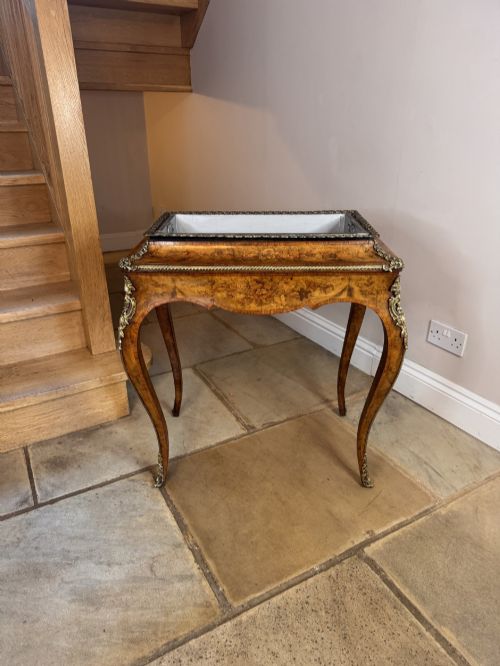
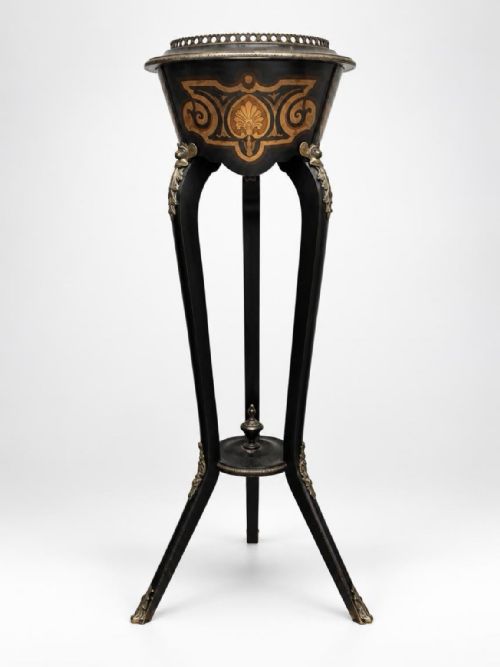
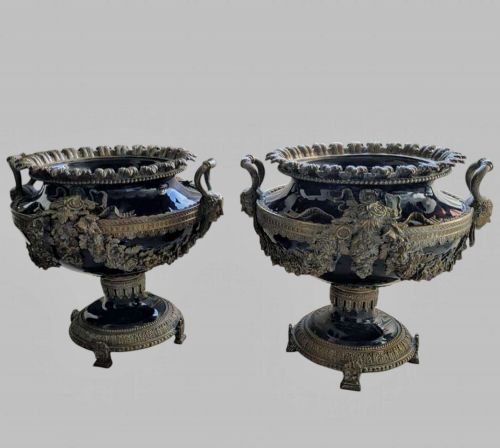
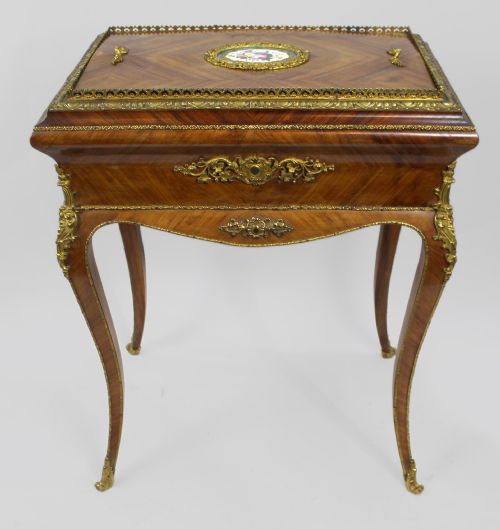
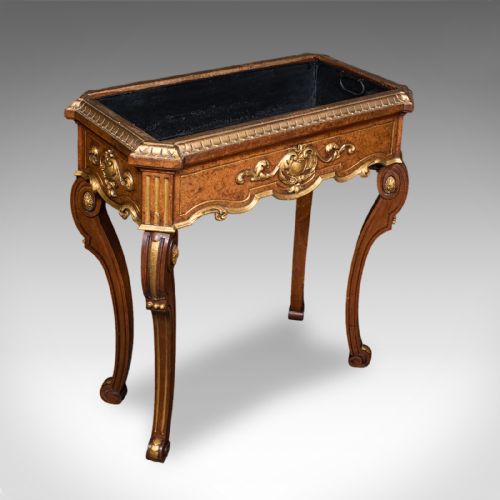
Construction relies heavily on fine cabinet timbers such as burr walnut, kingwood, and amboyna, often enhanced with intricate marquetry and contrasting inlay. Ormolu mounts, cast bronze details, and giltwood embellishments provide structural punctuation and rich surface contrast against dark woods.
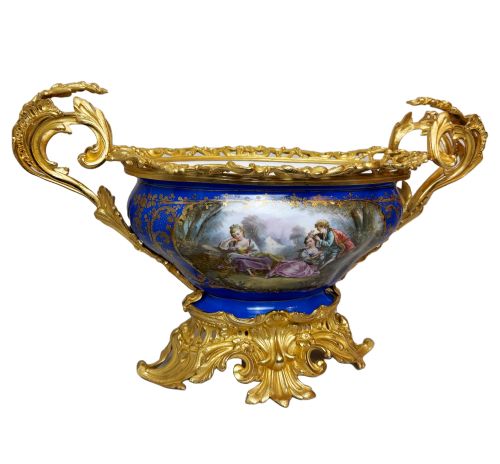
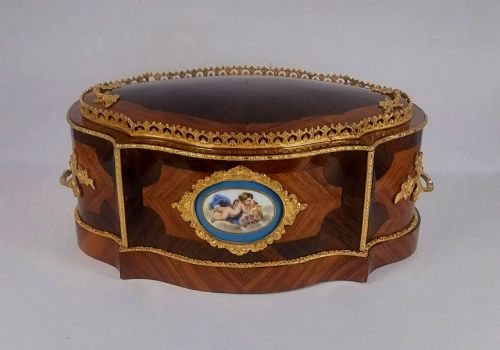
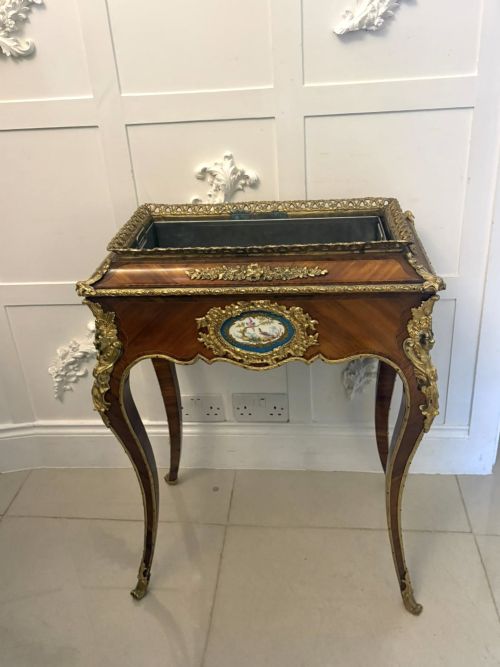
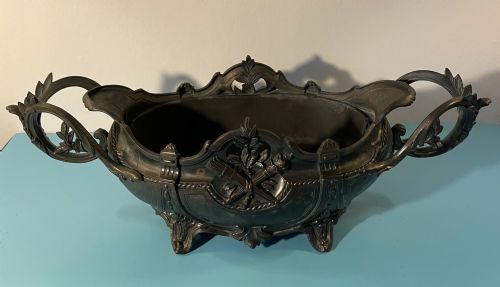
Ceramic components appear frequently as painted porcelain plaques or glazed earthenware inserts, while zinc and metal liners protect the underlying woodwork from moisture damage during plant maintenance. Wrought iron and wirework examples utilise forged scrollwork and lattice baskets for heavier exterior or conservatory placement.
French Jardiniere Planter Retail Price Guide 2026
Typical asking prices for french jardiniere planter among the pieces listed under this phrase on Sellingantiques today, from the lower quarter to the upper quarter. They describe what is for sale here now, not the wider market.
Listings demonstrate a strong prevalence of nineteenth-century French manufacture, combining exotic wood veneers with ormolu mounts and porcelain plaques.
Differentiating Quality
The highest tier of these objects displays crispness in the casting of ormolu mounts and precision in the cabinetmaker's marquetry and wood veneers. Integration between the decorative timber frame and the functional metal or ceramic liner demonstrates deliberate planning rather than a later adaptation.
Lesser examples may feature simplified joinery, pressed metal substitutes for hand-chased bronze mounts, or replaced liners that alter the original proportions of the interior well. The presence of undamaged painted porcelain plaques and retained internal zinc troughs elevates the standing of an individual piece.
The French Jardiniere Planter Glossary
- Jardiniere
- A large ornamental pot or stand designed to hold plants or flowers indoors. These vessels sit upon tables or function as independent furniture stands.
- Ormolu
- Gilt bronze mounts applied to furniture and decorative objects for ornamentation. This technique involves coating cast bronze in a layer of finely ground gold.
- Marquetry
- The art of applying decorative pieces of veneer to a structure to form intricate designs. Craftsmen utilise various coloured woods to create pictorial patterns.
- Boulle
- A style of marquetry utilising brass and tortoiseshell inlaid into furniture surfaces. Master craftsmen popularised this technique during the French baroque and revival periods.
French Jardiniere Planter: Frequently Asked Questions
What is a french jardiniere planter used for?
These vessels served to house potted plants, ferns, or floral displays within nineteenth-century drawing rooms and parlours. They brought nature indoors while functioning as sophisticated items of furniture.
Secondary uses included employing the waterproof wells as wine coolers or champagne troughs during formal dining occasions. Today, owners continue to utilise them for botanical displays or as decorative accent tables.
How do I protect the wood when using one?
Original metal liners or modern equivalent waterproof trays should remain inside the vessel during watering. Removing plants entirely for watering prevents moisture from reaching the sensitive wood veneers and interior joinery.
Applying a suitable microcrystalline wax helps preserve the polished finish of walnut and kingwood surfaces against ambient humidity. Regular wiping with a soft, dry cloth maintains the timber without introducing damaging moisture.
Are these planters meant for indoor or outdoor use?
The vast majority of wood, porcelain, and ormolu pieces were constructed strictly for interior domestic environments. Their delicate veneers and gilded mounts would suffer rapid deterioration if exposed to outdoor weather.
Conversely, listings featuring wrought iron, wirework, or heavy cast metal are built for gardens, patios, or conservatories. Checking the material construction dictates whether the piece belongs inside the house or on the terrace.
How do I identify a Napoleon III piece?
Napoleon III items typically showcase ebonised wood, elaborate Boullework, or rich gilt bronze mounts reflecting mid-nineteenth-century French revival tastes. Painted porcelain plaques depicting romantic scenes frequently adorn the sides of these stands.
This aesthetic draws heavily upon earlier Louis XV and Louis XVI designs with added Victorian eclecticism. The combination of dark polished surfaces and bright metal highlights defines the appearance.