

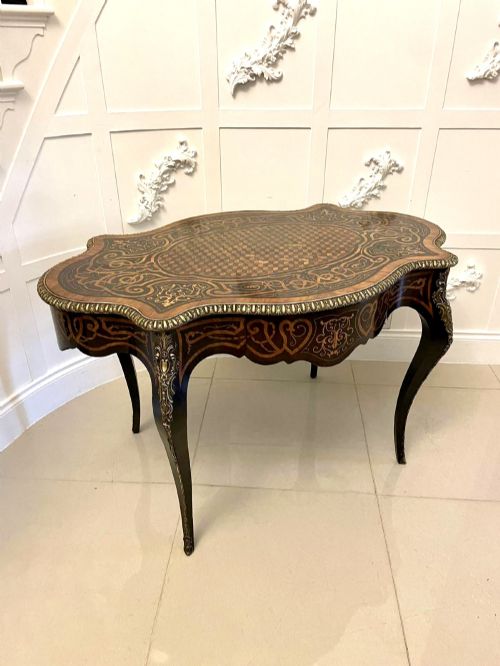
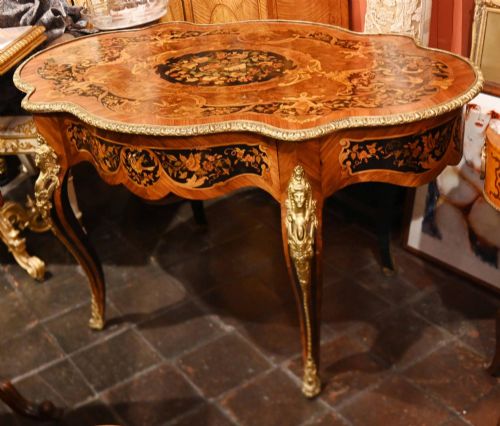
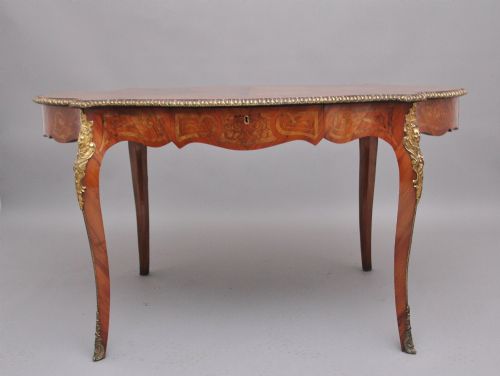
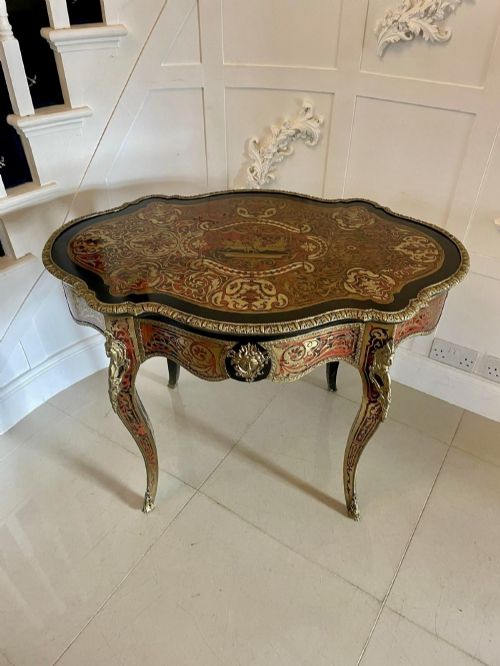
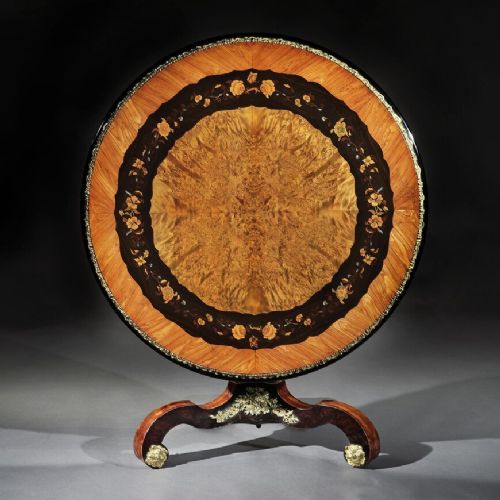
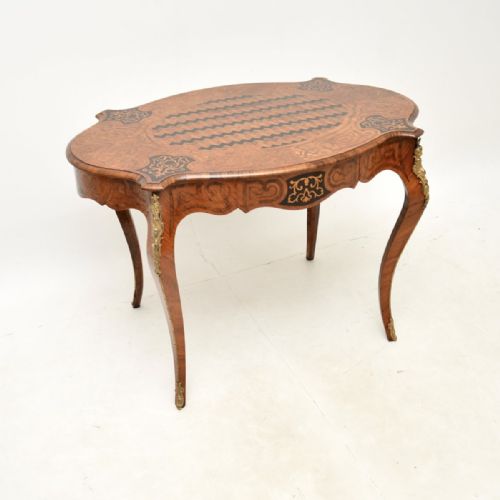
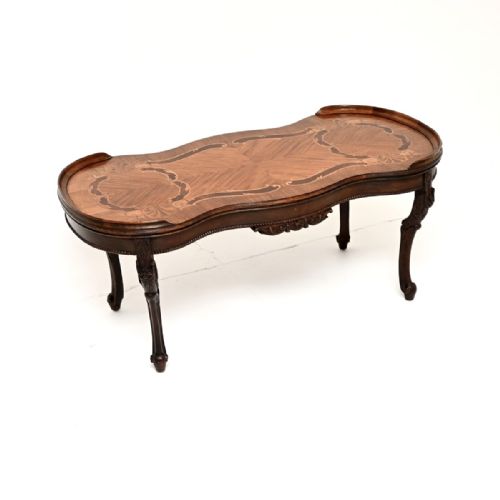
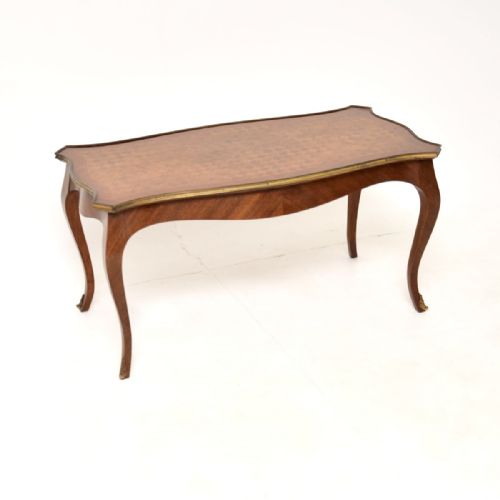
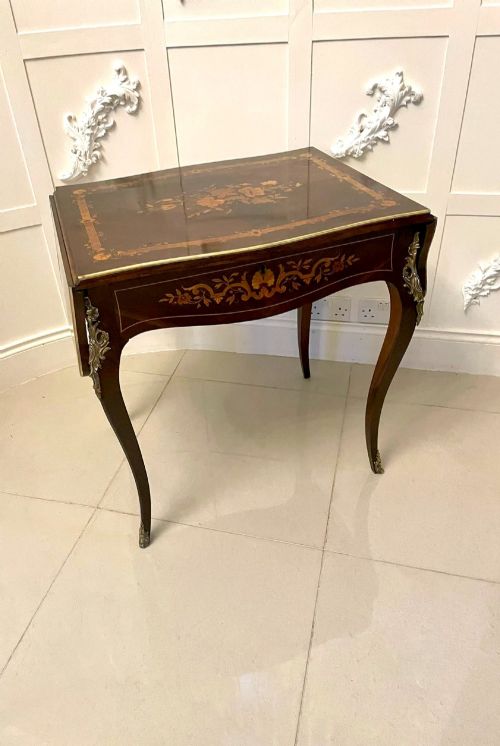

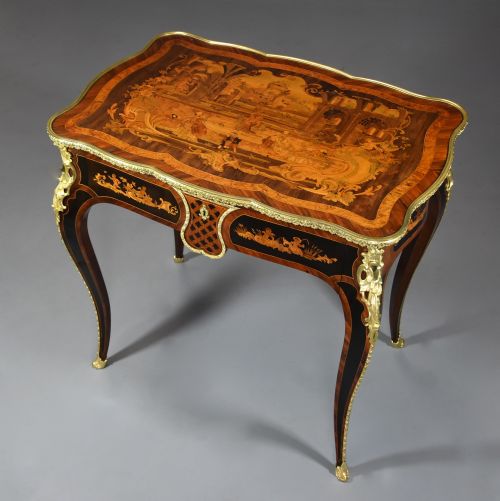

French Inlaid Centre Table
A french inlaid centre table brings sculptural presence and meticulous wood craftsmanship to the middle of a room.
French Inlaid Centre Table
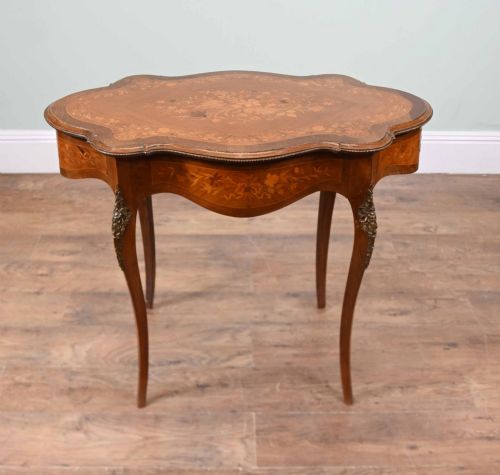
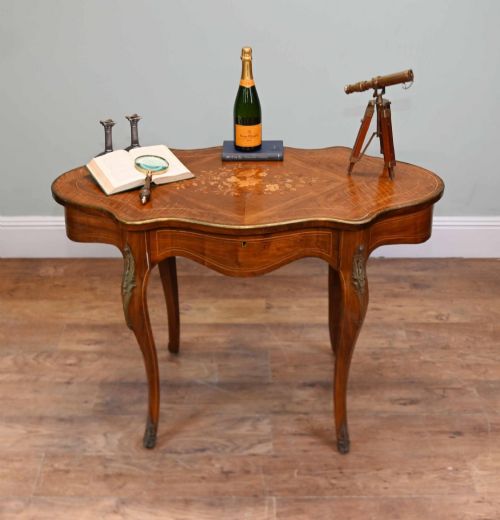
A french inlaid centre table is a freestanding piece designed to be viewed from all sides, commonly appearing in nineteenth-century Victorian and Napoleon III revivals of Louis XV and Louis XVI styles.
The form encompasses dedicated centre tables alongside related occasional tables, writing desks, and bureau plats that share intricate wood surfaces and decorative mounts.
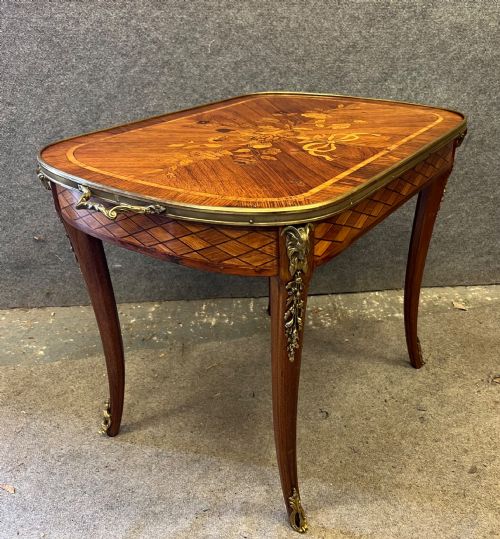
Most examples seen here date from the mid to late nineteenth century, executed in rich timbers with floral marquetry or geometric parquetry patterns.
How they were made
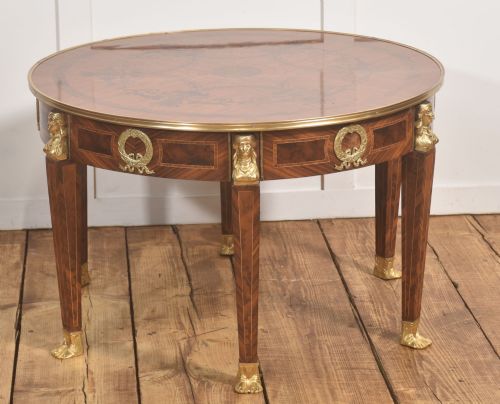
Cabinet makers combined dense hardwoods such as kingwood, rosewood, walnut, and satinwood, cutting contrasting veneers into elaborate floral marquetry or geometric parquetry designs.
Cast ormolu and gilt bronze mounts were applied to accent corners, friezes, and cabriole legs, paired with brass stringing and inlay to define the contours of the table.
French Inlaid Centre Table Retail Price Guide 2026
Typical asking prices for french inlaid centre table among the pieces listed under this phrase on Sellingantiques today, from the lower quarter to the upper quarter. They describe what is for sale here now, not the wider market.
Listings feature eighteenth and nineteenth-century pieces using kingwood, rosewood, walnut, and ormolu mounts.
What varies in quality
Quality rests upon the precision of the veneer work and the depth of the timber selection, where burr walnut, kingwood, and rosewood are matched with exacting grain alignment.
The crispness of the cast ormolu mounts and the fluidity of the cabriole legs separate standard production pieces from the finely detailed works associated with notable makers.
Edward Holmes Baldock·Maison Millet·Francois Linke·A. Beurdeley·Gillows
The French Inlaid Centre Table Glossary
- Marquetry
- A technique where pieces of veneer are assembled to form pictorial or floral decorative patterns on a wooden surface.
- Parquetry
- A geometric mosaic of wood pieces used for covering floors or furniture tops, creating repeating patterns.
- Ormolu
- Gilt bronze mounts used as decorative ornaments on furniture, cast and finished to highlight architectural details.
- Bureau Plat
- A flat-topped freestanding writing desk, frequently fitted with drawers and mounted in gilt bronze.
- Gueridon
- A small round table supported by a central column or cabriole legs, often featuring a marble top.
- Freestanding
- Finished on all four sides so the piece can stand in the middle of a room rather than against a wall.
French Inlaid Centre Table: Frequently Asked Questions
Where should a centre table go?
These tables are built to stand away from walls, making them ideal centrepieces in large rooms or reception halls where their detailed marquetry can be seen from every angle.
They also function effectively as large coffee tables or library desks depending on their height and top configuration.
How do I care for inlaid wood?
Keep the wood away from direct sunlight and strong heat sources to prevent the delicate rosewood, kingwood, or walnut veneers from drying and cracking.
Dust gently with a dry cloth and avoid modern silicone polishes that can damage the antique finish.
What is the difference between marquetry and parquetry?
Marquetry uses varied veneers to create pictorial scenes, ribbons, and floral arrangements across the top of the table.
Parquetry relies on geometric shapes such as cubes or squares to form repeating patterns across the wood surface.
Are these tables sturdy enough for daily use?
Nineteenth-century freestanding tables are structurally solid, though their decorative surfaces and gilt bronze mounts require gentle treatment.
They serve well for display, writing, and holding lamps, provided heavy or damp objects are kept off unprotected veneers.