





French Historical Art Print
A french historical art print brings classical mythology, portraiture, and cartography into the room through period engraving and lithography.
French Historical Art Print
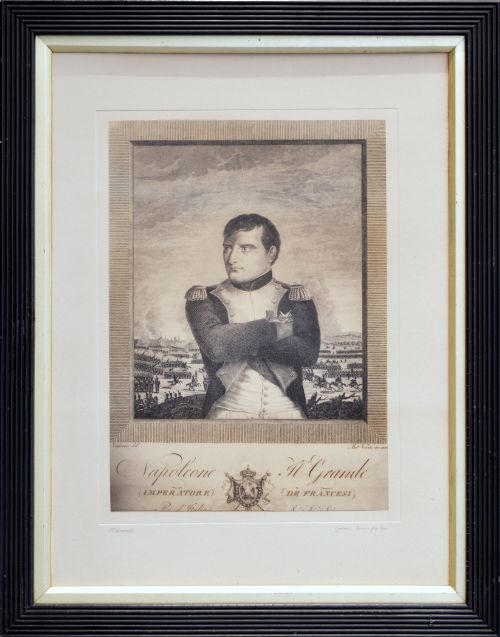
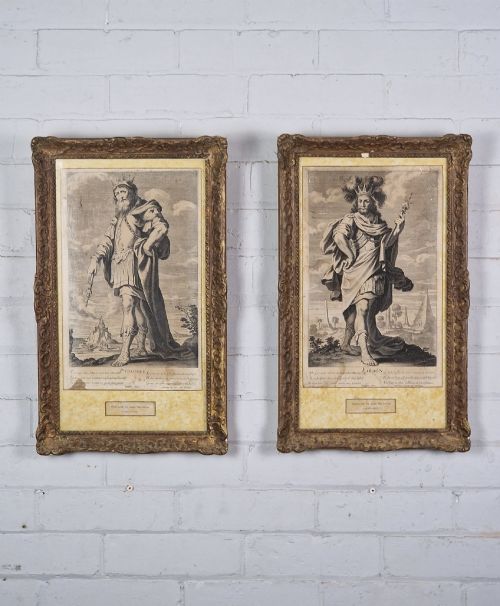
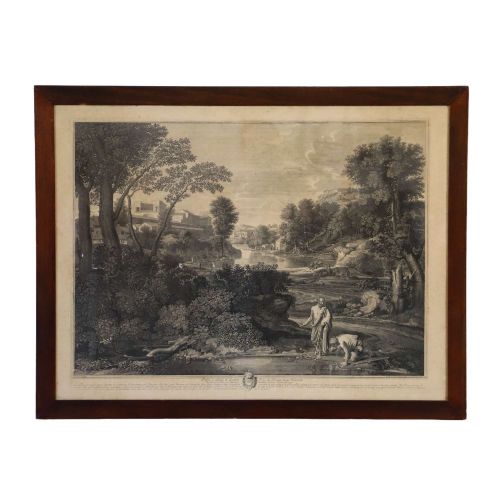
A french historical art print encompasses framed works on paper ranging from eighteenth-century engravings of classical subjects to nineteenth-century lithographs and maps. These pieces often depict mythological scenes, historical figures like Napoleon, or architectural plans framed in period wood.
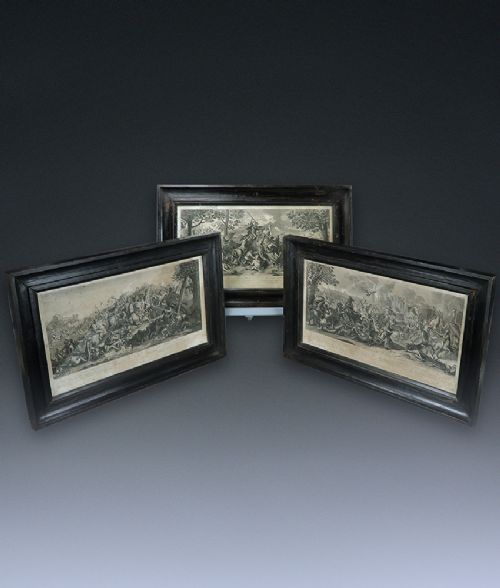
The selection on this page leans toward eighteenth-century engravings after artists such as Jean Mariette and Étienne Baudet, alongside Georgian cartography and mid-nineteenth-century hand-coloured plates. Buyers encounter both single framed sheets and multi-part sets housed in original or period frames.
Subjects stretch from classical narratives like Rinaldo and Armida to academic figure studies and early regional maps of England, Ireland, and Scotland. Each format offers a window into past European printmaking traditions and historical documentation.
Materials and Techniques
These works rely on ink applied to paper surfaces through engraving or lithographic processes, sometimes enhanced with hand-colouring. Engravings utilise incised metal plates to hold ink, producing fine, crisp lines characteristic of earlier periods.
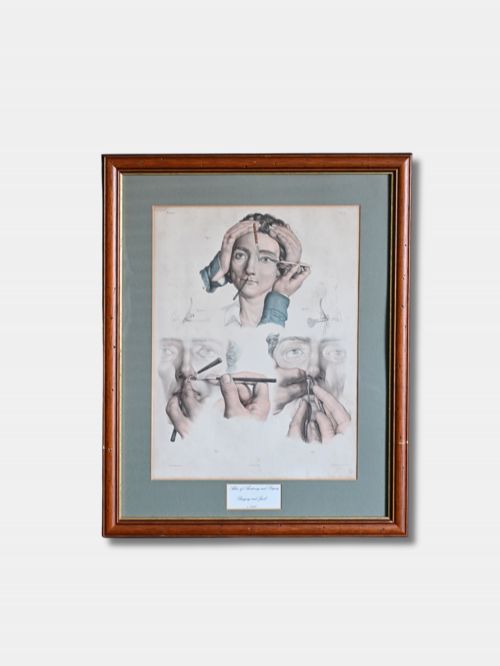
Lithography emerged later, allowing for smooth tonal gradations and the application of watercolours by hand, as seen in nineteenth-century medical and costume plates. Framed examples commonly employ wood, giltwood, or burr wood mouldings, often protecting the sheet beneath glass.
French Historical Art Print Retail Price Guide 2026
Typical asking prices for french historical art print among the pieces listed under this phrase on Sellingantiques today, from the lower quarter to the upper quarter. They describe what is for sale here now, not the wider market.
Medical procedures from eighteen-fifty make unexpected company for Napoleon and classical deities.
Factors That Distinguish Quality
Quality rests upon the clarity of the printed impression and the condition of the paper sheet. Early impressions pulled from fresh plates display sharper details in complex compositions than worn later strikes.
The presence of original framing, whether giltwood or burr wood, elevates a piece by preserving its historical context. Hand-colouring depth and the survival of margins around the printed image further separate standard examples from finer works.
Jean Mariette·Étienne Baudet·Le Brun
The French Historical Art Print Glossary
- Engraving
- A printmaking technique where an artist carves an image into a metal plate using a burin. The resulting lines hold the ink that transfers to paper under pressure.
- Lithograph
- A planographic printing method based on the chemical repulsion of oil and water. It allows for fluid lines and painterly washes of colour.
- Cartography
- The study and practice of making maps. Period examples document historical borders and geographical knowledge of past centuries.
- Giltwood
- Wood decorated with gold leaf or gold paint. It frequently forms the ornate frames surrounding eighteenth and nineteenth-century works.
French Historical Art Print: Frequently Asked Questions
What periods do these prints cover?
The available selection spans from the early eighteenth century through the Georgian era and into the mid-nineteenth century. Pieces reflect the prevailing artistic and cartographic standards of their respective decades.
Dates range from specific eighteenth-century plates to nineteenth-century academic submissions and lithographic portraiture.
How were these prints originally displayed?
Many of these works were framed in period wood, giltwood, or burr wood mouldings shortly after publication. They served as scholarly records, decorative wall art, or maps for domestic and institutional interiors.
Original framing remains a notable feature for several eighteenth-century engravings on this page.
Are the colours on the lithographs original?
Hand-coloured lithographs from the nineteenth century received their pigment by hand shortly after printing. This technique added vibrancy to costume studies and anatomical or medical illustrations.
Such application distinguishes hand-finished plates from purely mechanical colour printing processes.
What subjects are most common?
Subjects divide broadly between classical mythology, historical figures, academic figure studies, and historical cartography. Engravings often revisit famous compositions by historical painters.
Maps of the British Isles and world plans also form a substantial part of the historical print offerings.