


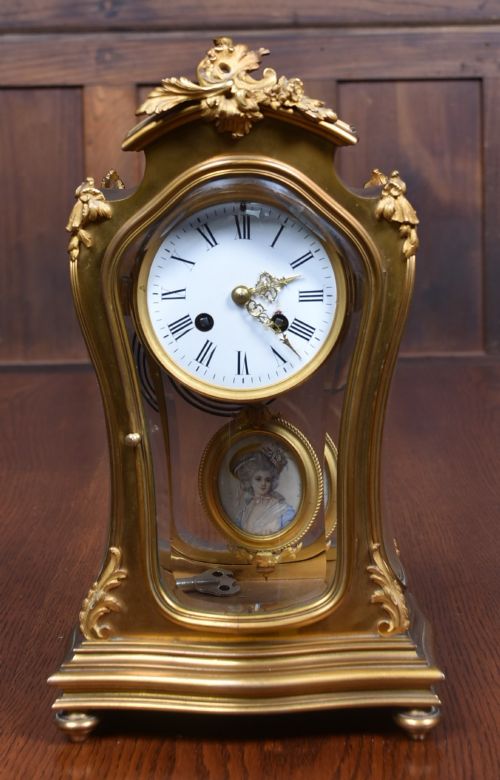

French Glass Mantel Clock
When you search for a french glass mantel clock, you are looking at domestic timepieces housed in glazed cases, built to display the movement within.
French Glass Mantel Clock
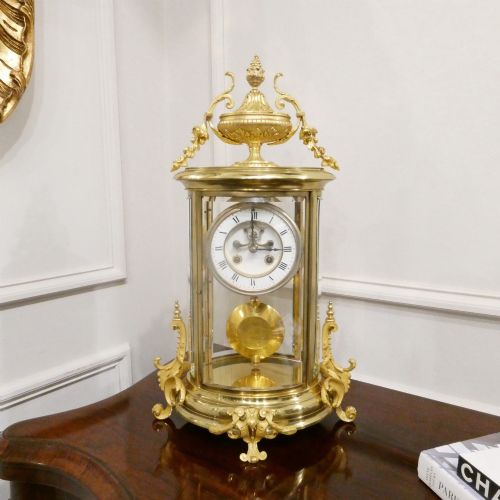
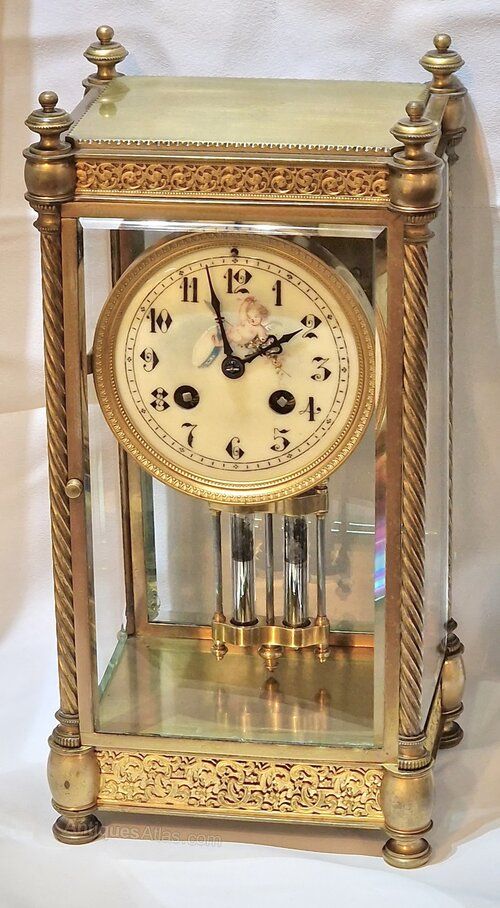
The french glass mantel clock category encompasses two distinct forms built across the nineteenth and early twentieth centuries: the four-glass crystal regulator style and the heavier portico or carriage clock design. Four-glass clocks dominate the listings here, typically featuring brass or gilt frames with bevelled glass panels that expose the escapement and mercury or spring-driven pendulum. They originate largely from late nineteenth-century workshops operating during the Victorian, Napoleon III, and Belle Epoque periods.
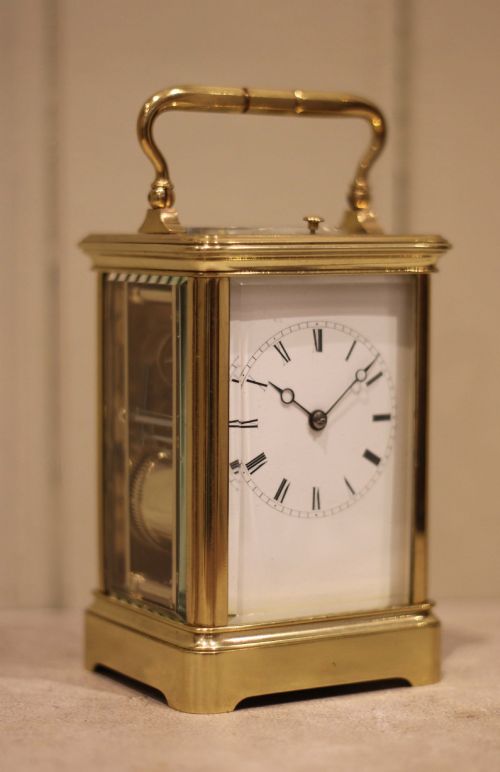
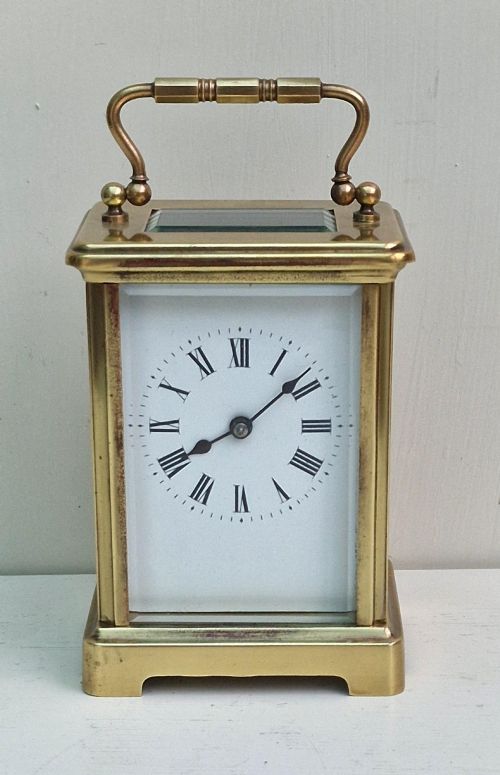
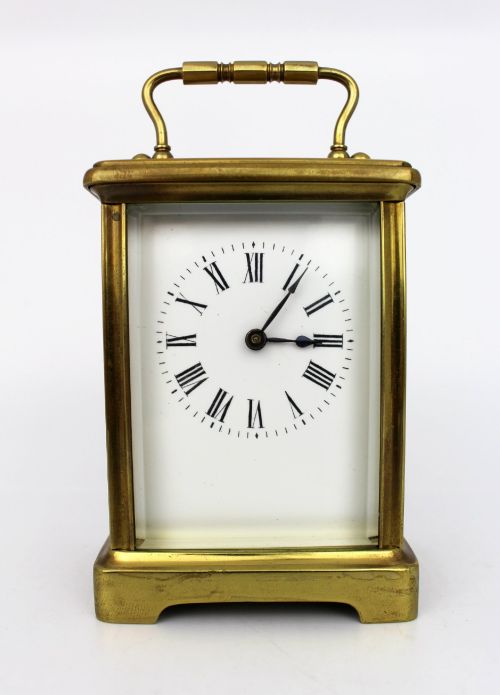
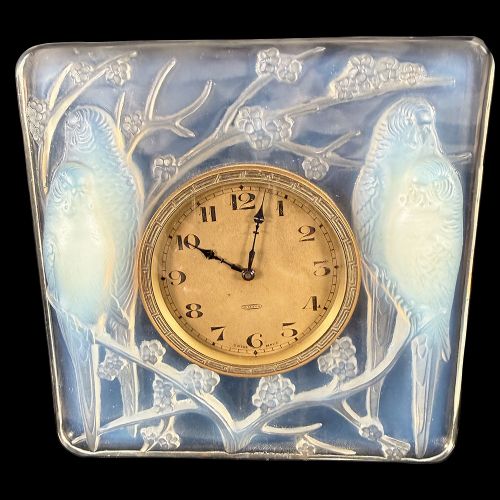
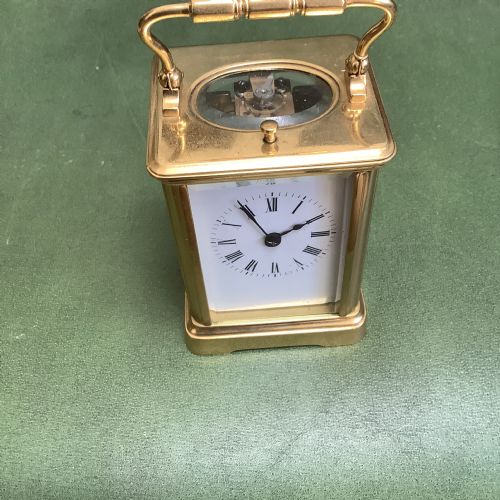
Carriage clocks also appear frequently within this grouping, offering a portable glass-sided housing originally intended for travel. These range from simple brass-framed timepieces with white enamel dials to complex examples featuring strike, repeat, and alarm mechanisms. Art Deco variations introduce moulded opalescent glass panels with figural motifs such as love birds, alongside unusual electric movements housed entirely in glass.
How They Were Made
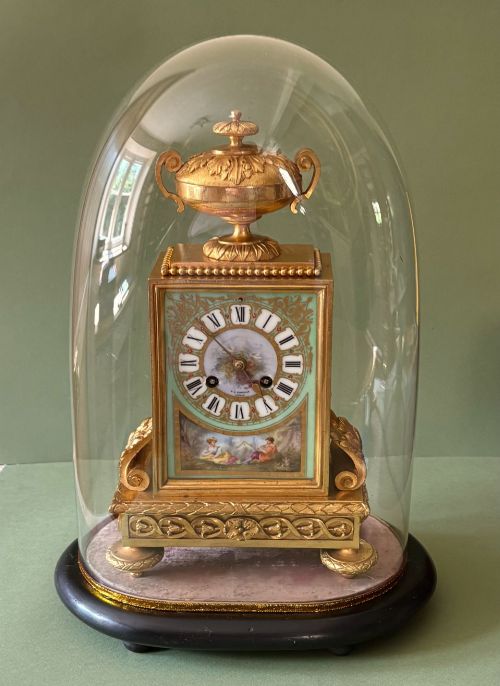
The structural framework relies on cast brass, gilt bronze, or ormolu shaped into slender columns and bezels to hold heavy bevelled glass plates tightly together. Enamel dials, frequently painted with Arabic or Roman numerals, sit centrally behind a small glazed door, while porcelain plaques and champleve enamel borders decorate the brass chassis.
Movements utilise brass wheel trains, jewelled escapements, and pendulum suspensions, with mercury-filled jars often suspended on a gridiron to compensate for temperature changes. Opalescent glass clocks of the later period employ pressed and moulded techniques pioneered by specialist glassmakers, setting figures directly into thick translucent material.
Some clocks feature love birds frozen in opalescent glass, keeping permanent watch over the passage of time.
What Varies in Quality
The standard of a french glass mantel clock depends primarily on the complexity of its movement and the prestige of its maker. Clocks featuring striking trains, perpetual calendars, or moonphase indications sit above simple timepieces.
Casting weight and finish also distinguish the work: heavier gilt brass, finely hand-engraved cases, and signed porcelain components indicate higher production standards than plain, mass-produced brass frames.
Samuel Marti·Rene Lalique·Leroy Paris·Tiffany·Vincenti·Japy Freres·Breguet·L Epee
The French Glass Mantel Clock Glossary
- Four glass mantel clock
- A clock constructed with glass panels on the front, back, and both sides, allowing an unobstructed view of the internal mechanism and pendulum. This style gained immense popularity in late nineteenth-century France.
- Mercury pendulum
- A pendulum design using jars of liquid mercury at the base to counteract temperature-induced expansion and contraction of the pendulum rod. It ensures accurate timekeeping across varying seasonal temperatures.
- Champleve
- An enamelling technique where troughs or cells are hollowed out of the metal surface and filled with coloured glass paste before firing. It appears frequently on the bezels and pillars of nineteenth-century French clock cases.
- Carriage clock
- A small, spring-driven timekeeper equipped with a folding handle and glass panels, designed for portability during travel. Many nineteenth-century examples are housed in moulded brass gorge cases.
- Escapement
- The mechanical linkage that translates the pull of the mainspring or weights into controlled impulses for the gear train. It produces the characteristic ticking sound of the clock.
French Glass Mantel Clock: Frequently Asked Questions
What is a four glass clock?
A four glass clock is a mantel timepiece built with transparent panels on every side and the door, designed to let light pass through and reveal the inner mechanism. These cases are commonly framed in brass, gilt bronze, or onyx.
They emerged as a staple of French horology during the nineteenth century, often housing mercury pendulum movements that remain fully visible during operation.
How do I wind my carriage clock?
Carriage clocks are wound using a dedicated key inserted into arbors located on the underside or backplate of the movement. Care must be taken not to overwind the mainspring.
Many of these movements feature a platform escapement visible through the top glass panel, which regulates the beat of the clock.
What dates are these clocks from?
The majority of pieces in this category date from the nineteenth century, spanning the Victorian, Napoleon III, and Belle Epoque eras. Production extended into the early twentieth century, incorporating Art Deco designs.
Maker signatures stamped on the backplates or dials often help narrow down the production decade more precisely.
How do I maintain a glass mantel clock?
These clocks require a stable, level surface away from direct sunlight and damp conditions to protect the delicate brass and glass housing. Regular professional servicing keeps the gear train and escapement functioning properly.
Glass panels can be cleaned gently with a soft cloth, avoiding harsh chemical cleaners that might damage the surrounding gilt or enamel surfaces.