


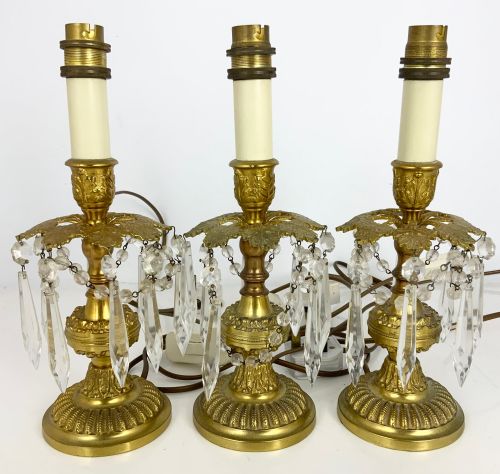


French Glass Candlesticks
French glass candlesticks bring remarkable illumination and decorative weight to a room, combining fine glasswork with metal mounts from the nineteenth and twentieth centuries.
French Glass Candlesticks
When you search for French glass candlesticks, you encounter a refined selection of lighting wares that combine glass bodies with brass, bronze, or gilt metal mounts. The examples appearing on this page span the nineteenth century up through the nineteen-thirties, capturing the shift from ornate revival styles to streamlined modern forms.
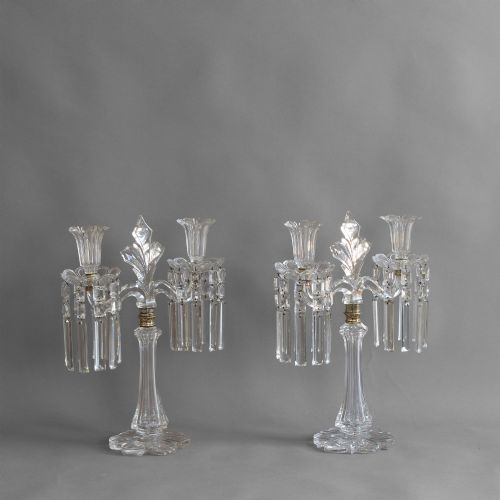
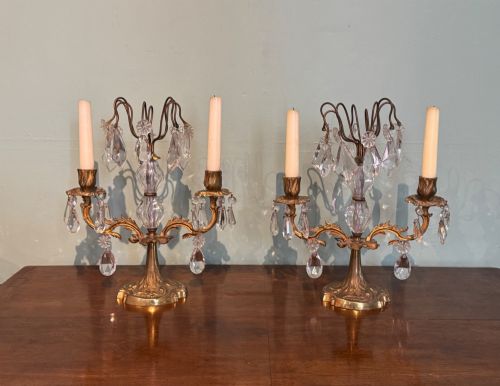
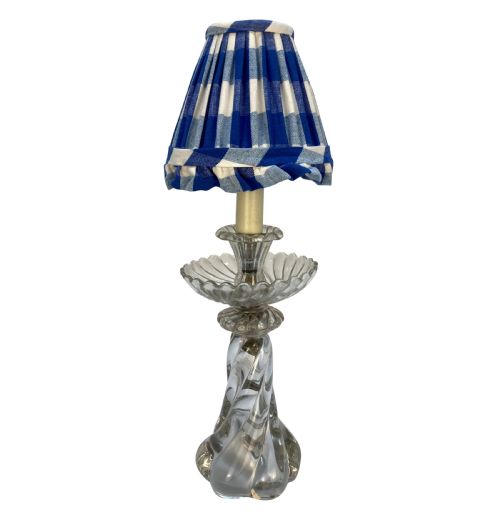
Most pieces survive in pairs and frequently incorporate hanging crystal prisms or drops known as lustres. Alongside traditional single-stem candlesticks, the selection includes multi-branch candelabra, table lamps, and table lustres designed to reflect candle or electric light.
Stylistically, these objects draw upon French Empire, Rococo Revival, Art Nouveau, and Art Deco traditions. Makers ranged from prominent glassworks to specialised ateliers producing ornamental bronze and ormolu fittings.
How they were made
The manufacture of these pieces required a combination of glassmaking and metal casting techniques. Glass bodies were often mould-blown, pressed, or hand-cut to create facets and patterns that enhanced the refractive qualities of crystal, opaline, or coloured glass.
Metal components such as bases, nozzles, and frames were cast in brass, bronze, or ormolu, then chased and gilded. Glass drops and hurricane shades were shaped independently before being suspended or fitted to the metal framework using wire or pins.
Listings feature items from the nineteenth century, the Regency era, and the nineteen-twenties and thirties, utilising materials including ormolu, cut crystal, and opaline glass.
What varies in quality
Quality in these objects is determined by the clarity and weight of the glass, the precision of any hand-cutting, and the crispness of the metal mountings. Finer pieces exhibit deeply chased bronze or ormolu work and heavy, flawless crystal components rather than light, pressed glass.
The integration between the glass and metal parts also separates standard production from exceptional work. Secure fittings, well-matched pairs of hanging prisms, and harmonious proportions indicate a higher grade of craftsmanship.
Rene Lalique·R Lalique
The French Glass Candlesticks Glossary
- Lustre
- A candlestick or candelabra hung with cut glass pendants designed to catch and reflect light. These pendants are often referred to as spear drops or prisms.
- Ormolu
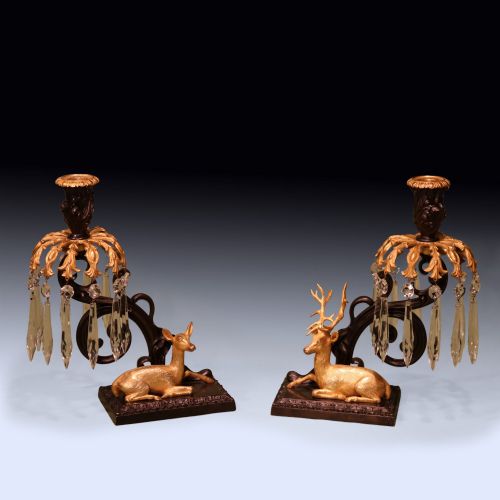
- Gilded bronze produced by applying a mercury and gold amalgam to a cast bronze object and heating it. This technique creates a durable, warm golden finish seen on many nineteenth-century mounts.
- Opaline glass
- An opaque or translucent art glass popular in nineteenth-century France, typically found in soft shades of blue, green, or white. It provides a dense, smooth background for gilt metal mounts.
- Candelabra
- A branched candlestick holding multiple lights on a single base. These often feature central shafts surrounded by scrolling arms.
- Regency
- A decorative style spanning the early nineteenth century characterised by classical restraint and elegant proportions. Pieces from this era often incorporate rich bronze and ormolu details.
French Glass Candlesticks: Frequently Asked Questions
How do I clean antique glass candlesticks?
Clean the glass components gently using a soft cloth dampened with mild soapy water, taking care to avoid harsh abrasives or soaking metal mounts. Remove hanging prisms individually if necessary to ensure thorough cleaning without damaging wire connections.
Dry each piece completely with a lint-free cloth to prevent water spots on the glass and tarnishing on the brass or bronze surfaces.
Were these originally for candles or electricity?
The majority of nineteenth-century pieces were designed exclusively for wax candles, utilising drip pans and sockets suited to taper sizes of the period. Many twentieth-century examples, particularly from the nineteen-thirties, were manufactured or later adapted for electric illumination.
Examine the base and central stem for internal wiring holes to determine if a piece retains its original candle configuration or has been converted to a lamp.
How do I tell Art Deco pieces from earlier styles?
Art Deco candlesticks from the nineteen-twenties and nineteen-thirties favour geometric symmetry, frosted surfaces, and stylized motifs associated with makers like Lalique. Earlier nineteenth-century examples lean towards floral casting, ornate scrolling, and heavy use of ormolu.
Look at the overall silhouette and mount details to distinguish the streamlined modernism of the interwar period from Victorian or Rococo revival aesthetics.
What is the difference between a lustre and a candlestick?
A standard candlestick holds one or more candles without additional reflective ornamentation attached to the shaft. A lustre incorporates glass pendants or drops suspended from a metal ring to amplify the luminosity of the flame.
Table lustres frequently served a decorative function on sideboards and mantelpieces, glittering even unlit in a room.