




French Gilt Pier Table
A french gilt pier table brings undeniable presence to a room, combining architectural marble with gilded carving designed to sit against a wall beneath a tall glass.
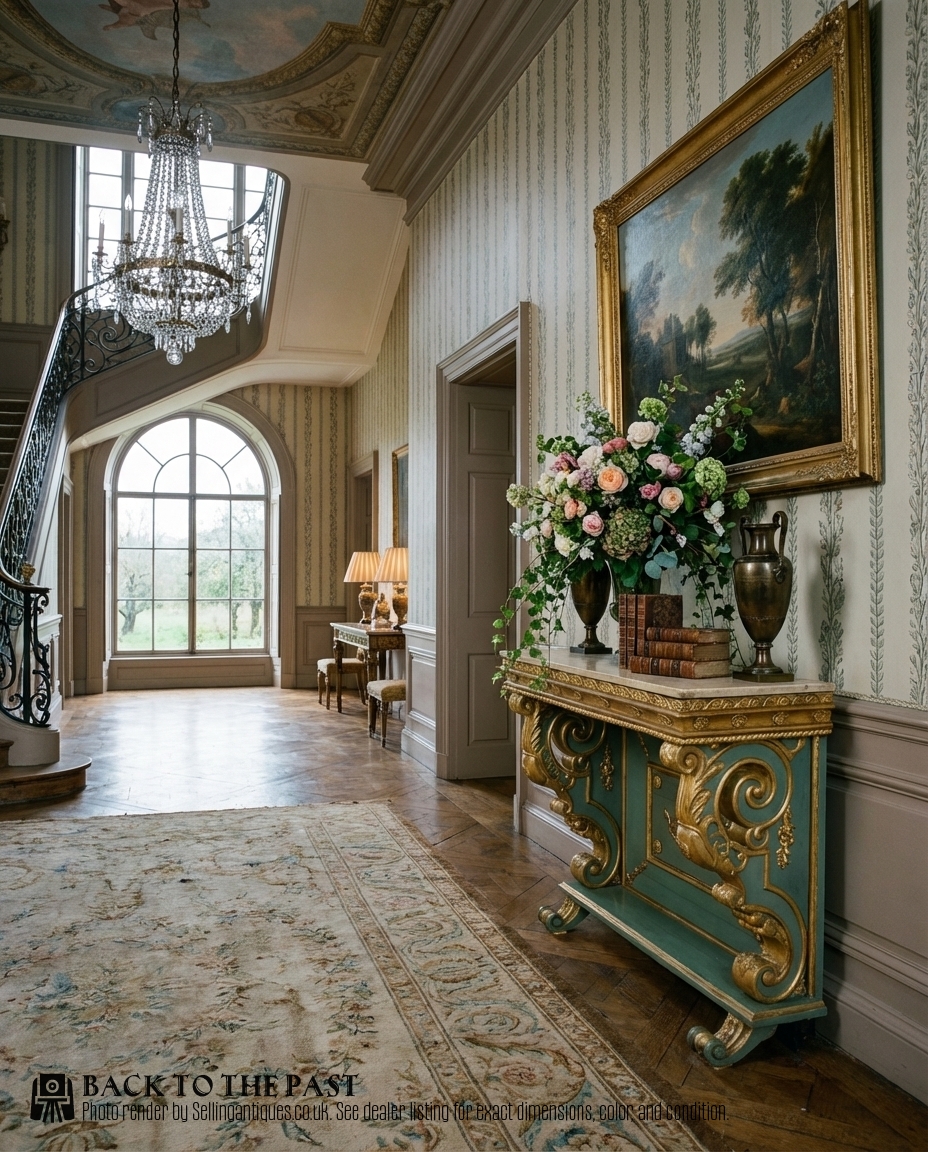
French Gilt Pier Table
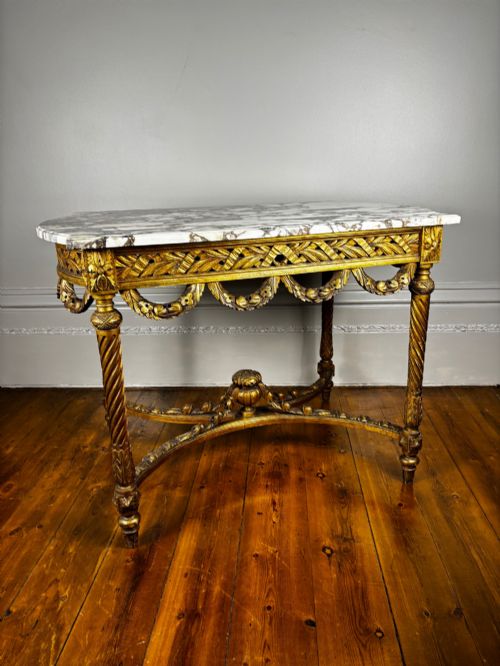
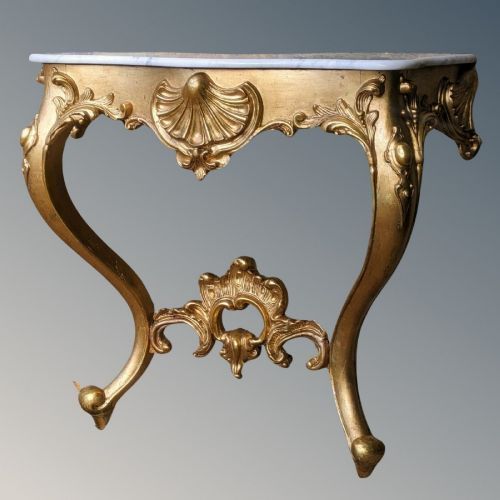
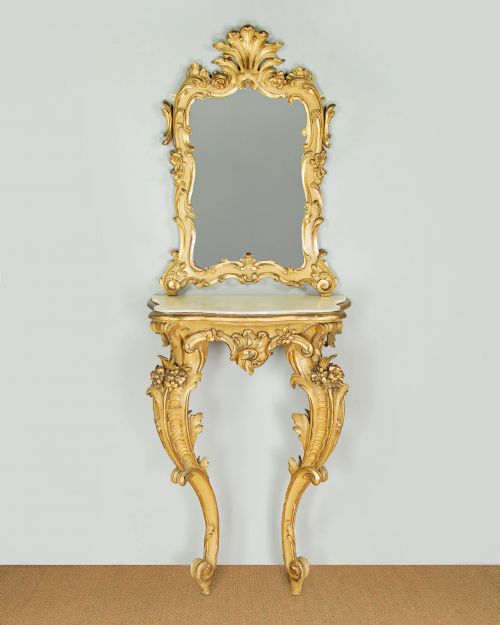
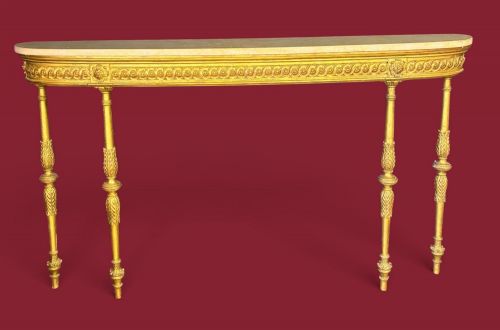
When searching for a french gilt pier table, buyers encounter console tables and console table and mirror sets designed to stand against a pier wall between windows. Most examples span the nineteenth century and the early twentieth century, drawing on Rococo, Neoclassical, and Empire revivals.
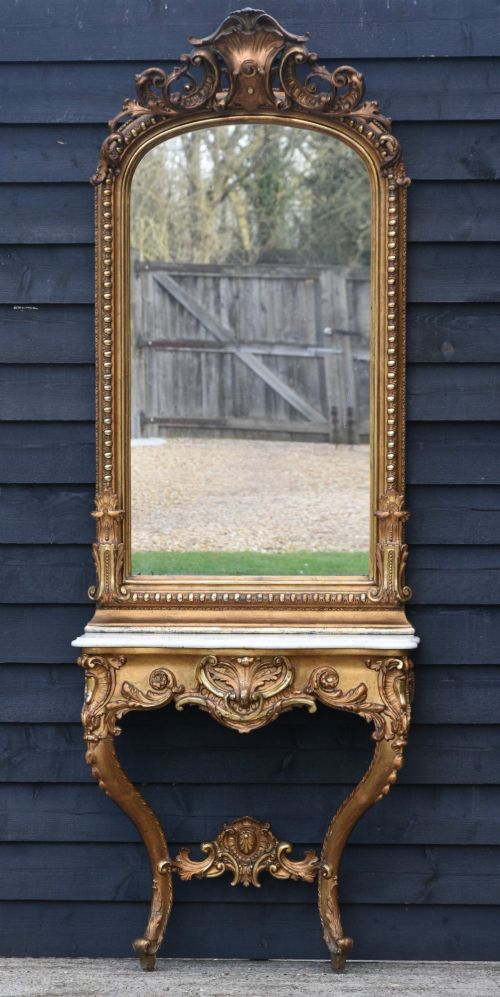
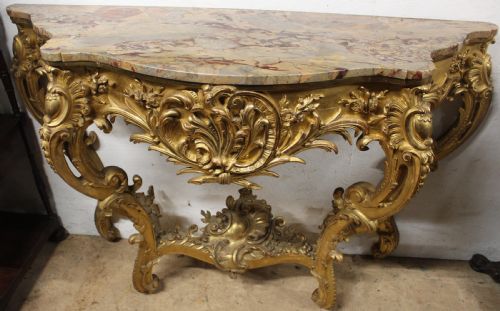
The forms vary from serpentine and demi-lune console bases to large matched sets that integrate a carved wooden table with a matching pier mirror. These pieces emerge in various sizes, ranging from small hall tables to large reception room furnishings topped with marble.
How they were made
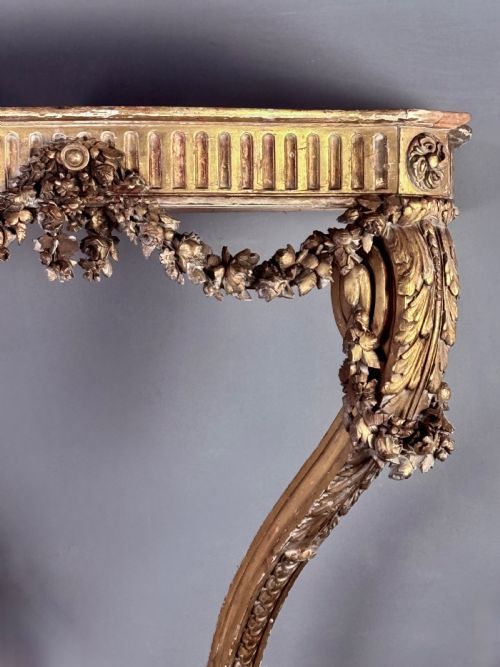
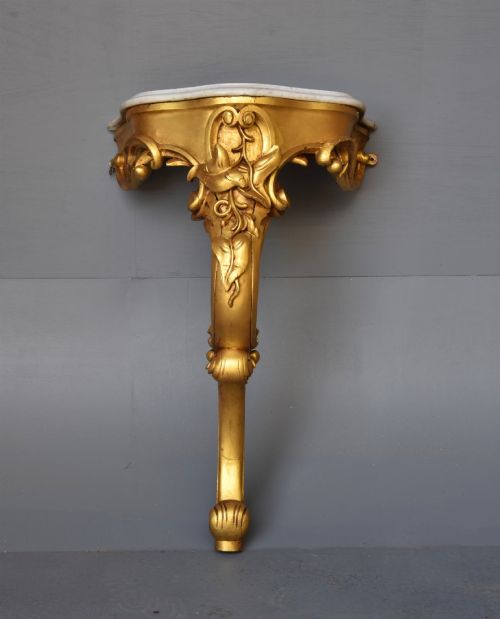
The construction relies on carved wood, gesso, and applied gold leaf or paint, forming ornate frames with high relief floral and scroll details. Many pieces incorporate secondary timbers such as mahogany, walnut, or satinwood beneath the gilt finish.
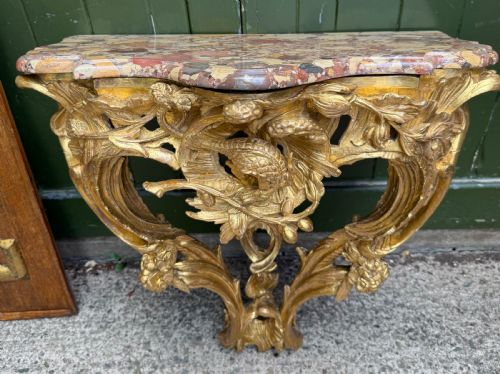
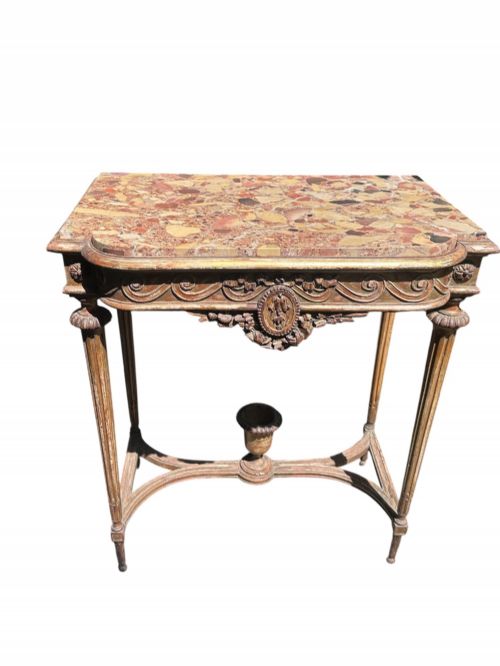
Heavy stone tops in varieties such as breche d'alep, white Carrara, rouge, and sienna marble rest directly upon the wooden bases, often shaped to serpentine or half-moon outlines.
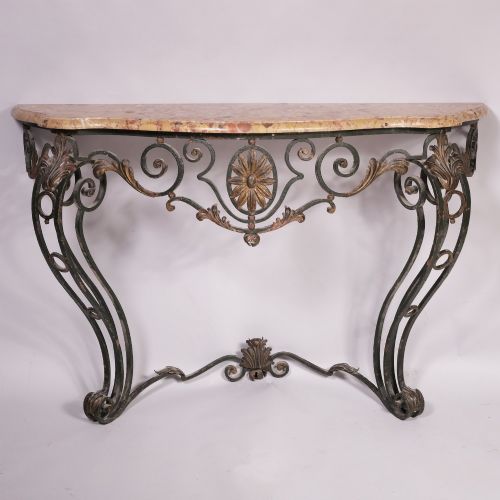
Listings span the eighteenth century to the early twentieth century, showing materials including gesso, wrought iron, and Sevres porcelain plaques.
What varies in quality
Quality rests in the crispness of the hand-carving within the gesso and wood, where deeper undercut foliage and smoother scrollwork distinguish finer workshop output from simpler production. The selection and thickness of the marble top also indicate grade, alongside the depth and luminosity of the original gilding.
Structural integration between the table base and any accompanying mirror demonstrates the ambition of the original commission, while maker stamps provide documentary evidence of origin from established Parisian cabinetmakers.
Felix-Alfred Ternisien·Krieger Paris
The French Gilt Pier Table Glossary
- Pier table
- A side table designed to stand against the wall space between two windows, frequently positioned beneath a tall mirror.
- Giltwood
- Timber coated with a thin layer of gold leaf over a prepared gesso ground, creating a bright reflective surface.
- Gesso
- A plaster-like mixture applied to wood surfaces and carved before gilding to provide sharp detail for ornamentation.
- Serpentine
- A furniture outline characterised by a central convex curve flanked by concave sweeps.
- Breche d'alep
- A decorative quarried marble featuring a brecciated pattern of varied earth tones and angular fragments.
French Gilt Pier Table: Frequently Asked Questions
Where should I place a pier table?
These tables suit hallways, drawing rooms, or entrance spaces where wall space allows a console to sit flush without obstructing movement.
They pair effectively with tall mirrors positioned above to reflect light within the room.
How do I care for the marble top?
Clean the marble surface using a soft cloth dampened with warm water and mild soap, avoiding acidic cleaning agents that etch the stone.
Place coasters or protective mats beneath items to prevent moisture rings or scratches on the polished surface.
Are these tables heavy?
The combination of solid carved wood frames and thick stone tops results in substantial weight, requiring stable placement against a secure wall.
Many larger examples benefit from wall fixings to ensure stability and prevent tipping.
How do I identify the period style?
Rococo revival pieces display asymmetrical scrollwork and organic leaf carving, whereas Neoclassical examples feature straight fluted legs and symmetrical geometry.
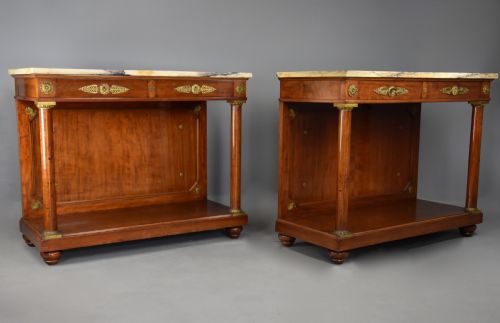
Empire items lean towards classical architectural motifs and darker woods with parcel gilt highlights.