

French Gilt Pendant Fitting
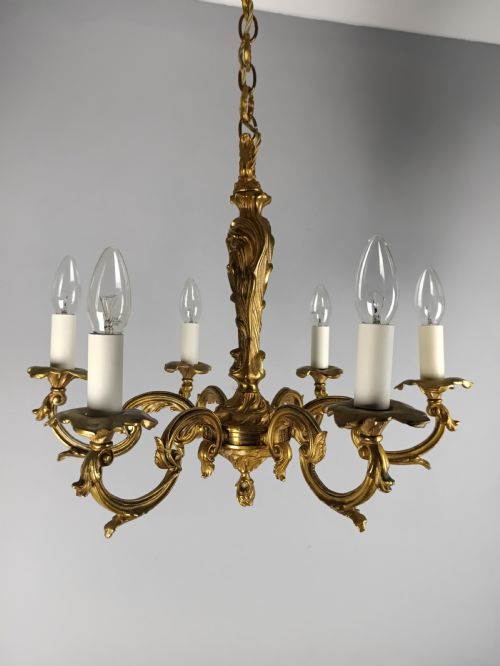
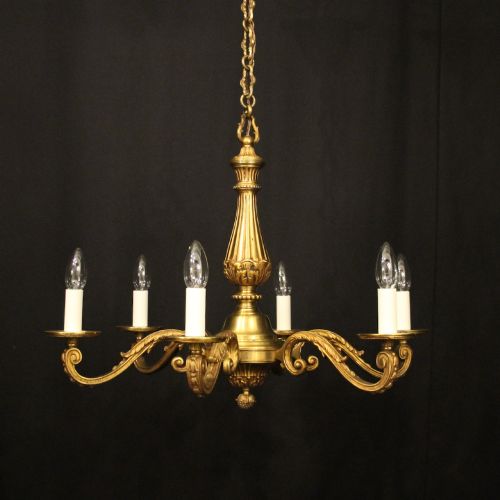
A french gilt pendant fitting brings warm, reflective illumination to a room through gilded metalwork and suspended glass.

French Gilt Pendant Fitting
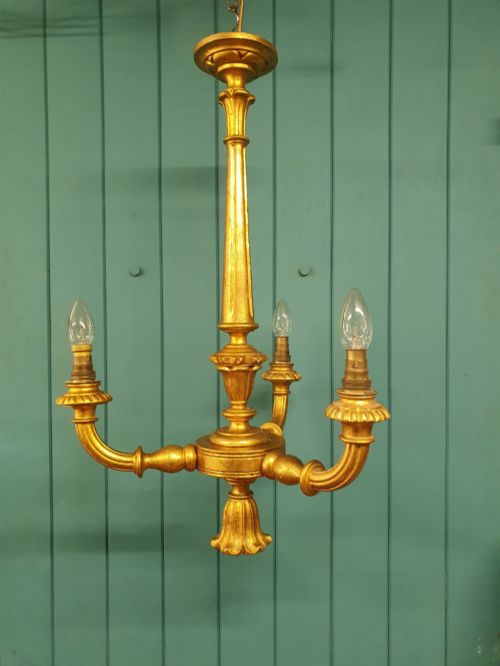
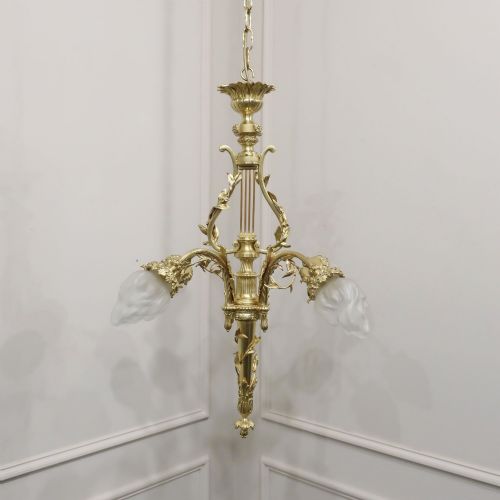
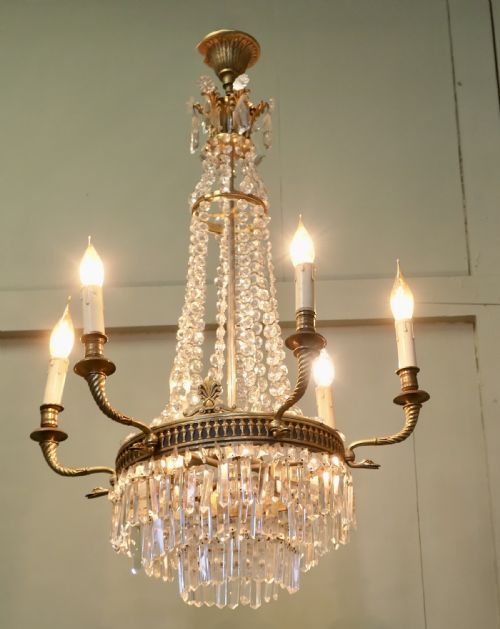
A french gilt pendant fitting comprises hanging light fixtures shaped by styles such as French Empire, French Rococo, and French Neoclassical. Buyers seeking these items will find chandeliers and ceiling lights originating predominantly from the late nineteenth century and the early decades of the twentieth century.
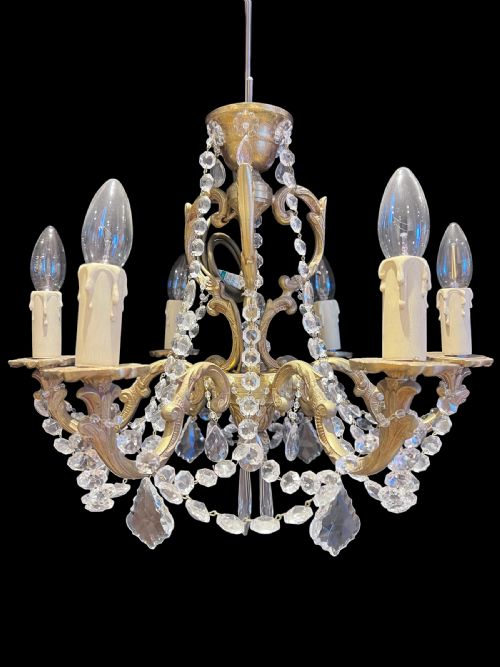
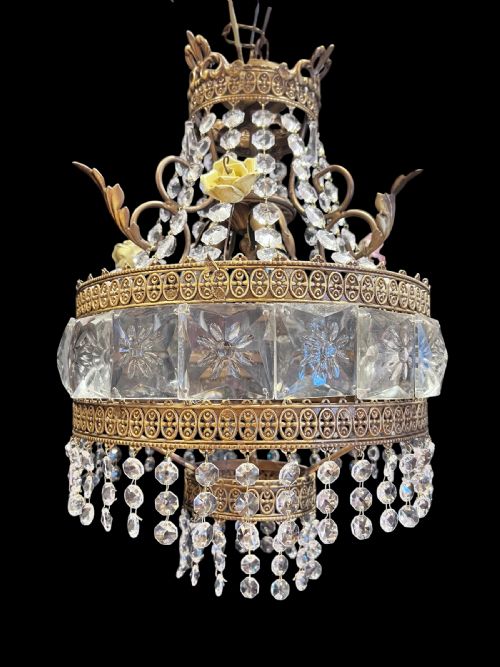
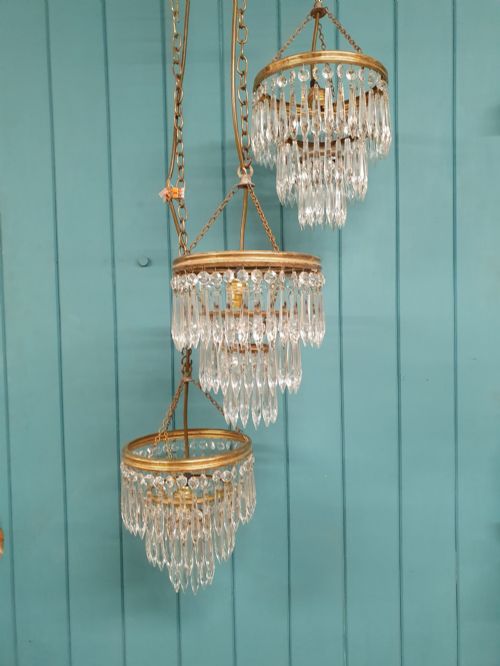
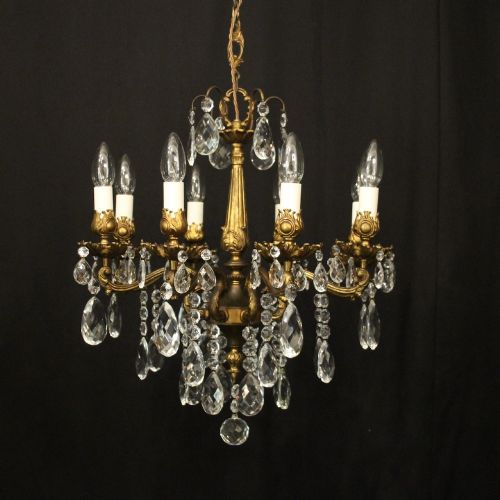
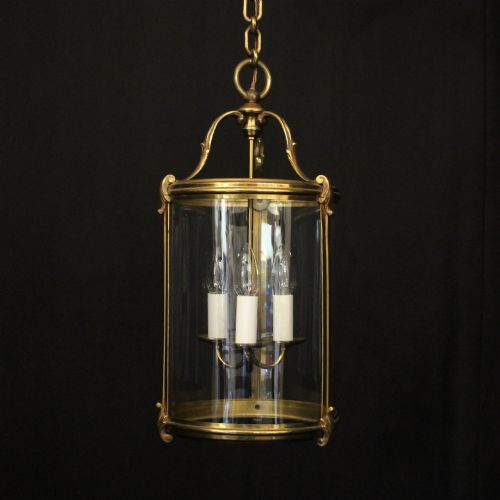
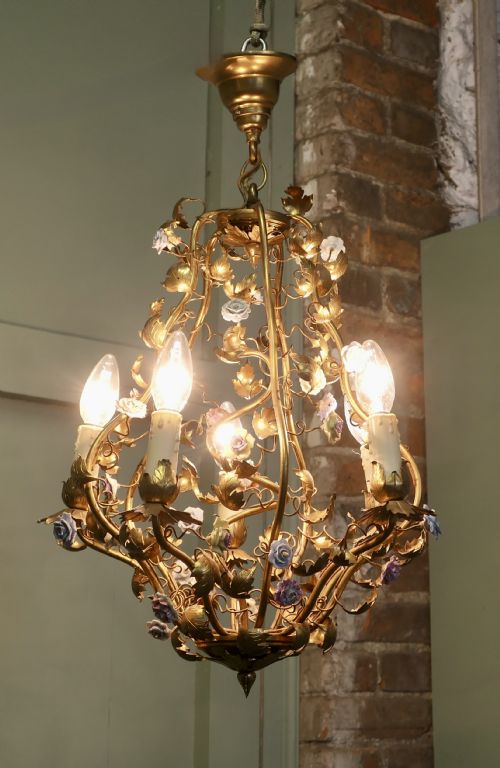
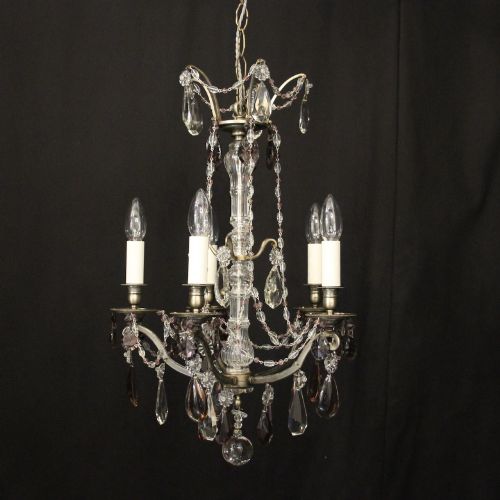
The selection on this page ranges from multi-light fixtures hung with cut glass crystals to convex hall lanterns and tolewear designs featuring ceramic flowers. These pieces serve as overhead focal points in rooms requiring traditional illumination and ornate metal detailing.
Quality and craftsmanship
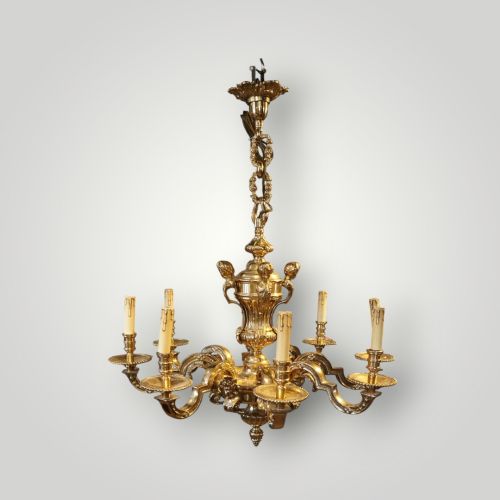
Quality in these fixtures rests upon the precision of the metal casting and the depth of the original gilding applied to the bronze or brass framework. Finer examples display crisper detailing in relief work, such as acanthus leaves or figural elements, alongside substantial weight in the primary structure.
The clarity and cut of the associated glass and crystal components also distinguish finer items from simpler productions. Fixtures retaining matching, high-refraction crystals demonstrate superior original assembly compared to pieces with mixed or replacement drops.
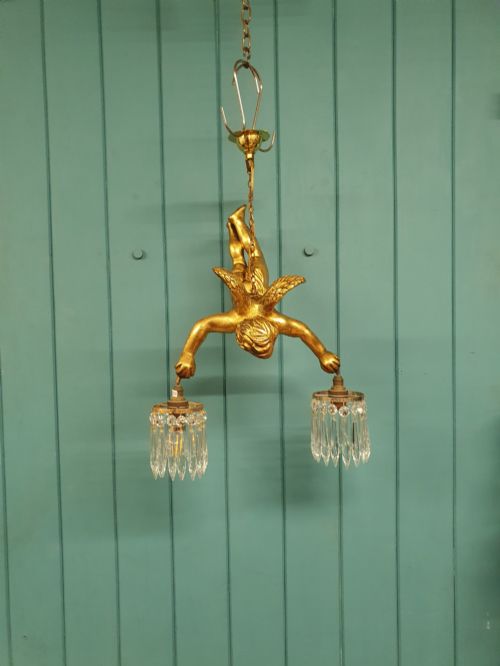
A flying cherub occasionally watches over the room from a brass and crystal perch.
G.E.C
The French Gilt Pendant Fitting Glossary
- Gilt bronze
- An alloy of copper and zinc or tin treated with a fine layer of gold on the surface. This technique produces a durable, lustrous finish common on nineteenth-century French light fittings.
- Crystal
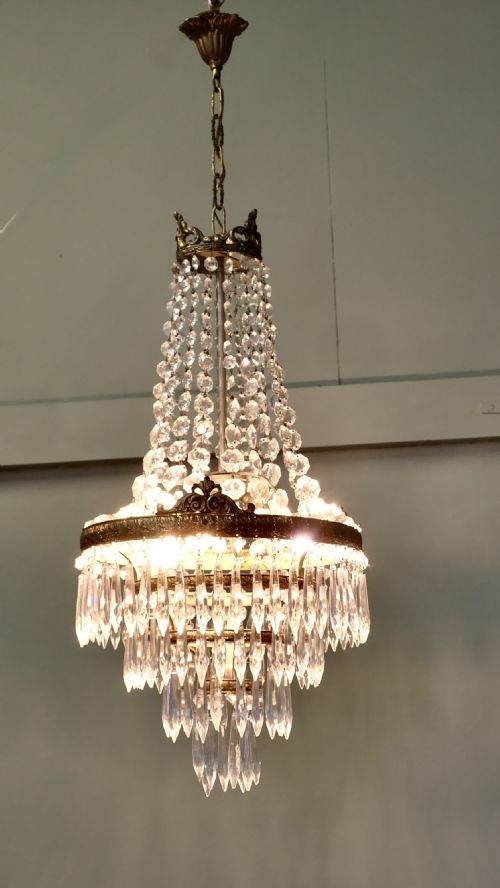
- Glass containing lead oxide to increase weight, brilliance, and light dispersion. It is shaped into prisms, drops, and spikes to hang from chandelier arms.
- Tolewear
- Painted or lacquered sheet metal utilised for decorative botanical forms, leaves, and shades. It introduces colour and organic shapes to the metallic framework.
- Hall lantern
- An enclosed hanging light fixture designed for entryways and corridors. These fittings often feature glazed panels held within a metal frame.
- Coffin prism
- A flat, elongated glass drop with bevelled edges resembling the shape of a traditional coffin. These prisms catch and reflect ambient light.
French Gilt Pendant Fitting: Frequently Asked Questions
What periods do these pendant fittings date from?
The pieces span from the nineteenth century through the Edwardian era and into the 1920s and 1930s. Styles range from formal neoclassical designs to later twentieth-century interpretations.
Specific production dates are attributed through stylistic indicators and manufacturing techniques typical of French and Italian workshops of those decades.
How do I clean a crystal chandelier?
Cleaning requires removing dust with a soft brush and wiping glass elements using a mild solution on a cloth. Care must be taken around fragile gilt surfaces to preserve the finish.
Many owners prefer cleaning individual drops in situ rather than dismantling the entire fixture from the ceiling.
Where should a hall lantern be hung?
Hall lanterns suit entrance hallways, stairwells, and landings where vertical space allows a suspended fitting. Their enclosed design protects the internal light source from drafts.
Positioning them centrally ensures balanced illumination across transition spaces in a home.
How are different French design styles told apart?
French Empire pieces display classical motifs, symmetry, and architectural restraint derived from antiquity. Rococo Revival designs feature asymmetrical scrolls, floral garlands, and exuberant curves.
Neoclassical fittings emphasise urns, lyres, and straight geometric lines rather than heavy scrolling.