


French Gilt Mirror Console
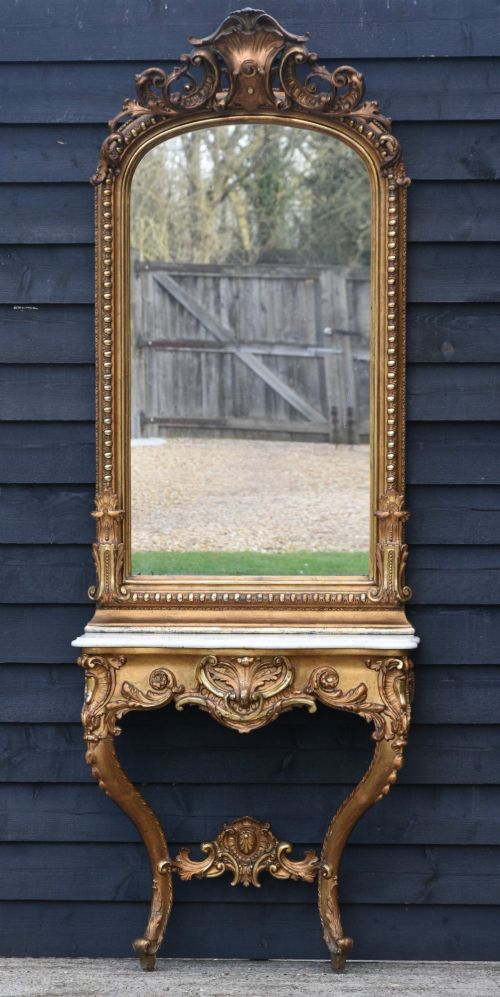
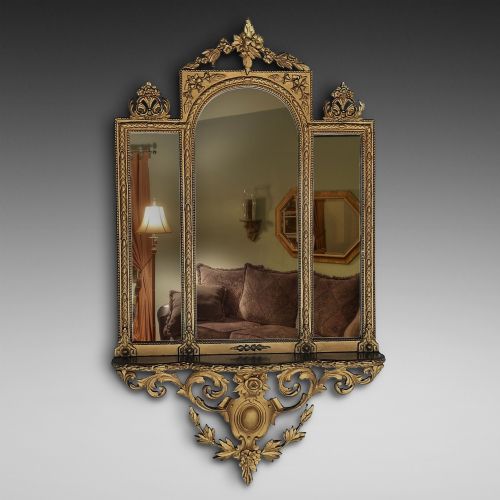
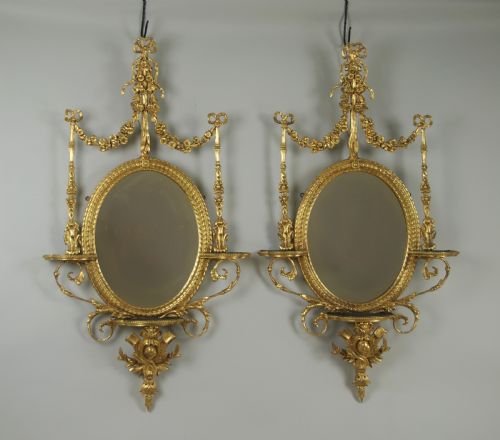
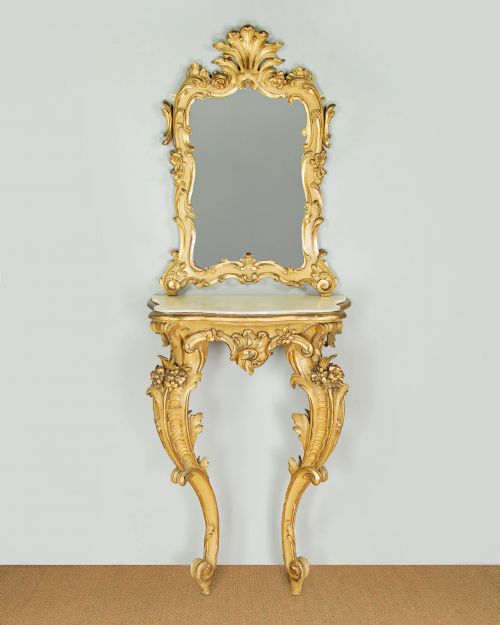
These substantial french gilt mirror console sets pair carved wooden frames with matching tables, bringing classical nineteenth-century proportion and bright metallic reflection into a room.
French Gilt Mirror Console
A french gilt mirror console combination brings together a tall vertical glass plate and a matching floor-standing table, most frequently encountered in nineteenth-century Victorian and Rococo Revival forms. The groupings range from integrated console sets with fixed tables to paired wall glasses suspended above heavy marble-topped bases.
The objects serve dual purposes within nineteenth-century domestic spaces, combining display surfaces for ornaments with large reflective panels designed to bounce daylight across a reception room or hallway. Many survive as matched sets originating from French chateau or Victorian parlour settings.
Materials and construction
Frames rely upon carved timber carcasses, often built from softwood or hardwood finished with layers of gesso to build up crisp relief work before the application of gold leaf or metallic paint. Mirrored glass plates sit within these housings, frequently accompanied by heavy slabs of white or grey marble fitted to the console table tops.
Decorative elements draw upon composition ornaments pressed into moulds and applied to the wooden structures, particularly around corners and scrollwork. Joinery combines traditional peg and mortise joints on the console bases with rebate housings for the heavy wall-mounted glasses.
Some pier mirrors include display brackets designed specifically for holding small porcelain figures within the reflection.
Judging the work
Quality rests in the crispness of the hand-carved wooden details and the depth of the gesso relief beneath the gilding, which separates finely sculpted pieces from mass-produced moulded equivalents. The crispness of acanthus leaves, scrolls and figural motifs indicates the skill of the original artisan.
The integrity of the matching relationship between table and mirror dictates the structural coherence of the ensemble, since many separate over time. Original marble tops with matching edge profiles and undisturbed silvering on the glass elevate the standing of a piece.
Donald Ross
The French Gilt Mirror Console Glossary
- Giltwood
- Timber coated with gold leaf laid over a prepared gesso ground. This finish provides the characteristic metallic brilliance seen on nineteenth-century frames.
- Gesso
- A plaster mixture applied to wood frames to create a smooth surface for carving and gilding. It allows intricate scrollwork and relief decoration.
- Pier glass
- A tall narrow mirror designed to hang on the wall space between two windows. These glasses frequently incorporate matching console tables positioned beneath them.
- Trumeau
- A decorative wall panel containing a painted scene or mirror glass set above a console table. The style originated in eighteenth-century French interior design.
- Carrera marble
- A high-grade white or blue-grey stone quarried in Italy. It forms the durable top surface for many nineteenth-century console tables.
French Gilt Mirror Console: Frequently Asked Questions
How do I clean giltwood frames?
Dust the carved surfaces gently using a soft dry brush to prevent damage to the delicate metallic leaf. Avoid liquid cleaners and chemical sprays entirely.
Moisture can penetrate the gesso layer beneath the gold leaf and cause flaking over time. Keep the frames away from direct heat sources and damp walls.
Were the tables and mirrors always matched?
Many console tables and wall glasses were manufactured as unified suites sharing identical decorative motifs and carving styles. They were designed to function as single decorative focal points in reception rooms.
Some surviving combinations bring together separate pieces from the same period that share compatible proportions and materials. Examining the timber backing and mountings helps determine if the pairing is original.
Where should I place a console mirror?
These tall assemblies work effectively in entrance halls, formal dining rooms, or above drawing-room fireplaces where they reflect natural light. The console base provides a narrow surface for decorative objects without blocking interior walkways.
Secure the tall mirror frames directly to wall studs using appropriate brackets to bear the considerable weight of the timber and glass. Ensure the floor beneath the console table is level to keep the structure stable.
How can I tell Victorian from earlier French pieces?
Victorian interpretations often feature heavier gesso mouldings and denser carvings compared to lighter nineteenth-century French models. British makers frequently adopted Rococo and Neoclassical vocabularies with slight variations in proportion.
French pieces from the mid-nineteenth century tend to display fluid scrolling leafwork and specific joinery traits characteristic of continental workshops. Looking at the backboards and screw types provides further clues to regional origin.