
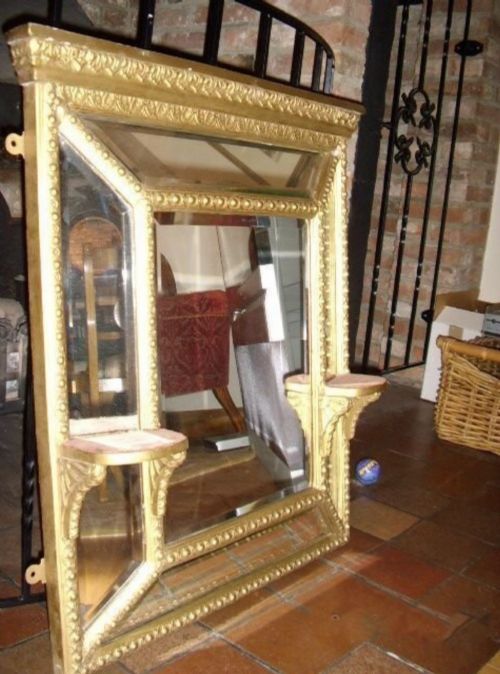


French Gilded Bracket Shelf
These French gilded bracket shelf pieces are ornate wall supports that bring architectural theatre and antique gleam to an interior.
French Gilded Bracket Shelf
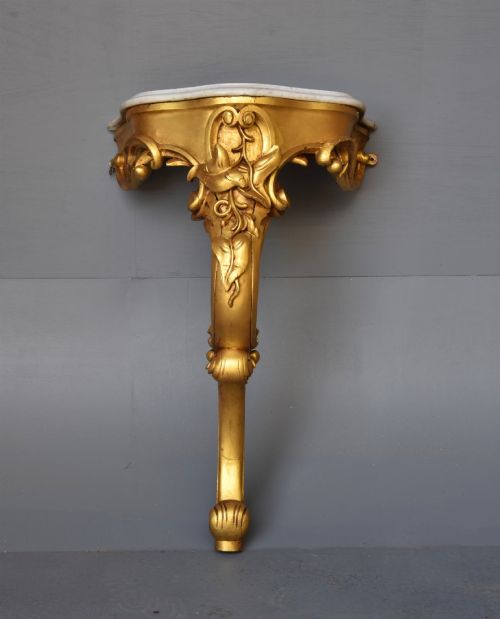
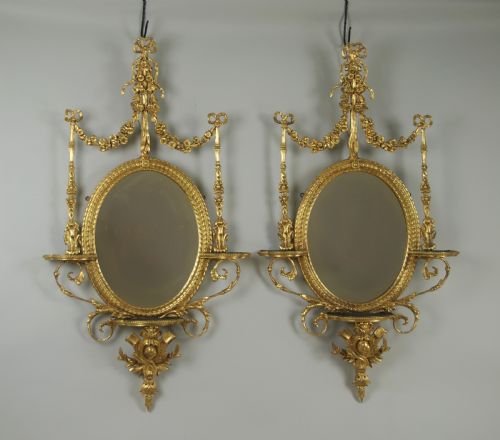
A french gilded bracket shelf provides a decorative projection from the wall, designed to hold small sculptures, clocks, or vases with formal elegance. These objects appear in various forms, including dedicated carved wall brackets, console tables, and mirror frames with integrated display shelves.
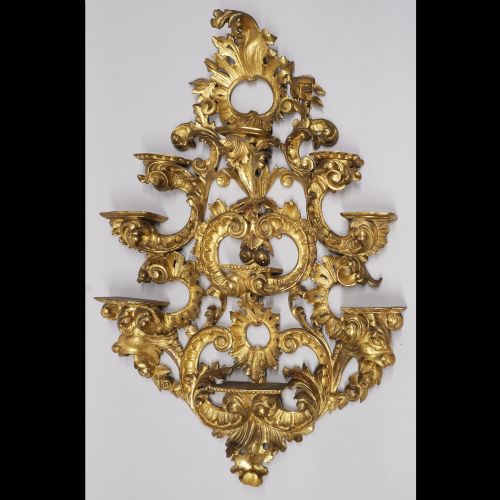
The pieces on offer span from the eighteenth century through to the early twentieth century, taking shape in styles such as Rococo Revival, Neoclassical, and Baroque Revival. Most examples encountered here rely on nineteenth-century craftsmanship, capturing the decorative spirit of French chateau interiors.
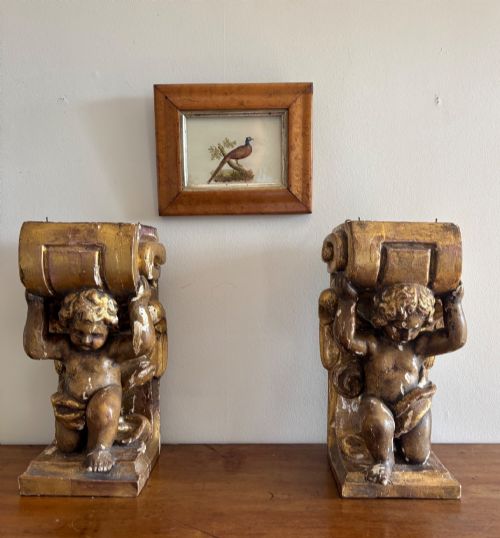
Makers and designers from these periods utilised rich surface treatments and sculptural forms to create functional art for the wall. Whether dealing with a pair of carved giltwood brackets or a porcelain shelf, each item serves as a focal point for display.
How they were made
Makers constructed these supports primarily from carved wood, gesso, and giltwood, applying gold leaf to achieve a luminous metallic finish. Ormolu and gilt bronze also appear on more elaborate pieces, adding heavy cast metal detail to the wooden or ceramic structures.
Techniques combined traditional wood carving with moulded gesso ornaments to build up high-relief scrolls, cherubs, and acanthus leaves. Glass and marble elements were frequently incorporated into console tops, mirror plates, and shelf inserts for added texture.
Listings span from the 18th century to the 1920s, featuring materials like giltwood, ormolu, marble, and hand-painted wood.
What varies in quality
Quality rests upon the crispness of the carving and the depth of the gilding, where hand-tooled surfaces outshine flat or mechanical finishes. Superior pieces exhibit well-defined gesso work that retains its original sharpness beneath the gold leaf.
The integrity of the underlying materials also dictates worth, as solid carved wood structures command greater respect than inferior compositions. Integration of secondary elements, such as bevelled glass, marble inserts, or ormolu mounts, elevates the ambition of the piece.
Henri Dasson
The French Gilded Bracket Shelf Glossary
- Giltwood
- Wood that has been treated with gesso and covered with thin sheets of gold leaf to create a golden surface. This finish defines the majority of traditional wall brackets.
- Ormolu
- Finely chased and gilded bronze, often used for mounts, clocks, and decorative brackets. The term derives from the French for milled gold.
- Gesso
- A plaster-like mixture applied to wood as a base for paint or gold leaf. It allows carvers to mould sharp, intricate details before gilding.
- Étagère
- A piece of furniture consisting of a set of open shelves for displaying small objects. Wall versions provide vertical display space in smaller rooms.
- Rococo Revival
- A nineteenth-century style reviving the asymmetrical scrolls, shell motifs, and natural curves of the original French Rococo period. It dominates many bracket and mirror designs.
French Gilded Bracket Shelf: Frequently Asked Questions
How were French gilded bracket shelves used?
These shelves were traditionally mounted to drawing room walls to display prized porcelains, bronze figures, or mantel clocks.
They raised decorative objects to eye level, turning utilitarian wall space into a formal gallery display.
How do I spot a Rococo Revival piece?
Rococo Revival works feature asymmetric C-scrolls, acanthus leaves, and shell motifs drawn from eighteenth-century French design.
Look for dynamic, curving lines that avoid strict symmetry across the bracket body.
What is the difference between giltwood and ormolu?
Giltwood consists of a carved wooden base covered in gold leaf, offering a warm and textured golden finish.
Ormolu is cast bronze that has been gilded, providing a heavier metallic structure with sharp, chased details.
How do I secure a wall bracket safely?
Wall brackets require solid fixings into wall studs or masonry because of the dense wood and plaster construction.
Weight distribution matters, particularly when placing marble clocks or porcelain figures on the shelf.