
French Floral Marquetry Cabinet
A french floral marquetry cabinet brings together intricate botanical wood veneers and classical silhouettes to anchor a room with period elegance.
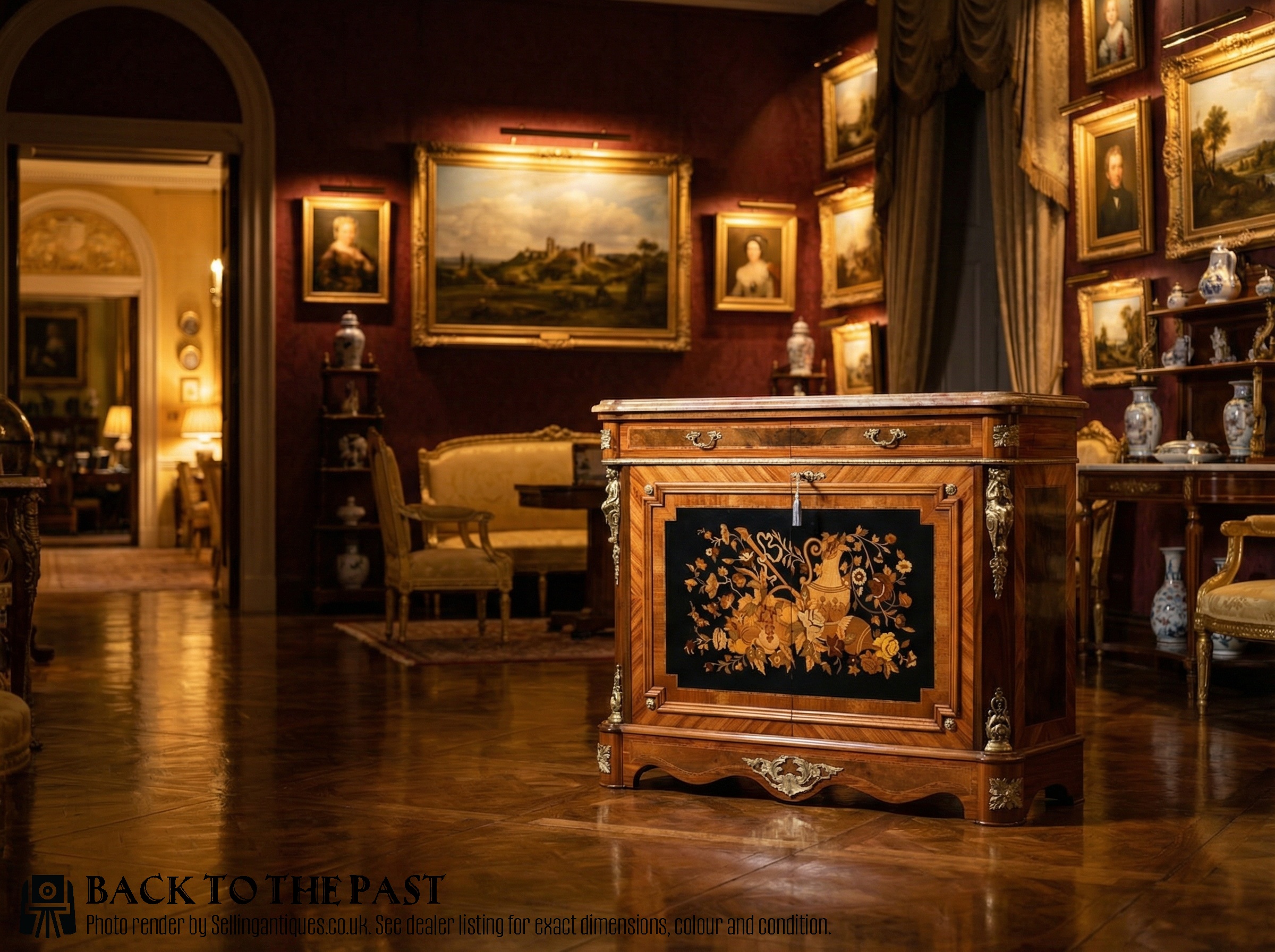
French Floral Marquetry Cabinet
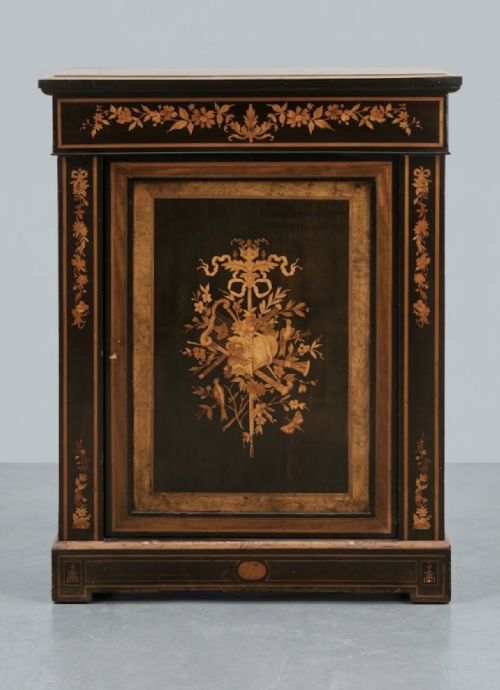
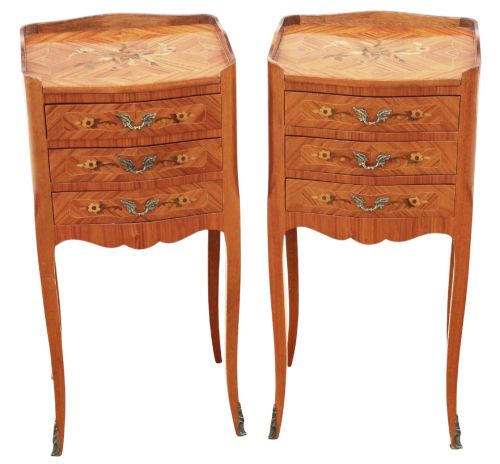
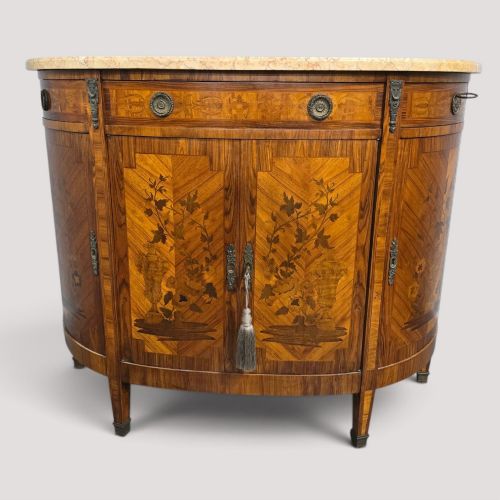
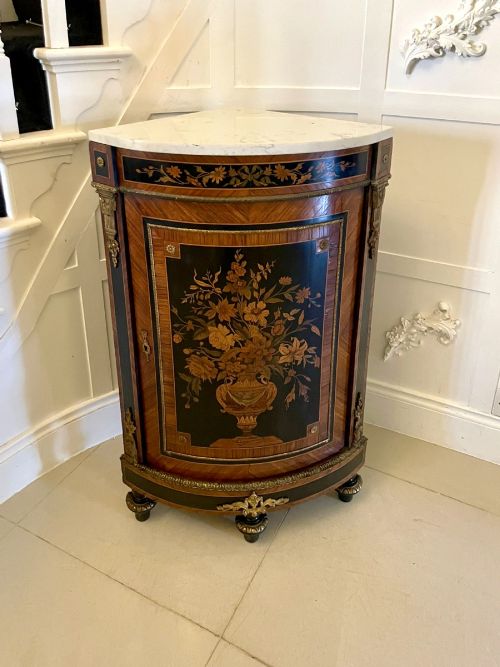
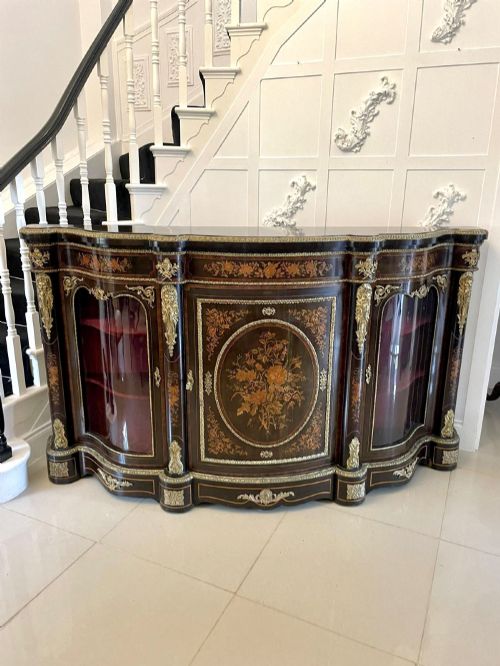
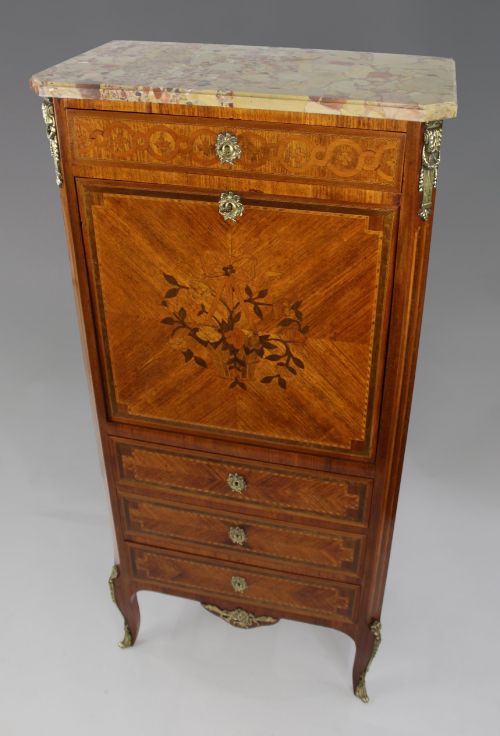
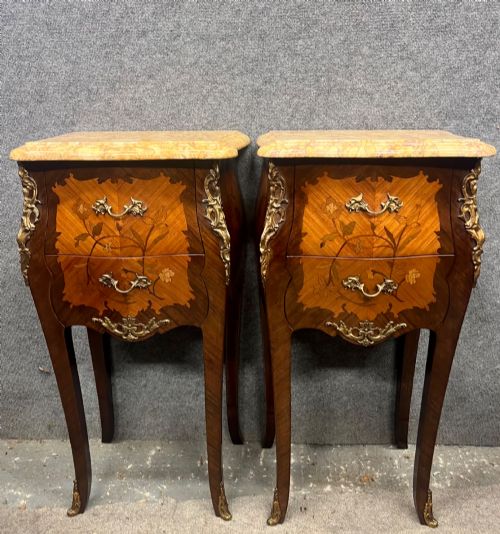
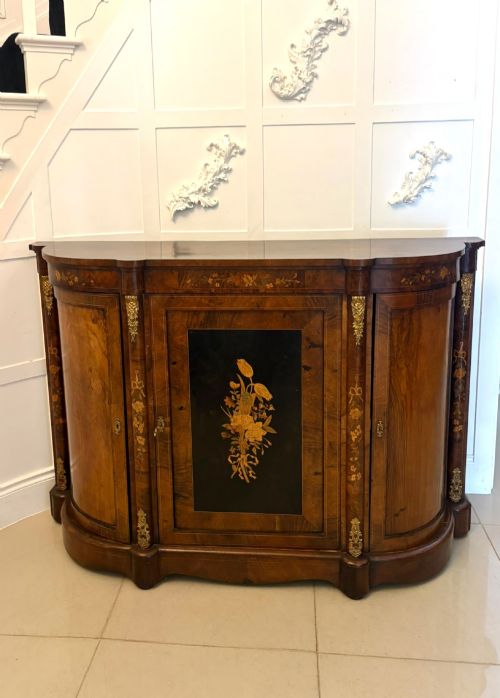
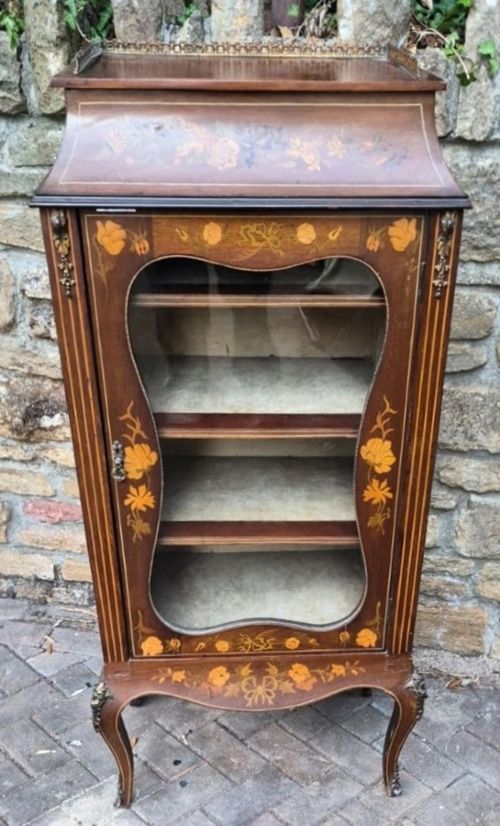
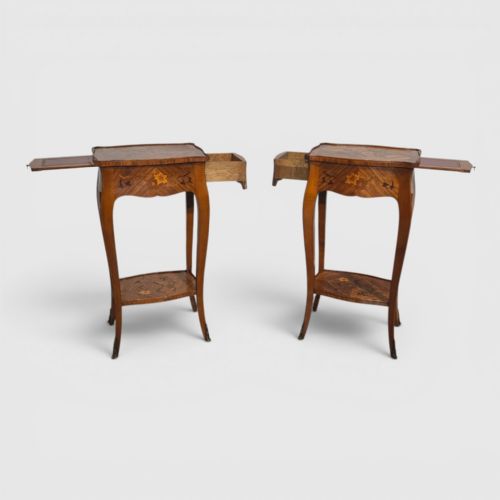
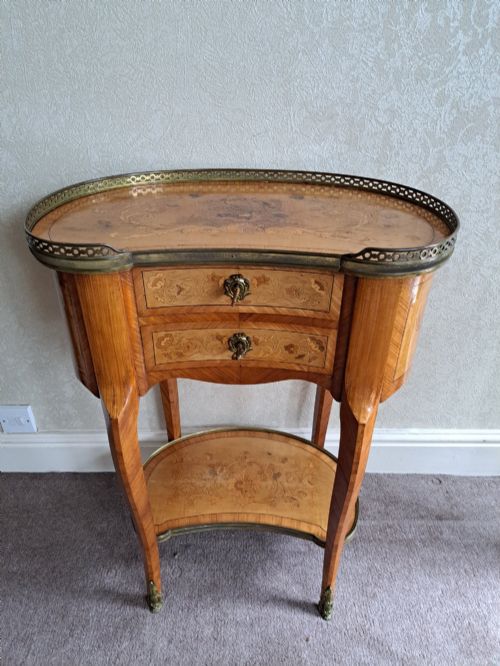
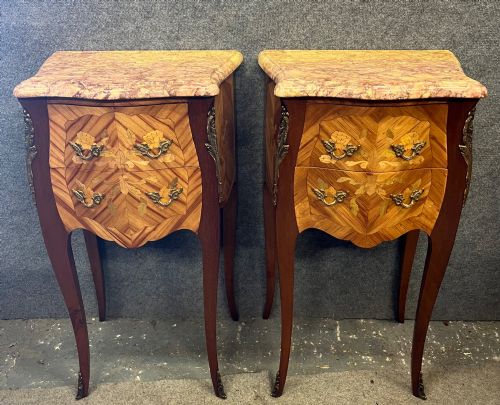
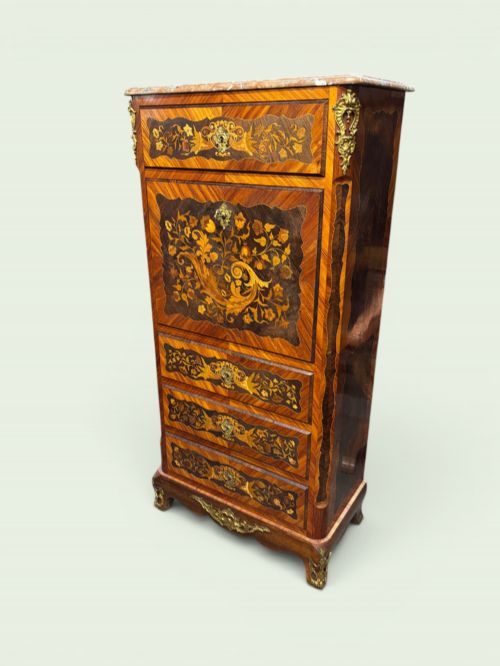
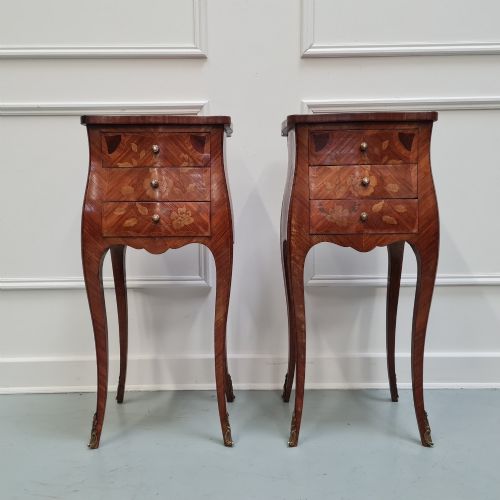
A french floral marquetry cabinet combines storage utility with pictorial wood inlay depicting botanical arrangements. The examples met most frequently on this page span the nineteenth century through the 1930s, taking forms such as side cabinets, bedside tables, credenzas, and corner cabinets.
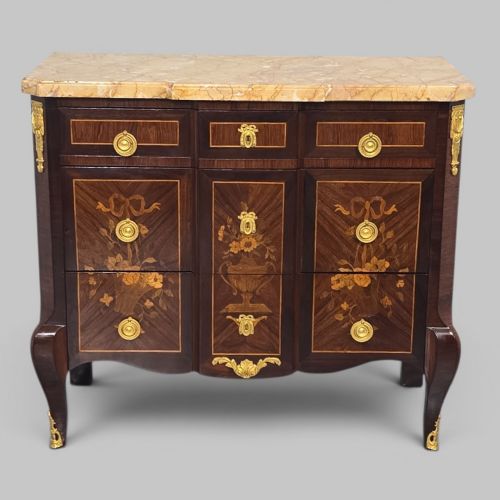
These pieces emerge from diverse regional workshops influenced by historical French design revivals. Makers of the period adopted Louis XV and Louis XVI aesthetics, translating eighteenth-century motifs into nineteenth-century commodes, display cabinets, and writing tables.
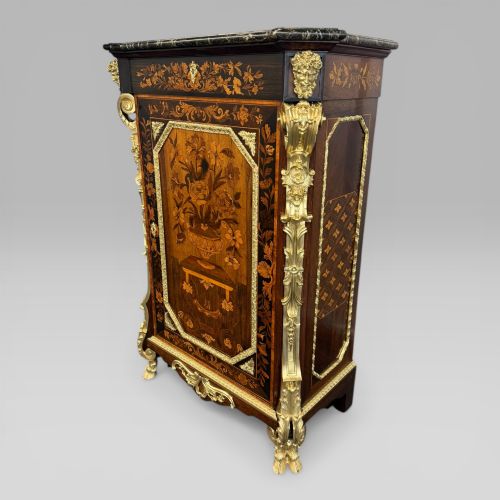
The integration of floral marquetry panels defines the primary visual appeal of these items. Workshops deployed contrasting timber veneers to form bouquets, floral sprays, and scrolling foliage across doors, drawer fronts, and tabletops.
How They Were Made
Craftsmen built carcass structures using foundational hardwoods such as walnut, kingwood, rosewood, and ebonised timber. Veneers of contrasting coloured woods were sliced thin and hand-cut to compose the floral pictorial scenes.
Mounts and decorative trims cast in ormolu and gilt bronze accent the structural corners, frames, and aprons. Marble tops in white or coloured varieties frequently complete the upper surface of commodes and side cabinets.
Cabinetmakers occasionally hid small compartments behind decorative floral inlays for clandestine storage.
What Varies in Quality
The precision and depth of the marquetry cutting dictate the upper tier of execution. Master workshops achieved subtle shading in petals and leaves by scorching veneers in hot sand before assembly.
The weight and crispness of the cast ormolu mounts separate standard production from exceptional pieces. Heavier, finely chased bronze mounts indicate superior workshop standards compared to simpler brass pressings.
Edward Holmes Baldock·Blake
The French Floral Marquetry Cabinet Glossary
- Marquetry
- Decorative wood veneer arranged in pictorial patterns or scenes. Artisans piece together different timber varieties to create complex floral motifs.
- Ormolu
- Gilt bronze mounts applied to furniture edges and feet. This decorative hardware provides metallic contrast against dark wood veneers.
- Demi-lune
- Half-moon shaped furniture profile often seen on console tables and small cabinets. The curved front softens room layouts.
- Credenza
- A low cabinet designed for display and storage, frequently featuring glazed side doors. Victorian and French iterations often incorporate extensive floral inlays.
French Floral Marquetry Cabinet: Frequently Asked Questions
What is a french floral marquetry cabinet?
A french floral marquetry cabinet is a storage or display piece decorated with hand-cut wood veneers forming botanical patterns. These items range from nineteenth-century credenzas to smaller bedside tables.
They reflect historical French design revivals, combining utilitarian function with detailed pictorial woodwork.
How do I identify the period?
Dating relies on timber choices, mount styles, and structural forms. Nineteenth-century examples often employ walnut, kingwood, and heavy ormolu mounts.
Twentieth-century iterations from the 1920s and 1930s tend toward simpler lines while retaining traditional inlay techniques.
Where were these cabinets placed?
These cabinets served multiple domestic functions across drawing rooms, boudoirs, and reception spaces. Larger credenzas and sideboards anchored formal rooms for display.
Smaller commodes and bedside tables functioned as functional bedside storage or lamp tables.
How should I care for the wood?
Maintenance involves protecting delicate veneers from direct sunlight and excessive humidity. Regular dusting with a dry, soft cloth preserves the polished surface.
Avoid chemical polishes that can degrade the aged timber and loosen fine veneer edges.