

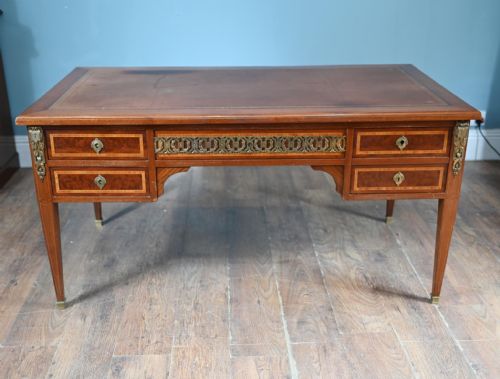


French Flat Top
These french flat top desks and trunks bring writing surfaces and travel baggage together in mahogany, kingwood, leather, and ormolu.
French Flat Top
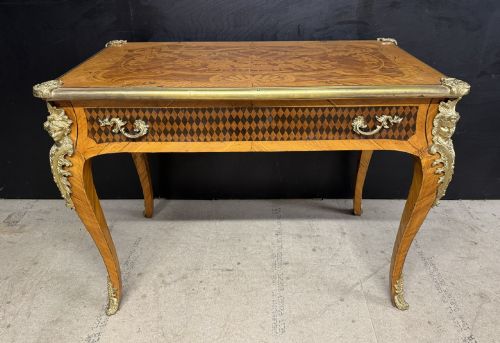
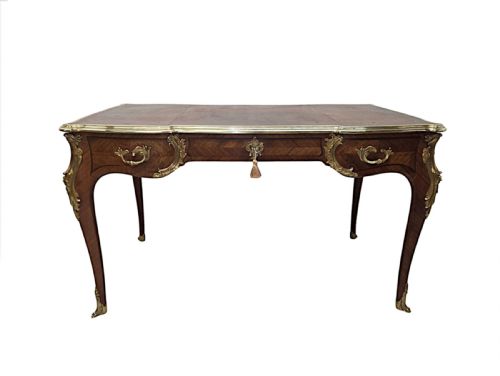
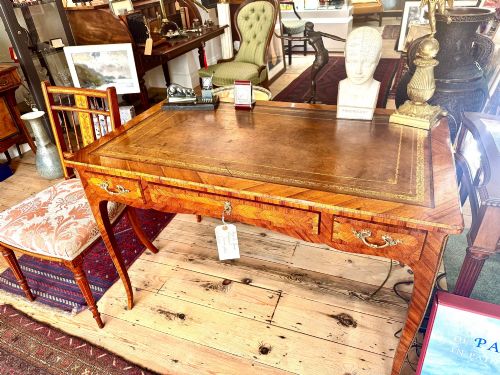
When you search for french flat top, you encounter writing desks known as bureau plat alongside nineteenth-century trunks and luggage. These pieces span the nineteenth century through the twentieth century, taking forms such as freestanding writing tables and steamer trunks.
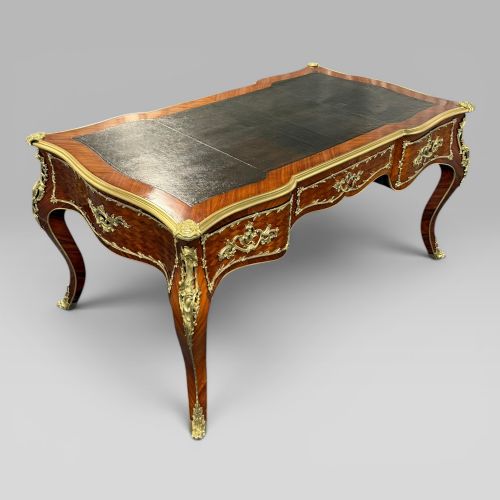
The desks dominate the selection, appearing most frequently in nineteenth-century interpretations of Louis XV and Directoire styles. Alongside these writing tables, notable pieces of luggage emerge from makers like Louis Vuitton and Aux Etats Unis.
What varies in quality
The refinement of the ormolu and gilt bronze mounts separates standard production from exceptional pieces. Finely chased metalwork demonstrates sharper detail and deeper relief against the wood or lacquer.
Surface execution marks another distinction, visible in the precision of kingwood parquetry, marquetry patterns, and the quality of the leather writing inserts. Maker attribution, such as work associated with Henry Dasson, elevates the standing of a desk.
French Flat Top Retail Price Guide 2026
Typical asking prices for french flat top among the pieces listed under this phrase on Sellingantiques today, from the lower quarter to the upper quarter. They describe what is for sale here now, not the wider market.
One twenty-five year anniversary trunk commemorates a quarter-century of royal milestone travel.
Henry Dasson·Louis Vuitton·Aux Etats Unis
The French Flat Top Glossary
- Bureau plat
- A freestanding writing desk with a flat top, typically featuring one or more drawers across the frieze. These tables originated in France and served as central workspace furniture.
- Ormolu
- Cast bronze that has been gilded with finely ground gold amalgam, used for decorative mounts on furniture. This technique creates a rich golden finish that highlights the contours of a desk.
- Parquetry
- Geometric wood inlay work arranged in patterns such as cubes or chevrons across a surface. Artisans utilised contrasting timbers like kingwood to achieve these precise visual motifs.
- Marquetry
- The art of applying pieces of veneer to a structure to form decorative pictorial designs or floral arrangements. Cabinetmakers used various woods to bring depth and tone to the tabletop.
- Directoire style
- A transitional neoclassical design movement bridging Louis XVI and Empire periods, characterised by restrained lines and classical motifs. Desks from this period favour geometric simplicity over rococo curves.
French Flat Top: Frequently Asked Questions
What is a bureau plat?
A bureau plat is a traditional French writing desk featuring a flat top and a finished back so it can stand in the middle of a room.
These desks typically include drawers beneath the writing surface and rest on cabriole or tapered legs.
How do I style a flat top desk?
Position the desk away from the wall to showcase the finished back and ormolu mounts as a centrepiece.
Pair the writing surface with a simple chair that complements the wood tone without competing with the brass or bronze details.
How do I identify Louis XV style?
Louis XV style pieces display asymmetrical curves, naturalistic floral motifs, and cabriole legs.
These designs avoid straight lines in favour of flowing contours and prominent gilt bronze ormolu mounts.
Are old steamer trunks durable?
Nineteenth-century and early twentieth-century trunks utilised robust canvas, wood, and metal construction designed for long journeys.
Today they function effectively as coffee tables or storage chests in living spaces.