
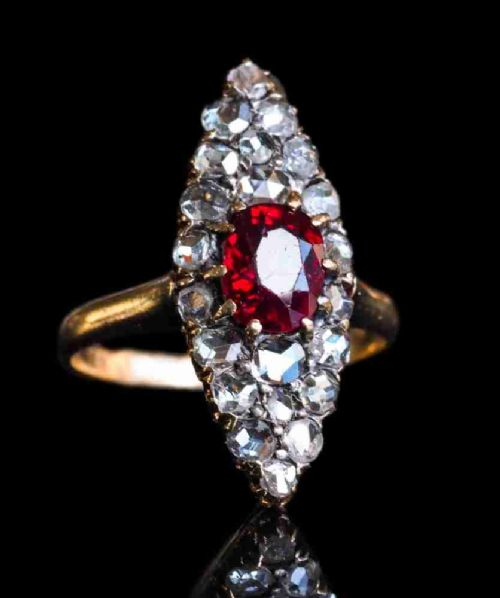


French Fine Jewellery
French fine jewellery encompasses exquisite antique rings, necklaces, bracelets, brooches, and boxes crafted across the Victorian, Edwardian, Art Deco, and mid-century periods.
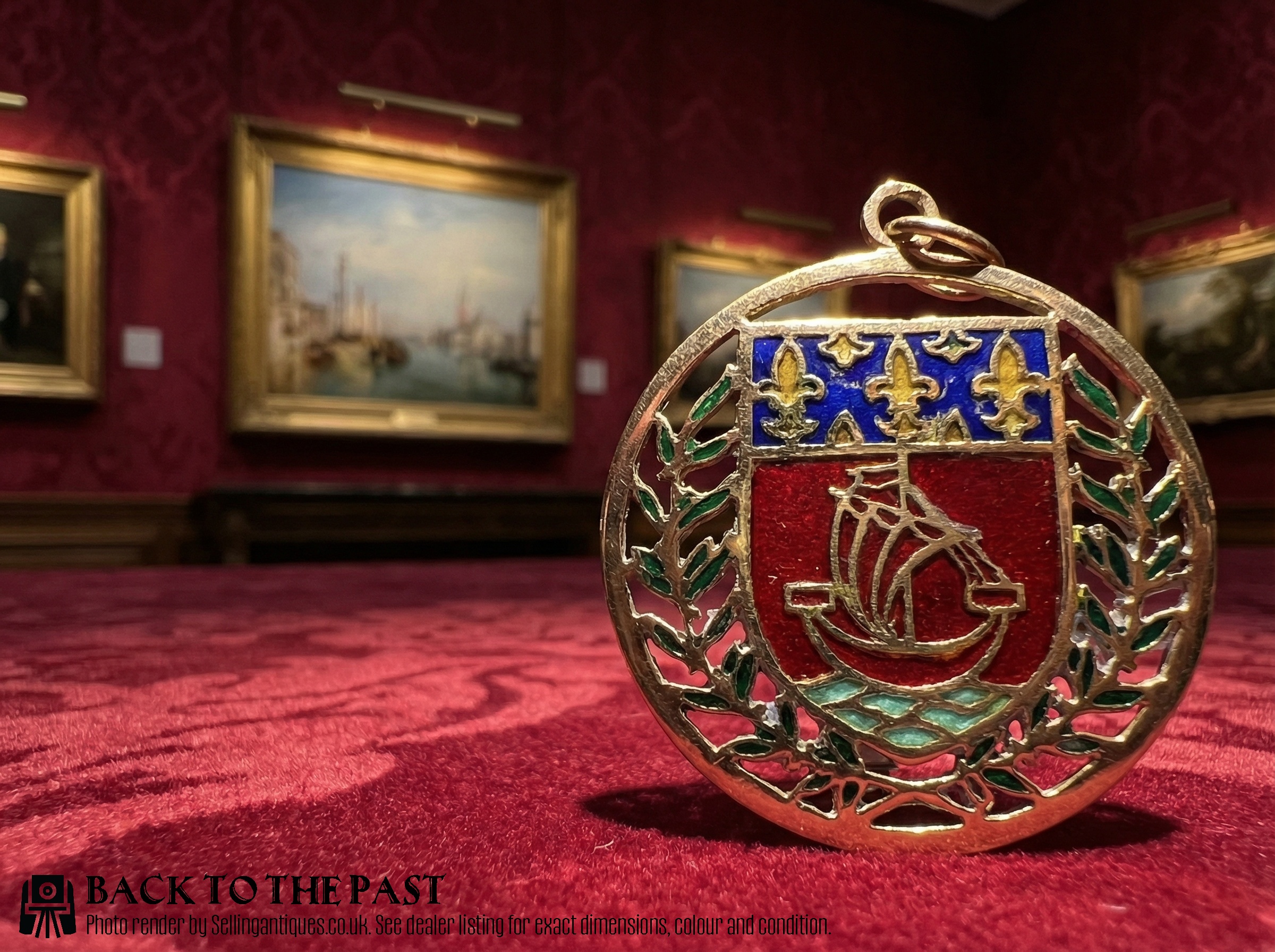
French Fine Jewellery
French fine jewellery spans wearable ornaments and decorative containers from the nineteenth and twentieth centuries. Buyers search this phrase for pieces ranging from ruby and diamond navette rings to plique-a-jour enamel charms and leather jewellery boxes.
The wearable pieces frequently showcase distinct historical phases such as Belle Epoque garlands, Art Deco geometry, and 1960s novelty designs. Alongside these rings, necklaces, and bracelets, the category encompasses display tables, vitrines, and trinket boxes designed to house precious items.
Origins trace through nineteenth-century Victorian and 1870 creations up to mid-century modern examples. These items reflect French craftsmanship across diverse object types, uniting personal adornment with refined domestic containers.
Distinctions in quality
Quality rests upon the selection and integration of materials, from the purity of unheated natural rubies and diamonds to the precision of goldwork and platinum settings. Master jewellers balanced stone weight with delicate structural proportion.
The execution of fine details determines superiority, visible in the clean transparency of plique-a-jour enamel, the crisp carving of tourmaline, or the structural joinery of bronze-mounted glass caskets. Maker attribution also elevates certain pieces.
Design coherence separates standard production from exceptional examples, ensuring that periods like Art Deco or Belle Epoque find expression through harmonious composition rather than mere ornament.
One particularly charming mid-century novelty pin depicts a tiny gold duckling waddling forth with unmistakable French confidence.
Van Cleef & Arpels·Chaumet·Cartier Paris·Baccarat
The French Fine Jewellery Glossary
- Navette
- A boat-shaped gemstone setting or ring design. This pointed oval silhouette lengthens the finger and maximises visual stone coverage.
- Plique-a-jour
- An enamelling technique resembling miniature stained glass without a backing. Light passes directly through the translucent enamel cells.
- Vitrine
- A glass-fronted display cabinet or table. These furniture pieces allow the safe exhibition of small precious objects.
- Belle Epoque
- A stylistic period spanning the late nineteenth century to the First World War. Designs feature garland motifs, platinum, and intricate diamond work.
- Bijouterie table
- A glass-topped display table intended for showing jewellery and small valuables. They combine furniture craftsmanship with display function.
French Fine Jewellery: Frequently Asked Questions
How do I identify Art Deco pieces?
Art Deco items rely on geometric lines, symmetrical patterns, and high-contrast combinations like onyx and diamond. Platinum and white gold frequently support these architectural compositions.
Look for stylised motifs and precise cutting that distinguish the period from earlier Victorian or later mid-century aesthetics.
What is plique-a-jour enamel?
Plique-a-jour is an enamelling method where fired glass sits within an open wire framework without a solid backing. This construction lets light shine straight through the coloured enamel.
Objects utilising this technique display stained-glass transparency within precious metal borders.
How were bijouterie tables used?
Bijouterie tables served as decorative display furniture in grand nineteenth-century salons and boudoirs. Collectors placed precious items, rings, and trinket boxes beneath their glass tops.
They combined the function of a small table with the security and visibility of a showcase.
What distinguishes Edwardian jewellery?
Edwardian jewellery highlights light, lace-like platinum and yellow gold structures set with pearls and diamonds. The aesthetic favours delicate garlands and floral motifs.
Pieces from this era emphasise refined grace and intricate wirework over the heavier forms of the mid-Victorian period.