





French Figurine Clock
A french figurine clock brings sculptural character and precise timekeeping together, offering a striking centrepiece for any mantel.

French Figurine Clock
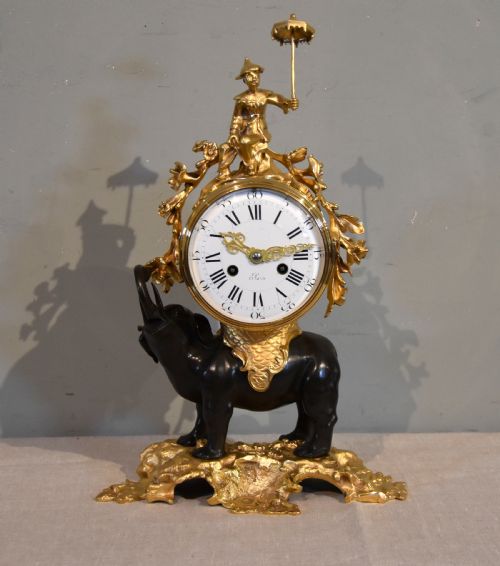
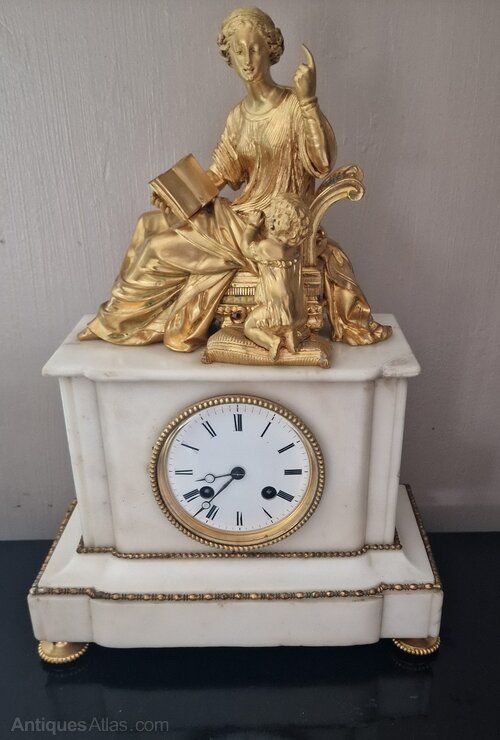
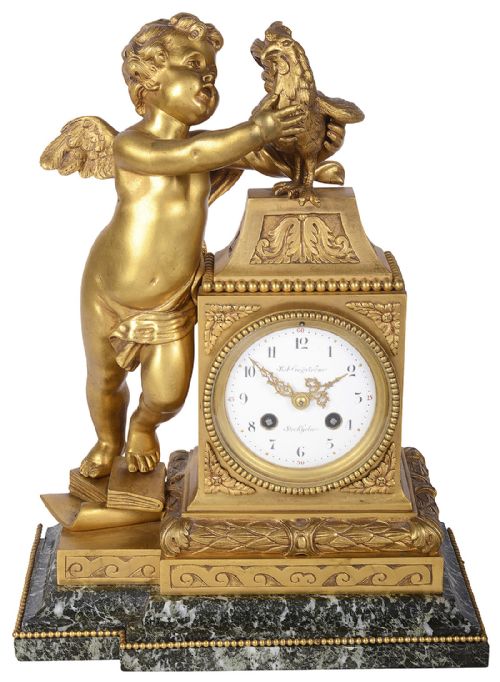
A french figurine clock combines a mechanical clock movement with sculptural figures cast in bronze, ormolu, or carved in marble. These objects frequently depict classical subjects, cherubs, animals, or historical figures integrated into the architectural case.
The versions most commonly met on this page belong to the nineteenth century, drawing heavily on earlier decorative styles such as Louis XV and French Rococo Revival. They range from compact mantel pieces incorporating porcelain elements to substantial arrangements featuring patinated bronze and marble stands.
Materials and construction
Maker workshops utilised fire-gilded ormolu alongside patinated bronze and white or variegated marble to build durable, heavy clock cases. Metal components were cast, chased by hand, and assembled to frame the enamel dials and porcelain plaques.
Complex compositions integrated delicate porcelain figures, such as Meissen Harlequin and Columbine, directly into gilt metal architectural frameworks. Glass domes often protected these intricate figural scenes from dust and damage.
Elephants and windmills occasionally serve as the housing for clock faces, proving that nineteenth-century horologists enjoyed a sense of humour.
Assessing quality and execution
The standard of chasing in the ormolu and the crispness of detail in the bronze figures dictate the overall merit of the piece. Superior examples display sharp definition in facial expressions, drapery, and foliate mounts rather than soft, blurred casting lines.
The integration of the movement with the sculptural subject also separates standard production from exceptional work. Signed movements by known makers and high-grade marble or porcelain components elevate the piece significantly.
Berger Paris·Achille Brocot·Delettrez
The French Figurine Clock Glossary
- Ormolu
- Gilded bronze produced by applying a mercury and gold amalgam to a bronze base and heating it. This technique creates a durable, warm golden finish characteristic of many decorative clocks.
- Patinated bronze
- Bronze treated with chemical solutions to produce a darkened or coloured surface finish. It provides contrast against bright ormolu mounts in figural compositions.
- Enamel dial
- A clock face made by fusing powdered glass onto a metal plate at high temperatures. These dials often feature painted numerals and delicate minute tracks.
- Rococo Revival
- A nineteenth-century design style drawing on eighteenth-century asymmetrical motifs, C-scrolls, and naturalistic shell forms. It appears frequently in the decorative mounts of these clocks.
French Figurine Clock: Frequently Asked Questions
Where should I place a french figurine clock?
These clocks suit prominent mantelpieces, sideboards, or large console tables where their sculptural details can be viewed from multiple angles. Ensure the surface is stable and level to support the substantial weight of marble and bronze bases.
Keep the clock away from direct sunlight and sources of heat to protect the delicate enamel dials, mercury gilding, and any accompanying porcelain elements.
How do I wind and maintain the movement?
Most mechanical movements require a key to wind the springs for the time and strike trains at regular weekly or bi-weekly intervals. Turn the key gently and avoid overwinding to prevent damage to the internal gears.
Professional cleaning and oiling every few years will keep the mechanical components running accurately and prevent wear on the pivots.
How can I tell the difference between periods?
Earlier eighteenth-century examples tend to feature lighter, hand-modelled porcelain components and restrained rococo mounts. Nineteenth-century revivals often utilise heavier marble bases and more assertive bronze casting.
Examining the backplate of the movement and the style of the chasing helps determine whether the piece is an original eighteenth-century creation or a later nineteenth-century interpretation.
What subjects do the figures represent?
Figurines on these clocks frequently portray classical mythology, cherubs, historical personages such as Napoleon Bonaparte, or theatrical characters like Harlequin and Columbine. Animals, including elephants, also appear incorporated into the architectural design.
These subjects reflect the shifting tastes of French decorative arts across the eighteenth and nineteenth centuries.