




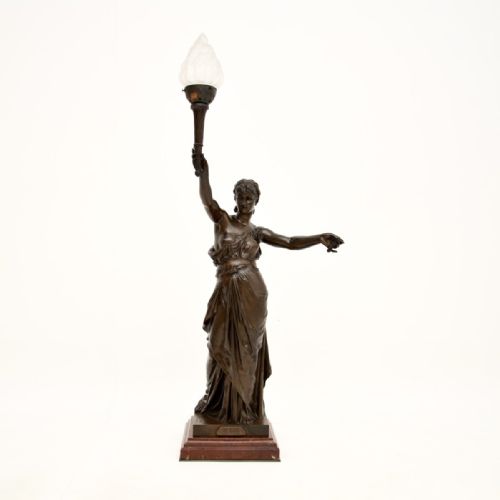


French Figural Bronze Lamp
A french figural bronze lamp combines sculptural human or allegorical figures with functional illumination, bringing nineteenth-century foundry work directly into domestic spaces.
French Figural Bronze Lamp
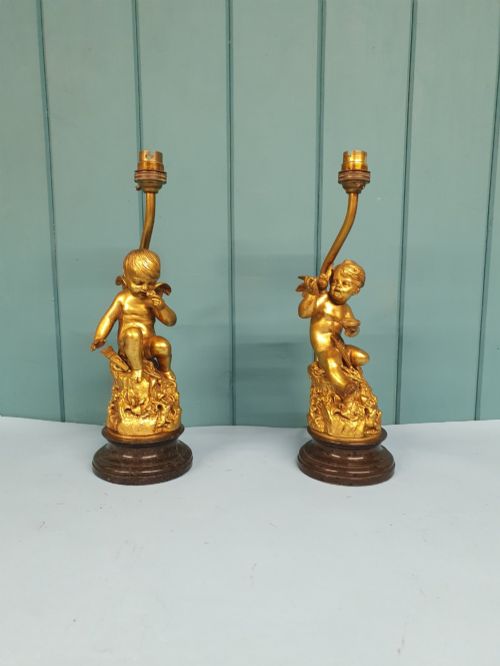
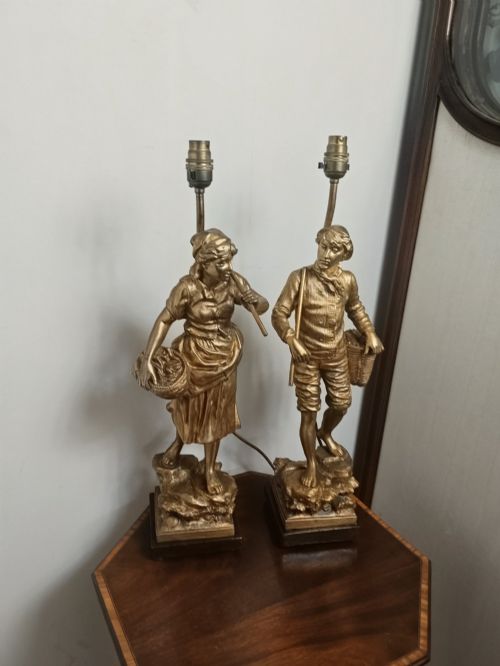
A french figural bronze lamp brings together cast metal figures and functional lighting, taking forms such as table lamps, floor lamps, and wall sconces. These pieces frequently depict allegorical subjects, classical deities, cherubs, maidens, and figures representing concepts like peace or fortune.
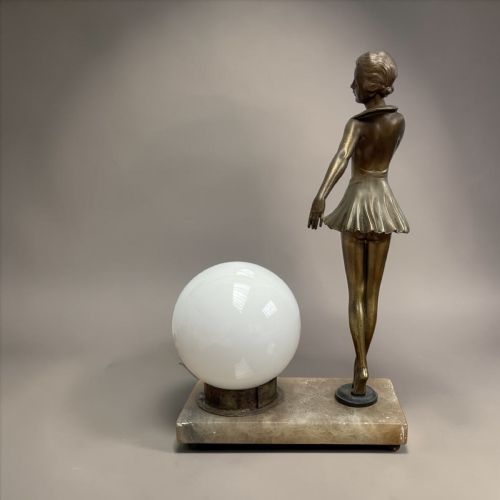
The objects span multiple periods from the Regency era through the nineteenth century and into the Art Nouveau and Art Deco twentieth-century movements. Table lamps and torchère designs dominate the selection, often mounted on marble or china bases.
Makers and sculptors frequently signed their metalwork, connecting utility with fine art sculpture. Stylistic shifts move from Neoclassical and Second Empire severity toward the flowing lines of Art Nouveau and the geometric reductions of Art Deco.
Materials and casting methods
Foundries utilised traditional bronze casting alongside alternative metals like spelter, applying patinated, gilt, or silvered finishes to the surface of the metal figure. Marble plinths and bases frequently provide structural weight and a classical foundation for the heavier metal sculptures.
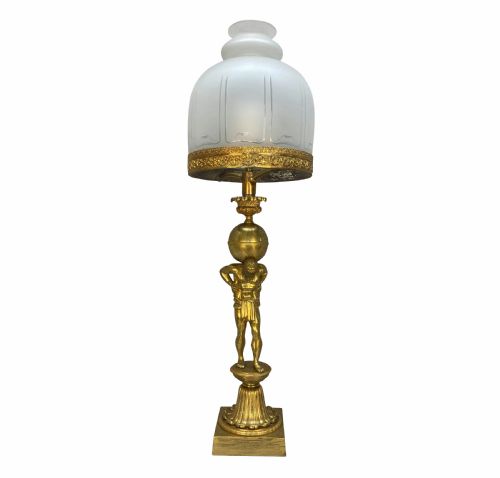
Many works incorporate glass elements, ranging from frosted shades to specialised torchère fittings, paired with fabric components. Gilt bronze, often termed ormolu, involves the application of a gold layer over bronze through mercury amalgamation or electroplating.
A bronze boy clutching his best friend appears alongside cherubs, dolphins, and goddesses holding torches.
Assessing quality in figural lamps
The choice of base materials and the weight of the metal components indicate the grade of the piece. Solid cast bronze and heavy carved marble plinths signify higher manufacturing ambition than lighter spelter alternatives paired with simplified bases.
E Rousseau·L & F Moreau·Emile Picault·Jean-Jules Cambos·H. Moreau·Aug. Moreau·François-Christophe-Armand Toussaint·Coutan·P.Sega·Henri Honore Ple·Adrien Gaudez·Auguste Moreau
The French Figural Bronze Lamp Glossary
- Spelter
- A zinc alloy frequently used as a cheaper alternative to bronze for figural castings. It requires patination to mimic the appearance of heavier metals.
- Torchère
- A tall ornamental stand or lamp designed to hold a light source aloft. These often take the form of figures holding aloft a torch or shade.
- Ormolu
- Gilt bronze produced by applying finely ground gold to a bronze base. The technique creates a rich golden finish characteristic of nineteenth-century decorative arts.
- Patination
- The surface coloration or film that develops on bronze naturally over time or through chemical application by the foundry. It accentuates the depth of the sculptural relief.
French Figural Bronze Lamp: Frequently Asked Questions
How do I distinguish bronze from spelter?
Bronze is heavier, colder to the touch, and rings with a clear tone when struck gently, whereas spelter feels softer and shows a duller sound. Examining the underside or places where the patina has worn reveals the greyish metal beneath a spelter casting.
Foundry marks and the crispness of the chasing also help separate the two materials. High-end artistic bronzes retain sharp details in the hair and hands that softer zinc alloys tend to lose during production.
Were these always lamps originally?
Many nineteenth-century figural bronzes started life as standalone decorative statues, vases, or torchères before being converted into lamps later in their existence. Conversion holes drilled through the base or figure often indicate where electrical wiring was added.
Purpose-built lamp bases appear more frequently in pieces dating from the late nineteenth century onward. Checking the internal fittings helps determine whether the lighting mechanism is original to the sculpture.
How do I clean the bronze surface?
Dusting gently with a soft dry cloth removes surface particles without disturbing the patination. Avoid commercial metal polishes, as they strip away historical patinas and damage gilt or bronze surfaces permanently.
Applying a very light coat of microcrystalline wax can protect the metal from atmospheric moisture. Professional conservation is recommended if the surface shows active corrosion or sticky residue.
What styles are most common?
Nineteenth-century pieces lean heavily toward Neoclassical, Rococo Revival, and Second Empire aesthetics, featuring classical deities, maidens, and cherubs. These designs emphasise naturalistic human anatomy and traditional sculptural drapery.
Later pieces transition into the sinuous curves of Art Nouveau and the geometric stylisation of Art Deco. These twentieth-century variations often incorporate marble bases and frosted glass elements.