


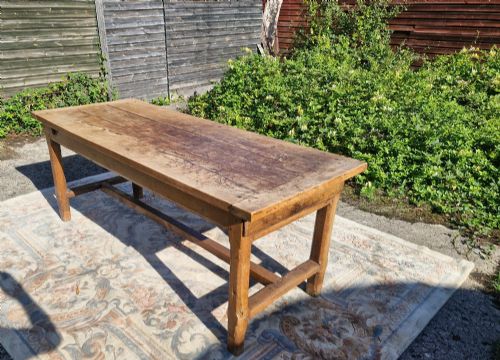
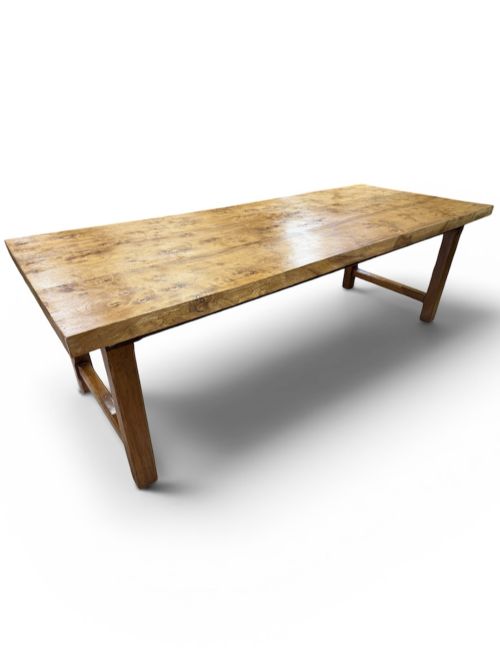
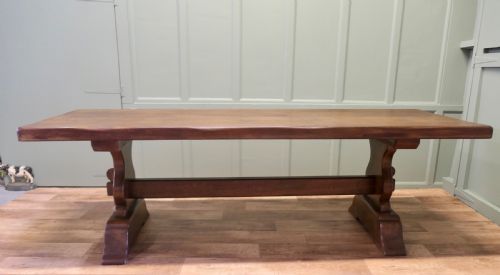
French Farmhouse Trestle Table
These heavy timbers and sturdy joints of the french farmhouse trestle table bring daily utility and centuries of shared meals into modern dining spaces.
French Farmhouse Trestle Table
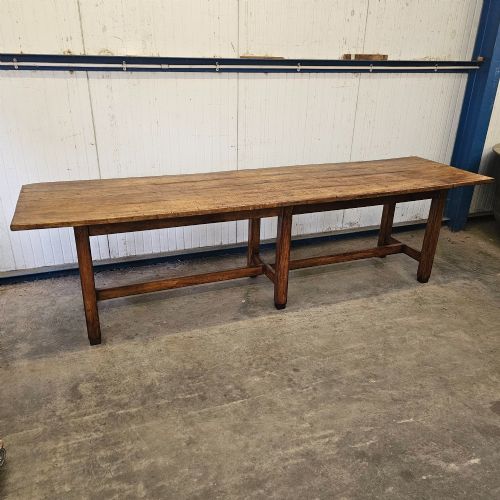
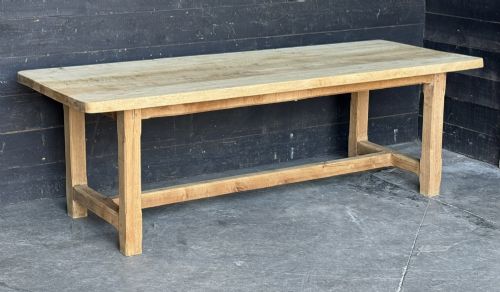
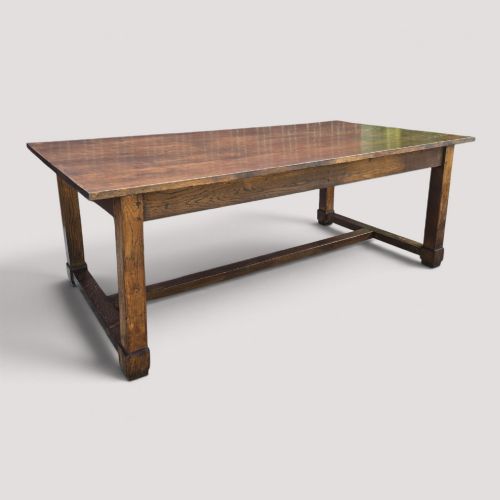
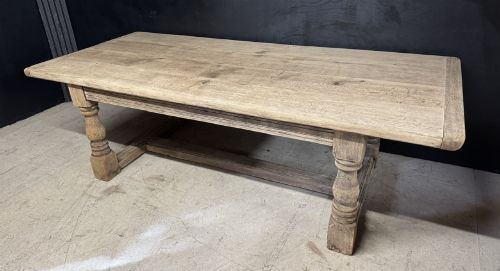
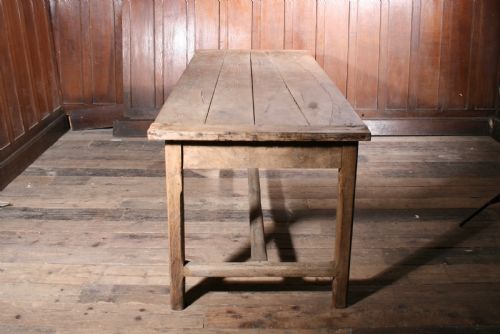
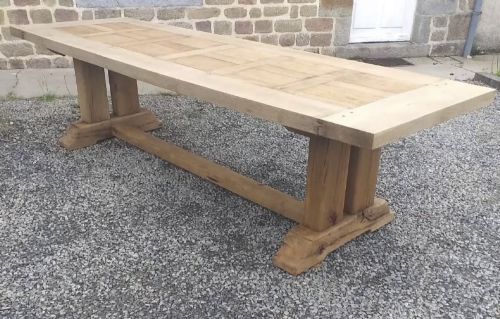
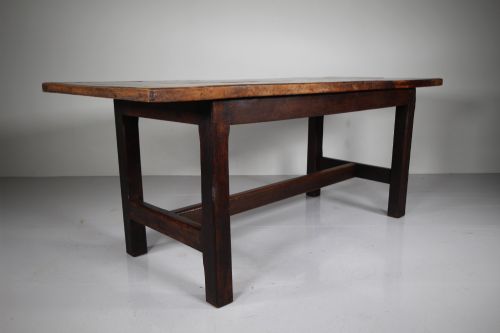
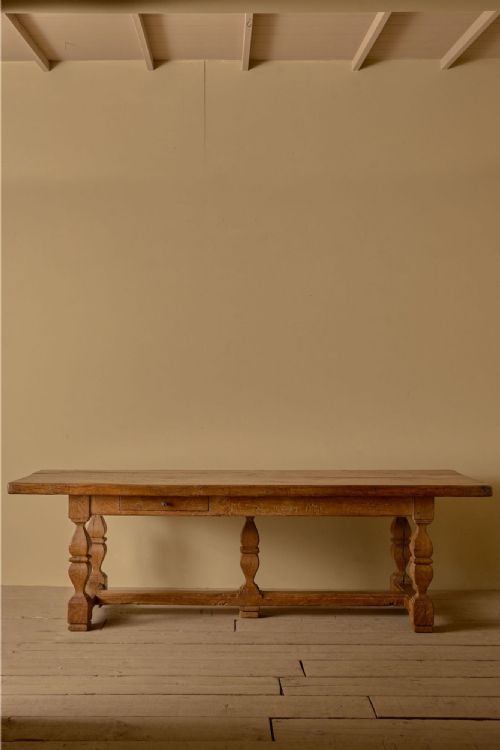
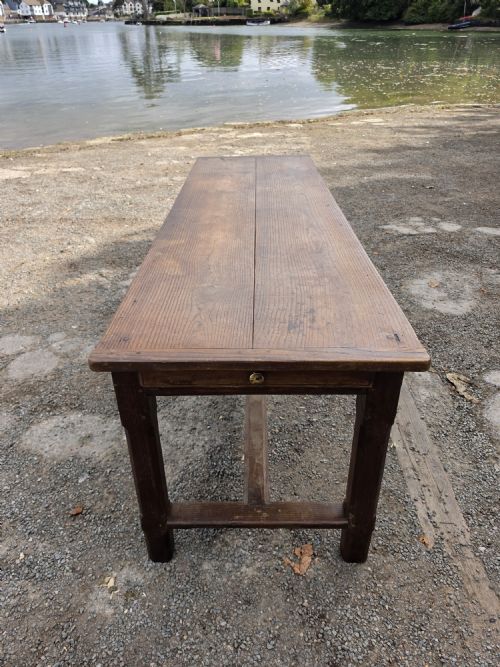
When you search for a french farmhouse trestle table, you are looking at substantial communal boards designed for heavy domestic and agricultural life. The examples appearing here span centuries of rural craftsmanship, reaching from Georgian and eighteenth-century origins through the nineteenth century and into the early decades of the twentieth century.
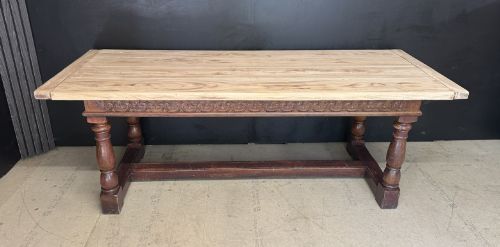
The most common forms on this page include large oak dining tables, refectory styles, and long harvest boards. Alongside traditional dining tables, you will occasionally encounter console tables, serving tables, and benches in complementary fruitwoods and elm.
Originating across French regions like Normandy, these pieces reflect the practical needs of large households. Their generous proportions provide ample seating for daily gatherings, making them central to kitchens, halls, and large dining rooms.
How they were made
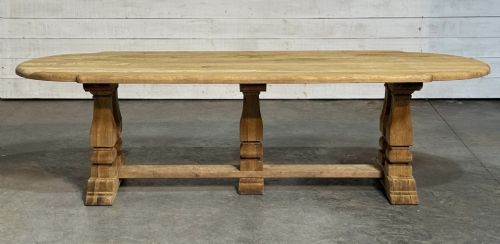
Carpenters relied on dense hardwoods such as oak, elm, chestnut, and fruitwood to build surfaces capable of withstanding heavy daily use. Planks were often joined in twin-board or multi-board configurations, secured with robust structural frames and sturdy trestle or barrel supports.
Secondary timbers like pine and beech appear in specific regional pieces, while iron hardware occasionally reinforces joints and stretchers. Surfaces show the marks of hand-planing and traditional joinery rather than mass-produced uniformity.
French Farmhouse Trestle Table Retail Price Guide 2026
Typical asking prices for french farmhouse trestle table among the pieces listed under this phrase on Sellingantiques today, from the lower quarter to the upper quarter. They describe what is for sale here now, not the wider market.
What varies in quality
The distinction between ordinary utility boards and superior examples lies in the selection of timber and the integrity of the original frame. Dense oak and figured chestnut with minimal structural alteration represent the upper tier of survivals.
Proportion and scale dictate the visual weight of the piece, with longer lengths and deeper boards commanding greater presence. Well-preserved patination from centuries of use separates honest, untouched surfaces from over-restored timber.
The French Farmhouse Trestle Table Glossary
- Refectory table
- A long, narrow dining table traditionally used in communal dining halls. These forms provide substantial length and generous knee clearance.
- Twin plank
- A tabletop constructed from two wide boards joined lengthwise. This method utilises mature timber from large old-growth trees.
- Bleached oak
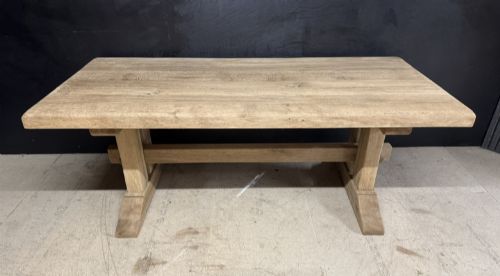
- Oak timber that has been lightened through natural weathering, scrubbing, or chemical treatment. This finish highlights the grain while softening the tone of the wood.
- Table monastere
- A heavy institutional or refectory-style table with substantial supports. These monumental forms are built to seat large groups comfortably.
- Harvest table
- A long utility table traditionally used during seasonal gatherings. Elm and fruitwood are common in these regional French examples.
French Farmhouse Trestle Table: Frequently Asked Questions
How do I seat guests comfortably?
Look closely at the placement of legs and trestle supports beneath the tabletop. Tables with recessed trestles or refectory bases offer much more freedom for chairs.
Measure the length between the table legs to ensure standard dining chairs slide underneath without obstruction. Generous four-metre lengths easily accommodate twelve or more guests.
Can I use these tables outdoors?
These timber tables were built for indoor domestic or agricultural use. Exposure to direct rain and fluctuating outdoor humidity will damage historic joints and warp wide planks.
Keep them inside where stable atmospheric conditions protect the centuries-old wood from splitting. Covered porches work temporarily if protected from damp weather.
How do I clean the wooden surface?
Wipe the timber gently with a slightly damp cloth to remove daily dust and crumbs. Avoid harsh modern chemical sprays that strip the natural historic wax and dry out the grain.
Feed the dry wood periodically with a traditional beeswax polish to maintain the sheen. Regular gentle buffing preserves the deep patination built up over generations.