




French Equestrian Artwork
French equestrian artwork captures horses, riders and racing scenes through centuries of paint, ink and print.
French Equestrian Artwork
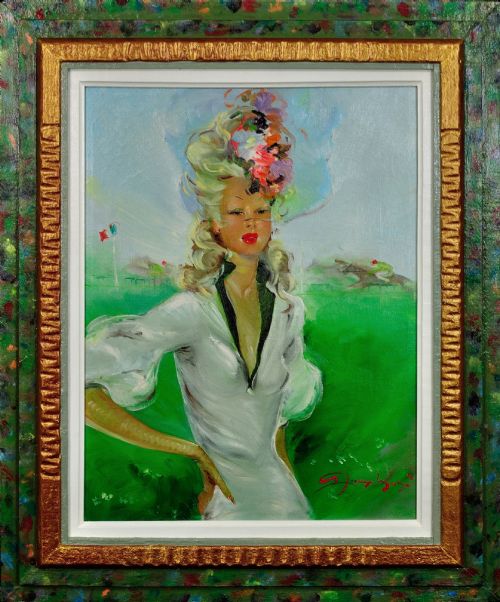
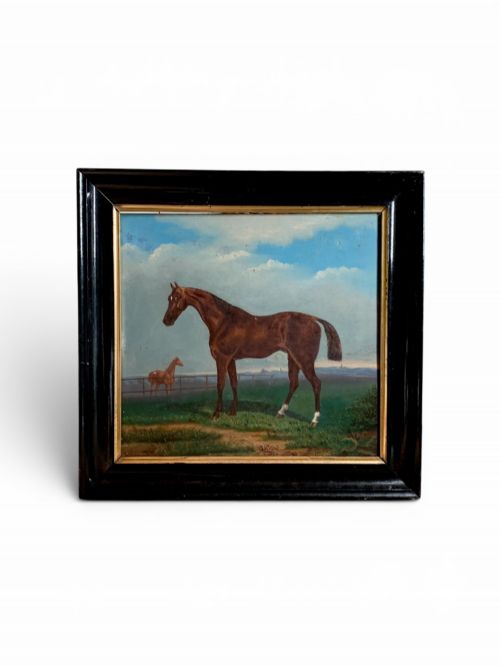
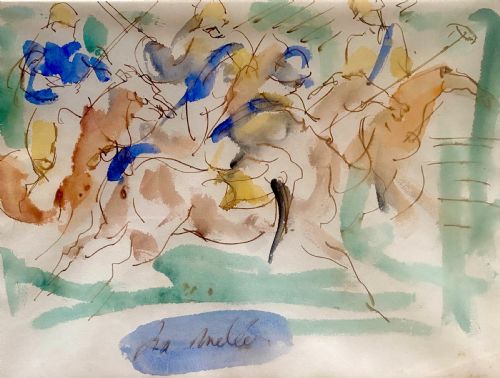
French equestrian artwork spans oil paintings, watercolours, charcoal drawings and engravings depicting horses in motion, racing, hunting and military service.
The selections on this page draw predominantly from the nineteenth and twentieth centuries, featuring framed canvases, paper works and panel paintings.
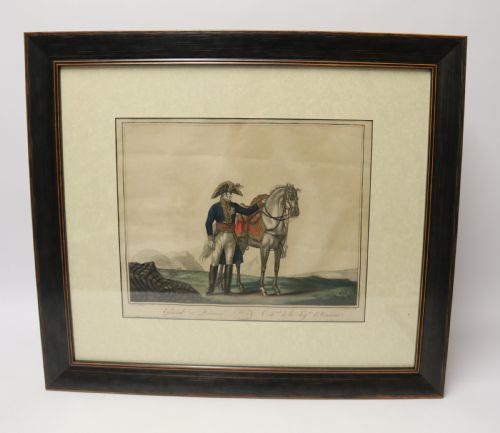
Subjects range from formal portraits of mounted cavalrymen and royal coach parties to dynamic racecourse scenes at Longchamp and polo matches.
Materials and methods
Works are executed using oil paint on canvas and wood panels, alongside watercolours, ink and charcoal on paper.
Printmakers utilised engraving techniques and hand colouring to produce detailed historical military prints and landscape hunting scenes.
Several horses in these nineteenth-century scenes appear to be posing with more aristocratic dignity than the riders steering them.
Qualities of execution
Quality rests in the draughtsmanship of the horse's anatomy and the energetic handling of brushwork or ink lines to convey movement.
Pieces by identified artists with documented exhibition histories demonstrate superior handling of light, atmosphere and narrative composition compared to anonymous works.
Jean-Gabriel Domergue·Gen Paul·Raimond Louis Lecourt·Gabriel Dauchot·Léon Joseph Voirin·Jean Sobieski·Guillaume Urban Régamey·C de Falens·Albert Ferdinand Le Dru·Martin Pierre - Denis
The French Equestrian Artwork Glossary
- Oil on canvas
- Pigment bound in drying oil applied to a stretched woven fabric support. This method allows for rich colour depth and textured brushstrokes.
- Watercolour
- Pigments suspended in a water-based, translucent solution applied to paper. It permits light to reflect through the washes for luminous effects.
- Engraving
- A printmaking process where an image is incised into a metal plate with a burin. Ink is held in the grooves and transferred under pressure.
- Orientalism
- Artistic style focusing on Middle Eastern subjects popularised in the nineteenth century. It frequently incorporated exotic settings alongside equestrian themes.
- French Provincial
- A rural, domestic style reflecting regional craftsmanship. Works in this category exhibit straightforward charm rather than academic formality.
French Equestrian Artwork: Frequently Asked Questions
What periods do these pieces date from?
The works span from the early eighteenth century through the nineteenth century and into the mid-twentieth century. Examples include royal coach scenes from the seventeen-hundreds and twentieth-century expressionist racing watercolours.
Most items originate from nineteenth-century academic and provincial traditions, capturing military subjects, hunts and portraits of riders.
How should I care for paper and canvas pieces?
Works on paper, including watercolours and engravings, require protection from direct sunlight to prevent fading. Framing behind UV-filtering glass preserves the ink and pigment.
Oil paintings on canvas benefit from stable indoor humidity and gentle dusting with a soft, dry brush. Avoid hanging them near heat sources that could dry the paint surface.
What subjects are most common?
Horse racing, polo matches and hunt scenes dominate the sporting subjects in these works. Artists frequently captured the dynamism of horses at gallop or gathered at the racecourse.
Other common themes include military cavalry portraits, rural working horses at troughs and formal royal processions near chateaux.
How do I distinguish an engraving from a painting?
Engravings show fine, uniform lines printed under pressure onto paper, sometimes with hand-applied watercolour washes. They often repeat a structured composition intended for multiple impressions.
Paintings display visible brush texture, layered pigments and the distinct weave of canvas or grain of wood panels beneath the paint.