


French Enamel Shelf Clock
A french enamel shelf clock brings architectural presence and precision engineering to a room, combining painted dials with polished metals and rich stone cases.
French Enamel Shelf Clock
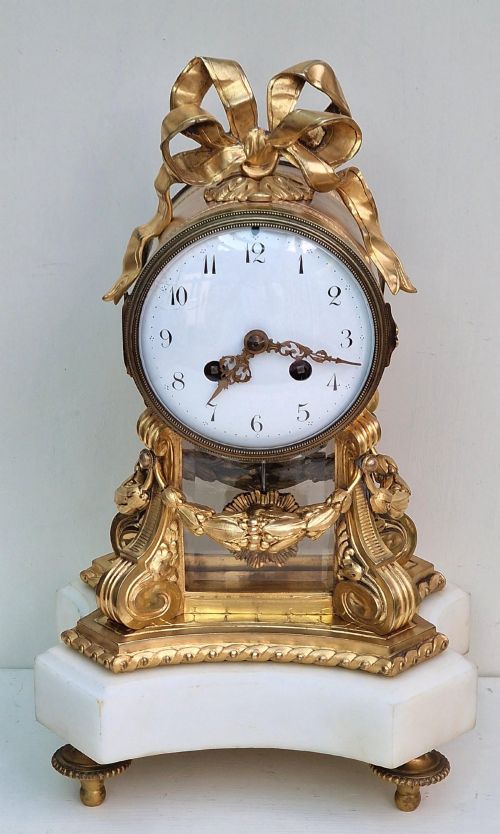
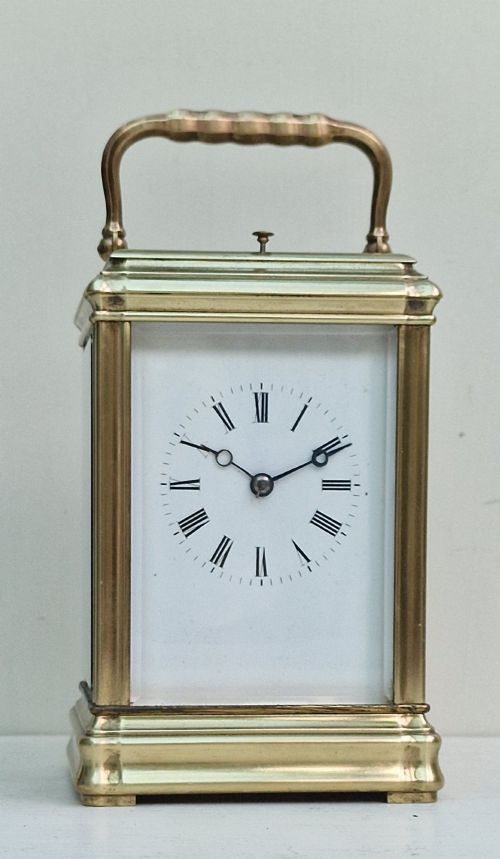
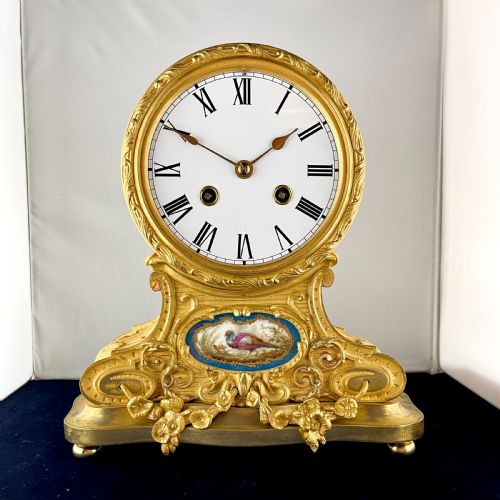
A french enamel shelf clock typically takes the form of a mantel clock or carriage clock, designed to sit on a mantelpiece, shelf or table. These pieces emerge predominantly from nineteenth-century workshops, spanning periods from the 1860s through to the early decades of the twentieth century.
The aesthetic vocabulary encompasses Victorian designs alongside French Rococo Revival, Louis XVI, Neoclassical and Empire styles. Cases vary from four glass panels revealing the movement to substantial structures formed of white marble, pink marble, ormolu, gilt bronze, mahogany and tortoiseshell.
Buyers encounter striking mechanisms, repeating complications and bell-striking functions housed within brass or gilt brass frameworks. Dials frequently feature enamel numerals set against gilt or white grounds, marking the passage of time through eight-day movements.
Distinctions in craftsmanship
Quality reveals itself in the weight and thickness of the cast bronze or ormolu mounts, where crisp chasing and deep fire-gilding separate standard production from finer outputs. Marble and wood cases demonstrate refinement through clean joinery, balanced proportions and harmonious stone selection.
The sophistication of the internal movement dictates grade, with striking and repeating carriage clocks or bell-striking mantel mechanisms representing higher levels of horological skill. Dial execution also plays a role, with finely painted enamel numerals and delicate hands marking superior workshop standards.
The documented object types span standard mantel clocks, carriage clocks and specialised four glass designs.
Paul Garnier
The French Enamel Shelf Clock Glossary
- Ormolu
- Gilded bronze produced by applying a mercury and gold amalgam to a bronze base and heating it until the mercury vaporised. This technique creates a durable, warm metallic surface found on many nineteenth-century cases.
- Carriage clock
- A portable spring-driven timepiece equipped with a handle, originally designed for travellers. These pieces often feature glass panels that expose the escapement.
- Champleve
- An enamelling technique where troughs or cells are hollowed out of a metal surface and filled with vitreous enamel before firing. It decorates clock bezels and mounts with colourful patterns.
- Repeating movement
- A complication mechanism that chimes the hours and quarters upon demand when a lever or cord is activated. This feature indicates advanced horological construction.
- Four glass clock
- A mantel clock housed in a rectangular brass or gilt frame inset with glass panels on all four sides. This design allows an unobstructed view of the pendulum and gear train.
French Enamel Shelf Clock: Frequently Asked Questions
How do I wind my clock?
Most mechanical pieces utilise a key inserted into winding holes on the enamel dial to tension the mainspring.
Care should be taken not to over-wind the mechanism, stopping as soon as resistance is felt.
What maintenance do these clocks need?
Regular servicing by a professional horologist keeps the gear trains clean and ensures accurate timekeeping.
Keeping the clock away from direct sunlight and damp environments protects the delicate enamel dials and wooden or stone cases.
How do I date a french enamel shelf clock?
Dating relies on stylistic clues such as the transition from ornate Rococo Revival or Empire motifs toward simpler Edwardian or Art Nouveau lines.
Maker signatures, patent marks on movements, and the specific composition of the brass or marble case also provide chronological markers.
Where should I place a heavy marble clock?
Substantial marble and bronze pieces require a sturdy, level shelf or mantel capable of supporting considerable weight.
A stable foundation ensures that the pendulum swings evenly and the striking train functions correctly.